
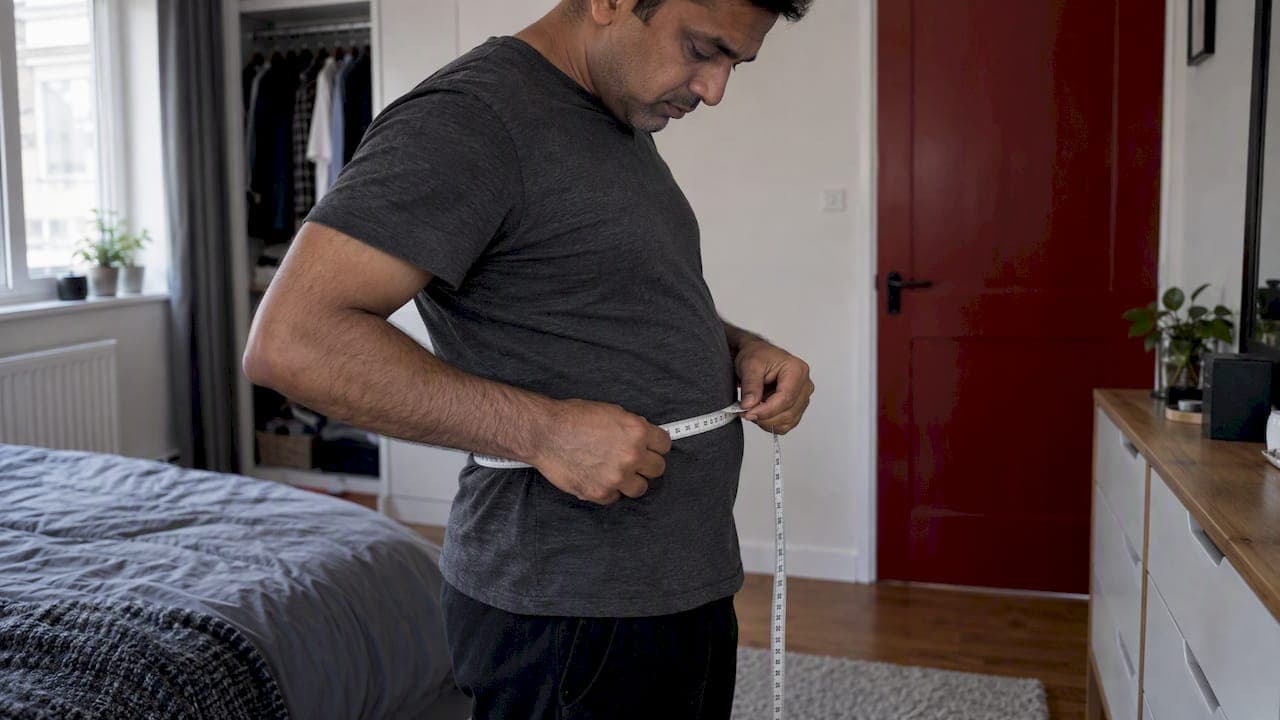
Insulin resistance and low testosterone are tied together in men, and the link runs both ways. Men with insulin resistance tend to have lower testosterone. Men with low testosterone tend to become more insulin resistant. Neither one is a side issue. Together they can leave you with a tank that never fills: tired, softer around the middle, flat in the drive department.
Here is what the research actually shows, what is still unsettled, and what you can ask your doctor for before anyone hands you a prescription.
TL;DR
- Insulin resistance is associated with lower testosterone in men, and low testosterone predicts later metabolic syndrome and type 2 diabetes.
- Belly fat and chronically high insulin sit at the center of the loop. Fix those and both numbers often move.
- Testosterone therapy can improve insulin markers in some men with diabetes and low T, but the results vary from trial to trial. It is not a shortcut.
- Ask for a fasting glucose, A1C and two morning testosterone tests before you decide anything.
Table of Contents
- What insulin does, and what "resistant" means
- Does insulin resistance lower testosterone?
- Does low testosterone make insulin resistance worse?
- What happens when men with low T take testosterone?
- How to tell where you stand
- What to do about it, in order
- Our perspective
- Where RedRockit fits
- FAQ
- Sources
What insulin does, and what "resistant" means
Insulin is the key that tells your muscle, fat and liver to take in glucose from your blood. When cells stop answering that key as well as they should, your pancreas makes more insulin to compensate. Blood sugar may look fine for years while insulin runs high in the background. That is insulin resistance.
The American Diabetes Association defines prediabetes as an A1C of 5.7% to 6.4%, a fasting plasma glucose of 100 to 125 mg/dL, or a 2-hour glucose of 140 to 199 mg/dL. Many men sit in or near that range and never hear about it, because nobody connects it to how they feel.

The signal is there. The body just stops listening to it.
Does insulin resistance lower testosterone?
Yes, the association is well documented. A frequently cited study by Pitteloud and colleagues found that increasing insulin resistance went along with a decrease in testosterone, and that it was linked to reduced testosterone secretion by the Leydig cells in the testes.
The pattern shows up at scale in men with diabetes. Roughly 25% to 40% of men with type 2 diabetes have low testosterone, often a functional (secondary) form, according to a 2026 review in PMC. "Functional" matters. It means the testes are not necessarily broken. Something upstream, in the signaling or in the metabolic environment, is turning the volume down.
The belly fat connection
The likely driver is not insulin alone. Obesity and a larger waist can come with high insulin and increased inflammatory cytokines, which are linked to low testosterone and low SHBG (sex hormone-binding globulin, the protein that carries testosterone in the blood). Glenn Cunningham of Baylor College of Medicine has described those low levels in men with metabolic syndrome as best explained by hyperinsulinism and inflammation from obesity.
Put plainly: visceral fat is not a passive storage tank. It is active tissue that sends its own signals, and those signals can interfere with your hormones.
Does low testosterone make insulin resistance worse?
It appears so. This is the second half of the loop. Low testosterone is associated with insulin resistance and predicts the later development of metabolic syndrome and type 2 diabetes. The same review notes biochemical evidence that testosterone helps your cells use glucose by stimulating glucose uptake, glycolysis and mitochondrial energy production.
An endocrinologist quoted in Endocrine News makes the clinical point: low testosterone increases insulin resistance, and leaving it untreated can predispose a patient to diabetes later in life.
So the loop looks like this:
- Weight gain around the middle and poor sleep push insulin up.
- High insulin and inflammation push testosterone and SHBG down.
- Lower testosterone makes it easier to lose muscle and gain fat.
- More fat, less muscle, more insulin resistance. Round and round.
A caution on cause and effect. Most of this evidence is associational. It shows the two travel together and predict each other. It does not prove that raising one number fixes the other, which brings us to treatment.
What happens when men with low T take testosterone?
This is where honest reading matters, because the headlines run hotter than the data.
The encouraging side. In hypogonadal men with type 2 diabetes, testosterone therapy can improve glycemic control and lower HOMA-IR, a common lab estimate of insulin resistance. The same review links therapy with lower total cholesterol, LDL and triglycerides, and possibly higher HDL. Lab work on fat tissue shows that treatment can upregulate insulin signaling genes such as GLUT4, and a study covered by Endocrine News found it raised AMPK in fat and muscle, a key energy-sensing switch.
In a large two-year trial of overweight men aged 50 to 74 with impaired glucose tolerance or new type 2 diabetes, all in a lifestyle program, testosterone cut the risk of type 2 diabetes (relative risk 0.59) compared with placebo.
The cautious side.
- The evidence on overall insulin sensitivity remains heterogeneous. Some men improve on HOMA-IR, others show little change.
- The most consistent signal in men with functional hypogonadism, obesity and diabetes or metabolic syndrome was more lean mass and less fat mass, not a clean fix for blood sugar.
- Safety questions are not closed. The FDA has reviewed observational reports on cardiovascular risk and found them seriously flawed, which is why large randomized placebo-controlled trials are still called for.
TRT can be the right call for a man with confirmed, symptomatic low testosterone. We are not here to tell you otherwise. But if insulin resistance is driving the problem, a prescription layered on top of the same habits is treating a symptom of the loop, not the loop. We cover the tradeoffs in When TRT Fixes Sex but Not Energy and the less discussed downsides in our piece on TRT risks.
How to tell where you stand
You cannot feel your way to this answer. Fatigue, low drive and slow recovery show up with insulin resistance, low testosterone, bad sleep, depression and overtraining alike. Testing sorts them out.
Bloodwork to request
| Test | What it tells you | Reference point |
|---|---|---|
| Fasting glucose | Blood sugar after an overnight fast | 100 to 125 mg/dL falls in the prediabetes range (ADA) |
| A1C | Average blood sugar over about three months | 5.7% to 6.4% falls in the prediabetes range (ADA) |
| Morning total testosterone, fasting, repeated | Whether low T is real or a one-day blip | The Endocrine Society advises confirming with a repeat morning fasting measurement |
| SHBG | How much testosterone is bound and unavailable | Often low when insulin is high |
| Fasting insulin (ask your clinician) | Early insulin resistance before glucose rises | Interpretation depends on the lab |
The Endocrine Society guideline is clear that a diagnosis of hypogonadism should be confirmed by repeating the morning fasting total testosterone. One random afternoon draw proves nothing. We walk through the common mistakes in Avoid Lab Mistakes on TRT Bloodwork, and the ranges are explained in Normal Testosterone Levels in Men. Timing matters because testosterone peaks in the morning.
Look at body composition, not just the scale
Weight alone hides the thing that matters most here: how much fat sits deep around your organs and how much muscle you carry. A body composition scan gives you a baseline you can retest. If you want one, you can compare same-week DEXA scan clinics by city and see which offer full-body composition.

Your waist is a free early-warning gauge. If it keeps climbing while your energy drops, take that seriously.
Rule out the look-alikes
Low mood and flat drive can be depression, not hormones. We cover how to separate them in Tell Depression From Low Testosterone. Hard training with too little recovery can also drag levels down, as we explain in Overtraining Can Lower Testosterone.
What to do about it, in order
The good news: the same moves that improve insulin sensitivity tend to take pressure off testosterone, because they attack the shared problem. This is general guidance, not a prescription. If you have diabetes or take blood sugar medication, talk to your doctor before changing your diet or training sharply, because your doses may need adjusting.
- Get the numbers first. Fasting glucose, A1C, and two morning testosterone tests. Know what you are dealing with.
- Lift, and walk after meals. Muscle is your largest glucose sink. Resistance training builds it. A short walk after your biggest meal is simple and costs nothing.
- Cut the liquid sugar and the late-night snacking. You do not need a perfect diet. You need fewer big insulin spikes and a stable routine.
- Protect your sleep. Short, broken sleep hurts both insulin sensitivity and morning testosterone. Set a fixed wake time and build around it.
- Lose the waist, not just weight. Even a modest drop in belly fat can ease the inflammation and insulin pressure behind the loop.
- Build a morning routine you can keep. Light, movement, a real breakfast, no phone for the first stretch. See Five Morning Steps That Protect Testosterone.
- Retest in a few months. Same labs, same time of day. If numbers are still low and symptoms are real, that is when a hormone conversation with a clinician gets serious.
Our perspective
We see the same story from men over 30 again and again. They get one lab slip, hear "your testosterone is a little low," and the next sentence is about a shot. Nobody asks about the waistline, the sleep, the fasting glucose, the 3 p.m. crash. That is backwards.
Our view is simple. Testosterone is a signal, and insulin resistance is one of the things that can jam it. Before you hand that signal to a prescription, find out whether something fixable is in the way. Measure properly. Rebuild the basics. Give your body a real chance to answer.
And if you do end up on TRT, you will go in informed, with a baseline, and with habits that make any treatment work better. That is not anti-medicine. That is pro-man.
For the partners reading: if he is tired, distant and putting on weight around the middle, he is probably not checked out on purpose. Metabolism and hormones can quietly erode motivation. Start with the conversation, then the labs. We wrote about this in Low Testosterone and Marriage.
— Nurse Rachel
Where RedRockit fits
RedRockit is a private-use red light wellness device built to support a daily restoration routine for men over 30, with a companion app, Rockit IQ, that guides your sessions. It is not a clinic, not TRT and not a treatment for insulin resistance or diabetes. It is a tool for the routine part: the consistent, at-home habit that sits alongside the sleep, training and food changes above. There are no subscriptions or appointments to keep up with it. See it at RedRockit Primal Restoration, or read our guide on how to increase testosterone after 40.
FAQ
Does insulin inhibit testosterone?
Not directly in a simple on-off way. What the research shows is that rising insulin resistance goes along with falling testosterone and reduced testosterone output from the testes. Chronically high insulin, fat gain and inflammation appear to work together to push levels down.
Can blood sugar problems cause low testosterone?
They are strongly associated. Around 25% to 40% of men with type 2 diabetes have low testosterone. The relationship is two-way, so it is hard to say which came first in any one man. Testing both is the way to find out.
Will testosterone therapy fix my insulin resistance?
Not reliably. In some hypogonadal men with type 2 diabetes it improves HOMA-IR and glycemic control, but trial results vary, and the most consistent effect is more lean mass and less fat mass. Lifestyle changes remain the foundation.
Which tests should I ask my doctor for?
Ask for fasting glucose, A1C and a morning fasting total testosterone, repeated if it comes back low. Many clinicians also add SHBG and fasting insulin. Bring up your symptoms and your waist measurement too.
Sources
- Testosterone and insulin resistance in the metabolic syndrome (Nature Reviews Endocrinology)
- Increasing insulin resistance is associated with a decrease in Leydig cell testosterone secretion (PubMed)
- Low Testosterone in Men With Type 2 Diabetes (PMC)
- Testosterone and metabolic syndrome (PMC)
- Indications, contraindications and maybes when prescribing testosterone therapy (Endocrine News)
- Effects of testosterone therapy in adult males with type 2 diabetes (PubMed)
- Metabolic Effects of Testosterone Replacement Therapy (PubMed)
- Insulin Resistance and Inflammation in Hypogonadotropic Hypogonadism (PubMed)
- Insulin Sensitivity Improves with Testosterone Therapy (Endocrine News)
- T4DM trial, testosterone to prevent or revert type 2 diabetes (The Lancet Diabetes & Endocrinology)
- Diabetes Diagnosis & Tests (American Diabetes Association)
- Testosterone Therapy for Hypogonadism Guideline (Endocrine Society)
- Male bone density and DEXA testing