

Here's the direct answer: magnesium can meaningfully support testosterone, but only for the men who actually need it. If your diet is running low on magnesium, or you're training hard and sweating it out, supplementing can raise free and total testosterone. If your levels are already solid, popping a magnesium pill isn't going to turn back the clock.
The evidence isn't hype. The NIH Office of Dietary Supplements sets the daily target for men, a widely cited 2011 PubMed trial found real hormonal shifts in athletes and sedentary men alike, and Primal Red Co has spent years telling men the truth about what actually moves the needle on drive and energy instead of selling a shortcut.
Before you supplement anything, do two things:
- Look honestly at your diet. Are you eating leafy greens, nuts, and whole grains, or living on takeout?
- Talk to a clinician about your levels and your Recommended Dietary Allowance (RDA) versus the Tolerable Upper Intake Level (UL) for supplements, before you self-prescribe a dose.
Keep reading. We'll walk through the mechanisms, the actual clinical data, who this helps most, and a starter protocol you can bring to your doctor.
Key Takeaways
Magnesium supports testosterone mainly by freeing up bioavailable hormone rather than manufacturing new testosterone, and it works best for men correcting a real deficiency alongside training.
| Point | Details |
|---|---|
| Verdict on supplementation | Magnesium helps free/total testosterone most in deficient men and athletes, not men with already-adequate levels. |
| Know your numbers | The RDA is 420 mg per day for men 31 to 50, with a 350 mg supplemental UL for pills or powders. |
| Choose glycinate first | Magnesium glycinate absorbs well, is gentler on the gut, and supports sleep quality alongside hormone health. |
| Lifestyle outranks supplements | Resistance training, sleep, and weight management remain the strongest proven levers for long-term testosterone. |
| Pair with a real routine | Primal Red Co's RedRockit offers a daily, non-TRT restoration routine that pairs with nutrition and sleep habits. |
This article is general information, not a substitute for advice from a qualified doctor. Consult a qualified healthcare professional about your own circumstances before acting on anything here.
Table of Contents
- How Magnesium Affects Testosterone: The Biology Behind the Signal
- What the Studies Actually Show (Key Clinical Evidence)
- Who Benefits Most (and Who Probably Won't)
- How Much Magnesium: RDA, Upper Limit, and Choosing a Form
- Safety, Interactions, and When to See a Clinician
- Diet and Lifestyle That Support Magnesium and Testosterone Together
- Starter Supplementation Protocol: A Step-by-Step Plan
- Magnesium's Role in LH and FSH: The Upstream Signal
- How Magnesium Interacts With Cortisol and Insulin
- Will the Testosterone Gains Actually Last?
- Do Results Vary by Ethnicity or Health Condition?
- Nurse Rachel's Clinician Perspective: What Men Over 30 Should Realistically Expect
- Where RedRockit Fits Into a Real Restoration Routine
- Sources
How Magnesium Affects Testosterone: The Biology Behind the Signal
Testosterone doesn't work alone in your bloodstream. Most of it rides around bound to a protein called sex hormone binding globulin (SHBG), and bound testosterone is essentially locked up, unavailable to do its job in muscle, brain, and libido. Only the free fraction, plus a portion loosely bound to albumin, counts as "bioavailable" testosterone, the stuff your body can actually use.
Magnesium appears to compete with testosterone for binding sites on SHBG. When magnesium status is adequate, less testosterone gets locked away, and more stays free and active. That's the leading theory behind why magnesium supplementation shows up in hormone research at all. It's not manufacturing new testosterone from nothing. It's freeing up what you've already got.
There's a second pathway worth knowing. Magnesium acts as a cofactor in hundreds of enzymatic reactions, including the ones that activate vitamin D in your body. Vitamin D itself has a documented relationship with testosterone production, so a magnesium shortfall can create a quiet bottleneck upstream, before testosterone synthesis even gets started.
A few things this mechanism does NOT mean:
- It doesn't mean magnesium manufactures testosterone from scratch.
- It doesn't mean more magnesium always equals more free testosterone in men who are already replete.
- It doesn't mean the SHBG effect is fully mapped out. Researchers are still working out the exact dose response.
Quick stat: NHANES data show that a substantial portion of Americans take in less magnesium from food than their Estimated Average Requirement. That's close to half the men reading this article walking around with a mineral shortfall they don't know about, which may be quietly capping their free testosterone before they ever notice symptoms.
The honest caveat: this is mechanism support, not ironclad proof of causation. Researchers understand the biochemical logic reasonably well. What's less settled is exactly how much of a testosterone bump a given man gets from closing his magnesium gap, because that depends on how deficient he was to begin with.
What the Studies Actually Show (Key Clinical Evidence)
The most-cited piece of evidence here is a 4-week supplementation trial published in 2011, and it's worth understanding exactly what it did and didn't show. Researchers gave magnesium to two groups, athletes in active training and sedentary men, then measured free and total testosterone before and after.
- Both groups saw testosterone increases after four weeks of supplementation.
- The athletes saw a bigger jump than the sedentary men, suggesting magnesium's effect compounds when paired with training stress.
- The study measured testosterone at rest and after exhaustive exercise, capturing how magnesium status interacts with physical demand.
This lines up with a broader insight worth sitting with: the effect looks strongest when supplementation happens alongside training, not in isolation. Magnesium alone, taken by a man who never lifts a weight, is a weaker lever than magnesium taken by a man who's also hitting the gym three times a week.
Smaller observational studies report similar associations between magnesium status and testosterone, but they carry real limitations. Sample sizes tend to be modest. Trial durations are short, usually weeks rather than months. And baseline magnesium status varies wildly between study populations, which makes it hard to generalize results to a man who doesn't know his own starting point.
Harvard Health's review of magnesium research urges a conservative read of all this:
Many studies on magnesium are small or inconsistent, and food sources should be the first choice for most people. Routine supplementation usually isn't necessary unless a deficiency is suspected.
That's not a dismissal. It's a call for precision. Magnesium is a real lever for the right man, not a blanket prescription for every man.
Who Benefits Most (and Who Probably Won't)
Here's the part most articles skip: not every man reading this needs to supplement. Being honest about that is what separates a real restoration plan from a marketing pitch.
Men most likely to see a benefit:
- Guys with a magnesium-poor diet: heavy on processed food, light on greens, nuts, and legumes.
- Athletes and heavy sweaters, since intense training and sweat loss both drain magnesium stores faster than average.
- Older men with borderline testosterone levels, where closing a nutrient gap can nudge free testosterone in the right direction.
Men unlikely to see much change:
- Guys already eating a magnesium-rich diet with normal lab values. You can't top off a tank that's already full.
- Anyone expecting a dramatic testosterone spike from a supplement alone, with no changes to sleep, training, or body weight.
If you're wondering whether you fall into the first category, get tested. A clinician can order both a magnesium panel and a testosterone panel, though it's worth knowing that serum magnesium tests only reflect a small fraction of what's actually stored in your body, so a "normal" blood result doesn't always rule out a deeper shortfall. Many practitioners weigh your diet history and symptoms, like cramping, poor sleep, or fatigue, alongside the lab number rather than relying on the blood test in isolation.
Pro Tip: Before you buy a bottle of anything, spend one week logging what you eat. If spinach, almonds, and beans rarely make an appearance, you've probably found your answer without spending a dime on labs.
How Much Magnesium: RDA, Upper Limit, and Choosing a Form
The numbers matter here, so let's get specific. The RDA for adult men ages 31 to 50 is 420 mg of elemental magnesium per day, and that figure covers total intake from food and supplements combined.
Key number: the Tolerable Upper Intake Level for supplemental magnesium sits at 350 mg per day. That UL applies specifically to what you take in pill or powder form, not to magnesium from food, because your gut regulates dietary magnesium absorption far better than it handles a concentrated supplemental dose. Cross that supplemental ceiling and the most common consequence is diarrhea, not a hormonal windfall.
Here's how the common forms stack up:
- Magnesium glycinate. Bound to the amino acid glycine, this form tends to absorb well and sits gently on the stomach. It's often the first pick for men who also want a sleep benefit, since glycine itself has calming properties.
- Magnesium citrate. Well absorbed and inexpensive, but it has a reputation for loosening stools at higher doses. Fine for men without sensitive digestion.
- Magnesium oxide. Cheap and common on drugstore shelves, but poorly absorbed relative to other forms. It's a weak first choice if bioavailability is your goal.
- Magnesium malate. Paired with malic acid, sometimes favored by men dealing with muscle fatigue or exercise recovery, with reasonable absorption.
If your priority is closing a dietary gap without wrecking your gut or your sleep, start with glycinate and titrate from there.
Safety, Interactions, and When to See a Clinician
Magnesium is generally well tolerated, but "generally" isn't "always," and men over 30 juggling other medications need to pay attention here.
- The most common side effects at higher supplemental doses are diarrhea, cramping, and general GI upset.
- True hypermagnesemia, excess magnesium in the blood, is rare in men with normal kidney function, but symptoms include nausea, muscle weakness, and in severe cases, breathing difficulty. This is a medical emergency, not a "push through it" situation.
- Certain antibiotics and diuretics can interact with magnesium, either reducing its absorption or altering how your kidneys clear it.
- Men with kidney dysfunction are at meaningfully higher risk of magnesium buildup, because impaired kidneys can't clear excess magnesium the way healthy ones do.
If you're on any prescription medication, especially blood pressure drugs, antibiotics, or anything affecting kidney function, loop in your clinician before starting a supplement. If you experience muscle weakness, irregular heartbeat, or breathing trouble after starting magnesium, stop taking it and seek care immediately. That's not a scare tactic. That's just how you handle any mineral supplement responsibly.
Diet and Lifestyle That Support Magnesium and Testosterone Together
Food should be your first move, not your backup plan. A handful of magnesium-dense foods can cover a serious chunk of your daily 420 mg target without a single capsule.
- Spinach, about one cup cooked, delivers a solid dose of magnesium alongside other micronutrients your body needs anyway.
- Almonds, roughly a one-ounce handful, are an easy add to a morning routine or a desk drawer snack.
- Pumpkin seeds, a quarter cup, pack more magnesium per calorie than most snack foods you'd reach for instead.
- Beans and legumes, a half cup serving, work double duty for magnesium and fiber.
- Dark chocolate, one to two ounces of the 70% or higher variety, is a legitimate source, not just an excuse.
Sleep is the piece men chronically underrate. Testosterone production is tied closely to sleep architecture, and most of your daily testosterone release happens during deep sleep cycles. Magnesium glycinate's calming effect on the nervous system is one reason it's often recommended specifically for men whose poor sleep might be part of the testosterone problem in the first place.
Pro Tip: Resistance training and maintaining a healthy body weight remain the two most proven, most powerful levers for long-term testosterone maintenance. Magnesium supports the system. It doesn't replace the barbell.
Starter Supplementation Protocol: A Step-by-Step Plan
If you've read this far and you think supplementation makes sense for you, here's a straightforward way to approach it.
- Assess your diet and symptoms first. Log a week of meals and note fatigue, cramping, or sleep issues.
- Consider baseline labs. Ask your clinician about testosterone and magnesium status before you start, so you have something to compare against.
- Choose your form and start low. A supplemental range of 100 to 200 mg, split into two doses, morning and evening, is a conservative starting point.
- Track and recheck. Log energy, sleep, and mood for four to eight weeks, then revisit labs with your clinician if warranted.
Pro Tip: Splitting your daily dose into two smaller amounts rather than one large one tends to reduce GI upset and may improve absorption. Take the evening dose alongside your wind-down routine if you're using glycinate for sleep support.
Expect weeks, not days, for any hormonal shift to show up, and only escalate past 350 mg of supplemental magnesium under a clinician's direction.
Magnesium's Role in LH and FSH: The Upstream Signal
Testosterone doesn't start in the testes. It starts in the brain, with a signal chain running from the hypothalamus to the pituitary gland, which releases luteinizing hormone (LH) and follicle-stimulating hormone (FSH). LH is the direct trigger telling the testes to produce testosterone, while FSH supports sperm production and overall testicular function.
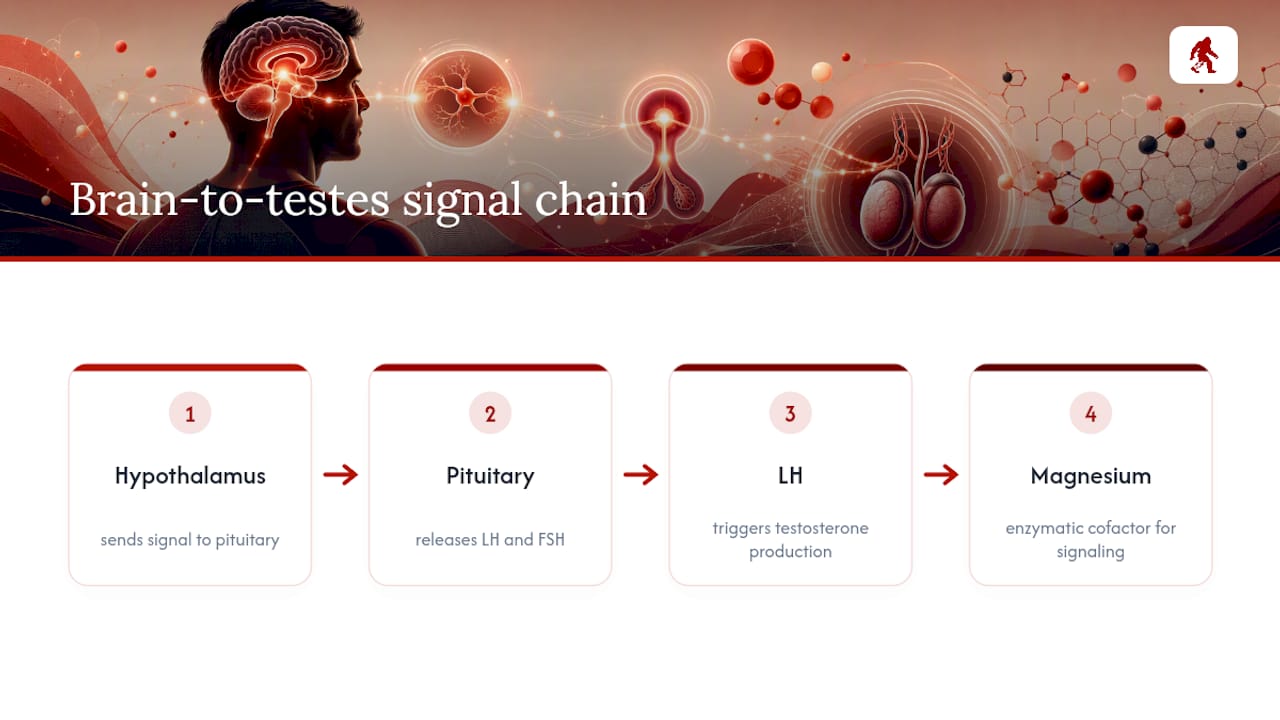
Magnesium's involvement here is less studied than its role with SHBG, but the enzymatic cofactor logic still applies. Because magnesium supports hundreds of cellular reactions, including the ones involved in hormone synthesis and signaling, a chronic shortfall could theoretically dull the strength of that upstream LH signal before testosterone production even ramps up.
This is an area where the science is genuinely thinner than the SHBG story, and it's worth saying plainly: researchers haven't nailed down a direct, well-replicated causal link between magnesium status and LH or FSH output in men. What exists is biological plausibility, not a stack of confirmed trials. If your labs come back with low LH alongside low testosterone, that's a conversation for your doctor about the whole hormonal chain, not a problem magnesium alone is going to solve.
How Magnesium Interacts With Cortisol and Insulin
Testosterone doesn't operate in a vacuum. Cortisol, your primary stress hormone, and testosterone have an inverse relationship in a lot of physiological contexts: when cortisol runs chronically high, testosterone tends to suffer.
Magnesium has a documented calming effect on the nervous system's stress response, partly through its role in regulating the hypothalamic pituitary adrenal axis, the same signaling chain that governs cortisol release. A magnesium shortfall can leave that stress response running hotter than it should, which indirectly works against testosterone.

Insulin sensitivity tells a similar story. Poor magnesium status is linked to worse insulin sensitivity, and insulin resistance itself is associated with lower testosterone in men, particularly men carrying excess body fat. This is one more reason weight management keeps showing up as a testosterone lever independent of any supplement: the insulin and cortisol pathways are doing real work in the background, and magnesium touches both of them.
None of this makes magnesium a cortisol-crushing miracle mineral. It makes it one input among several, sitting alongside sleep, training load, and body composition as factors that move these interconnected hormones together rather than in isolation.
Will the Testosterone Gains Actually Last?
This is the question men over 30 should be asking before they buy anything: does closing a magnesium gap produce a lasting change, or a temporary bump that fades the moment you stop paying attention?
The honest answer is that it depends entirely on why the deficiency existed in the first place. If your diet stays magnesium-poor and you supplement for a month, then quit, any testosterone benefit is likely to fade as your magnesium status drifts back down. Sustainability here isn't about the supplement. It's about whether the underlying habit, the diet, the training load, the sleep routine, actually changed.
Men who see the most durable results tend to be the ones who treat magnesium as one piece of a broader restoration routine rather than a standalone fix they can stop thinking about. Pairing consistent magnesium intake with resistance training and steady sleep habits gives your body multiple reasons to maintain healthier testosterone levels, rather than relying on one mineral to carry the whole load. That's a maintenance mindset, not a quick-fix one, and it's the difference between a man who feels the benefit for a season and one who holds onto it for years.
Do Results Vary by Ethnicity or Health Condition?
Large-scale research directly comparing magnesium's effect on testosterone across different ethnic groups is limited, and no major study has established that the mechanism works meaningfully differently by ethnicity. What does vary, and vary significantly, is baseline magnesium status and the presence of comorbid conditions, both of which shape how much benefit a man is likely to see.
Men with type 2 diabetes or insulin resistance often run lower magnesium status to begin with, partly because elevated blood sugar increases magnesium loss through urine. That population may have more room to benefit from correcting a deficiency than a metabolically healthy man with normal levels.
Gastrointestinal conditions that impair nutrient absorption, Crohn's disease and celiac disease among them, can also drive magnesium shortfalls regardless of diet quality, meaning some men need a higher supplemental approach under medical supervision just to reach adequate status. Kidney disease sits on the opposite end of the risk spectrum, since impaired kidney function raises the risk of magnesium buildup rather than deficiency.
The practical takeaway: your personal health history, not your ethnicity, is what should shape this conversation with your clinician.
Nurse Rachel's Clinician Perspective: What Men Over 30 Should Realistically Expect
Magnesium is an adjunct, not a rescue plan. When men ask me about it, I tell them to fix sleep, training, and diet first, because those three levers move testosterone more reliably than any mineral on a shelf. Get labs if you have real symptoms, not just curiosity. Ask your doctor plainly: "Is my magnesium status contributing to how I feel, and is supplementation appropriate given my other medications?" Give it eight weeks before you judge it. Expect a modest, supportive shift, not a transformation.
— Nurse Rachel
Where RedRockit Fits Into a Real Restoration Routine
Magnesium can close a nutrient gap. It won't fix a man who's not sleeping, not training, and not paying attention to his body until something breaks. That's the gap Primal Red Co built RedRockit to help close, a daily red light restoration routine designed to sit alongside the nutrition and sleep work you're already doing, not replace it.

A RedRockit session takes minutes, not hours, and pairs naturally with the same habits that make magnesium worth taking in the first place: consistent sleep, resistance training, and a diet that isn't working against you. This isn't TRT, and it's not a promise to diagnose or fix anything. It's a tool for the men who feel the shift coming and want to do something before bigger decisions land on the table. If that's you, start with the Male Vitality After 40 page to see how the routine fits together, or go straight to the RedRockit Activation Method to see the protocol itself and decide if it belongs in your week.
Sources
- Magnesium - Health Professional Fact Sheet | NIH Office of Dietary Supplements
- Effects of magnesium supplementation on testosterone levels of athletes and sedentary subjects at rest and after exhaustion | PubMed
- What can magnesium do for you and how much do you need? | Harvard Health