

Zinc can raise testosterone — but mainly when you were deficient to begin with. That's the honest verdict from the clinical literature, and it matters because most of the marketing around zinc skips that part entirely. The NIH Office of Dietary Supplements sets the recommended dietary allowance (RDA) for adult men at 11 mg/day and the tolerable upper intake level (UL) at 40 mg/day. Stay in that range, test your levels first, and zinc becomes a genuinely useful tool. Ignore those guardrails and you're just guessing.
The research anchor here is a 1996 clinical trial by Prasad et al. that showed zinc supplementation raised serum total testosterone in marginally deficient elderly men over several months. A 2022 systematic review in the Journal of Trace Elements in Medicine & Biology confirmed the same conditional picture: zinc deficiency lowers testosterone, and correcting that deficiency can restore it. But zinc doesn't push testosterone above your natural ceiling if your levels are already fine.
If you're a man over 30 noticing the shift in energy, drive, or recovery, zinc is worth understanding. Primal Red Co builds non-TRT restoration routines for exactly that man. Zinc is one piece of that picture. Here's what the science actually says.
Key Takeaways
Zinc raises testosterone primarily in men who are deficient — supplementation in zinc-replete men does not reliably increase testosterone levels.
| Point | Details |
|---|---|
| Zinc corrects deficiency | Supplementation raised serum total testosterone in marginally deficient elderly men over several months (Prasad et al.). |
| RDA and upper limit | The RDA for adult men is 11 mg/day; the tolerable upper intake level is 40 mg/day — never exceed it chronically without monitoring. |
| Test before you supplement | Serum zinc and morning testosterone labs identify who actually benefits; skipping labs means missing other treatable causes of low T. |
| Copper risk is real | Chronic zinc intake above 40 mg/day can deplete copper and cause anemia and neurological effects; monitor if using therapeutic doses. |
| Primal Red Co approach | RedRockit supports daily restoration routines for men over 30 as a non-clinical adjunct while pursuing testing-first, stepwise care. |
Table of Contents
- Does zinc really affect testosterone levels?
- How zinc affects testosterone in your body
- Which men are most likely to benefit from zinc supplementation?
- How to test for zinc deficiency and low testosterone
- Practical dosing, supplement forms, and what studies actually used
- Risks, toxicity, and interactions you need to know
- How long before zinc supplementation might change your testosterone?
- What to actually do next: a stepwise plan
- Common mistakes clinicians see men make with zinc and testosterone
- A perspective on zinc, testosterone, and what men actually need
- RedRockit fits into a restoration routine, not a prescription pad
- Sources
Does zinc really affect testosterone levels?
Yes — conditionally. The research is consistent on this: zinc and testosterone track together when zinc status is low, and supplementation in deficient men reliably moves the needle. The effect disappears in men who are already zinc-replete.
The Prasad trial: the study everyone cites
The Prasad et al. study is the most referenced clinical data point in this space, and for good reason. In marginally zinc-deficient elderly men, oral zinc supplementation over several months raised serum total testosterone significantly. The same researchers showed the reverse: restricting dietary zinc in healthy young men reduced testosterone after 20 weeks. That bidirectional finding is what makes the mechanism credible, not just correlational.
What the systematic review adds
A 2022 systematic review covering 38 papers (8 clinical, 30 animal studies) found a positive correlation between serum zinc and total testosterone across populations. The effect size varied significantly depending on baseline zinc and testosterone status, the form of zinc used, the dose, and how long supplementation lasted. That variability is the key clinical lesson: zinc is not a flat-rate T booster. It's a corrective agent.
When zinc supplementation doesn't move testosterone
Studies that recruited zinc-replete, healthy young men observed no meaningful change in total or free testosterone after supplementation. This is sometimes called the "ceiling effect" — zinc restores function when deficient but doesn't pharmacologically push testosterone above physiological norms in men who are already sufficient. If your zinc is fine, adding more won't signal your body to produce more testosterone.
Key study takeaways:
- Populations that benefited: older men with marginal deficiency, athletes with high sweat losses, men with dietary restrictions
- Typical study doses: 25–40 mg elemental zinc daily for therapeutic correction
- Trial durations: 8–24 weeks for measurable testosterone changes
- Endpoints measured: serum total testosterone, free testosterone, and luteinizing hormone (LH)
- Null results: zinc-replete men in controlled trials showed no testosterone increase
Pro Tip: Baseline zinc status is the single biggest moderator of whether supplementation will change your testosterone. Testing before you start isn't optional — it's the whole game.
How zinc affects testosterone in your body
The connection between zinc and testosterone isn't a marketing claim. It runs through real biological pathways, and understanding them helps you see why deficiency hits so hard.
Leydig cells and steroidogenesis
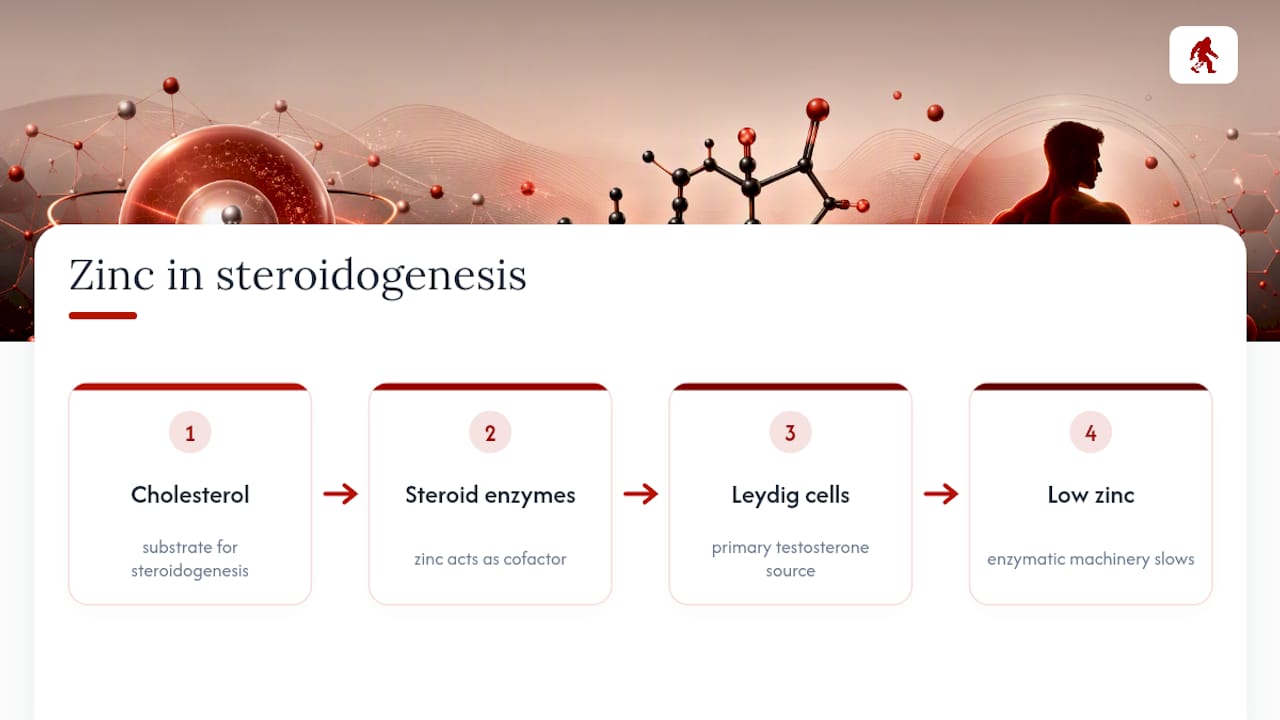
Testosterone is produced primarily in the Leydig cells of the testes. Zinc acts as a cofactor for several enzymes involved in steroidogenesis — the biochemical process that converts cholesterol into testosterone. When zinc is low, that enzymatic machinery slows down. The systematic review in the Journal of Trace Elements in Medicine & Biology documents this pathway directly, identifying zinc's role in Leydig cell function as a central mechanistic link.
LH signaling from the pituitary
Zinc also supports the release of luteinizing hormone (LH) from the pituitary gland. LH is the upstream signal that tells the Leydig cells to produce testosterone. Without adequate zinc, that signal weakens. Think of it like a radio tower losing power — the message still exists, but it doesn't reach its destination with enough strength to trigger the full response.
Androgen receptors and zinc-finger proteins
Androgen receptors — the structures that allow testosterone to actually do its job inside cells — are zinc-finger proteins. Their structural integrity depends on zinc. So even if testosterone is present, a zinc-depleted environment can blunt how effectively that testosterone is used at the cellular level.
The biological chain looks like this:
- Zinc supports pituitary LH release
- LH signals Leydig cells to produce testosterone
- Zinc cofactors enable steroidogenic enzyme activity in Leydig cells
- Zinc-finger androgen receptors allow testosterone to bind and act in target tissues
Which men are most likely to benefit from zinc supplementation?
Not every man will see a testosterone response from zinc. The men who tend to benefit share a common thread: they were losing zinc faster than they were replacing it, or they weren't getting enough to begin with.
Risk factors for zinc deficiency:
- Older age (reduced absorption and appetite)
- Low animal protein intake (plant-based zinc is less bioavailable due to phytates)
- Strict vegetarian or vegan diet
- Chronic gastrointestinal conditions (Crohn's disease, celiac, short bowel syndrome)
- Heavy alcohol use (alcohol increases urinary zinc excretion)
- High-sweat athletes — research shows that intense training with significant sweat loss can blunt post-exercise testosterone, and zinc supplementation in those athletes helped prevent that drop
- Certain medications (diuretics, ACE inhibitors, proton pump inhibitors)
A 55-year-old man eating mostly processed food with little red meat or shellfish, who also trains hard three days a week and has noticed his recovery slowing — that man has multiple risk factors stacking. A 32-year-old eating a balanced omnivorous diet with regular protein sources probably doesn't.
Who is unlikely to benefit: Men with adequate zinc intake from a varied diet, normal serum zinc on labs, and no major absorption issues. Supplementing on top of sufficiency doesn't add anything for testosterone — and it carries real risks at higher doses.
How to test for zinc deficiency and low testosterone
Before you buy anything, get the data. This is where most men go wrong — they skip the labs and spend months supplementing blind.
Recommended labs to request:
- Morning serum total testosterone (collected between 7–10 a.m., when levels peak)
- Free testosterone or calculated free testosterone index if total T is borderline
- Fasting serum zinc panel
- Complete blood count (CBC) and basic metabolic panel if you have symptoms suggesting broader deficiency
- Consider a C-reactive protein (CRP) or other inflammation marker alongside zinc — acute inflammation can suppress serum zinc and make a normal level look low
Why serum zinc isn't always straightforward
Serum zinc is useful but imperfect. Research on zinc biomarkers confirms that a single measurement can be misleading: zinc levels fluctuate with fasting state, time of day, and inflammatory status. A man with an active infection or recent illness may show a falsely low zinc reading. That's why collection conditions matter.
You can also check your low testosterone symptoms against a clinical checklist before you walk into the lab — it helps you frame the conversation with your doctor.
Pro Tip: Ask the lab to note the collection time and whether you were fasting. If your zinc comes back low but you had a recent illness or injury, request a repeat draw after recovery before starting supplementation.

When to retest after starting zinc
Give supplementation 8–12 weeks before expecting meaningful lab changes. For confirmed deficiency correction, a full 3–6 month window is more appropriate before drawing conclusions. Don't retest at four weeks and assume it's not working.
Practical dosing, supplement forms, and what studies actually used
The RDA for adult men is 11 mg/day. The tolerable upper intake level is 40 mg/day. Those two numbers from the NIH Office of Dietary Supplements are your guardrails — not suggestions.
Clinical trials that showed testosterone benefits typically used 25–40 mg elemental zinc daily, but those were therapeutic protocols for confirmed deficiency, not general supplementation for healthy men. The Healthline synthesis notes one trial where approximately 30 mg/day of zinc (combined with magnesium) increased free testosterone — again, in a context where participants had suboptimal baseline levels.
Zinc supplement forms compared
Practical dosing guidance:
- Take zinc with food to reduce nausea and GI irritation
- Don't take zinc within 2 hours of certain antibiotics (quinolones, tetracyclines) — it can reduce their absorption
- Avoid chronic dosing above 40 mg/day without clinical monitoring
- If using a multivitamin, count that zinc toward your daily total before adding a separate supplement
Risks, toxicity, and interactions you need to know
Zinc is safe at the RDA. It gets complicated above 40 mg/day, especially when used chronically without monitoring.
Signs of zinc toxicity:
- Nausea and vomiting (often the first signal)
- Abdominal cramps and diarrhea
- Headache and fatigue
- Immune dysfunction with prolonged overuse
The more serious long-term risk is copper deficiency. Research on zinc toxicity and nutrient interactions documents that chronic high-dose zinc intake interferes with copper absorption in the gut, which can lead to anemia and neurological symptoms over time. This isn't a theoretical risk — it's been documented in men who self-supplemented with high-dose zinc for months without monitoring.
The UL of 40 mg/day applies to chronic intake. Short-term therapeutic use above that level has been used clinically for confirmed deficiency, but only under supervision with copper monitoring.
Drug interactions to flag:
- Quinolone antibiotics (ciprofloxacin, levofloxacin): zinc reduces absorption; space by at least 2 hours
- Tetracycline antibiotics: same absorption interference
- Thiazide diuretics: increase urinary zinc excretion, raising deficiency risk
- Penicillamine (used in rheumatoid arthritis): zinc reduces its absorption
Pro Tip: If your clinician recommends a short therapeutic trial above the RDA, ask about concurrent copper supplementation or monitoring. A standard therapeutic ratio is roughly 8–15 mg of copper per gram of zinc at higher doses — your clinician will guide the specifics.
How long before zinc supplementation might change your testosterone?
Realistic timelines matter. Men who expect a two-week turnaround will quit before the protocol has a chance to work.
- The Prasad trial saw meaningful testosterone changes over 3–6 months of supplementation in deficient men
- Most clinical trials use 8–24 week windows as their measurement endpoints
- Dietary zinc restriction in young men reduced testosterone within 20 weeks — suggesting the body's zinc-testosterone relationship operates on a weeks-to-months timescale, not days
Practical timeline:
- Weeks 1–4: GI tolerance established; no meaningful lab changes expected yet
- Weeks 8–12: First reasonable retest window for serum zinc and testosterone
- Months 3–6: Full assessment window for deficiency correction; if testosterone hasn't moved by month 6 with confirmed deficiency corrected, investigate other causes
- Ongoing: If zinc normalizes but testosterone remains low, that's a signal to escalate to a clinician or endocrinologist
Short-term symptom monitoring (energy, sleep quality, recovery) can start earlier, but don't use subjective improvement as a substitute for lab confirmation.
What to actually do next: a stepwise plan
Stop guessing. Here's a clean decision path.
Numbered checklist:
- Optimize your diet first — oysters, red meat, poultry, pumpkin seeds, and legumes are the highest zinc sources; aim to hit 11 mg/day from food before adding supplements
- Get labs: fasting serum zinc (morning draw), morning serum total testosterone (7–10 a.m.), and a CRP if you've been sick recently
- If zinc is confirmed low, work with a clinician to start a supervised supplement regimen — typically 25–40 mg elemental zinc daily for 8–12 weeks
- Retest serum zinc and testosterone at 8–12 weeks; extend to 3–6 months if deficiency was significant
- If zinc normalizes but testosterone stays low, escalate to specialty care — endocrinology or urology — to investigate other causes
Decision flow for common scenarios:
- Low zinc + low testosterone: supervised zinc trial is the logical first step; retest before assuming TRT is needed
- Normal zinc + low testosterone: zinc supplementation is unlikely to help; investigate sleep apnea, obesity, medication effects, pituitary function, or other causes
- Normal zinc + normal testosterone + fatigue: look at lifestyle factors — sleep, resistance training, stress, and body composition before adding any supplement
Lifestyle supports that genuinely matter for testosterone: consistent resistance training, 7–9 hours of sleep, weight management (excess body fat converts testosterone to estrogen), and limiting chronic alcohol use. These aren't filler advice. They move the needle on their own, and they amplify whatever zinc correction achieves. You can also explore what to try before TRT as part of building a full restoration picture.
Common mistakes clinicians see men make with zinc and testosterone
The pattern repeats: a man feels off, reads about zinc online, buys a high-dose supplement, and takes it for six months without ever testing his levels. Sometimes he feels slightly better. Sometimes he doesn't. Either way, he has no idea whether zinc was the issue or whether something else is driving his low energy and flat drive.
The most common mistakes:
- Supplementing without testing: missing other treatable causes of low testosterone (sleep apnea, hypothyroidism, medication-induced hypogonadism, pituitary issues)
- Using chronically high doses without monitoring copper status
- Interpreting a single morning testosterone value as definitive — clinical guidelines generally recommend two separate morning draws before diagnosing hypogonadism
- Ignoring medication-induced zinc depletion (diuretics, PPIs) as a root cause
- Conflating marketing claims with clinical evidence — many supplement brands cite the Prasad trial without mentioning it involved deficient elderly men, not healthy 35-year-olds
If you've already optimized diet, confirmed zinc deficiency, run a supervised trial, and testosterone is still low — that's not a zinc problem anymore. That's when you need a specialist, not a higher dose.
Pro Tip: If your primary care physician isn't sure what to do with persistent low testosterone despite normal zinc, ask for a referral to endocrinology or urology. That's not an escalation — that's appropriate care.
A perspective on zinc, testosterone, and what men actually need
Zinc is real. The mechanism is real. The clinical evidence is real. But the way it gets sold — as a testosterone booster for any man who wants more drive — is where the story goes sideways.
The clinical literature is clear: zinc corrects a deficit. It doesn't manufacture testosterone out of thin air. A man who is zinc-sufficient and takes 50 mg a day hoping to feel 25 again isn't going to get there. He might get nausea, copper depletion, and a lighter wallet. The men who actually benefit are the ones who were quietly losing zinc through sweat, poor diet, age-related absorption decline, or medication — and who never knew it.
What bothers me about the conversation around zinc and testosterone is how rarely men are told to test first. The supplement industry has a financial interest in broad recommendations. The clinical literature has a different interest: accuracy. Those two things don't always point the same direction.
If you're a man over 30 who feels the shift — the slower recovery, the flat energy, the drive that used to be automatic — zinc might be part of the picture. Or it might not. The only way to know is to look. Get the labs. Understand your baseline. Then make a decision based on your actual biology, not a marketing headline.
That's the kind of restoration work that actually holds.
RedRockit fits into a restoration routine, not a prescription pad
You've done the reading. You understand that zinc corrects deficiency, that testing comes first, and that low testosterone has more than one cause. So what do you do while you're waiting on labs, working on diet, and figuring out whether supplementation is even the right move?

That's exactly where RedRockit lives. It's a private-use red light wellness device built for men over 30 who want a daily restoration routine they can actually stick with — supporting energy, recovery, and drive without clinical intervention. RedRockit is not a medical treatment. It does not diagnose or treat low testosterone. It's a tool for men who are paying attention before bigger decisions are on the table.
If you're exploring male vitality after 40 and want to build a restoration routine around the lifestyle and supplementation steps this article covers, RedRockit is designed to fit that picture. Consult a clinician for any diagnosis or treatment decision. Then build the routine that keeps you in the game.
Sources
The evidence base for zinc and testosterone is solid but conditional. These are the primary sources worth sharing with your clinician when requesting labs or discussing a supervised trial.
- Zinc status and serum testosterone levels of healthy adults
- Correlation between serum zinc and testosterone: A systematic review
- Zinc — Health Professional Fact Sheet (NIH Office of Dietary Supplements)
- Correlation between serum zinc and testosterone: A systematic review (Journal of Trace Elements in Medicine & Biology DOI)
Print these or send the links to your doctor before your next appointment. A clinician who sees you've done the reading will engage differently.
This article is for general informational purposes only and is not a substitute for professional medical advice. Consult a qualified clinician for diagnosis, testing, and any treatment decisions related to testosterone or zinc deficiency.