

If you want to raise testosterone without shutting down your fertility, enclomiphene is generally the stronger choice. That verdict comes from real comparative data, not marketing. A retrospective study of 78 men (46 on enclomiphene, 32 on clomiphene) found that both drugs improved serum testosterone and sperm motility, but only enclomiphene produced a statistically significant increase in total motile sperm count (TMSC). That single finding matters more than most of the noise you'll read online.
Here's what you need to know before you go further:
- Both are SERMs (selective estrogen receptor modulators) that stimulate your body's own testosterone production, unlike TRT, which shuts it down.
- Enclomiphene is not FDA-approved for men in the U.S. and carries unlicensed status in many regions. The British Society of Sexual Medicine (BSSM) calls it promising but insists on specialist oversight.
- Long-term safety data are limited for both drugs, especially enclomiphene. Small studies, short follow-ups, and variable dosing mean you cannot assume what works at 12 weeks holds at 12 months.
- Primal Red Co. does not prescribe either medication. This article exists to help you walk into a clinician's office informed, not to replace that conversation.
The bottom line: If fertility preservation is your priority, enclomiphene has the edge. If cost and clinical familiarity matter more, clomiphene remains a legitimate off-label option with decades of use behind it.
Table of Contents
- How do enclomiphene and clomiphene actually work?
- What clinical studies show about testosterone and fertility outcomes
- Side effects and estrogenic drawbacks men actually report
- U.S. availability, prescription path, dosing, and monitoring
- Which men are most likely to benefit from each drug?
- Non-drug approaches to support energy and testosterone naturally
- Key Takeaways
- The case for doing something before the bigger decisions land
- RedRockit fits where clinical care leaves off
- Primary sources and further reading
How do enclomiphene and clomiphene actually work?
Both drugs block estrogen receptors in the hypothalamus, which tricks the brain into releasing more LH and FSH. Those signals travel to the testes and tell them to produce more testosterone. Your body makes the hormone. Nothing is injected from outside. That's the core appeal for men who want to avoid TRT's fertility consequences.
The difference lives in the chemistry. Clomiphene is a 50/50 mixture of two isomers: enclomiphene (the trans isomer) and zuclomiphene (the cis isomer). Enclomiphene drives the gonadotropin signal. Zuclomiphene does the opposite: it has estrogenic agonist activity and a half-life reported up to roughly 30 days, meaning it lingers in your system long after you stop the pill. That persistent estrogenic activity is where many of clomiphene's mood, libido, and energy complaints originate.
Enclomiphene as a standalone drug strips out zuclomiphene entirely. You get the gonadotropin signal without the estrogenic drag. Hormonal changes typically appear within 4–6 weeks for both drugs, though individual response varies.
Key mechanism differences at a glance:
- LH/FSH stimulation: Both drugs raise LH and FSH, which drives endogenous testosterone.
- Estrogenic activity: Clomiphene carries zuclomiphene's estrogenic load; enclomiphene does not.
- Half-life: Zuclomiphene's long half-life can delay side effects and prolong them after stopping.
- Fertility impact: Both preserve spermatogenesis, unlike exogenous testosterone, which suppresses it.
What clinical studies show about testosterone and fertility outcomes
Both drugs raise serum testosterone. The question is by how much, how reliably, and at what cost to your fertility metrics and side-effect burden.
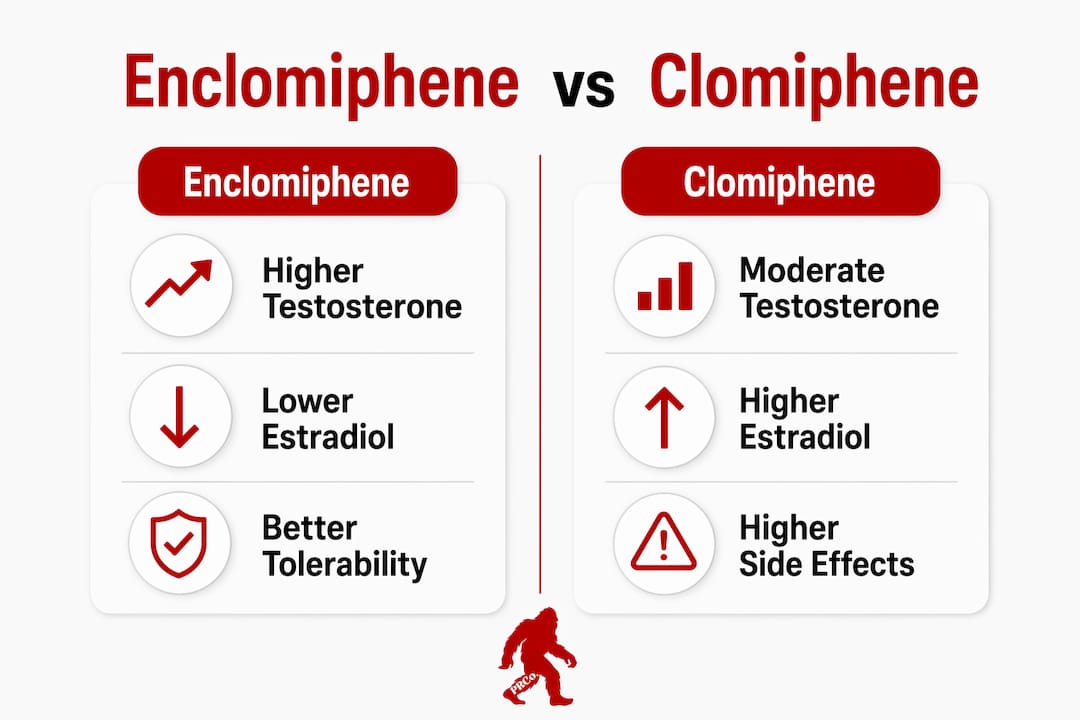
In the cohort analysis comparing the two directly, enclomiphene produced a median testosterone increase of 166 ng/dL versus 98 ng/dL for clomiphene. That gap did not reach statistical significance (P=0.20), so you cannot call enclomiphene definitively superior for testosterone alone. What did reach significance was TMSC: only the enclomiphene group showed a meaningful improvement in total motile sperm count.
A separate randomized controlled trial found enclomiphene non-inferior to transdermal testosterone for raising serum testosterone levels in a 44-man study, while spermatogenesis remained intact in the enclomiphene group. That's the key distinction from TRT: you get the hormonal lift without the fertility shutdown.
| Metric | Enclomiphene | Clomiphene |
|---|---|---|
| Median testosterone increase | +166 ng/dL | +98 ng/dL |
| Statistical significance (T increase) | P=0.20 (not significant) | P=0.20 (not significant) |
| TMSC improvement | Statistically significant | Not significant |
| Median estradiol change | −5.92 pg/mL | +17.50 pg/mL |
Limitations you should know: The 78-man retrospective study is small. Follow-up periods were short. Dosing was not always standardized across subjects. These findings are directional, not definitive. No large, long-term RCT has settled this comparison.
Side effects and estrogenic drawbacks men actually report
Enclomiphene wins on tolerability, and the numbers back that up. In one clinical cohort, adverse events hit 47% of clomiphene patients versus 13.8% of enclomiphene patients. The odds ratio for adverse events on enclomiphene was 0.18 (95% CI 0.07–0.44; P=0.02), meaning men on enclomiphene had significantly lower odds of reporting problems.

The estradiol data explains why. Clomiphene raised median estradiol by +17.50 pg/mL; enclomiphene dropped it by 5.92 pg/mL. Higher estradiol in men correlates with mood swings, reduced libido, fatigue, and water retention. That's the zuclomiphene effect playing out in real men.
Commonly reported side effects by drug:
Clomiphene:
- Mood changes, irritability, and low energy (estrogenic effect of zuclomiphene)
- Reduced libido
- Visual disturbances (blurred vision, light sensitivity) — rare but documented
- Headaches and nausea
Enclomiphene:
- Generally milder profile in available studies
- Headache and mild GI discomfort reported in some subjects
- Visual symptoms possible (SERM class effect), though less frequently reported
Safety caveat: Because enclomiphene is unlicensed in the U.S., most men access it through compounding pharmacies. Compounded products carry variable quality and lot-to-lot consistency. That's not a reason to avoid it, but it is a reason to use a clinician who knows what they're ordering and why.
U.S. availability, prescription path, dosing, and monitoring
Neither drug is a routine, insurance-covered treatment for male hypogonadism in the U.S. Clomiphene is FDA-approved for female infertility (approved 1976) and used off-label in men. Enclomiphene remains generally unapproved for men and is typically accessed via compounding pharmacies under a physician's prescription.
Your most realistic path: a urologist, reproductive endocrinologist, or a primary care physician with experience in male hypogonadism. Telehealth men's health platforms have expanded access, but quality of oversight varies. The BSSM recommends using enclomiphene within research frameworks where possible, with specialist management.
Typical starting doses seen in studies range from 12.5 mg to 25 mg daily for enclomiphene and 25 mg to 50 mg daily (or every other day) for clomiphene, though your clinician will adjust based on your labs.
| Lab / Test | Baseline | 6 Weeks | 3 Months | Red Flags |
|---|---|---|---|---|
| Total testosterone | ✓ | ✓ | ✓ | No response after 3 months |
| LH and FSH | ✓ | ✓ | ✓ | Suppressed LH suggests primary failure |
| Estradiol | ✓ | ✓ | ✓ | Significant rise on enclomiphene |
| Hematocrit | ✓ | — | ✓ | Elevation above normal range |
| Semen analysis | ✓ (if fertility goal) | — | ✓ | No TMSC improvement |
Which men are most likely to benefit from each drug?
Choose enclomiphene when:
- Fertility preservation is a stated goal (trying to conceive now or in the future)
- You want to minimize estrogenic side effects, particularly mood and energy disruption
- You've had a poor tolerability experience with clomiphene previously
- Your clinician has access to quality compounded enclomiphene and will monitor labs
Clomiphene may still make sense when:
- Cost is a primary concern (clomiphene is significantly less expensive and widely available)
- Your clinician has more experience prescribing it and prefers a drug with a longer track record
- Fertility is not an immediate priority but you want to avoid exogenous testosterone
Red flags for either drug:
- Primary testicular failure (elevated LH/FSH already, damaged testes): SERMs won't help because the signal is already maxed out
- Untreated prostate concerns: get a PSA and urological clearance first
- Unexplained polycythemia: elevated hematocrit needs investigation before adding any testosterone-raising therapy
- Drug interactions: men managing metabolic conditions with medications like metformin should review potential interactions with their prescriber before adding a SERM
Enclomiphene works best for secondary hypogonadism, where the problem is a weak signal from the brain, not a broken testis. If your LH and FSH are already high and testosterone is still low, neither drug is likely to help much.
Non-drug approaches to support energy and testosterone naturally
Before you pursue a prescription, or alongside one, lifestyle changes can move the needle more than most men expect. Sleep is the most underused lever. Men who consistently get fewer than 6 hours per night show measurably lower testosterone levels, and the fix costs nothing. Seven to nine hours is the target.
Resistance training, particularly compound movements like squats and deadlifts, stimulates testosterone acutely and supports body composition over time. Losing excess body fat matters too: adipose tissue converts testosterone to estrogen via aromatase, so carrying extra weight actively works against you.
Practical steps to start this week:
- Sleep: Prioritize 7–9 hours; treat it like a training variable, not a luxury.
- Resistance training: 3–4 sessions per week, compound-focused.
- Protein: 0.7–1.0 g per pound of bodyweight supports muscle retention and hormonal health.
- Alcohol: Even moderate intake suppresses testosterone production; reduce or eliminate.
- Stress management: Chronic cortisol elevation directly suppresses LH signaling.
These changes won't replace clinical care if your testosterone is clinically low, but they create the conditions where medication works better and where some men find they don't need medication at all. Primal Red Co.'s guide on what to try before TRT walks through this in more detail, including how a daily restoration routine fits alongside these habits.
Key Takeaways
Enclomiphene is the stronger choice for men prioritizing fertility preservation, with significantly better tolerability data and the only drug in the comparison to show a statistically significant TMSC improvement.
| Point | Details |
|---|---|
| Fertility advantage | Only enclomiphene showed a statistically significant TMSC increase in the 78-man comparative study. |
| Tolerability gap | Adverse events hit 47% of clomiphene patients vs. 13.8% on enclomiphene (OR 0.18; P=0.02). |
| Testosterone gains | Both drugs raised testosterone; enclomiphene median +166 ng/dL vs. clomiphene +98 ng/dL, not statistically significant. |
| Regulatory reality | Neither drug is a routine covered treatment for men in the U.S.; both require clinician oversight and lab monitoring. |
| Primal Red Co. | RedRockit supports daily restoration habits that complement clinical care and lifestyle changes before or alongside medication. |
The case for doing something before the bigger decisions land
Most men researching enclomiphene vs. clomiphene are not broken. They're paying attention. They feel the shift in energy, drive, or recovery and they want to understand their options before someone hands them a prescription or tells them TRT is the only answer.
Here's what I think the research actually tells us: enclomiphene is genuinely promising, and the tolerability data is meaningful. But the men who get the most out of any hormonal intervention, pharmaceutical or otherwise, are the ones who've already done the foundational work. Sleep, training, body composition, stress. Those aren't consolation prizes. They're the substrate that makes everything else work better.
The other thing worth saying plainly: enclomiphene's unlicensed status in the U.S. is not a technicality to dismiss. Compounded products vary. Clinician experience varies. A man who walks into a telehealth platform and gets enclomiphene prescribed in a 10-minute consult, with no baseline labs and no follow-up plan, is not getting the benefit the research describes. He's getting a pill. The monitoring protocol matters as much as the molecule.
If you're considering either drug, bring the 78-man comparative study to your appointment. Ask specifically about your LH and FSH levels before anyone writes a prescription. And if fertility is on the table at all, say so clearly. That single piece of information should shape the entire conversation.
RedRockit fits where clinical care leaves off
Most clinicians will tell you what to take. Fewer will tell you what to build. That's the gap Primal Red Co. exists to fill.

RedRockit is a private-use red light wellness device built for men over 30 who want a consistent daily restoration routine, not a prescription, not a clinic visit, not a commitment to something they can't walk back. It supports energy, recovery, and the kind of daily consistency that makes every other intervention, lifestyle or clinical, work better.
If you're in the research phase right now, that's exactly the right time to start building the foundation. Check out the RedRockit Activation Method to see how a structured daily protocol fits into a non-TRT restoration routine. Or if you're still weighing your options, the alternatives to TRT page lays out the full picture honestly.
Primary sources and further reading
The research behind this article is accessible and worth bringing to your next clinician visit. These are the core sources:
- Efficacy of Clomiphene Citrate Versus Enclomiphene Citrate for Male Infertility Treatment: A Retrospective Study — the 78-man comparative study; the most direct head-to-head data available.
- Enclomiphene Citrate for the Treatment of Secondary Male Hypogonadism (PMC) — mechanism review covering isomer pharmacology, zuclomiphene half-life, and secondary hypogonadism context.
- Safety and Efficacy of Enclomiphene and Clomiphene for Hypogonadal Men (Translational Andrology and Urology) — cohort analysis with adverse event rates, testosterone and estradiol change data.
- BSSM Position Statement on Enclomiphene for Male Hypogonadism — professional body guidance on unlicensed status, specialist oversight, and spermatogenesis preservation.
The literature is directional, not definitive. Sample sizes are small, follow-ups are short, and no large RCT has settled the enclomiphene vs. clomiphene question at scale. Print these, bring them to your appointment, and ask your clinician what they mean for your specific labs and goals. If you're a clinician or researcher working in this space and want to connect, Primal Red Co. welcomes that conversation.
This article is general educational information, not medical advice. Confirm current prescribing guidelines and your individual suitability with a qualified clinician before starting any medication.
Recommended
- TRT and Fertility: What Men Should Know Before They Start | RedRockit
- TRT Side Effects: What Men Search Before Starting Testosterone | RedRockit
- Is TRT for Life? What Men Should Understand Before Starting Testosterone | RedRockit
- What to Try Before TRT: Male Vitality, Energy, and Restoration | RedRockit