
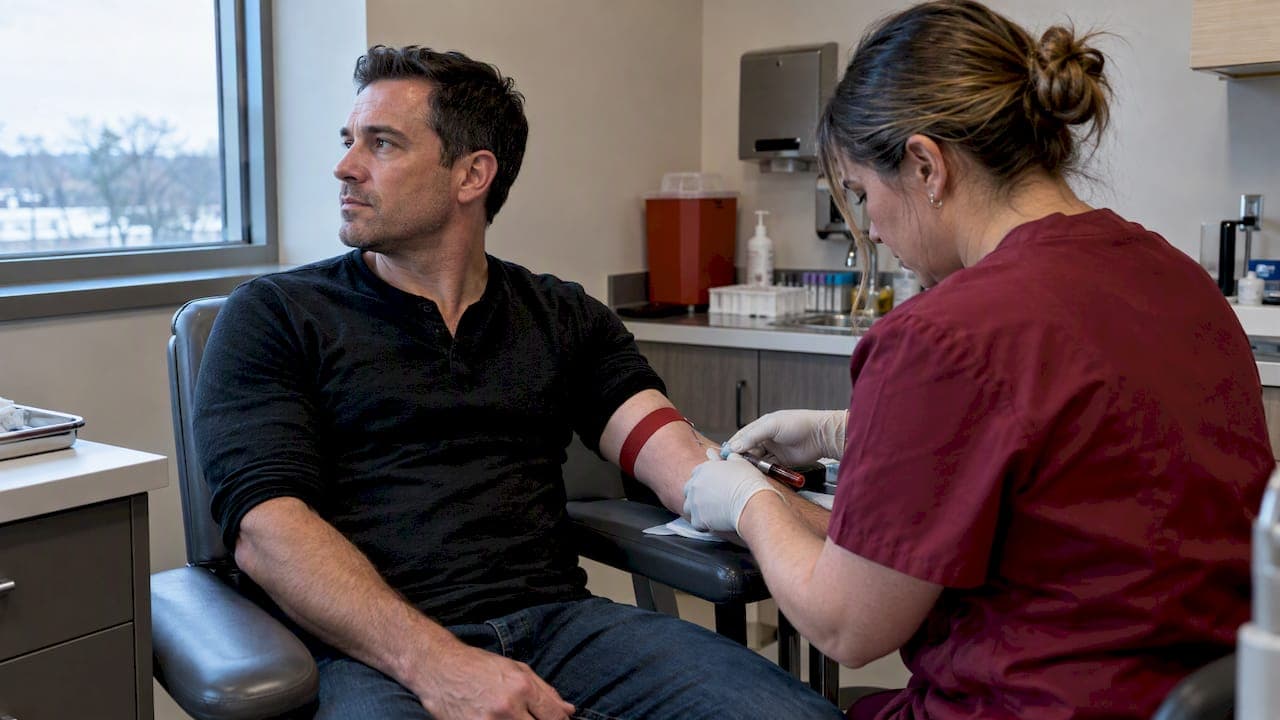
Safe TRT monitoring starts with two morning total testosterone tests on separate days, plus a baseline CBC for hemoglobin and hematocrit, LH/FSH, and PSA when indicated. Add free testosterone or SHBG if your totals sit in a gray zone. After starting or changing therapy, follow-up labs happen on a formulation-specific schedule, then every several months once stable. One result never tells the whole story, so nobody should adjust a dose off a single number.
TL;DR:
- Total testosterone should be drawn in the morning between 8 and 10 a.m., with repeat testing before making treatment decisions.
- Free testosterone or SHBG testing is crucial when total levels are borderline or conditions like obesity alter SHBG levels.
- Follow-up labs should be timed according to the formulation, typically after steady state is reached, and not within days of dose changes.
- Lab results must be interpreted in context, considering assay method accuracy, patient symptoms, and trends over multiple tests, not a single number.
- Monitoring hemoglobin, hematocrit, and PSA regularly is essential to catch potential safety issues during TRT.
Table of Contents
- Which tests belong in a TRT bloodwork panel
- When to draw blood for results you can actually trust
- How clinicians read the numbers: targets, thresholds, and red flags
- Why the lab method behind your number matters more than you think
- Your checklist before you walk into the lab
- A nurse's take on the mistakes men make with TRT labs
- What the guidelines get right, and what they leave out
- Another option: non-prescription restoration tools worth knowing about
- FAQ
- Sources
Which tests belong in a TRT bloodwork panel
A real TRT panel is built from a handful of tests that each answer a different question. Skip one, and you are flying partly blind.
Total testosterone is the screening workhorse. It needs a morning fasting draw, since testosterone follows a daily rhythm and runs highest shortly after waking. The American Urological Association recommends diagnosing testosterone deficiency only after two early-morning total testosterone measurements, not one. Immunoassays are the most common method labs use, but they lose accuracy at low concentrations compared to liquid chromatography-mass spectrometry, a distinction that matters more than most men realize until their numbers do not match their symptoms.
Free and bioavailable testosterone, alongside SHBG, matter most when your total testosterone sits in a borderline zone or when you have a condition known to shift SHBG, like obesity or diabetes. Endotext notes that free or bioavailable testosterone should be measured when SHBG is altered, because total testosterone alone can be misleading in those cases. A man with high SHBG can carry a normal or high total testosterone reading while his free, usable hormone runs low, which is exactly the trap our guide on high SHBG was written to help you avoid.
LH and FSH tell you where the problem originates. Low testosterone with high LH points to a testicular issue, a primary problem. Low testosterone with low or normal LH points upstream, toward the pituitary or hypothalamus, a secondary problem. The AUA guideline lists LH as a first-line adjunctive test precisely because it changes the workup and the conversation about fertility.
Estradiol (E2) gets checked when symptoms suggest it, like water retention, new breast tenderness, or mood swings on therapy. Elevated E2 on TRT sometimes prompts a dose adjustment rather than reaching straight for an aromatase inhibitor. Our breakdown of testing and managing estrogen on TRT walks through what a rising E2 number actually means in context.
CBC with hemoglobin and hematocrit is non-negotiable, both before you start and at every follow-up. Testosterone therapy can thicken the blood, a condition called erythrocytosis, and catching it early is the entire point of monitoring.
PSA gives a baseline prostate read and supports shared decision-making about ongoing screening. It is not optional in a responsible TRT workup for most men, particularly those over 40.
Metabolic markers, including fasting glucose, HbA1c, a lipid panel, and liver function tests, round out the safety picture. They are not strictly TRT-specific, but they catch problems that TRT can interact with or mask.
- Total testosterone: morning fasting draw, screens for deficiency.
- Free testosterone/SHBG: clarifies borderline totals or SHBG-altering conditions.
- LH/FSH: distinguishes primary from secondary hypogonadism.
- Estradiol: checked when symptoms or dose changes warrant it.
- CBC (hemoglobin/hematocrit): detects treatment-related blood thickening.
- PSA: baseline and ongoing prostate monitoring.
- Metabolic panel (glucose, HbA1c, lipids, LFTs): broader safety check.
When to draw blood for results you can actually trust
Timing is where most home lab confusion starts. Testosterone is highest in the morning and drifts lower through the day, so a draw at 2 p.m. and a draw at 9 a.m. are not telling you the same story.
- Schedule fasting draws between 8 and 10 a.m. to limit the swing caused by your body's natural daily rhythm, and confirm any abnormal result with a repeat test before acting on it.
- If you use a topical gel, time your blood draw 2 to 8 hours after application, but only once you have reached steady state, which usually takes more than a week of consistent use.
- For short-acting injections dosed weekly, draw blood midway between doses, around day 3 or 4, to capture a representative mid-range level rather than a peak or trough.
- For long-acting injectables or pellets, your clinician will time the draw according to the specific release profile, since peak and trough windows differ from short-acting esters.
- Get your first follow-up check once you have hit steady state, roughly 2 to 4 weeks in for topical formulations or after 3 to 4 injection cycles for short-acting esters, then recheck at 3 to 6 months, then every 6 to 12 months once things look stable.
The AUA guideline specifically flags that injectable timing requires a mid-interval draw to avoid the peak and trough variability that makes single injectable readings hard to interpret. Testing immediately after a dose change is one of the most common ways men end up chasing numbers that were never going to hold steady anyway.
Pro Tip: Write down the exact date and time of your last dose before you walk into the lab. Without it, even a perfect blood draw is nearly impossible to interpret correctly.
Our piece on circadian rhythm and testosterone goes deeper into why morning timing is not a suggestion so much as a requirement for comparable results.
How clinicians read the numbers: targets, thresholds, and red flags
A single low number does not equal a diagnosis. The Endocrine Society's 2026 statement is blunt about this: diagnosis requires symptoms plus consistently low, accurately measured testosterone on repeat morning testing, and the statement specifically warns that non-standardized assays can misclassify samples. That warning exists because it happens often enough to matter.
Once treatment starts, the goal typically is a mid-normal testosterone range, with guideline discussion often centered around roughly 450 to 600 ng/dL as a treatment target rather than chasing the top of the reference range.

Nearly all current clinical guidance converges on one safety checkpoint: the Endocrine Society recommends monitoring testosterone, hemoglobin/hematocrit, and PSA at 3 to 6 months after starting therapy, again at 12 months, and then periodically every 6 to 12 months once stable. That rhythm is not bureaucratic box-checking. It is how erythrocytosis and prostate changes get caught while they are still manageable.
Several thresholds trigger a real conversation, not just a note in your chart:
- Rising hematocrit toward unsafe levels calls for dose adjustment first, with therapeutic phlebotomy or referral considered when thresholds are exceeded, according to AUA guidance.
- A PSA rise greater than 1.4 ng/mL within 12 months, or an absolute PSA above 4.0 ng/mL, is a recognized trigger for urology referral.
- Testosterone running persistently above the treatment target suggests the dose needs to come down, not a reason to feel like treatment is "working extra well."
- Repeated discordant results between how you feel and what the labs show often mean it is time to repeat testing at the same lab, with the same assay, rather than guessing.
Specialty referral, whether to endocrinology, urology, or hematology, is not a sign something went wrong. It is what the system is built for when a result sits outside the expected range or does not match the clinical picture. The VA's clinical recommendations lay out similar baseline and monitoring thresholds, reinforcing that this is not one guideline's opinion but a consistent standard across major U.S. clinical bodies.
Why the lab method behind your number matters more than you think
Two men with identical testosterone can get different numbers from different labs, and it is rarely a mistake. It is the assay.
Most routine labs run immunoassays, which are fast and cheap but lose precision at lower testosterone concentrations, exactly the range where diagnostic decisions get made. Liquid chromatography-mass spectrometry, or LC-MS, is more specific and more accurate at those lower levels. Endotext describes LC-MS as offering greater specificity than many standard immunoassays, which is why a borderline or symptom-discordant result is worth confirming with an LC-MS test before anyone makes a treatment decision based on it.
This is also where the CDC's Hormone Standardization (HoST) program comes in. It is a harmonization effort designed to make testosterone results comparable across different labs and assay platforms, reducing the kind of lab-to-lab drift that used to make shopping around for a "better number" an actual strategy for some men.
A few practical moves cut down on this noise:
- Ask your lab or clinician whether their testosterone assay is LC-MS based or participates in CDC HoST harmonization.
- Use the same lab for repeat testing whenever possible, since switching labs mid-monitoring introduces a variable you cannot control for.
- Ask your clinician to interpret results against that specific lab's reference range, not a number you found online.
None of this is about distrust. It is about recognizing that "low testosterone" on paper sometimes reflects assay noise rather than biology, and a second look with a better method resolves more confusion than another round of guessing.
Your checklist before you walk into the lab
A little prep prevents a wasted draw and a confusing result.
Before the draw: fast overnight, avoid biotin supplements for 48 to 72 hours since the FDA has flagged biotin interference with lab assays as a real source of skewed results, skip heavy exercise the morning of the test if your clinician advised it, and note the exact time of your last testosterone dose or gel application.
On cost: a standalone total testosterone test typically runs cheaper than a full panel with free testosterone, SHBG, LH, and PSA bundled together, and insurance coverage varies widely depending on whether the test is framed as diagnostic or routine monitoring. Ask your clinician's office or the lab directly about expected turnaround time, since results for specialty tests like LC-MS confirmation can take longer than a standard immunoassay.
What to bring: photo ID, your current medication and supplement list, including anything like DHEA since some DHEA supplement use can influence hormone readings, and a written note of your dosing schedule so the ordering clinician can time interpretation correctly. If your result looks off relative to how you feel, it is reasonable to ask directly whether an LC-MS confirmation makes sense.
- Fast overnight and avoid biotin for 48 to 72 hours before the draw.
- Record the exact time of your last dose or gel application.
- Bring ID, your medication list, and ask about LC-MS confirmation if results seem off.
A nurse's take on the mistakes men make with TRT labs
We have read enough panels to know where men get tripped up. The biggest one: a clinic offering to start treatment off a single testosterone draw. Guidelines are consistent on this, and a single number, drawn once, at any time of day, is not a diagnosis. Walk away from anywhere that treats it like one.
The second mistake is misreading a normal total testosterone while ignoring a high SHBG, which can mask a genuinely low free testosterone level. If your symptoms do not match your total testosterone number, SHBG is often the missing piece, and our guide on free versus total testosterone questions covers exactly what to ask before accepting a result at face value.
The third is skipping hematocrit monitoring because it feels like an inconvenient extra test. It is not extra. It is one of the few numbers that can catch a real safety problem before it becomes a bigger one, something we cover in detail in our piece on hematocrit risk and fertility protection on TRT.
And before starting therapy at all, have the fertility conversation. Exogenous testosterone suppresses the signal your body uses to produce sperm, and that conversation belongs before the first injection, not after.
— Nurse Rachel
What the guidelines get right, and what they leave out
The guideline consensus here is genuinely solid: two morning tests, hematocrit and PSA monitoring, formulation-specific timing. Where it falls short is in how it gets delivered. Men are handed a lab order and a follow-up date, with almost nobody explaining why the timing matters or what a borderline free testosterone actually means for how they feel day to day.
The bigger gap is upstream of all this bloodwork. Plenty of men chase a TRT prescription when their fatigue, low drive, and foggy recovery have more to do with sleep, stress load, and years of treating their body as an afterthought. That does not make TRT wrong for the men who genuinely need it. It means the first move should be understanding your own numbers and your own habits before clinic shopping for someone willing to write a script.
If you take one thing from this: do not let a single result, or a single provider's eagerness, make this decision for you. Get the full picture first.
— Nurse Rachel
Another option: non-prescription restoration tools worth knowing about
TRT is not the only lever available to men paying attention to their energy, drive, and recovery, and it is not always the first one worth pulling. We built RedRockit as a non-prescription, non-pharmaceutical device for men who feel the shift coming and want to do something about it before a clinic conversation becomes the only option left.

RedRockit is not TRT, and we are not a clinic. It is a private-use red light wellness device built around a daily restoration routine, with a companion app guiding each session. It tends to suit men who are not in crisis but notice the drop-off, the energy that used to show up automatically, the recovery that takes longer than it used to.
- The device works alongside, not instead of, any medical care you are already getting.
- It carries no ongoing prescriptions, subscriptions, or clinic visits.
If bloodwork and a clinician point you toward TRT, that is a real and valid path. If you are still in the "something is off but I'm not ready for a clinic" stage, explore RedRockit and see if it fits where you are right now.
This article is general information, not a substitute for advice from a qualified doctor. Consult a qualified healthcare professional about your own circumstances before acting on anything here.
FAQ
What bloodwork should I get for TRT?
A standard TRT panel includes two morning total testosterone tests on separate days, a CBC for hemoglobin and hematocrit, LH/FSH, and PSA when indicated. Add free testosterone or SHBG if your total testosterone is borderline or you have a condition known to alter SHBG, such as obesity or diabetes, as Endotext notes.
How much does a TRT blood test cost?
Cost varies by whether you order a single total testosterone test or a full panel bundling free testosterone, SHBG, LH, and PSA, and by your insurance coverage for diagnostic versus routine monitoring visits. Ask your lab or clinician's office directly for current pricing and turnaround time, since costs differ by provider and by assay method requested.
What was a normal testosterone level in 1970?
Historical testosterone data from that era is not reliably comparable to today's readings, since lab assay methods have changed substantially since then and were not standardized the way modern labs aim to be. A meaningful comparison requires looking at your own result against your lab's current reference range, not a decades-old figure measured with outdated methods.
How often does TRT require follow-up labs?
The Endocrine Society recommends checking testosterone, hemoglobin/hematocrit, and PSA at 3 to 6 months after starting therapy, again at 12 months, and then every 6 to 12 months once levels are stable. Specific follow-up schedules can vary by provider and by how your individual labs trend over time.
Can I adjust my TRT dose based on one lab result?
No single lab value should drive a dose change, since testosterone fluctuates with timing, assay method, and daily variation. Guideline groups consistently recommend repeating abnormal results and interpreting them alongside symptoms before any adjustment is made.
Sources
- Statement on Testosterone Replacement Therapy | Endocrine Society
- Testosterone Deficiency Guideline - American Urological Association
- Laboratory Assessment of Testicular Function - Endotext
- Testosterone Replacement in Males: Clinical Recommendations — VA