

Testosterone peaks between 7:00 and 10:00 AM and bottoms out by late afternoon, and that daily swing shrinks as you age past 30. Sleep disruption blunts the rhythm further, but body weight and overall health drive the bigger changes in most men. The practical move: test in the morning, fix your sleep and light habits first, and treat hormone therapy as a later option, not a first response.
TL;DR:
- Testing testosterone in the afternoon can miss the peak, as levels are typically 20 to 25 percent lower than morning measurements in younger men.
- The testosterone wave flattens with age due to reduced Leydig cell responsiveness, altered hormone pulses, and less deep sleep, making timing and interpretation more challenging.
- Disrupted circadian cues from shift work, irregular light exposure, and sleep fragmentation significantly inhibit testosterone production, with weight management being the most effective lever.
- Proper testing requires blood draws before 10:00 AM, ideally between 7:00 and 9:00, and confirmatory tests on separate mornings improve diagnosis accuracy.
- Lifestyle interventions like consistent sleep, morning light exposure, resistance training, and weight control are foundational, low-risk steps before considering hormone therapy.
Table of Contents
- How Circadian Rhythm Affects Testosterone Levels Throughout the Day
- What Happens to the Testosterone Rhythm as Men Age
- How Do Clock Genes Control Testosterone Production?
- What Disrupts Testosterone's Daily Rhythm the Most?
- When Should You Get Tested, and What Do the Results Mean?
- Building a Daily Routine That Supports Your Testosterone Rhythm
- Why the Science Deserves Respect, Not Panic
- Where a Red Light Routine Fits Into the Picture
- Sources
- FAQ
How Circadian Rhythm Affects Testosterone Levels Throughout the Day
Your body doesn't produce testosterone at a steady drip. It builds a wave, and that wave has a predictable shape if you're a healthy man under about 40.
Testosterone climbs overnight during sleep, peaks in the early morning window between 7:00 and 10:00 AM, then declines steadily through the day, hitting its lowest point in the late afternoon or early evening. This is the diurnal pattern researchers have documented since the late 1970s, and it hasn't changed. What has changed is how many men know about it.
The magnitude of that swing matters more than most guys realize. In younger men, testosterone measured in the afternoon can run 20 to 25 percent lower than the same man's 8:00 AM reading. That's not noise. That's the difference between a number that looks normal and one that gets flagged as low, depending entirely on what time the blood was drawn.
Underneath the daily wave sits something even faster: ultradian pulses. Luteinizing hormone (LH) fires from the pituitary in bursts roughly every 90 minutes, and testosterone follows those pulses with a short lag. Stack enough of those pulses during deep, consolidated sleep, and you get the nocturnal rise that produces your morning peak. Interrupt sleep, and you interrupt the pulse train. This is why the surge is described as sleep-dependent rather than purely clock-dependent. You need actual sleep architecture, not just darkness, for the mechanism to run.
Here's what this means for anyone getting bloodwork done:
- A single afternoon draw can make a healthy 35 year old look borderline low.
- A morning draw on a bad sleep night can undersell a man who's otherwise fine.
- Borderline results deserve a second morning draw before anyone talks about treatment.
- Labs drawn at wildly different times of day are not comparable, even for the same man.
Quick fact: Testosterone can swing considerably across a single day in younger men, based on clinical measurement data comparing 8:00 AM and afternoon draws. That's enough to flip a normal reading into a flagged one, or the reverse, depending on the clock.
The clinical takeaway is simple, even if the biology isn't: if you're getting your testosterone checked, book it before 10:00 AM. Anything drawn after lunch is measuring a different part of the wave, and comparing it to a "normal range" built on morning data is comparing apples to a fruit salad. Our guide on normal testosterone levels in men breaks down what those reference ranges actually assume about draw timing.
What Happens to the Testosterone Rhythm as Men Age
The wave doesn't disappear as you age; it flattens.
Studies comparing younger and older men consistently find the same pattern: older men still show a morning peak and an afternoon dip, but the gap between the two shrinks. Where a 25 year old might see a substantial morning to evening drop, a 65 year old's curve looks closer to a gentle slope than a peak. The clock is still running. The signal is just weaker.
Two mechanisms drive that flattening, and they compound each other over time:
- Reduced Leydig cell responsiveness. The testicular cells that manufacture testosterone in response to LH signaling become less sensitive to that signal as men age, so the same pulse produces a smaller output.
- Altered LH pulsatility. The pituitary's pulse pattern itself becomes less regular and less amplified, meaning the upstream signal driving the whole system loses some of its rhythm before it even reaches the testes.
- Sleep architecture changes. Older men spend less time in the deep, consolidated sleep stages that drive the nocturnal surge, which independently blunts the peak regardless of what the clock genes are doing.
This creates a real diagnostic trap. If the reference ranges clinicians use were built largely on younger men with sharper rhythms, then testing an older man in the afternoon and comparing him to a "normal" range calibrated on morning peaks in 25 year olds is doubly unfair. He's not just tested at the wrong time. He's being measured against a rhythm he no longer has.
This is part of why some men over 30 get told they're "fine" when they don't feel fine, and why others get flagged as deficient off a single bad-timing draw. A flattened rhythm means the margin for error in interpretation shrinks. There's less daily variation to average out a fluke reading, but there's also less of a clear peak to anchor a diagnosis to.
The practical fix is unglamorous: test in the morning, repeat if borderline, and factor age into how much weight you put on any single number. A 45 year old man reading slightly low on one afternoon draw is a very different situation than a 45 year old man reading consistently low across two or three morning draws, weeks apart. One is a timing artifact. The other is information worth acting on. Our home testing guide walks through how to structure that kind of repeat testing without overcomplicating it.
How Do Clock Genes Control Testosterone Production?
Testosterone synthesis isn't just hormonally controlled from the top down. It's regulated at the cellular level by the same genetic clock that runs your sleep-wake cycle, and that clock exists in two places at once.
The suprachiasmatic nucleus (SCN) in your brain acts as the master clock, syncing to light and dark cues from your eyes. But your Leydig cells, the testosterone factories in your testes, run their own local clock using the same core genes: BMAL1, CLOCK, the PER and CRY family, and NR1D1. These genes don't just tell time. They physically bind to and regulate the enzymes that build testosterone from cholesterol, including StAR (which shuttles cholesterol into the mitochondria) and CYP11A1 (which kicks off the conversion process), along with the HSD enzyme family further down the chain.
Recent reviews of this system describe testosterone synthesis as directly wired into the clock machinery, not just loosely influenced by it, based on research tracking how clock genes regulate steroidogenic enzymes. When the clock genes lose their rhythm, the enzymes they control lose theirs too, and testosterone output follows.
Animal research has gone a step further, showing exactly where the damage lands. Experimental circadian desynchrony in rodent models measurably reduces Leydig cell steroidogenic gene expression and impairs mitochondrial energetics, according to a 2022 study on Leydig cell function. The mitochondria inside Leydig cells are where the first steroidogenic step actually happens, and desynchrony hits that process directly, reducing what's called mitosteroidogenesis, the mitochondrial conversion step that starts the whole testosterone production chain.
The clock isn't just a metaphor for your sleep habits. Inside a Leydig cell, BMAL1 and CLOCK physically regulate the same enzymes that turn cholesterol into testosterone. Desynchronize the clock, and you're not disrupting a routine. You're disrupting the machinery.
A few points worth holding onto here, because the science gets misquoted constantly:
- Clock genes regulate testosterone-building enzymes directly, not just indirectly through sleep quality.
- Both a central brain clock (SCN) and a local testicular clock appear to matter, and they can fall out of sync with each other.
- Animal models show mitochondrial damage from circadian desynchrony, which is a plausible mechanism for lower testosterone in disrupted humans.
- Direct human trial evidence that fixing circadian timing reliably raises testosterone is still limited.
That last point matters. Most of the mechanistic detail above comes from rodent studies, and rodents are nocturnal, have different sleep architecture, and respond to light differently than humans do. The mechanism is compelling. It is not the same as proof that a man who fixes his sleep schedule will see his testosterone number climb by a predictable amount. Treat this section as the "why it's plausible," not the "here's your guaranteed result."
What Disrupts Testosterone's Daily Rhythm the Most?
Not every circadian disruptor carries the same weight, and lumping them all together is how men end up chasing the wrong fix.
Four disruptors show up again and again in the research: shift work, nighttime light exposure, social jet lag (the mismatch between your weekday and weekend sleep schedule), and general sleep fragmentation. A 2025 review on clock genes and testosterone synthesis identifies shift work and irregular light exposure as major inhibitors of the enzymatic machinery Leydig cells need to run steroidogenesis. Population data backs this up at scale: an NHANES analysis covering 2011 to 2016 found that U.S. men showing features of circadian syndrome, a cluster including irregular sleep, metabolic disruption, and altered activity timing, had a higher prevalence of testosterone deficiency than men without those features.
That's an association, not a proven cause. NHANES is a snapshot of a large population at one point in time. It can show that disrupted circadian patterns and low testosterone travel together far more often than chance would predict. It cannot tell you that fixing one guarantees fixing the other, because it can't rule out that something else, like obesity or poor overall health, is driving both.
And that's the honest nuance most articles skip: weight is a bigger, more reliable lever than sleep alone. A 2014 review of sleep disorders and testosterone points out that while sleep and circadian disruption are consistently associated with lower testosterone, weight loss is a more reproducible way to raise testosterone in men than isolated sleep interventions, including CPAP therapy for men with sleep apnea. If you're carrying significant excess weight, that's likely doing more damage to your testosterone than your slightly irregular bedtime.
Sleep timing preference itself, though, does appear to carry independent weight. A 2024 Mendelian randomization study found that men with an early chronotype (natural early risers) had a genetic association with higher total and bioavailable testosterone compared to men with a late chronotype. Because Mendelian randomization uses genetic variants as a proxy for lifelong exposure, this is some of the stronger evidence available that sleep timing itself, not just sleep quality, plays a causal role, separate from confounders like weight or job schedule.
Here's how to prioritize, based on where the evidence is strongest:
- Manage your weight first. This has the most consistent, reproducible link to testosterone changes of anything on this list.
- Protect a consistent sleep schedule. Reduce social jet lag by keeping weekday and weekend wake times within an hour of each other.
- Fix your light exposure. Bright light in the morning, dim light at night, based on the mechanistic link between light cues and clock gene function.
- Add resistance training. It supports both weight management and testosterone independently, giving it a double benefit on this list.
- Address shift work exposure where you can. If rotating shifts are unavoidable, consistency within the rotation still beats total chaos.
Pro Tip: If you can only change one thing this month, change your wake time, not your bedtime. A consistent wake time anchors your circadian clock more reliably than chasing an earlier bedtime you can't actually stick to.
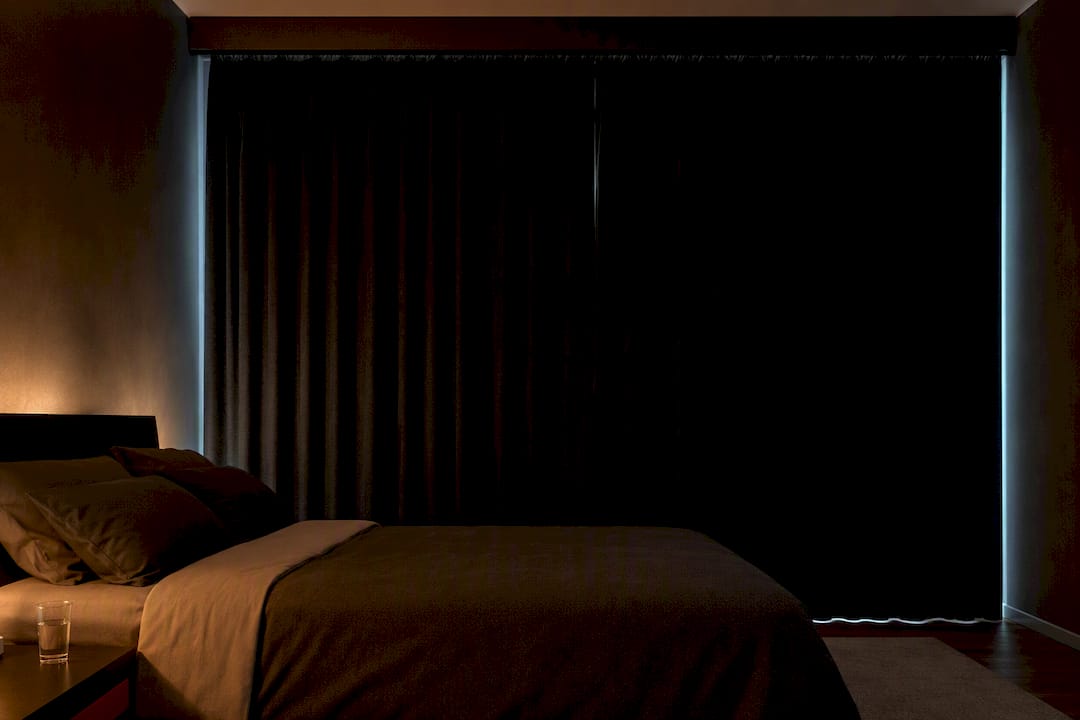
If nighttime light in your bedroom is part of the problem, something as unglamorous as blackout curtains solves a meaningful piece of it without requiring any willpower at all.
When Should You Get Tested, and What Do the Results Mean?
Timing is the single most common testing mistake men make, and it's an easy one to fix before you draw any conclusions about your hormones.
Get your blood drawn before 10:00 AM, ideally between 7:00 and 9:00. This is when the diurnal peak is at its highest, and it's the window the standard reference ranges were built around. A single low reading from an afternoon draw isn't a diagnosis. It's a data point drawn from the wrong part of the curve, and it should trigger a repeat morning test, not a prescription.
If the first morning test comes back low, get a second confirmatory morning draw, ideally on a different day, before treating the number as real. Guidelines around low testosterone diagnosis generally call for at least two low readings on separate mornings before labeling a man as testosterone deficient, precisely because single readings can be thrown off by a bad night's sleep, illness, or plain daily variability.
Age changes how you should read the result. Because the rhythm flattens with age, an older man's morning and afternoon numbers sit closer together than a younger man's would. That's not necessarily pathology. It's an expected part of the age-related blunting described earlier. What matters more is the absolute number relative to standard ranges, combined with how you actually feel, not the size of the daily swing.
Certain symptoms and conditions deserve a faster path to an endocrinologist or your primary care physician rather than a "let's try lifestyle changes first" approach:
- Rapid, unexplained loss of muscle mass or strength over a short period.
- Persistent, severe erectile dysfunction that isn't improving with basic lifestyle changes.
- Diagnosed or suspected sleep apnea, which independently affects testosterone and needs its own treatment.
- Fertility concerns, since testosterone-related decisions can affect sperm production in ways worth understanding before you start anything. Our page on TRT and fertility covers what to know before that conversation.
- Diabetes, obesity, or other metabolic conditions that can independently drive low readings and need their own management.
For men without those red flags, the more reasonable sequence is: get a proper morning test, confirm it if it's low, then spend a real stretch of weeks, not days, on sleep consolidation, light exposure, weight management, and resistance training before deciding whether hormone therapy is actually the next step. That's not a delay tactic. It's giving the cheaper, lower-risk interventions a fair shot before reaching for the more permanent one. Our breakdown on home testosterone testing covers how to structure that morning testing routine without needing a clinic visit for every check.
Building a Daily Routine That Supports Your Testosterone Rhythm
None of the mechanisms above matter if they don't turn into something you actually do at 6:30 AM on a Tuesday. Here's what the evidence supports as a realistic daily structure, not a 40-step optimization plan nobody follows past week two.
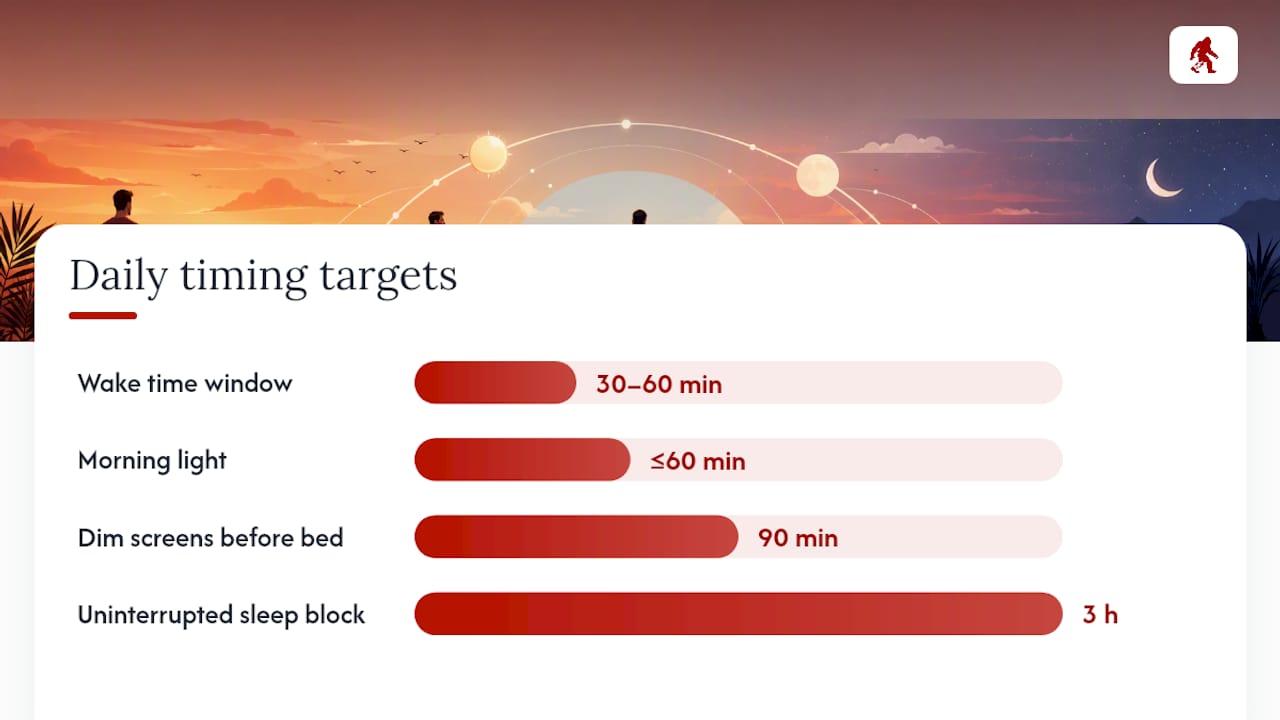
Sleep consolidation comes first. The nocturnal testosterone surge needs several hours of consolidated, uninterrupted sleep to occur, based on findings that the sleep-dependent nature of the nocturnal rise matters more than circadian timing alone. Fragmented sleep, waking up four times a night even if you're technically in bed for eight hours, blunts the surge regardless of what your internal clock thinks the time is. Aim for a consistent bedtime and wake time, and protect at least one solid three-hour block of uninterrupted sleep as a non-negotiable minimum.
Morning light exposure sets the clock. Get outside, or at least near a bright window, within the first hour of waking. This is the single strongest external cue your SCN uses to set the day's rhythm, and it cascades down to the peripheral clocks in your Leydig cells. Pair it with daytime activity, movement, sunlight exposure during the day, and a clear drop in light intensity as evening approaches.
Evening light discipline matters just as much. Bright screens and overhead lighting late at night send a "still daytime" signal that can delay the whole cycle. Dimming lights and screens in the two hours before bed is a low-effort, high-leverage move. Our guide on blue light at night covers seven practical fixes if screens are your main obstacle.
Resistance training and protein timing support the system independently. Lifting weights consistently and eating enough protein, particularly around training sessions, supports both healthy body composition and testosterone through pathways separate from the circadian clock. Combined with weight management, this is one of the more reliably supported levers available.
- Anchor your wake time within a 30 to 60 minute window every day, including weekends.
- Get outdoor or bright-window light within an hour of waking.
- Dim household lights and put screens away 90 minutes before bed.
- Protect at least one uninterrupted three-hour sleep block nightly.
- Train with resistance work three to four times per week.
- Eat adequate protein daily, particularly around training windows.
Pro Tip: Treat evening red light as a signal, not a solution. Using a red light device in the evening as part of a wind-down routine can support your light hygiene habits without the bright blue-spectrum stimulation of a phone or overhead lamp. It's a routine tool, not a substitute for the sleep consolidation itself. Learn more about the evidence on red light and testosterone.
None of this replaces medical care when medical care is warranted. But for a man without red-flag symptoms, this is a genuinely evidence-aligned starting point, and it costs nothing but consistency.
Why the Science Deserves Respect, Not Panic
Here's what gets lost when men read about circadian rhythm and testosterone: the science is real, but the certainty a lot of headlines imply isn't there yet.
The animal data on Leydig cell mitochondria and clock genes is genuinely compelling. The NHANES associations are real and worth taking seriously. But we don't have a clean human trial showing that fixing your sleep schedule for eight weeks reliably raises your testosterone by a specific number. Weight, sleep apnea, medications, and general health status all tangle together in ways that make clean causation hard to isolate in any one man's case.
That's not a reason to shrug and do nothing. It's a reason to start with the moves that are low-risk and plausibly high-reward: consistent sleep, better light exposure, weight management, resistance training. These cost you nothing but discipline, and even in the worst case where your testosterone doesn't move much, you're still sleeping better and carrying less weight. That's not a bad outcome regardless of what the hormone panel says.
If you've made these changes for a real stretch of time, tested properly in the morning, confirmed a low reading twice, and you're still not feeling like yourself, that's the point to bring in a clinician, particularly if you're dealing with complex medical history, sleep apnea, or fertility questions. Skipping straight to treatment without trying the cheaper lever first isn't caution. It's just skipping steps.
— Nurse Rachel
Where a Red Light Routine Fits Into the Picture
Everything in this article points toward one conclusion: your daily light and sleep habits are doing more to shape your testosterone rhythm than most men realize, and fixing them is cheaper and lower-risk than jumping straight to a clinical fix. The device was built for exactly that gap. It's a private-use red light device designed to support the evening wind-down and light hygiene routines described above, without the bright blue-spectrum interference of a phone or overhead light.

To be direct about what this is and isn't: this device is not TRT, and it's not a medical treatment. It's an adjunct, a daily tool that fits alongside the sleep consolidation, morning light exposure, and weight management work that actually moves the needle on your hormone rhythm. Paired with a companion app for guided session protocols, it's meant to make the "consistency" part of this routine easier to stick with instead of one more thing you forget by Thursday.
If you're weighing whether lifestyle changes are enough for your situation, or whether it's time to look at clinical paths, our page on what men should know before choosing a testosterone path breaks down the considerations honestly. And if low drive or low energy is what brought you here in the first place, Male Vitality After 40 walks through the full restoration framework RedRockit was built to support. Start there, and decide what your next step actually needs to be.
Sources
The claims in this article draw on a mix of clinical measurement studies, population data, and mechanistic research:
- Circadian rhythm of testosterone level in plasma. I. (1979)
- The cost of circadian desynchrony on Leydig cell function (2022)
- Chronotype and circulating testosterone: Mendelian randomization study (2024)
FAQ
Does Testosterone Affect Circadian Rhythm, or Is It the Other Way Around?
The relationship runs both directions, but the circadian clock is the primary driver: it's the clock genes controlling your sleep-wake cycle that regulate the enzymes producing testosterone, not testosterone setting your internal clock. Genetic research also shows an early chronotype predicts higher testosterone, suggesting your natural sleep timing shapes your hormone levels more than the reverse.
Does Ejaculating Every Day Lower Testosterone Levels?
No consistent evidence supports the idea that daily ejaculation meaningfully lowers testosterone in healthy men. The bigger, better documented levers affecting your levels are sleep consolidation, body weight, and circadian timing, not sexual frequency.
What Hormone Wakes You Up at 4 AM?
The predawn hours involve rising cortisol, part of your body's natural wake-preparation cycle, not testosterone. Testosterone is also climbing during this window as part of its nocturnal surge, but cortisol's sharper morning rise is the more likely trigger behind early, involuntary waking.
What Are the First Signs Testosterone-Supportive Changes Are Working?
Better morning energy and steadier mood are typically the earliest signals men notice once sleep consolidation and light exposure improve, often before any lab number shifts. Because testosterone's daily rhythm is closely tied to sleep quality, improved sleep depth is usually the first honest signal that your underlying rhythm is recovering.
How Soon Should I Retest After Making Sleep and Light Changes?
Give lifestyle changes at least six to eight weeks before retesting, since testosterone's daily rhythm needs sustained, consistent sleep and light patterns to shift, not a few good nights. Always retest in the morning, before 10:00 AM, to keep the comparison valid against your first reading.