
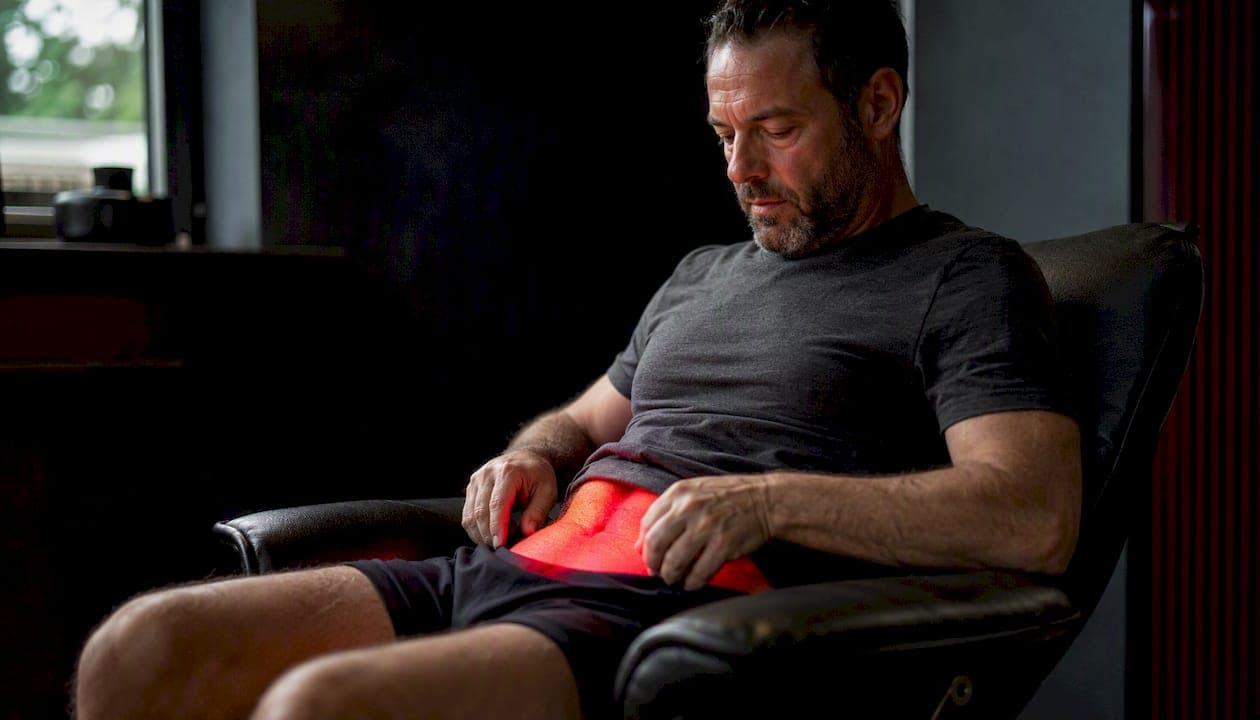
Red light therapy has not been proven to raise testosterone in men. No published human trial has measured a real, reliable jump in serum testosterone from red or near infrared light. What exists is a stack of promising cell and animal studies, a biologically plausible mechanism, and a whole lot of marketing that has outrun the science.
Before you try anything aimed at your hormones, talk to a clinician, especially if fertility or a possible low testosterone diagnosis is on your radar. And skip anything involving UV light or "testicle tanning." That's a different animal entirely, and it's dangerous.
Here's your trust checklist before you read another word:
- No large randomized controlled trials in men exist showing systemic testosterone increases from red or near infrared light.
- The strongest supporting evidence comes from in-vitro Leydig cell work and animal studies, not human trials.
- Major clinical resources still treat low testosterone as a diagnosis requiring bloodwork and evaluation, not a symptom you self-treat with light.
Key Takeaways
Red light therapy shows real cellular and animal evidence for supporting testosterone-related pathways, but no human trial has proven it raises serum testosterone.
| Point | Details |
|---|---|
| Evidence gap is real | Cell and animal studies show promise; no randomized human trials confirm testosterone increases. |
| Mechanism is plausible, not proof | Mitochondrial stimulation in Leydig cells offers a theory, not a guaranteed hormonal outcome. |
| UV and testicle tanning are dangerous | UV light raises genital tumor and fertility risks and is unrelated to safe red or near infrared use. |
| Heat management matters most | Even mild scrotal warming from a poorly designed device can suppress sperm production. |
| RedRockit fits the conservative approach | It uses specified wavelengths, active cooling, and app-guided sessions instead of unproven percentage claims. |
Table of Contents
- Does Red Light Therapy Increase Testosterone? What the Research Shows
- How Might Red and Near Infrared Light Affect Testosterone Production?
- Is Testicle Tanning Safe? Debunking the UV Myth
- What Are Safe Red Light Therapy Protocols for Testosterone Support?
- Who Should Consider Testicular Light Therapy?
- What Would a Clinician Say About Red Light Therapy and Testosterone?
- Why Primal Red Co Prioritizes Safety Over Hype
- A Safer Way to Experiment: RedRockit for Conservative Restoration
- Frequently Asked Questions
- Sources
Does Red Light Therapy Increase Testosterone? What the Research Shows
The honest answer: the evidence trail runs from petri dish to mouse cage, and stops well short of your bloodstream. That gap matters, and every man researching red light therapy testosterone claims deserves to see it laid out plainly.
At the cellular level, researchers have exposed Leydig cells, the testosterone-producing cells in the testes, to specific wavelengths and watched steroidogenic enzyme activity shift. Photobiomodulation studies in cells and small animals have shown changes in enzyme expression and some testosterone-related increases, using wavelengths like 670 nm and 808 nm on rodent and cell-culture models. That's a real signal. It's just not a signal measured in a man's blood test.
Move up to animal studies and the picture gets more interesting but no more conclusive. Some rodent research shows improved sperm parameters and local testicular tissue changes alongside modest hormonal shifts. A comprehensive evidence review focused specifically on men concludes there are no published randomized controlled trials showing red or near infrared light raises systemic testosterone in humans. Most of what supports the theory is in-vitro or animal data, plus scattered small human studies that measure surrogate outcomes like sperm motility rather than hormone levels directly.
What's missing, specifically:
- Large, randomized, placebo-controlled human trials measuring serum testosterone before and after treatment.
- Consistent wavelength and dosing protocols across studies, so results can actually be compared.
- Long-term follow-up data separating a genuine hormonal effect from lifestyle noise like sleep, training, and diet.
Until those exist, "photobiomodulation testosterone" research stays in the promising-but-unproven category. That's not a dismissal. It's where honest evidence review lands you.
How Might Red and Near Infrared Light Affect Testosterone Production?
The mechanism has real teeth, even if the clinical proof doesn't yet. Red and near infrared light get absorbed by cytochrome c oxidase, an enzyme in your mitochondria, which can boost ATP production, your cells' energy currency. Leydig cells are mitochondria-dense because steroidogenesis, the process of building testosterone from cholesterol, is metabolically expensive work. More usable cellular energy is a plausible lever for better hormone output, at least in theory.
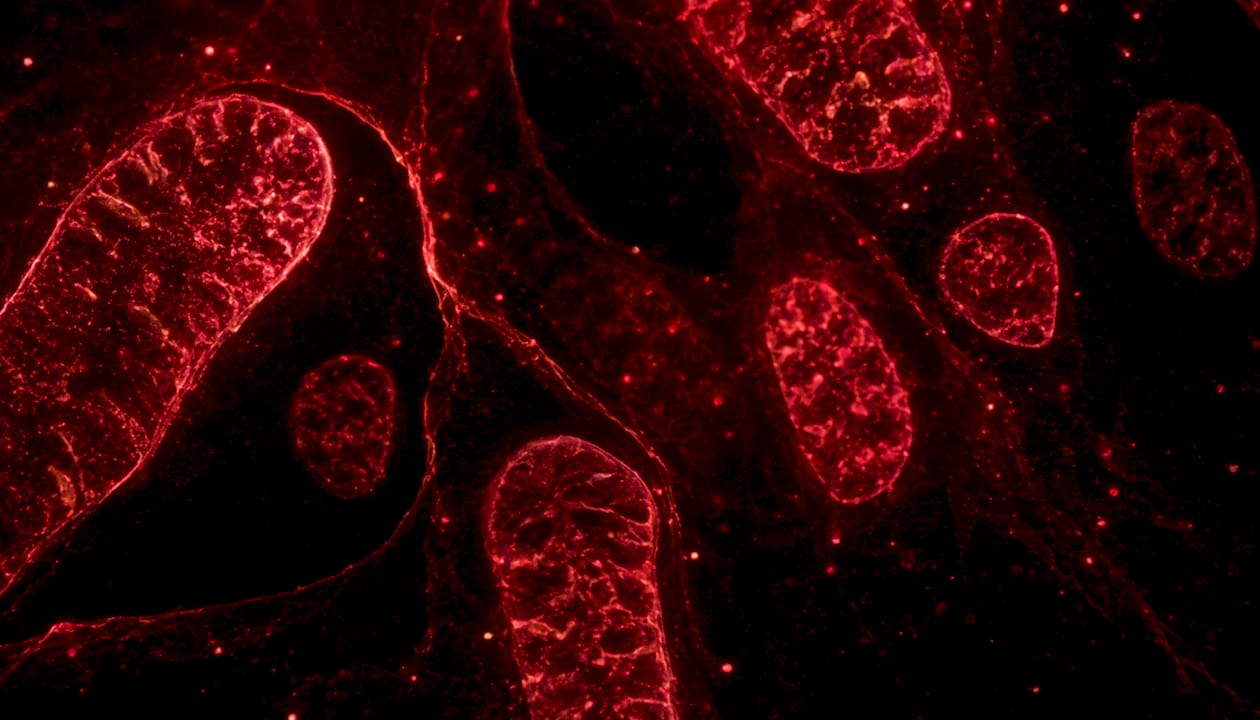
Wavelength matters here. Red light in the 630 to 670 nm range penetrates skin and shallow tissue well. Near infrared, roughly 810 to 850 nm, reaches deeper structures, which is part of why NIR gets more attention for testicular applications specifically.
Pro Tip: A mechanism being real doesn't mean the outcome is guaranteed. Plenty of biologically plausible pathways, like antioxidants reducing "oxidative stress," have failed to move the needle in actual clinical trials. Mitochondria light up under a microscope. Your labs are a different test entirely.
Is Testicle Tanning Safe? Debunking the UV Myth
Testicle tanning is not the same thing as red light therapy, and confusing the two could cost you your fertility. UV exposure and non-ionizing red or near infrared light are fundamentally different categories, and treating them as interchangeable is where this trend goes off the rails.
UV radiation damages DNA and drives skin cancer risk, a well-documented danger that medical resources like Mayo Clinic have flagged for decades. Red and near infrared light don't carry that same carcinogenic mechanism. But heat is its own separate risk, and it applies to both. Your scrotum sits outside the body specifically to keep testicular temperature a few degrees below core body temp. Spermatogenesis is heat-sensitive tissue. Even mild, sustained warming from a poorly managed device can suppress sperm production, regardless of what wavelength caused the heat.
An observational study tracking public interest in testicle tanning found the trend spiked after media promotion and warned it's evidence-lacking and genuinely risky, with UV exposure linked to genital tumors and reduced sperm counts. Some promoters lean on a 1939 study of UV-exposed skin to justify modern claims, an extrapolation that doesn't hold up given the different light type and exposure site involved.
Public interest in testicle tanning grew fast after media coverage, even though the underlying evidence for benefit doesn't exist. The trend carries real risk of UV-related harm, including genital tumors and reduced sperm counts.
Your safety checklist:
- Never use UV light or tanning beds anywhere near the testicles.
- Avoid direct skin contact with high-power near infrared panels; keep reasonable distance.
- Keep sessions short and monitor how the area feels; warmth or discomfort means stop.
- See a clinician if fertility or hormone concerns are driving your interest.
Pro Tip: If a device or influencer promises a specific testosterone percentage increase, that's your cue to close the tab. No legitimate human trial has produced that number yet.
What Are Safe Red Light Therapy Protocols for Testosterone Support?
If you're going to experiment, do it conservatively and treat it like a controlled trial of one, not a miracle cure. Stick with red light in the 630 to 670 nm range for surface tissue, or near infrared around 810 to 850 nm if you're targeting deeper structures. Those ranges show up consistently across the research because they balance penetration depth against safety.
On session guidance, practitioner-reported protocols suggest starting with short exposures, around 5 to 10 minutes, a few times weekly, from a reasonable distance rather than direct contact. Give it a real trial window, 4 to 8 weeks, and track more than how you feel. If you can get baseline and follow-up labs, do it. Subjective energy shifts are notoriously unreliable on their own.
When picking a device, check these boxes:
- Published irradiance specs, not vague marketing language.
- Real cooling or heat management so sessions don't cook the tissue you're trying to help.
- Documented EMF safety information.
- No guaranteed testosterone percentage claims anywhere in the marketing.
Pro Tip: Touch the device area with the back of your hand mid-session. If it's noticeably warm to the touch, that's heat building where it shouldn't. Stop, let it cool, and reconsider distance or session length next time.
Men who want a structured starting point instead of guesswork often turn to guided app protocols that manage timing and distance automatically, which removes a lot of the trial-and-error risk described above.
Who Should Consider Testicular Light Therapy?
This makes the most sense for men without a confirmed low-T diagnosis who are curious about non-prescription options and willing to track results, ideally with actual labs, not just vibes.
It's a poor fit, or an outright bad idea, if you're actively trying to conceive, have a history of testicular disease, an active infection, any suspicious lump or lesion, or recent scrotal surgery. Heat-sensitive conditions are a hard no for any close-proximity device use.
If fertility or a possible testosterone problem is genuinely in play, talk to an endocrinologist or urologist first. Bloodwork tells you things guesswork never will.
What Would a Clinician Say About Red Light Therapy and Testosterone?
brings a straightforward lens to this topic: interesting science, premature marketing claims, and a real need for caution around heat and unproven promises.
The cellular research is worth paying attention to. It just isn't a substitute for a testosterone panel or a conversation with your doctor. Start conservative, monitor what's actually changing, and don't let heat undo whatever benefit you're chasing.
Pro Tip: Pair any light therapy experiment with the levers that reliably move testosterone: consistent sleep, resistance training, and dropping excess body fat. None of those require a device, and all three have decades of data behind them.
Why Primal Red Co Prioritizes Safety Over Hype
Primal Red Co builds for restoration, not miracle percentages. We'd rather hand you a conservative, evidence-aware routine than a headline number that can't survive a real clinical trial. Talk to your clinician before targeting your hormones with anything.
A Safer Way to Experiment: RedRockit for Conservative Restoration
If you've read this far, you already know the responsible path: conservative wavelengths, managed heat, tracked results, no wild promises. That's exactly what we built RedRockit around.

This is a publisher recommendation, and we'll be straight with you about why: RedRockit uses specified wavelength ranges instead of a one-size-fits-all blast, includes real cooling and heat management so you're not gambling with scrotal temperature, and pairs with the Rockit IQ app for guided session protocols instead of leaving you to guess at distance and timing. None of that replaces bloodwork or a doctor's input. It just gives you a safer container for the conservative experiment this article just walked you through.
Start low, track your own results over a few weeks, and see the RedRockit Activation Method if you want a structured way to begin.
Frequently Asked Questions
Does red light therapy actually increase testosterone? Not proven in humans. Cell and animal studies suggest a plausible pathway through Leydig cell mitochondria, but no published randomized controlled trial has shown a reliable testosterone increase in men.
Is near infrared light better than red light for testosterone? Near infrared, around 810 to 850 nm, penetrates deeper tissue, which is why it draws more attention for testicular applications than surface-level red light in the 630 to 670 nm range.
Can red light therapy improve sperm health even without raising testosterone? Animal and in-vitro data on sperm parameters look more promising than the data on systemic testosterone, though human trial confirmation is still limited.
Is testicle tanning the same as red light therapy? No. Testicle tanning typically involves UV exposure, which carries documented cancer and fertility risks. Red and near infrared light are non-ionizing and work through a different mechanism entirely.
How long before I'd notice any change from red light therapy? Practitioner-reported protocols suggest trial periods of 4 to 8 weeks with short, conservative sessions, ideally paired with baseline and follow-up bloodwork rather than relying on how you feel.
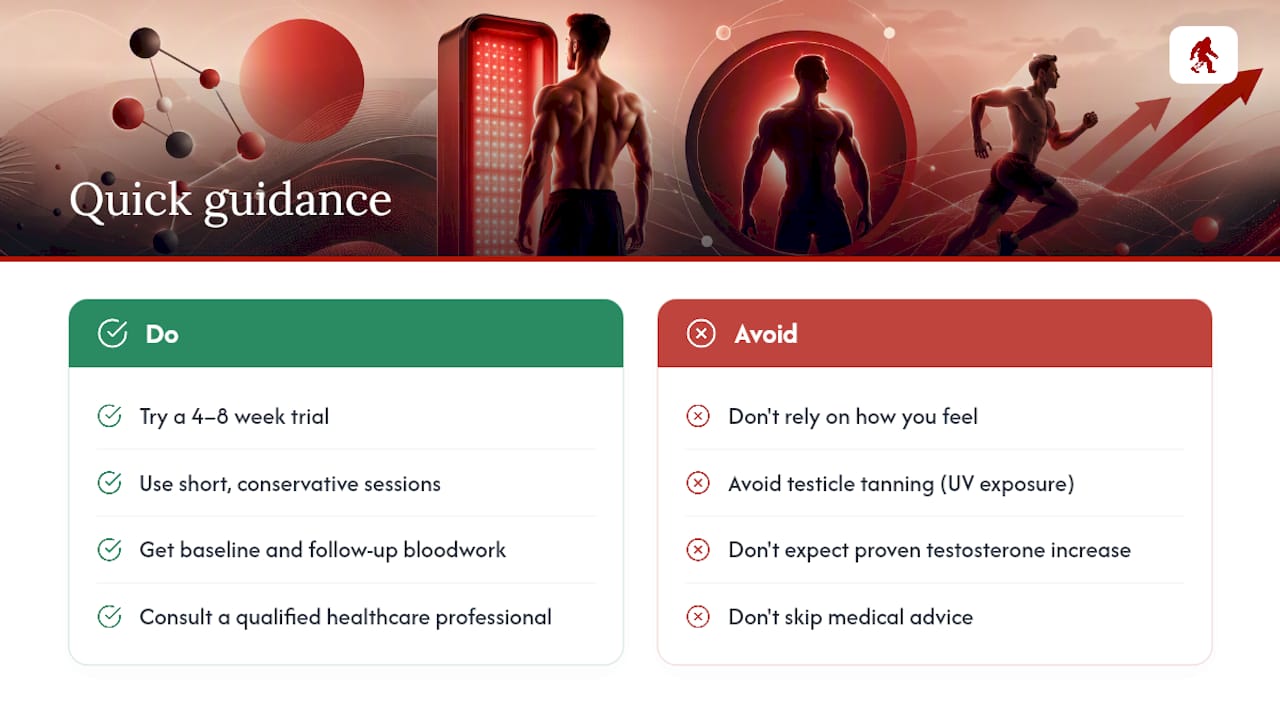
This article is general information, not a substitute for advice from a qualified doctor. Consult a qualified healthcare professional about your own circumstances before acting on anything here.
Sources
- Evaluating the Public's Interest in Testicle Tanning: Observational Study - PMC
- Redlighttherapy
- PMC article on photobiomodulation (example source) - NCBI
- Low testosterone (male hypogonadism) - Cleveland Clinic