
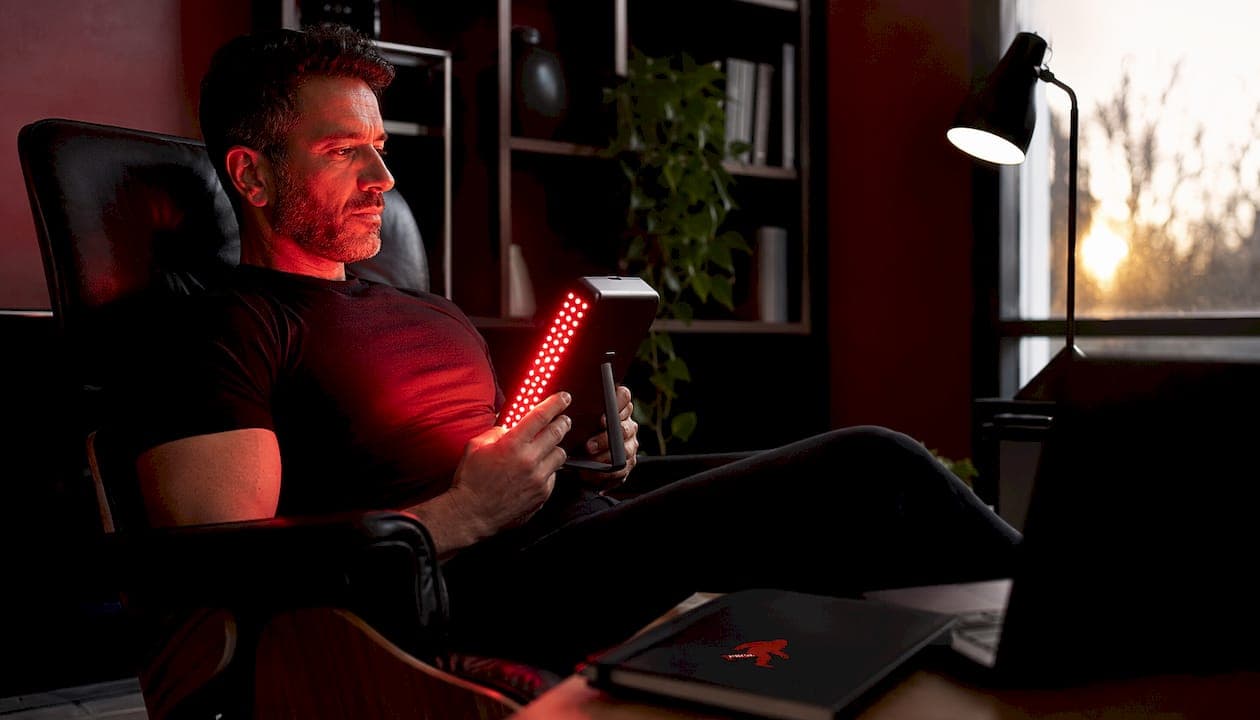
For men over 30 who want restored energy, drive, and reliable recovery, RedRockit from Primal Red Co. is the top pick. It pairs the right wavelengths with usable irradiance and a form factor you'll actually use every day. That last part matters more than any spec sheet.
TL;DR:
- RedRockit covers both red (~660 nm) and near-infrared (~850 nm) wavelengths, targeting surface tissue and deeper muscle
- Irradiance is reported at the recommended use distance, not just at the emitter
- Routine-friendly design with the Rockit IQ companion app for guided sessions
- Backed by clinical research signals; follow FDA clearance guidance when evaluating any device
- Start here: pick 3 sessions this week, 10 minutes each, and track how you feel by day 7
Table of Contents
- What specs actually matter in the best red light devices?
- How red and near-infrared light restore energy and drive
- What to check before you buy any red light device
- How to use red light devices: a starter routine for men over 30
- Is red light therapy safe, and what does the evidence actually support?
- Why consistency beats raw power for men focused on energy
- What men over 30 say about red light therapy results
- Accessories and complementary products that improve your sessions
- Key Takeaways
- The signal is still there
- RedRockit: built for men who aren't waiting to crash
- Useful sources for going deeper
What specs actually matter in the best red light devices?
The two numbers that separate a real device from a marketing prop are wavelength and irradiance at distance.
| Spec | What to Look For | Why It Matters |
|---|---|---|
| Red wavelength | 630–660 nm | Penetrates 1–2 mm; targets skin, collagen, surface tissue |
| Near-infrared (NIR) | 830–850 nm | Penetrates 3–5 cm; reaches muscle, joints, deeper tissue |
| Irradiance at use distance | 30–100 mW/cm² at the use distance | Determines actual dose delivered to your body |
| Form factor | Panel, handheld, or wrap | Affects how often you'll actually use it |
| Regulatory signal | FDA clearance or published clinical studies | Confirms the device meets a credible evidence standard |
Clinically recommended wavelengths cluster around red (630–660 nm) and NIR (830–850 nm). Devices that include both ranges cover surface and deeper tissues in a single session.
- Red light handles skin, collagen production, and surface-level recovery
- NIR goes deeper, reaching muscle groups, joints, and vascular tissue
- Irradiance at the skin is the number that counts, not input wattage
- FDA clearance or published studies separate credible devices from unregulated gadgets
RedRockit is built around this dual-wavelength approach, with irradiance specs reported at the recommended session distance, not inflated at the emitter.
How red and near-infrared light restore energy and drive
The mechanism is called photobiomodulation. Light at specific wavelengths is absorbed by mitochondria, which ramps up ATP production. More ATP means more cellular energy. Less inflammation. Better microcirculation. That's the signal your body has been waiting to receive again.
- Mitochondrial ATP upregulation: red and NIR light stimulate cytochrome c oxidase, the enzyme that drives energy production inside cells
- Reduced inflammation: lower inflammatory markers support faster tissue repair and less systemic fatigue
- Improved microcirculation: better blood flow to muscle and connective tissue accelerates recovery
- Sleep quality: consistent evening sessions have been associated with improved sleep onset in several trials
Red light works at the surface. NIR goes deeper, reaching the muscle belly and joint capsule. For men focused on male vitality after 40, that combination is what makes the difference between a skin gadget and a real restoration tool.
Clinical note: Published trials show reliable benefits for skin texture and wound healing at home; evidence for systemic energy and recovery effects is growing and depends on NIR coverage and device quality.
What to check before you buy any red light device
Goal first. Device second. That order matters.
- Recovery and energy: panel or targeted wrap with both 660 nm and 850 nm
- Skin health: mask or handheld with strong 630–660 nm output
- Joint pain: NIR-dominant device (810–850 nm) positioned close, 3–6 inches
- Cognitive goals: transcranial devices are a separate, specialized category
Once you know your goal, run through this checklist:
- Wavelengths listed: both red and NIR for most men's restoration goals
- Irradiance at distance listed in mW/cm², not just wattage
- Distance guidance: minimum useful irradiance at skin is 30 mW/cm²; target 50–100 mW/cm²
- FDA clearance or peer-reviewed clinical studies linked on the product page
- Session timer, mounting option, or app to remove friction
- Warranty, customer support, and return policy clearly stated
Pro Tip: A device you use four times a week at moderate irradiance will outperform a high-spec panel you use twice a month. Prioritize the setup that fits your actual morning or evening routine.
How to use red light devices: a starter routine for men over 30
You don't need a complex protocol. You need one you'll repeat.
-
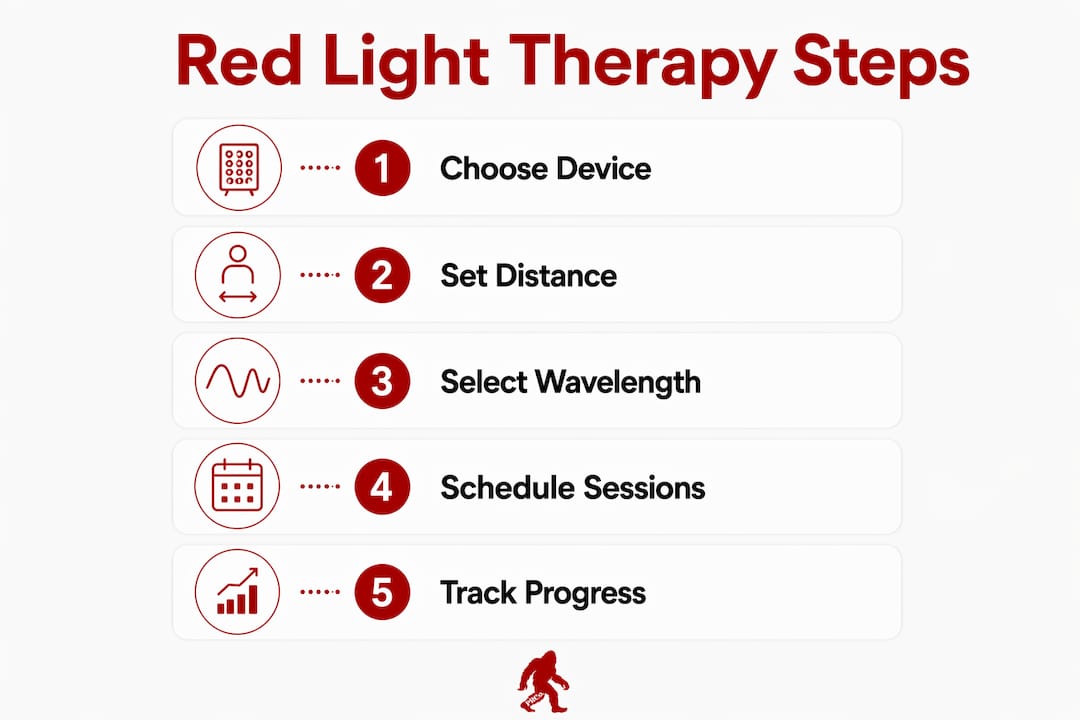
Set up distance: position the device 6–8 inches from the target area for most sessions; move to 3–6 inches for joint or targeted muscle work
-
Eye protection: wear the included goggles or close your eyes; NIR is invisible but still reaches retinal tissue
-
Session length: start at 5–10 minutes per area; work up to 10–20 minutes as tolerated
-
Frequency: 3–5 sessions per week is the clinician-recommended starting range
-
Sequencing: full-body areas first, then targeted spots; post-workout timing (within 2 hours) works well for muscle recovery
-
Log it: note energy, sleep quality, and soreness on a simple 1–10 scale each week
-
Timeline: expect first subjective changes in weeks 2–4; evaluate objective outcomes at 8–12 weeks
Distance is the most overlooked variable. Doubling your distance from the device reduces delivered intensity by roughly four times. Stay consistent with your positioning every session.
Is red light therapy safe, and what does the evidence actually support?
Red light therapy is generally safe for home use when you follow device guidance. But "generally safe" isn't the same as "use however you want."
- Strongest evidence: skin health, collagen production, wound healing, and surface-level inflammation
- Growing evidence: muscle recovery, joint pain, and systemic fatigue reduction when NIR coverage is adequate
- Limited evidence: cognitive and hormonal claims unless the device is specifically designed and studied for those applications
- Contraindications: photosensitizing medications and active cancer treatment warrant a conversation with your clinician before starting
- Overexposure risk: the biphasic dose response is real. Too much light can inhibit the same benefits you're chasing. Start short, increase gradually
- Device overheating: follow manufacturer distance and session-length guidelines; don't assume more time equals more benefit
- Eye safety: always use goggles, especially with NIR wavelengths
Devices with FDA clearance and published clinical data are more reliably effective than unregulated consumer products. Check before you buy.
Why consistency beats raw power for men focused on energy
The best red light therapy device is the one you actually use. That's not a platitude. It's what clinicians consistently emphasize when comparing outcomes across device types.
A compact, routine-friendly device used five days a week delivers more cumulative dose than a large panel used sporadically. Think about the man who swapped a full-size floor panel for a targeted device he could use while reading before bed. Same wavelengths, lower setup friction, and he actually stuck with it past week three. His results came from repetition, not raw output.
- Look for a companion app or built-in timer that removes the "how long was that?" guesswork
- Simple mounting or placement options matter more than you'd expect
- A device that fits your existing routine, morning or evening, will get used; one that requires rearranging your space probably won't
Pro Tip: The Rockit IQ app built into the RedRockit system gives you guided session protocols so you're not guessing distance, timing, or frequency. That structure is what turns a device into a consistent restoration routine.
What men over 30 say about red light therapy results
Men using red light devices as part of a daily restoration routine most often report changes in three areas: sleep quality, post-workout recovery speed, and morning energy levels. These aren't overnight results. They show up after weeks of consistent use, which is exactly why the routine-first approach matters.
The pattern that comes up repeatedly is this: men who commit to a set time and place for sessions, rather than fitting them in whenever, are the ones who notice real change. Recovery that used to take two days starts happening overnight. The drag that used to hit mid-afternoon starts arriving later, or not at all. That's the signal coming back online.
Accessories and complementary products that improve your sessions
The device is the foundation. What you pair with it determines how much you get out of each session.
- Protective goggles: non-negotiable for NIR sessions; most quality devices include them, but replacements are worth having
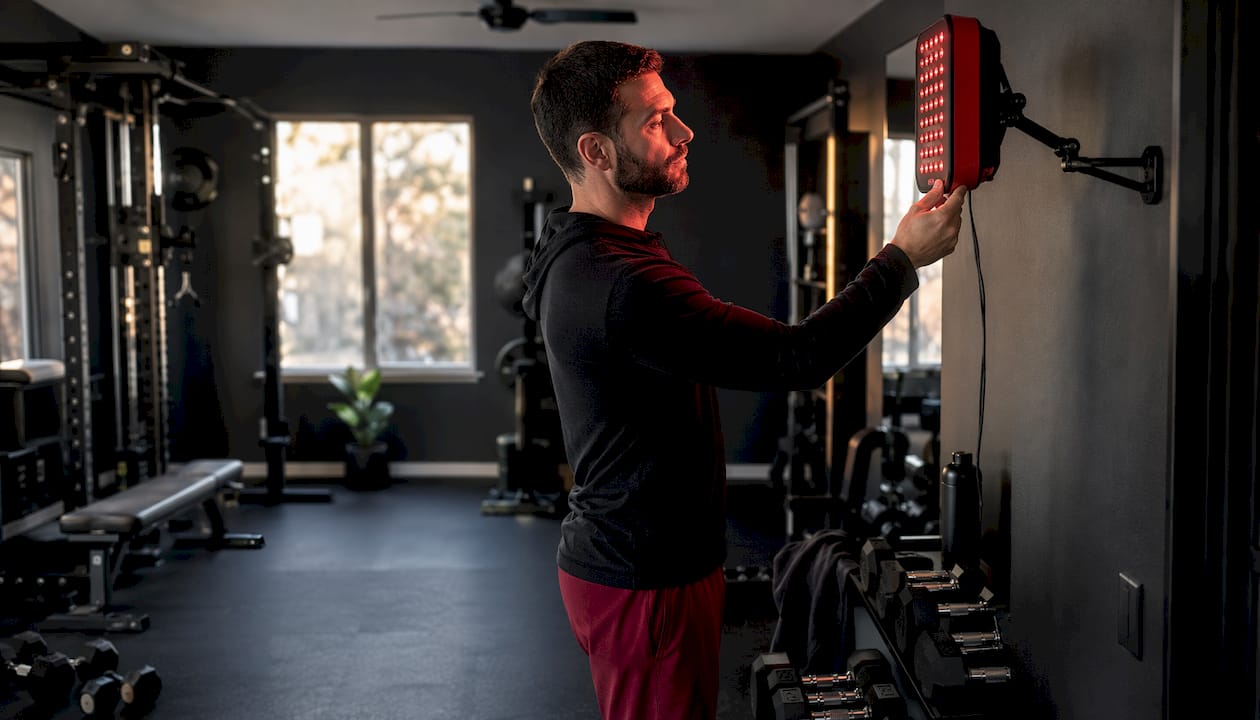
- Mounting stand or wall bracket: keeps distance consistent and frees your hands; critical for adherence
- Foam roller or massage tool: used immediately after a session to compound the circulation and recovery benefit
- Sleep tracking app: pairing sessions with sleep data (Oura Ring, Whoop, or Apple Health) gives you objective feedback on recovery trends
- Supplements for men over 40: magnesium glycinate and zinc support the same cellular recovery pathways that red light activates; stacking them thoughtfully amplifies the baseline
None of these are required. But each one reduces friction, improves feedback, or compounds the benefit of the light itself.
Key Takeaways
The most effective red light device for men over 30 covers both 630–660 nm and 830–850 nm wavelengths, delivers appropriate irradiance at the use distance, and fits a routine you'll actually repeat regularly.
| Point | Details |
|---|---|
| Match device to goal | Recovery and energy need both red and NIR wavelengths; skin-only goals can use red alone. |
| Irradiance at distance | Target a sufficient irradiance level at the skin; input wattage alone does not indicate dosage. |
| Frequency over intensity | 3–5 sessions per week consistently outperforms sporadic high-power sessions. |
| Verify credentials | FDA clearance or published clinical studies separate credible devices from marketing noise. |
| RedRockit for men 30+ | Primal Red Co.'s RedRockit pairs dual wavelengths, usable irradiance, and the Rockit IQ app for guided daily sessions. |
The signal is still there
Most men over 30 aren't broken. The signal just got quieter. Red light therapy, used consistently with the right wavelengths and a routine that actually fits your life, is one of the few tools with real physiological backing for energy, recovery, and drive. Not a cure. Not a replacement for sleep, training, or nutrition. But a genuine input your mitochondria can use.
The mistake most men make is chasing the highest-spec device instead of the one they'll use every day. Adherence is the variable that separates results from regret. A 10-minute session at 6 inches, five days a week, beats a 20-minute session you do twice a month because setup is a hassle.
Start simple. Track your sleep and energy for 30 days. Let the data tell you whether it's working.
RedRockit: built for men who aren't waiting to crash
Most red light devices are designed for spas or skin clinics. RedRockit was built for men who have a job, a family, and 15 minutes before bed. It covers both 660 nm and 850 nm wavelengths, delivers usable irradiance at the recommended session distance, and pairs with the Rockit IQ app so you always know exactly what to do and for how long.

No guessing. No complicated setup. Just a repeatable signal your body can actually use. RedRockit is the restoration device for men who want to stay in the game without waiting for a crisis to force the conversation.
| Spec | RedRockit |
|---|---|
| Wavelengths | 660 nm (red) + 850 nm (NIR) |
| Recommended session length | 10–20 minutes per area |
| Companion app | Rockit IQ (guided protocols) |
| Form factor | Targeted, routine-friendly |
Ready to restore the signal? Start with the RedRockit Activation Method and run your first session this week.
This article is general wellness information, not medical advice. Confirm current guidelines with a qualified clinician for your specific situation.
Useful sources for going deeper
- What to Look for in Red Light Therapy: A Product Guide Backed by Science (PMC) — Best for verifying wavelength standards, FDA clearance criteria, and clinical evidence thresholds
- How to Use Red Light Therapy at Home: A Clinician's Guide (Dr. Michael Ruscio) — Best for starter protocols, session frequency, and the biphasic dose response
- Best Red Light Therapy Devices: A Clinician's Honest Review (Dr. Michael Ruscio) — Best for understanding irradiance at distance and how to read manufacturer specs
- How to Use Red Light Therapy: Distance, Duration, and Protocol (LightTherapyIQ) — Best for the inverse square law, distance guidance, and goal-specific dosing charts
- How to Use Red Light Therapy: Guide of At-Home Devices (Wareable) — Best for setting realistic expectations on skin vs. systemic evidence
- Red Light Therapy Protocols: Dosing Charts for Every Device — Best for matching device irradiance to session length by use case
Recommended
- Male Vitality After 40: Energy, Drive, Recovery, and Restoration | RedRockit
- Supplements for Men Over 40: Vitality, Energy, and Restoration | RedRockit
- Low Testosterone Symptoms in Men: What Changes After 40 Can Feel Like | RedRockit
- How to Increase Testosterone After 40: What Men Search Before TRT | RedRockit