

TRT works for men with confirmed low testosterone, and the recent TRAVERSE trial cleared it of the heart attack fears that dominated headlines for a decade. But it's not a free pass. The real TRT risks are erythrocytosis (thickened blood), fertility suppression, and worsening sleep apnea. Confirm low T with two morning blood tests, get baseline hematocrit and PSA, and build a monitoring plan before your first injection.
TL;DR:
- Men with confirmed low testosterone should undergo thorough baseline testing and close monitoring, especially checking hematocrit levels to prevent dangerous erythrocytosis.
- TRT carries specific risks such as increased rates of atrial fibrillation, kidney injury, and blood clots, which must be weighed against benefits for individual health profiles.
- Fertility is profoundly impacted by TRT, with sperm production often stopping and recovery requiring months or years, making pre-treatment fertility planning essential.
- Patients with recent heart attacks, untreated prostate or breast cancer, or high baseline hematocrit should avoid TRT or seek specialist evaluation before starting.
- A structured, multi-month trial with clear goals, objective lab rechecks, and a detailed monitoring plan is crucial for safe and effective TRT use.
Table of Contents
- What Major Trials and Guidelines Say About TRT Risks
- System-by-System: Where the Real TRT Dangers Show Up
- Baseline Testing and a Real Monitoring Schedule
- Who Should Avoid TRT or Wait
- Setting Up a TRT Trial the Right Way
- Nurse Rachel's Checklist for Your Next Appointment
- Why the Loudest TRT Advice Online Misses the Point
- What to Try Before, or Alongside, TRT
- Sources
What Major Trials and Guidelines Say About TRT Risks
For years, doctors hesitated to prescribe testosterone because of a genuine fear: would it stop hearts? That fear had teeth. Older observational studies and a 2013 FDA warning about heart attack and stroke risk made plenty of physicians gun-shy, and the caution trickled down to patients who showed up at appointments already braced for a "no."
The TRAVERSE trial changed the conversation. It found no increase in the composite outcome of death, heart attack, or stroke between men on TRT and men on placebo. That's the headline result, and it's a real one. But TRAVERSE also flagged something the press releases glossed over: higher rates of atrial fibrillation, acute kidney injury, and pulmonary embolism in the treatment group. Cleared of one danger doesn't mean cleared of all of them.
Guideline bodies have caught up to this nuance. The Endocrine Society and the American Academy of Family Physicians both stress the same starting point: confirm the diagnosis before you confirm the treatment. That means:
- Two separate morning total testosterone measurements, not one rushed draw at 3 p.m.
- A shared decision-making conversation about realistic benefits versus documented risks
- A monitoring plan set up before the first prescription, not after a problem shows up
There's a distinction here that gets lost constantly. Prescribing TRT for a man with clinically confirmed hypogonadism, low labs plus real symptoms, is a different medical decision than prescribing it for a 45 year old whose testosterone sits at the low end of normal and who just feels run down. Both scenarios get marketed the same way online. They are not the same risk profile, and no responsible clinician treats them identically.
System-by-System: Where the Real TRT Dangers Show Up
Generic warnings don't help you. What helps is knowing exactly which body system is affected, how often, and what number should make you or your clinician pull the brakes.
Heart and blood vessels
TRAVERSE gave us actual data showing the composite cardiovascular event rate was similar between the TRT group and placebo, suggesting no increased overall cardiovascular risk. But look at the secondary findings:
By the numbers (TRAVERSE trial): Atrial fibrillation occurred at higher rates in men on TRT compared to placebo. Acute kidney injury and pulmonary embolism were also more common with TRT.
None of those gaps are enormous in isolation. Stacked together, they tell you TRT isn't cardiovascularly neutral, it shifts risk into specific channels rather than eliminating it. If you have an irregular heartbeat history, kidney issues, or a prior clotting event, that context matters more to your decision than the reassuring composite headline.
Erythrocytosis: the one risk that's actually preventable
Testosterone stimulates red blood cell production. Push levels up artificially, and hematocrit, the percentage of blood made up of red cells, climbs with it. Thicker blood clots more easily, and that's the mechanism behind most of the serious TRT complications you'll read about.
The thresholds are specific, not vague. A baseline hematocrit above 48% is generally a reason to avoid starting TRT at all. Once you're on therapy, a hematocrit climbing past 54% means stopping treatment, reducing dose, or getting a therapeutic phlebotomy, sometimes all three. This is, frankly, the single most manageable danger on this entire list: check it, and you catch it before it becomes a clot.
Prostate and PSA
The prostate cancer fear around testosterone therapy has mostly aged out of the current evidence. Review data doesn't show a clear link between TRT and new prostate cancer diagnoses. That doesn't mean you skip monitoring. PSA still gets checked at baseline and annually, adjusted for your age, and any concerning bump gets a urology referral instead of a shrug.
Fertility: the risk nobody warns you about loudly enough
This is where Primal Red Co gets genuinely frustrated with how TRT gets marketed. Exogenous testosterone shuts down your body's own signal to produce sperm, the same feedback loop that regulates natural hormone production gets told to stand down. Sperm counts can crater, sometimes to zero. Recovery after stopping can take months, occasionally years, and some men need assisted reproductive help to get there.
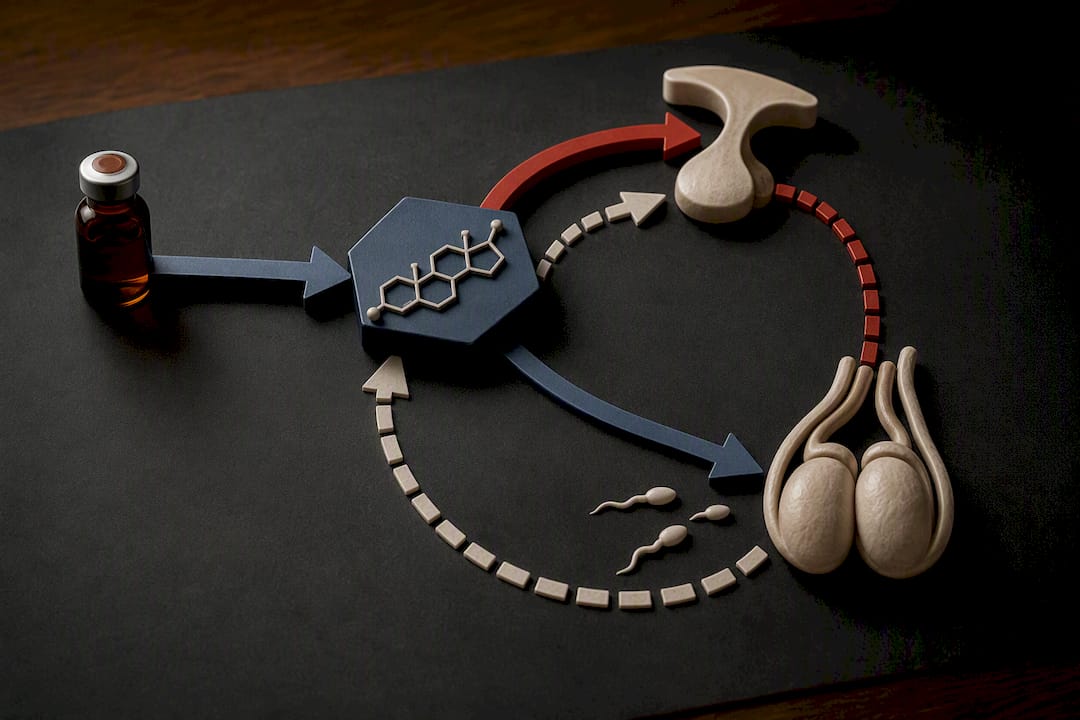
If you're even loosely planning to have more kids, this conversation needs to happen before you start, not after your levels drop. Fertility-preserving alternatives exist, clomiphene therapy among them, and they deserve a real conversation with a specialist rather than an afterthought.
Sleep apnea, skin, and fluid retention
TRT can worsen obstructive sleep apnea, which is one more reason screening matters before you start, not just for comfort but because untreated OSA and cardiovascular risk are already linked on their own. Acne and oilier skin show up often enough to mention, usually manageable with basic dermatologic care. Gynecomastia (breast tissue growth) and ankle or facial fluid retention happen less often but aren't rare, and both typically respond to dose adjustments.
Baseline Testing and a Real Monitoring Schedule
A prescription without a monitoring plan isn't medical care, it's a guess with extra steps. Here's the sequence a responsible plan actually follows:
- Before starting: two morning total testosterone draws, baseline hematocrit and hemoglobin, PSA appropriate to your age, liver function tests, a metabolic panel, and a conversation about sleep apnea symptoms and cardiac history.
- At 3 months: recheck testosterone and hematocrit, adjust dose based on both numbers and how you actually feel.
- At 6 months and annually after: repeat testosterone, hematocrit, and PSA; keep tracking symptoms the whole way through, not just at checkpoints.
- Any time something feels wrong: don't wait for the scheduled draw if you notice new chest pain, leg swelling, or shortness of breath.
Stopping or pausing therapy isn't a failure, it's the plan working as designed.
Pro Tip: Ask your clinician for a written lab schedule at your very first visit, dates, thresholds, and all, and keep your own folder of every result. Clinics that can't hand you a monitoring calendar usually aren't planning to follow one.
Who Should Avoid TRT or Wait
Some situations rule TRT out entirely. Others just mean the conversation needs to go deeper before anyone reaches for a prescription pad.
Absolute exclusions:
- Untreated prostate cancer or male breast cancer
- Baseline hematocrit above 48%
- Heart attack or stroke within the past six months
- Untreated, severe heart failure
Relative exclusions, meaning proceed only with real specialist input:
- Actively planning to conceive in the near term
- Severe, untreated obstructive sleep apnea
- Poorly controlled polycythemia
- Significant urinary symptoms from an enlarged prostate
If you land in any of these categories, the right move is a specialist referral, an honest fertility conversation if that applies, and a real look at non-hormonal alternatives before testosterone itself is even on the table.
Setting Up a TRT Trial the Right Way
TRT isn't an all-or-nothing lifetime commitment on day one. Treat it as a structured trial with a defined endpoint, not an open-ended experiment.
Men with genuinely confirmed hypogonadism tend to see real gains in libido, energy, and lean mass. What TRT doesn't reliably deliver: dramatic cognitive sharpness or guaranteed longevity benefits. Anyone promising those outcomes is selling you something beyond the evidence.
A sound trial plan looks like this:
- Three to six months on therapy before any real judgment gets made
- A target testosterone range agreed on up front, not adjusted after the fact to justify staying on it
- Specific symptoms tracked, sexual function, energy, sleep quality, not a vague "do you feel better"
- Objective labs rechecked at each interval: testosterone, hematocrit, and PSA
Pro Tip: Before your next appointment, write down three questions: How will we track fertility if I want kids later? What's our plan if hematocrit climbs? What does "not working" look like, and when do we stop? Clinicians respect specific questions, and specific questions get specific answers.
Nurse Rachel's Checklist for Your Next Appointment
Walk in prepared. Bring your prior labs if you have them, write down your actual symptoms instead of trying to remember them on the spot, and note where you stand on having more kids before anyone brings up a needle.
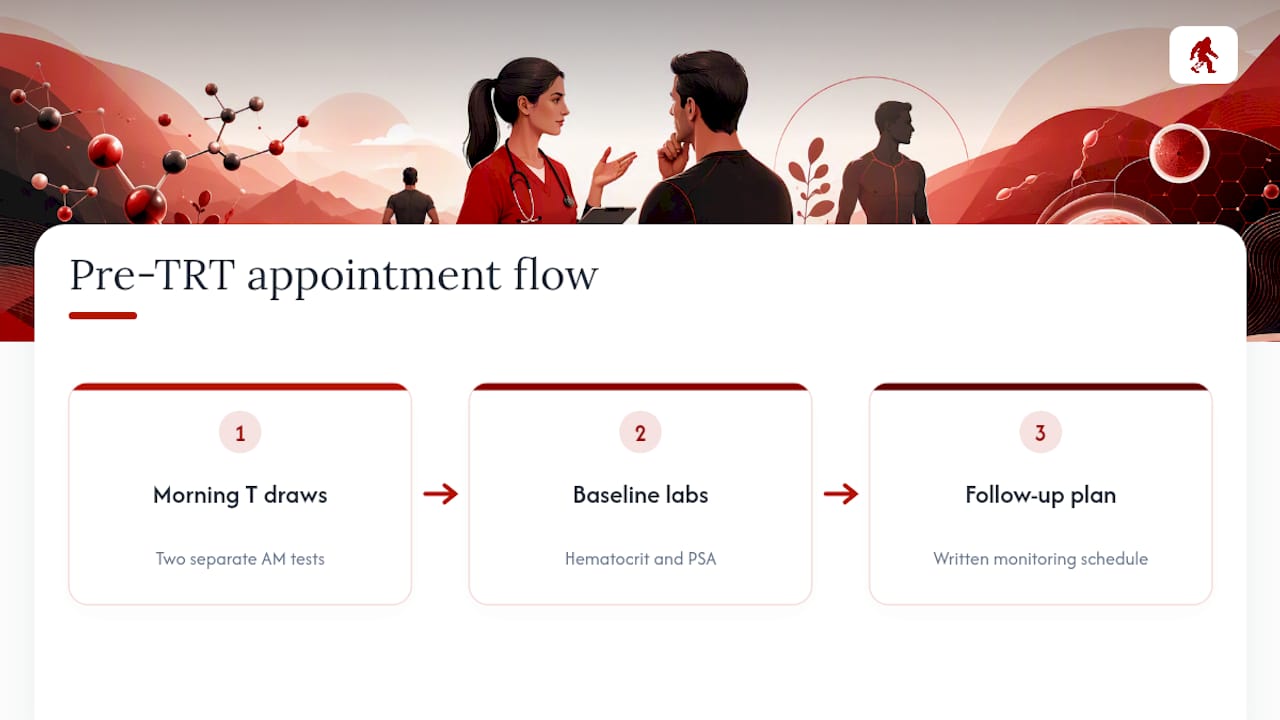
At the visit itself, confirm three things happen: two separate morning testosterone draws (not one), baseline hematocrit and PSA, and a written follow-up schedule you leave with, not a vague "we'll see how it goes."
Red flags that should send you walking out the door: a same-day prescription with no lab work, a telehealth visit that skips monitoring entirely, or any clinic promising a "fix" without ever drawing your blood first. That pattern predicts unmonitored hematocrit spikes, and unmonitored hematocrit spikes are exactly how men end up in the ER instead of just annoyed at a copay.
For more on what to check before committing to therapy, our guides on TRT side effects and what to try before TRT go deeper into the specifics.
Why the Loudest TRT Advice Online Misses the Point
Most of what circulates about testosterone therapy online splits into two camps: reflexive fear or reflexive hype. Neither camp reads the actual trial data. TRAVERSE didn't prove TRT is dangerous, and it didn't prove it's risk-free either. It proved something more useful and less quotable: the risks are real, specific, and manageable if someone is actually watching the numbers.
The conventional advice tells men to "just get labs done." What it skips is the harder truth, that fertility conversations happen too late, erythrocytosis gets caught only after symptoms appear instead of on a routine draw, and too many clinics treat monitoring as optional paperwork instead of the actual point of the treatment.
If there's one priority above the rest, it's this: erythrocytosis is the risk you can control almost completely with a simple blood draw. Prioritize that number, protect your fertility conversation early, and don't let anyone rush you past either one.
— Nurse Rachel
What to Try Before, or Alongside, TRT
TRT isn't the only lever, and for plenty of men it isn't even the first one worth pulling; some explore BioSync-XT Natural Testosterone Support & Booster as a non-prescription option to support testosterone naturally. Sleep optimization, meaningful weight loss, resistance training, cutting back on alcohol, and treating undiagnosed sleep apnea all move testosterone numbers, sometimes enough to close the gap entirely. Reviewing medications that suppress hormone production with your doctor belongs on that list too.
This is where Primal Red Co built RedRockit: a private-use red light wellness device designed for men who feel the shift coming and want to do something about it before a prescription is the only option on the table. It's not TRT, and we're not pretending it replaces confirmed medical treatment for documented hypogonadism. What it does is give you a daily restoration routine, guided through the companion Rockit IQ app, aimed at supporting energy, drive, and recovery without a needle or a monitoring calendar. If your labs come back genuinely low with real symptoms attached, TRT under proper supervision is still the right medical path, and no device changes that math. But if you're in the gray zone, feeling the drop without a diagnosis demanding a prescription, RedRockit is built for exactly that window. Visit the male vitality after 40 page to see how the routine works and get your device moving before bigger decisions land on your table.
This article is general information, not a substitute for advice from a qualified doctor. Consult a qualified healthcare professional about your own circumstances before acting on anything here.
Sources
- What men should know about proposed changes for testosterone therapy | Harvard Health
- Testosterone Replacement Therapy (TRT): What It Is | Cleveland Clinic
- Testosterone replacement therapy: male hypogonadism | American Family Physician (AAFP) 2024