
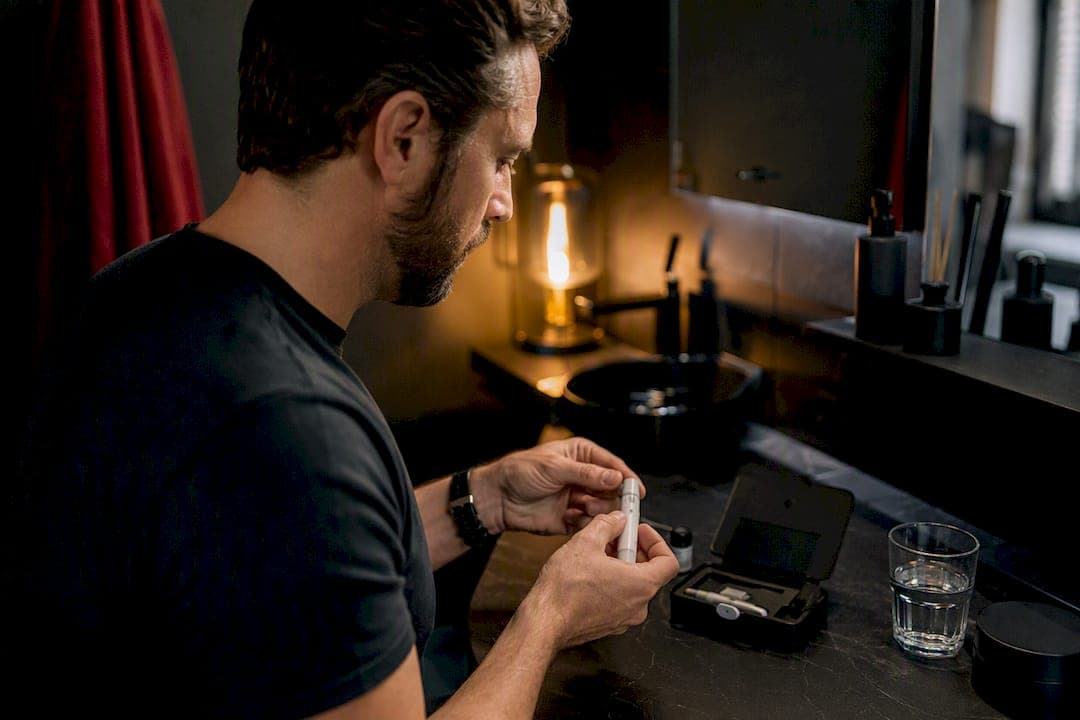
Most men on TRT do not need an aromatase inhibitor. That is the verdict, and it surprises a lot of guys who came here already Googling anastrozole dosing. The right first move is a sensitive estradiol test, timed correctly, matched against your actual symptoms, before any drug enters the picture.
Here is your immediate checklist:
- Test smart. Order a sensitive estradiol assay (LC-MS/MS), not the standard immunoassay your lab defaults to.
- Match labs to symptoms. A number on a page means nothing without your real-world experience attached to it.
- Try the boring fixes first. Dose timing, injection frequency, and body composition move estradiol more than most men expect.
Contact your prescriber promptly if you notice rapid breast tenderness, a palpable lump under the nipple, a sensitive-assay estradiol reading far outside your clinic's normal range, or a sudden crash in mood or sexual function. Those are not "wait and see" situations.
Key Takeaways
Managing estrogen on TRT comes down to testing with a sensitive assay, correlating results with real symptoms, and fixing protocol and lifestyle factors before ever considering medication.
| Point | Details |
|---|---|
| Test before you treat | Order a sensitive LC-MS/MS estradiol assay since standard immunoassays misread male-range levels. |
| Balance beats elimination | Target roughly 20 to 40 pg/mL as a reference point, not a rule, since symptoms vary by individual. |
| Fix the protocol first | Splitting injections and reducing body fat often lower estradiol without any medication. |
| Avoid oncology-level AI dosing | Low-start doses like 0.25 to 0.5 mg anastrozole weekly, with lab follow-up, are standard in TRT care. |
| Watch for red flags | Rapid breast tenderness, a palpable lump, or severe mood or sexual changes warrant prompt clinician contact. |
| Support the fixable half | Primal Red Co's RedRockit offers an adjunctive restoration routine for energy and recovery, alongside, not instead of, proper testing and clinical care. |
Table of Contents
- Why Estradiol Matters When You're on TRT
- How TRT Raises Estrogen: The Aromatization Problem
- High Estrogen vs. Low Estrogen: What the Symptoms Actually Look Like
- Which Labs to Order and When to Draw Them
- The Stepwise Way to Manage Elevated or Low Estradiol
- What to Try Before Reaching for a Prescription
- Sources
Why Estradiol Matters When You're on TRT
Estradiol is not the villain in the TRT story. It is the most active form of estrogen in your body, and it does heavy lifting for bone density, cardiovascular health, and sexual function. It also shapes mood, cognition, and how your joints feel when you get up out of bed.
Push estradiol too low, and you feel it fast: joint pain that shows up out of nowhere, flat libido, brain fog, and bone density that quietly erodes over years. Push it too high, and you get water retention, tender nipples, mood swings, and in some cases actual breast tissue growth. Neither extreme is the goal. Balance is.
- Bone strength depends on estradiol, not just testosterone.
- Cardiovascular and lipid markers respond to your E2 level, not just your total T.
- Mood, cognition, and libido all have an estrogen-dependent piece.
Over-suppressing estradiol does more long-term damage than a mild-to-moderate elevation ever will. That's why reflexive, prophylactic use of an aromatase inhibitor is one of the more common self-inflicted mistakes men make on TRT.
How TRT Raises Estrogen: The Aromatization Problem
Testosterone converts to estradiol through an enzyme called aromatase. This isn't some rare side reaction. It happens constantly, in fat tissue, the brain, bone, liver, and even the testes. More circulating testosterone gives aromatase more raw material to work with, so some rise in estradiol is a predictable, normal consequence of starting TRT.
How much your estradiol rises depends on a handful of things you can actually influence:
- Total weekly dose. More testosterone in the system means more substrate for conversion.
- Injection frequency. Big, infrequent doses create sharp peaks that aromatize harder than smaller, steadier ones.
- Body fat percentage. Adipose tissue is where a lot of aromatase activity lives, so carrying more body fat tends to correlate with higher conversion.
- Alcohol intake and certain medications can nudge the conversion rate as well.
That peak-and-valley pattern matters more than most men realize. A once-weekly injection spikes testosterone (and along with it, estradiol) far higher right after the shot than a protocol using smaller, more frequent doses or a steady transdermal delivery. Same weekly total, different hormonal weather.
High Estrogen vs. Low Estrogen: What the Symptoms Actually Look Like

Here's the frustrating part: high and low estradiol on TRT can produce symptoms that overlap enough to fool you. That is exactly why guessing from how you feel and self-treating is a bad plan.
Signs that tend to point toward high estradiol:
- Water retention or puffiness, especially in the face
- Nipple tenderness or sensitivity
- Emotional swings that feel out of character
- Early gynecomastia (a firm lump behind the nipple)
Signs that tend to point toward low estradiol:
- Joint pain, especially in knees, elbows, or hips
- Flat or absent libido
- Brain fog and low motivation
- Hot flashes, which men rarely expect to experience
Both lists share territory with low-libido symptoms and general TRT side effects, which is why blood work has to drive the decision, not how you're feeling on a given Tuesday.
Pro Tip: If you start or adjust an aromatase inhibitor, symptoms of low estradiol can show up within days, not weeks. A single 0.5 mg dose of anastrozole can crash E2 fast in some men, so pay close attention to how you feel in the first week after any medication change.
Which Labs to Order and When to Draw Them
Getting an accurate estradiol reading starts with picking the right test. Standard immunoassays were built for female hormone ranges and routinely misfire at the lower concentrations typical in men. A sensitive estradiol assay using LC-MS/MS is the only method reliable enough to trust for men on TRT.
Many clinicians target a sensitive-assay estradiol range considered effective by some as a starting reference point, but this varies among individuals. Some men feel great at 45. Some men have joint pain at 25. The number informs the conversation; it doesn't replace it.
| Lab Test | Why It Matters | When to Draw |
|---|---|---|
| Sensitive estradiol (LC-MS/MS) | Standard immunoassays are unreliable at male-range concentrations | Baseline, 6 to 12 weeks after starting or changing TRT, then every 3 to 6 months |
| Total testosterone | Confirms your dose is landing in target range | Same schedule, timed relative to your last dose |
| Free testosterone | Shows what's actually bioavailable, especially with SHBG shifts | Alongside total testosterone |
| SHBG | Affects how much free hormone is circulating | Baseline and periodic follow-up |
| Hematocrit | TRT can thicken blood; routine monitoring catches this early | Baseline, 3 to 6 months, then routine |
| PSA | Standard prostate safety check on TRT | Baseline and annual, per your clinician |
Timing matters as much as the test itself. If you inject testosterone, draw blood at a consistent point in your cycle (many clinicians prefer midpoint between doses) so results are comparable over time. Chasing a single peak or trough reading without context leads to chasing your own tail.
The Stepwise Way to Manage Elevated or Low Estradiol
Treat this like a ladder, not a light switch. Skipping steps is how men end up crashing their estrogen and feeling worse than when they started.
- Confirm with a sensitive assay and correlate with symptoms. No treatment decision should rest on a single number.
- Adjust the protocol first. Reduce total dose slightly, split injections into smaller and more frequent doses, or consider a transdermal option if injections keep spiking your peaks.
- Address body composition and lifestyle. Fat loss, resistance training, sleep, and cutting back on alcohol all move the needle before you ever touch a prescription pad.
- Consider a low-dose aromatase inhibitor or SERM only if elevation is confirmed and symptomatic after steps one through three haven't resolved it.
- Refer to endocrinology for persistent gynecomastia, complex cases, or when standard adjustments aren't working.
If medication becomes necessary, the options include anastrozole, exemestane, and SERMs like tamoxifen, each with real tradeoffs. Aromatase inhibitors are meant for confirmed, symptomatic elevation that hasn't responded to protocol changes, not as a standing prescription alongside every testosterone refill. Anastrozole and exemestane can affect bone density and lipid profiles when overused. SERMs carry their own sexual-function and mood considerations depending on the man.
Do not use oncology-level dosing for hormone optimization. A daily 1 mg anastrozole dose, common in breast cancer treatment, is wildly excessive for a man managing TRT-related estradiol. Practitioners who use AIs at all typically start around 0.25 to 0.5 mg once or twice weekly, adjusted only after repeat labs confirm the direction it's heading.
Anastrozole works fast, sometimes too fast. A single low dose can drop estradiol substantially within days in some men, which is exactly why the smallest effective dose and close follow-up are non-negotiable. After starting or adjusting any anti-estrogen medication, recheck a sensitive E2 level in 4 to 6 weeks and adjust from there. Guessing your way through AI dosing without lab confirmation is how men end up with the joint pain and flat libido of low estrogen, having started the drug to avoid the puffiness of high estrogen.
Men weighing fertility alongside estrogen management should also look into how SERMs like enclomiphene function differently from aromatase inhibitors, since the two are often confused despite serving separate purposes.
What to Try Before Reaching for a Prescription
Body fat is aromatase's favorite fuel source. Since conversion activity concentrates in adipose tissue, even modest fat loss can meaningfully bring estradiol down without touching your protocol or adding a pill.

Protocol tweaks help too. Splitting a weekly injection into two or three smaller doses reduces the peak concentration that drives aromatization, often without changing your total weekly testosterone at all. Some men find switching to a transdermal delivery further smooths out the swings.
An 8 to 12 week trial before considering medication should include:
- Split injections (if you're not already doing smaller, more frequent doses)
- A realistic body fat reduction target, even 5 to 10 pounds can shift things
- Reduced alcohol intake
- Consistent resistance training and adequate protein intake
- Prioritized sleep, since poor sleep quietly worsens almost every hormone marker you're trying to fix
Retest with a sensitive assay at the end of that window before deciding anything about medication.
A Practical, No-Drama Take on Estrogen Panic
Men on TRT get spooked by estrogen faster than almost any other lab value, usually because a forum post scared them before a clinician educated them. My honest read: most "high E2" complaints trace back to dosing peaks or unmanaged body fat, not a broken system that needs a daily pill. Test first. Fix the protocol. Save the medication for when the numbers and the symptoms actually agree. If gynecomastia, a persistent lump, or anything outside a normal lab range shows up, that's your cue to get in front of a specialist, not a supplement aisle.
Restoration Routines That Support the Fixable Half of This Equation
A lot of what pushes estradiol out of range on TRT, poor sleep, excess body fat, low recovery capacity, is the same territory Primal Red Co built RedRockit to address. RedRockit is a private-use red light wellness device designed to support a daily restoration routine, not a medical treatment and not a replacement for lab work or a prescriber's guidance.

If you're already doing the protocol and lifestyle work this article walks through and want a consistent, low-effort routine to support recovery and energy alongside it, the RedRockit Activation Method is worth a look. For men still deciding what to try before or alongside TRT, Primal Red Co's guide on what to try before TRT breaks down non-prescription options worth exploring first. Check either page out and see what fits your routine.
Sources
- Estradiol on TRT: Managing Estrogen Levels in Men | TRT FAQ
- Testosterone Replacement Therapy (TRT): What It Is
This article is general information, not a substitute for advice from a qualified doctor. Consult a qualified healthcare professional about your own circumstances before acting on anything here.
Recommended
- What Is TRT? What It Is, What It Asks of You, and What Your Appointment Skipped (A Nurse's Guide) | RedRockit
- What to Try Before TRT: Male Vitality, Energy, and Restoration | RedRockit
- High Estrogen in Men: Causes, Symptoms, and Treatments
- Is TRT Worth It? An Honest Nurse's Guide – RedRockit™ | RedRockit