
At-home red light means using a red or near-infrared device on your skin to support the cellular energy systems tied to mood, drive, and motivation. It is not brain-implant science, and it is not a testosterone shot. The honest verdict: red light plausibly nudges energy and mood in the right direction, has solid backing for exercise recovery, and has zero proven link to boosting testosterone. This guide is written with Nurse Rachel and the team at Primal Red Co, and it's built to tell you the truth before it tries to sell you anything.
TL;DR:
- Red light therapy primarily supports exercise performance and recovery, with moderate effects on energy and mood, but does not increase testosterone.
- Wavelength selection matters: 660 nanometers targets skin and superficial tissues, while around 850 nanometers penetrates deeper into muscles and joints.
- Optimal use involves short, consistent sessions three times weekly, avoiding overexposure, cold post-treatment, or high doses that can reduce benefits.
- Benefits typically appear after two to four weeks for skin and sleep, and eight to twelve weeks for mood and performance, requiring ongoing regular use.
- Men should consult healthcare providers before use if on photosensitizing medications and avoid using red light on broken skin or sunburn.
Table of Contents
- What Does the Science Actually Say About Red Light and Dopamine?
- How Do You Build a Red Light Routine That Actually Works?
- How Much Red Light Is Too Much? The Arndt-Schulz Rule
- How Long Before You Notice a Difference?
- What Side Effects Should You Watch For?
- Do the Benefits Last, or Do You Have to Keep Using It Forever?
- What Do Men Get Wrong About Red Light and Dopamine?
- How Does Red Light Compare to Other Ways to Support Dopamine?
- Where Does Red Light Fit in a Man's Restoration Toolbox?
- Where RedRockit Fits Into Your At-Home Routine
- Sources
What Does the Science Actually Say About Red Light and Dopamine?
Here's the honest map, not the marketing version. Red and near-infrared light get absorbed by an enzyme called cytochrome c oxidase, sitting inside your mitochondria. That absorption appears to help your cells produce ATP, the energy currency your body runs on. More usable energy at the cellular level is a plausible mechanism for feeling less foggy, less flat, and more like yourself. That's the "why it might work" part, and it's grounded in real photobiology, not wishful thinking.
Where the evidence gets genuinely strong is exercise. Multiple systematic reviews show photobiomodulation improves exercise performance and recovery, including time to exhaustion, reps to failure, and reduced muscle soreness. That's not a fringe finding. It's one of the more consistently replicated benefits in the red light research.
Where it falls apart is the testosterone angle. No published, peer-reviewed randomized controlled trial has shown that shining red light on the testes raises circulating testosterone in men. The mechanism sounds reasonable on paper, but the human clinical data simply isn't there. Reputable reviews are blunt about this gap between plausible biology and proven outcome, and you deserve that same bluntness before you spend a dollar.
So what's reasonable to expect from a red light dopamine-support routine?
- Modest, real support for daily energy and subjective mood, especially with consistent use
- Meaningful, well-documented benefits for workout recovery and reduced soreness
- No guaranteed change in testosterone, libido, or sperm count based on current human trials
- Better results as an add-on to sleep, training, and nutrition, not a stand-alone fix
The bottom line: the strongest, best-supported use case for red light right now is exercise performance and recovery. Treat mood and energy gains as a real but secondary bonus, not the headline promise.
How Do You Build a Red Light Routine That Actually Works?
Wavelength matters more than most guides admit. 660 nanometers (red) penetrates skin and superficial tissue, which is where you'll see effects tied to skin, circulation, and localized comfort. Around 850 nanometers (near-infrared) goes deeper, reaching into muscle and joint tissue, which is why near-infrared gets paired with red light for anything training-related. A device that only offers one wavelength is giving you half the tool.
Three routines cover most men over 30:
- Maintenance routine. Three sessions per week, 10 to 15 minutes, device positioned 6 to 12 inches (15 to 30 centimeters) from bare skin. This is your baseline for steady energy and mood support without overdoing it.
- Pre-exercise boost. Five to ten minutes of red and near-infrared light on the muscle groups you're about to train, applied right before your warmup. Practitioner guidance and a recent meta-analysis point to pre-exercise timing outperforming post-exercise use for strength and endurance output, with dose ranges around 20 to 60 joules per muscle group.
- Daily mood and energy session. Five to ten minutes each morning, full-body or face and chest, aimed at supporting alertness and steady energy through the day rather than chasing a single big effect.
Start conservative on distance and time, especially in your first two weeks. It's easier to add a few minutes than to walk back overexposure.
Pro Tip: Pair your pre-exercise session with protein and hydration in the hour after training. Red light supports the cellular groundwork, but recovery still depends on the basics you feed your body.
One stacking mistake worth flagging: don't follow a red light session immediately with an ice bath or cold plunge. Cold exposure right after light exposure can blunt some of the cellular signaling you were just trying to support. Give it a few hours of separation, or do your cold exposure on a separate day. For more on sequencing sessions around your day, Primal Red Co's guide on the best time for red light therapy breaks this down by goal.
How Much Red Light Is Too Much? The Arndt-Schulz Rule
More light is not automatically better. This is the single biggest misunderstanding home users bring into red light therapy, and it has a name: the Arndt-Schulz principle. It describes a biphasic dose response, meaning a low to moderate dose stimulates a positive effect, but push past a certain threshold and the same light can start working against you.
The Arndt-Schulz curve shows that photobiomodulation doesn't scale in a straight line. Past a certain energy dose, more light can actually blunt ATP production instead of boosting it, which is the opposite of what most men assume when they crank up session time hoping for faster results.
The practical rule of thumb: start at the low end of any protocol, track how you feel and perform over two weeks, then adjust in small increments. Don't stack multiple long sessions in a single day thinking you'll double the benefit. You won't. You'll likely just waste time and, at the extreme, work against your own cells.
A few contraindications deserve straight talk:
- Skip sessions if you're on photosensitizing medications (certain antibiotics, acne treatments, some blood pressure drugs) without checking with your doctor first.
- Avoid direct light on recent sunburn or broken skin.
- Always use eye protection. Direct near-infrared exposure to unprotected eyes is not worth the risk. Primal Red Co's eye safety guide covers this in plain terms.
- Pregnant or lactating partners, and anyone in active cancer treatment, should get medical clearance before starting.
For a full contraindications breakdown, the clinical safety overview from Bone Health Sacramento is worth a read, alongside Primal Red Co's own home safety rules for men.
How Long Before You Notice a Difference?
Don't expect an overnight switch flip. Skin and sleep-related changes tend to show up fastest, often within two to four weeks of consistent use, while performance and mood improvements usually need eight to twelve weeks of steady application to become clear rather than coincidental.
Track it like you'd track a lift, not a mood swing:
- Rate your daily energy on a simple 1 to 10 scale each morning before you check your phone.
- Log workout performance weekly: reps, endurance, how heavy things feel versus how heavy they actually are.
- Note sleep quality and libido as subjective markers, not lab numbers.
- Reassess every two weeks. If nothing's moved by week six, adjust session timing or frequency before assuming the tool doesn't work.
- If energy, mood, or libido stay flat past twelve weeks despite consistent use, that's your signal to talk to a doctor and consider bloodwork instead of pushing the routine harder.
What Side Effects Should You Watch For?
Red light therapy carries a low side-effect profile compared to most interventions men reach for, but "low risk" doesn't mean "no risk." The most common complaint is mild skin dryness or temporary redness after longer sessions, usually resolved by shortening session time or increasing distance from the panel.
Eye strain or discomfort shows up when men skip protective eyewear, particularly with near-infrared panels, since you can't feel infrared light the way you feel visible red. Headaches occasionally get reported after long or frequent sessions, which typically traces back to overdoing session length rather than the light itself, another real-world example of the Arndt-Schulz principle in action.
Some men on photosensitizing medications report increased skin sensitivity, which is why checking your medication list matters before you start. The fix for nearly every side effect on this list is the same: back off dose, add distance, shorten time, and reassess. Red light therapy rewards patience over intensity.
Do the Benefits Last, or Do You Have to Keep Using It Forever?
Red light isn't a one-time fix you bank and forget. The benefits tied to cellular energy production and exercise recovery appear to depend on continued, consistent use, similar to how strength training results fade once you stop training. Stop the sessions, and the mitochondrial support you were giving your cells stops too.
That's not a flaw. It's how the mechanism works. The realistic long-term picture is a maintenance habit, three sessions a week or a short daily routine, folded into your existing schedule the same way you'd treat stretching or a protein shake. Men who stick with it report the benefits holding steady over months. Men who use it sporadically, a week on and three weeks off, tend to see benefits that come and go without ever compounding.
The sustainability question isn't really about the light. It's about whether the routine fits your life enough that you'll still be doing it in six months.
What Do Men Get Wrong About Red Light and Dopamine?
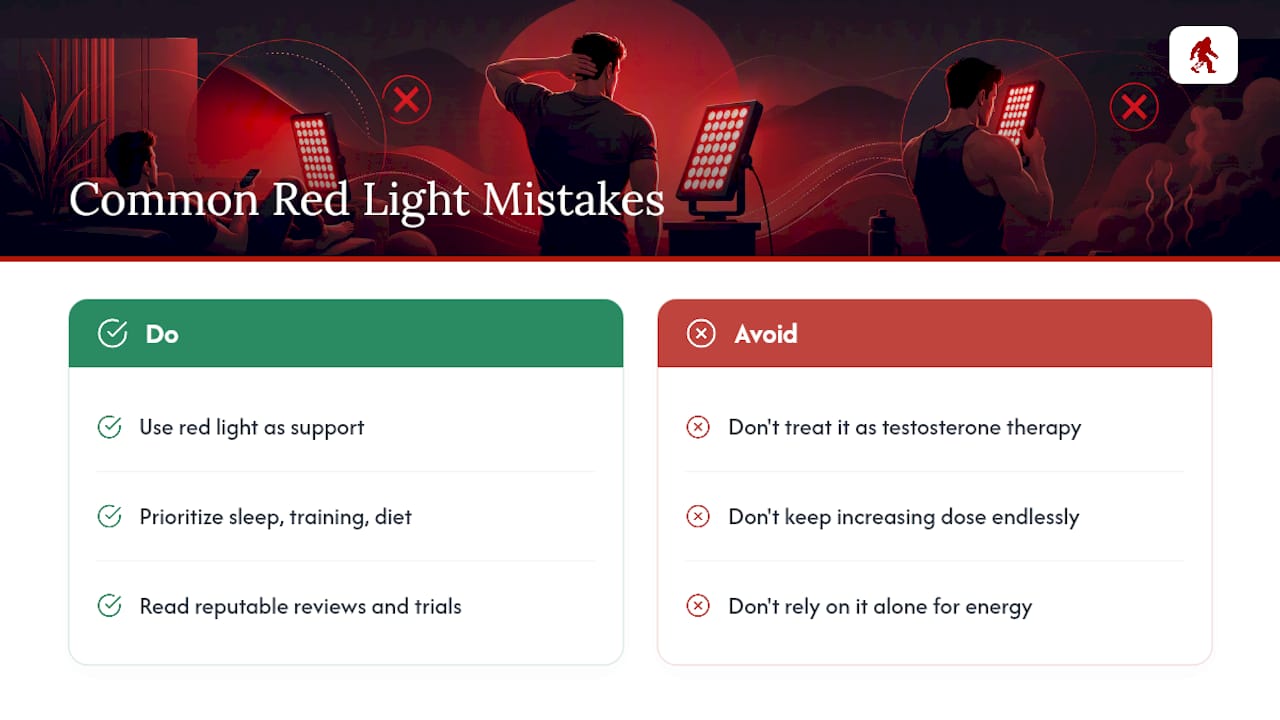
The biggest misconception is treating red light as a testosterone therapy. It isn't, and no honest source will tell you otherwise. The confusion usually starts with marketing that leans hard on testicular red light claims, language that reputable reviewers have called out as overhyped relative to what human trials actually show. If you're chasing a hormone number, red light is the wrong tool for that specific job.
A second misconception: more light, more often, equals faster results. The Arndt-Schulz principle says otherwise, and plenty of men burn through the early weeks of a routine cranking session time before backing off out of frustration when results plateau or reverse.
A third misconception treats red light as a stand-alone fix for low energy or low drive, divorced from sleep, training, and diet. It works best as a supporting piece, not the whole structure. For a broader look at what red light does and doesn't do for libido specifically, Primal Red Co's breakdown on red light therapy and libido is worth reading before you set expectations too high.
How Does Red Light Compare to Other Ways to Support Dopamine?
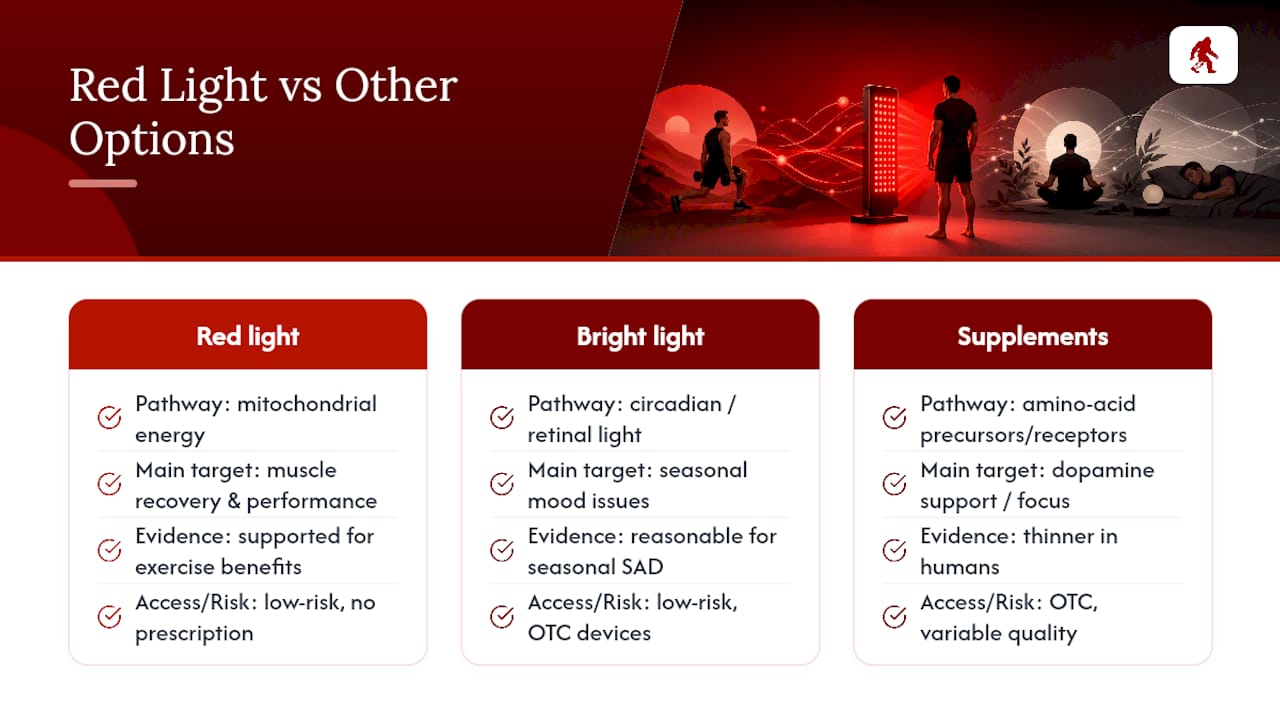
Red light sits in a different lane than most dopamine-adjacent interventions men consider. Bright light therapy boxes, the kind used for seasonal mood dips, work through a completely different pathway, mainly your circadian system and retinal light exposure, rather than mitochondrial energy production. They're a reasonable tool for seasonal mood issues but aren't built for muscle recovery or physical performance the way red light is.
Supplements marketed for dopamine support, think tyrosine, mucuna pruriens, or various "focus" blends, work through amino acid precursors or receptor activity, and the human evidence behind most of them is thinner than what backs red light's exercise benefits. Prescription options like TRT work through direct hormone replacement, an entirely different intervention with different risks, monitoring requirements, and commitment levels.
Where red light earns its place is as a low-risk, low-commitment daily habit that stacks cleanly with training and doesn't require a prescription, bloodwork, or a long-term medical commitment to try. It's not competing with clinical care. It's the low-barrier option you try first, honestly assess after a few months, and use to decide whether bigger conversations with a doctor are actually necessary.
Where Does Red Light Fit in a Man's Restoration Toolbox?
Red light is an adjunct, not a replacement for medical care. That distinction matters more than any single protocol in this guide. If you're consistently exhausted, your libido has dropped off a cliff, or something feels genuinely off rather than just "aging normally," a conservative routine like the one outlined here is a reasonable first step, but it isn't a substitute for bloodwork or an honest conversation with your doctor.
I'd rather see a man try a low-risk, well-dosed routine for eight to twelve weeks and track it honestly than jump straight to a prescription he didn't need to consider yet. But I'd also rather see that same man walk into a lab appointment the moment his numbers on the tracking sheet stay flat. Red light earns its spot for men who feel the shift starting and want to do something now, before the bigger decisions land on the table.
— Nurse Rachel
Where RedRockit Fits Into Your At-Home Routine
RedRockit was built around the exact wavelengths this guide points to: 660 nanometers and near 850 nanometers, delivered in a panel sized for real at-home use, not a clinic waiting room. If you've read this far, you already know the difference between a device that's dosed thoughtfully and one that just promises "more light, more results."

A few things worth knowing before you decide:
- RedRockit pairs both recommended wavelengths in one panel, so you're not choosing between skin-level and deeper-tissue support.
- The companion Rockit IQ app walks you through session timing and distance, which takes the guesswork out of the Arndt-Schulz dosing conversation above.
- It's built for the maintenance, pre-exercise, and daily mood routines covered in this guide, not a one-size-fits-all generic setting.
Primal Red Co built RedRockit for men who feel the dip coming and want a real routine before bigger decisions are even on the table. If you're weighing red light against other paths, our page on male vitality after 40 walks through where energy, drive, and recovery routines fit before anything more clinical enters the picture. Start there, or go straight to RedRockit and build your first protocol this week.
Sources
- Redlighttherapy
- Red light therapy benefits for men over 40 — the real mechanism, best wavelengths, correct dosing, and how to combine it with training, sauna and sleep.
- How to Use Red Light Therapy at Home: A Clinician's Guide - Dr. Michael Ruscio, DC