
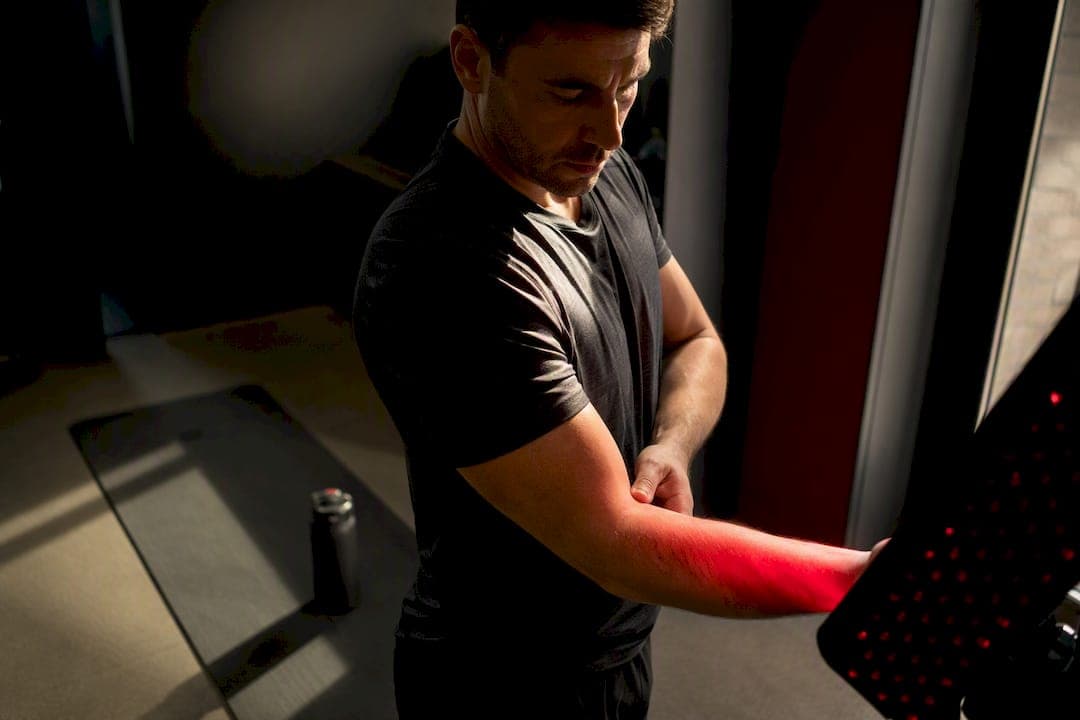
Pick morning for energy and daytime skin prep. Pick evening for recovery and sleep support. Either way, start with 5 to 20 minutes per area, 3 to 5 times a week, and finish sessions at least 1 to 2 hours before bed if you're the kind of guy who feels wired afterward. The exact hour matters less than most articles want you to believe.
Here's the anchor you actually need before you overthink this:
- Session length: 5 to 20 minutes per treatment area, depending on your device's output.
- Frequency: 3 to 5 sessions weekly to start, adjusted once you see how your body responds.
If you're chasing one primary goal, let that goal pick your timing. If you're chasing consistency, pick whatever hour you'll actually protect on a bad week.
Key Takeaways
Match your session timing to your primary goal, keep sessions between 5 and 20 minutes, run 3 to 5 sessions weekly, and give it 4 to 8 weeks before judging results.
| Point | Details |
|---|---|
| Morning for energy | Choose morning sessions for daytime energy, mood, and skin prep before your routine. |
| Evening for recovery | Choose evening sessions for recovery and inflammation support, finished 1 to 2 hours before bed. |
| Dose sweet spot | Stay within 5 to 20 minutes per area to respect the biphasic dose response and avoid diminishing returns. |
| Workout spacing | Leave 6 to 8 hours between sessions on the same muscle group, whether pre-lift or post-run. |
| Guided consistency | RedRockit's app-timed sessions help men 30+ stick to a 3 to 5 times weekly routine without guesswork. |
This article is general information, not a substitute for advice from a qualified doctor. Consult a qualified healthcare professional about your own circumstances before acting on anything here.
Table of Contents
- Best Time for Red Light: Morning vs Evening by Goal
- How Long Should a Red Light Session Last?
- When Should You Use Red Light Around Workouts?
- Skincare and Eye Safety Timing That Actually Matters
- Who Should Talk to a Doctor Before Starting Red Light?
- Sample Weekly Routines for Energy, Recovery, or Both
- Sources
Best Time for Red Light: Morning vs Evening by Goal
The honest answer to "best time for red light" is that your goal decides the clock, not some universal rule. Red and near infrared wavelengths work by stimulating mitochondria to produce more ATP, the energy currency your cells run on. That process doesn't care what time it is. What changes with timing is how your nervous system and circadian rhythm respond to the light on top of that cellular effect.
Morning sessions tend to pair with the natural rise in cortisol and alertness your body already produces, which is why a lot of men report a mood and energy bump when they use light early. It also sets you up to layer skincare products on freshly stimulated, product-free skin before a full day of activity. A physician-reviewed breakdown from Ubie frames this exact split: morning for energy and daytime prep, evening for recovery and wind-down.
Evening sessions shine for recovery, because inflammation modulation and muscle repair happen while you're winding down anyway. The catch is timing it against sleep. Cleveland Clinic's explainer on circadian rhythm supports finishing red light sessions 1 to 2 hours before bed, especially if the device runs hot or bright enough to feel stimulating rather than calming.
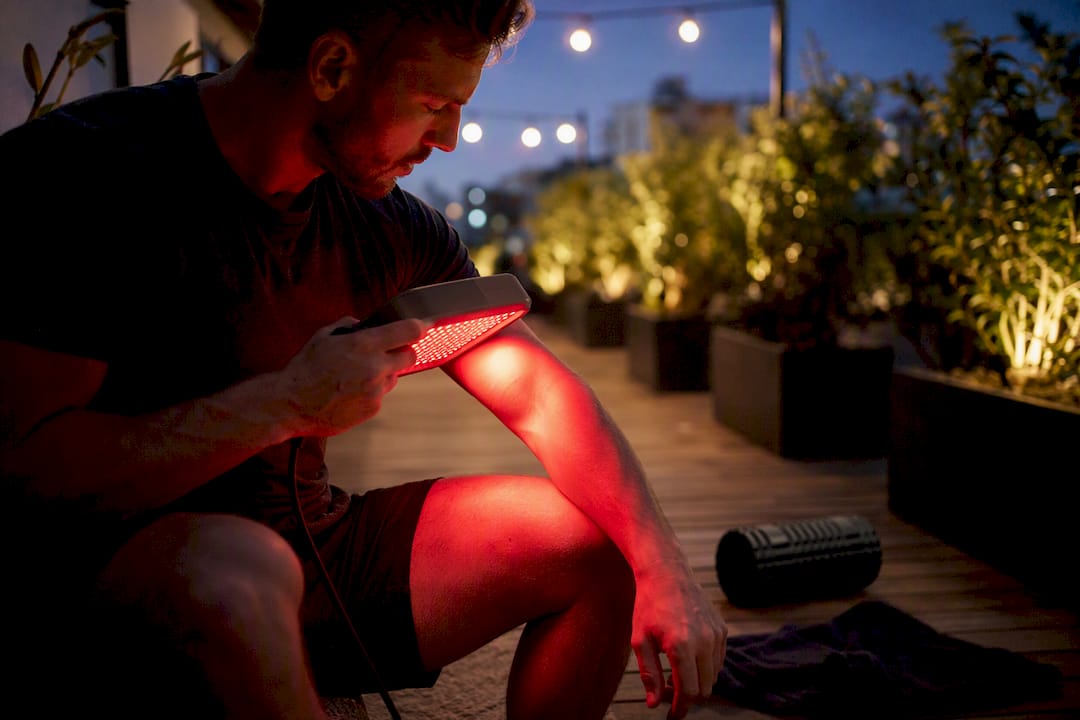
Device output changes the math. A high irradiance panel can deliver a full dose in under 10 minutes; a weaker device might need 20 minutes to do the same job. Any device with blue light built in adds another variable, since blue wavelengths can suppress melatonin if used late at night.
Pro Tip: If you're not sure which goal to prioritize, default to morning for the first two weeks. It's easier to build a habit around a routine you do before the day gets away from you.
How Long Should a Red Light Session Last?
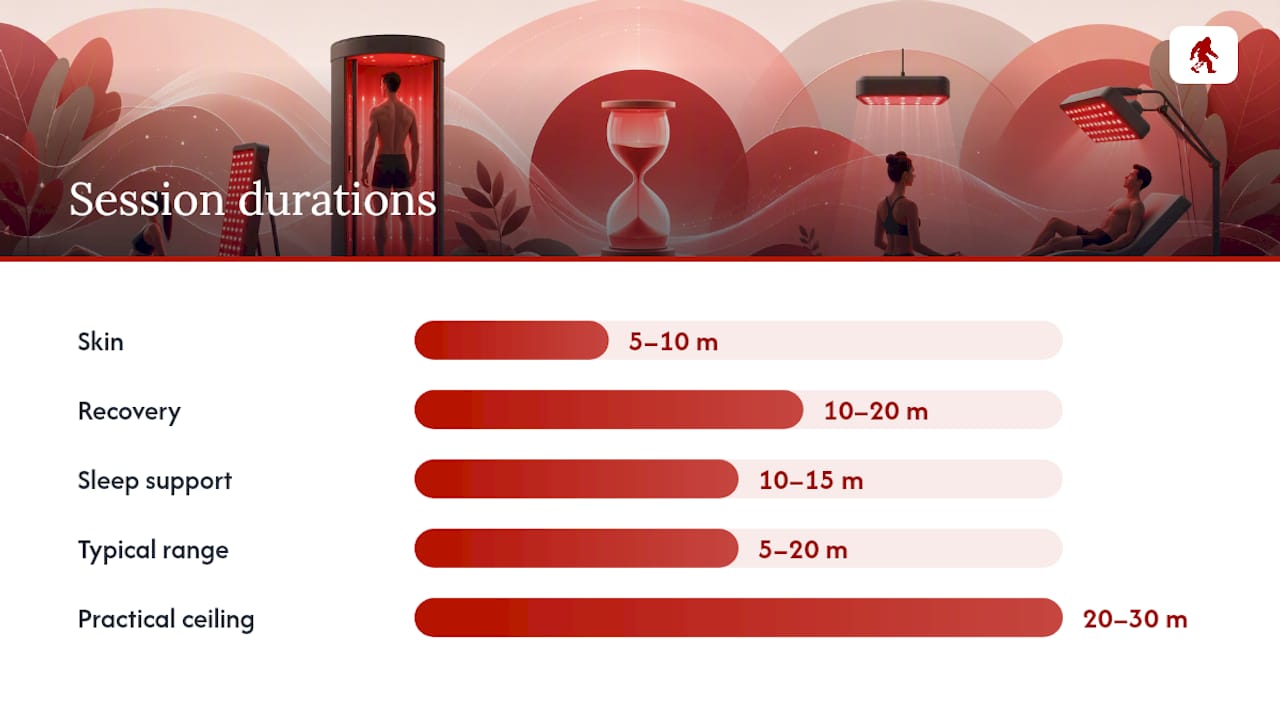
Most clinical summaries land in the same range regardless of skin, joint, or muscle target: 5 to 20 minutes per area, 3 to 5 times weekly, and that range holds up whether you're treating a knee or your face. The specifics shift slightly by goal.
- Skin goals: roughly 5 to 10 minutes per area, using clean skin.
- Recovery goals: 10 to 20 minutes on the target muscle or joint.
- Sleep support: 10 to 15 minutes, timed well before bedtime.
Photobiomodulation research describes a biphasic dose response, meaning there's a sweet spot in the middle of the dosing curve. Too little light does nothing. Too much can blunt the benefit or even reverse it, which is documented in mechanistic reviews of photobiomodulation. That's the science behind why marathon 30 minute sessions aren't automatically better. Stick to 20 to 30 minutes as a practical ceiling unless a clinician has told you otherwise for a specific condition.
A workable ramp: run 4 to 5 sessions weekly for the first 4 to 8 weeks, then step down to 2 to 3 sessions a week once you've hit your target outcome. Health backs this exact intensive-then-maintenance structure, and notes that visible results for skin remodeling often take 4 to 12 weeks, while pain relief can show up in 1 to 3 weeks of consistent use.
When Should You Use Red Light Around Workouts?
Timing red light around training splits into two very different goals: priming muscle before you lift, or calming it down after.
- Pre-workout priming: some protocols target sessions 3 to 6 hours before activity to influence muscle readiness, not immediately before you walk into the gym.
- Post-workout recovery: a short session within 30 to 120 minutes after training can support inflammation modulation while your muscles are already in repair mode.
- Same-area spacing: leave 6 to 8 hours between treatments on the same muscle group so cells have room to recover between doses.
- Template it: "pre-lift" means a midday session ahead of an evening workout; "post-run" means a quick 10 minute session right after you cool down.
Stacking two sessions on the same knee or shoulder back to back doesn't speed anything up. It just risks pushing you past the effective dose window.
Skincare and Eye Safety Timing That Actually Matters
Skin absorbs light best when it's clean. Apply red light before your serums and moisturizers, not after, since heavy creams can block photon penetration. Practical dosing guides consistently recommend product-free skin during treatment, with your normal routine layered on afterward.
Eye protection matters more than most guides admit. If your panel sits close to your face, wear the shields that came with your device. Clinical periocular protocols exist, but those are supervised exceptions, not a DIY move.
- Clean, product-free skin before your session.
- Eye protection any time the panel is near your face.
- Serums and moisturizers go on after, not before.
- Skip evening sessions on blue-light-heavy devices if you're sensitive to sleep disruption.
Who Should Talk to a Doctor Before Starting Red Light?
Most healthy adults tolerate red light therapy without issue, but a few situations deserve a conversation with a clinician first, not a Google search.
- You're on photosensitizing medications (certain antibiotics, acne treatments, or retinoids).
- You have a history of skin cancer or an active malignancy at the treatment site.
- You're pregnant and considering abdominal or pelvic-area use.
- You notice redness, irritation, or unusual sensitivity that doesn't fade within a day.
If irritation shows up, pause for 48 to 72 hours and cut your next session time in half before resuming.
Pro Tip: Screen yourself once before you start a new schedule: medications, skin history, and pregnancy status. Three questions, thirty seconds, and you've ruled out the situations that actually matter.
Sample Weekly Routines for Energy, Recovery, or Both
You don't need a lab coat to run this well. You need a schedule you'll actually repeat. Here are three starting templates:
- Energy-focused morning plan: 10 minutes daily, right after your shower, 5 days a week for the first month.
- Recovery-focused evening plan: 15 to 20 minutes on sore joints or muscles, 3 to 4 evenings weekly, finished at least 90 minutes before bed.
- Mixed plan for active men: a short morning session for energy, plus a post-workout recovery session on lifting days, keeping at least 6 hours between any sessions on the same muscle group.
Track sleep quality, pain levels, skin texture, and energy weekly. Small, boring numbers over 4 to 8 weeks tell you more than how you feel on any single day.
Nurse Rachel has watched this play out in practice for years: men who stick to one simple, repeatable routine see steadier results than men chasing the "perfect" protocol. Consistency, not precision, is what moves the needle.
Habit stacking works because it removes the decision. Attach your session to something you already do, like your morning coffee or evening shower, and let an app-guided routine handle the timer so you're not guessing.
A Note From Nurse Rachel on What Actually Works
The men who succeed with red light don't have the fanciest protocol. They pick a time, morning or evening, and protect it for 2 to 4 weeks before judging results. The common mistake I see is overcomplicating things, chasing an overnight change, then quitting before week three. Log what you notice. Adjust one variable at a time. That's the whole system.
A Guided Way to Actually Stick With This
RedRockit is built for the exact routines above: guided session lengths, appropriate output for real dosing, and app-timed sessions so you're not counting minutes on your phone while standing half-lit in your bathroom. It's designed to remove the friction that kills most home red light routines before week two. The RedRockit Activation Method walks you through session length and frequency based on your goal, whether that's energy, recovery, or both. If you're ready to stop guessing at minute counts and start a routine you'll actually keep, that product page is where to start.
Sources
- Photobiomodulation (review) — PMC10484593
- Cleveland Clinic: Circadian rhythm
- Health
- Ubie Doctor's Note: Best time for red light therapy