

Home red light therapy is generally low-risk when you protect your eyes, follow your device's dose instructions, and stop if something feels off. That is the whole answer. Clinical reviews back this up, and organizations like Cleveland Clinic and companies like Primal Red Co treat it as a safe daily habit, not a gamble.
But "generally safe" is not the same as "no rules apply." Here is what to lock in before your first session:
- Wear wavelength-specific goggles. Your eyelids do not block enough light to protect your retina.
- Follow YOUR device's manufacturer dose and distance. Generic advice from a different device can under or overexpose you.
- Stop and call a doctor if you're pregnant, on photosensitizing medication, managing bipolar disorder, or you notice burning, blistering, or sharp eye pain.
TL;DR:
- Protect your eyes with wavelength-specific goggles every session because eyelids do not block enough light to shield your retina.
- Follow your device's specific instructions on distance and duration, as generic advice cannot account for individual device differences.
- Stop immediately and consult a doctor if you experience burning, blistering, or sharp eye pain during or after use.
- Check the device's wavelength, irradiance stability, FDA clearance, and risk group to ensure safe quality before purchasing.
- Use a device like RedRockit that provides documented specs and session logging to maintain consistent, safe doses over time.
Table of Contents
- Is Red Light Safety Backed by Real Evidence?
- How Do You Use a Home Red Light Device Safely?
- Do You Really Need Eye Protection for Red Light Therapy?
- Who Should Talk to a Doctor Before Starting?
- What Should You Check Before Buying a Device?
- How Should Men Over 30 Use Red Light for Energy and Recovery?
- A Nurse's Take on What Actually Matters
- Keeping Your Device Clean and Working Right
- What's the Long-Term Safety Picture?
- The Overlooked Truth About Red Light Safety
- Where RedRockit Fits Into a Safety-First Routine
- Key Takeaways
- Sources
Is Red Light Safety Backed by Real Evidence?
Yes, and the evidence has been building for years, not months. Clinical reviews and multidisciplinary consensus statements describe photobiomodulation, the technical term for red and near-infrared light therapy, as low-risk for adult use when people follow manufacturer instructions. A consensus paper published through eScholarship found no severe adverse events in the literature, though it flagged one real gap: ocular safety data is still limited, which is exactly why eye protection gets its own section below.
What the numbers actually say: consumer red light devices typically run irradiance levels between roughly 50 and 150 mW/cm², with recommended sessions lasting 5 to 20 minutes, three to five times a week. Those ranges are wide because devices are not standardized. A panel sitting six inches from your chest delivers a very different dose than the same panel at two feet.
A few things the evidence does NOT yet fully answer:
- Long-term outcomes from years of daily home use, since most home devices have only been mainstream for a few years.
- How much device-to-device variability in build quality affects real-world safety over time.
- Whether combining red and near-infrared wavelengths changes the risk profile compared to single-wavelength devices.
None of this means home red light therapy is unproven. It means the science is solid on short-term safety and still catching up on decades-long data, which is normal for any consumer wellness category still early in its life.
How Do You Use a Home Red Light Device Safely?
Consistency beats intensity here. Following a repeatable routine matters more than chasing the "perfect" session.
- Read your device's manual before your first use. Generic red light advice online is not a substitute for your specific unit's guidance on distance, duration, and irradiance.
- Start with shorter sessions. Most guidance points to 5 to 20 minute windows, 3 to 5 times weekly, but a new user should start on the lower end and build up.
- Position at the manufacturer's recommended distance. Too close increases heat and irradiance beyond tested parameters; too far under-doses you and wastes your time.
- Log each session. Note the date, duration, distance, and how your skin looks afterward. Our Rockit IQ companion app was built for exactly this kind of tracking.
- Do a quick skin check post-session. Mild pink warmth that fades within an hour is normal. Anything beyond that is a signal to dial back.
Stop immediately if you notice burning, blistering, or sharp eye pain. These are not "push through it" symptoms. They are your body telling you the dose, distance, or duration was wrong for that session.
Pro Tip: Keep a simple three-column log: date, minutes, distance from device. After two weeks you'll know exactly what dose your body tolerates best, instead of guessing every time.
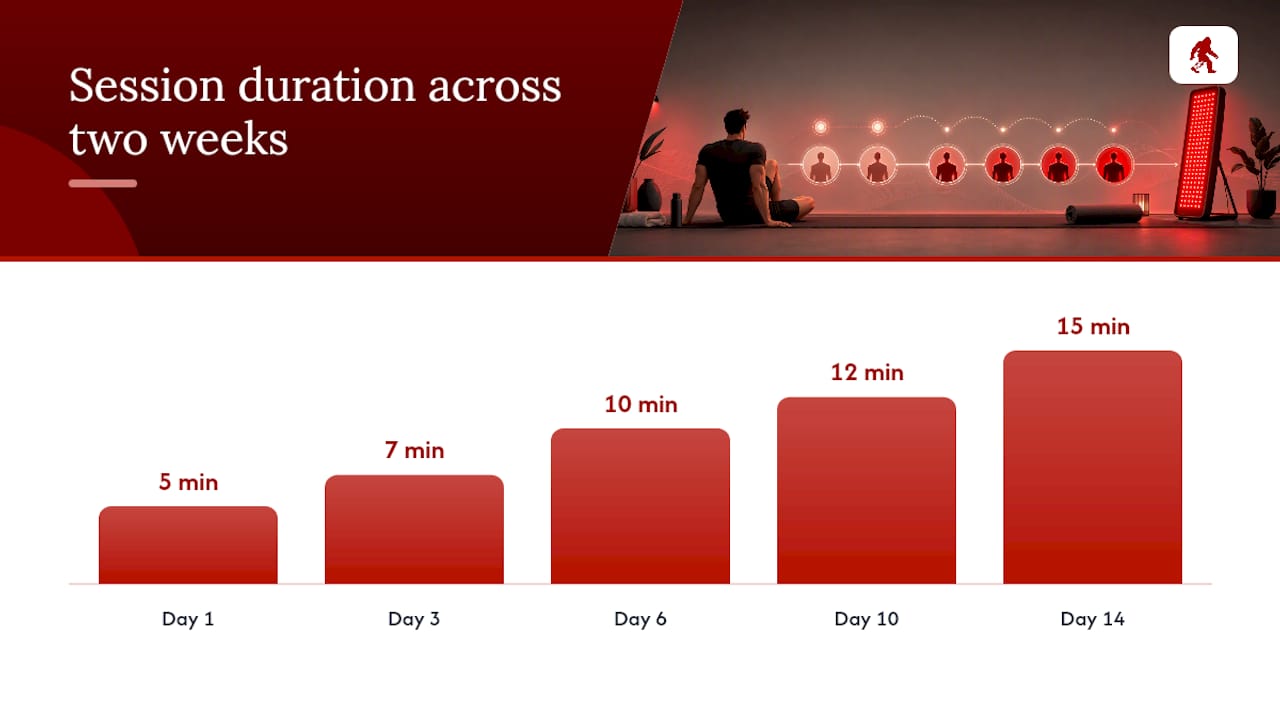
For device-specific timing breakdowns, our guide on using red light therapy at home walks through setup step by step.
Do You Really Need Eye Protection for Red Light Therapy?
Yes, and this is the one corner nobody should cut. Your eyelids are thin enough that red and near-infrared light pass right through them to reach your retina. Closing your eyes during a session is not protection. It just feels like it is.
- Use wavelength-specific, snug-fitting goggles whenever your device instructions call for them, especially with near-infrared panels.
- Near-infrared light is invisible to the human eye, which makes it easy to underestimate. A panel can look dim and still be emitting a real dose of NIR energy at your face.
- If your device did not include goggles, opaque blackout goggles work as a conservative fallback — but regular sunglasses will not cut it.
The data point that matters most: direct eye exposure is considered the primary hazard of home red light devices, according to safety reviews from ConsumerLab. Our full breakdown on red light eye safety covers goggle selection in more depth.
Who Should Talk to a Doctor Before Starting?
Most men over 30 can start a red light routine without a clinical workup first. But a few situations change that calculus, and skipping this step is the one mistake that turns "low-risk" into "unnecessary risk."
- Pregnancy or a pregnant partner in the household. Avoid abdominal exposure and consult a doctor before any use.
- Photosensitizing medications or known photosensitivity. Certain antibiotics, acne medications, and other prescriptions increase skin reactivity to light.
- Bipolar disorder or active mood instability. Light-based therapies can interact with mood regulation in ways that deserve a clinician's input first.
- A history of skin cancer or a suspicious lesion in the treatment area. Get it checked before applying any light-based therapy over it.
If you fall into any of these categories, a five-minute conversation with your doctor is worth more than any amount of research reading. Our side effects overview covers additional edge cases worth knowing.
What Should You Check Before Buying a Device?
Not all red light panels are built, or rated, the same way. The spec sheet tells you more than the marketing copy does.
- Wavelength. Red light in the 600 to 680 nanometer range targets skin-level benefits; near-infrared in the 800 to 850 nanometer range penetrates deeper toward muscle and joint tissue. Our red light versus infrared comparison breaks down which one fits your goal.
- Irradiance and output stability. Consumer devices vary widely, sometimes reporting output as low as 5 mW/cm² or as high as 80 mW/cm² depending on wavelength and build quality. A device with documented, stable output gives you a repeatable dose session after session.
- "FDA-cleared" versus "FDA-approved." Cleared means the device went through the 510(k) review pathway for safety and labeling, not that its specific claimed benefits were clinically proven. Our FDA guidance breakdown explains the difference in plain terms.
- IEC 62471 risk group. Risk Group 0 means exempt from eye hazard under normal use; Risk Group 1 signals low risk that still requires eyewear guidance. Check the label before you assume either way.
For protective goggles and accessories, Vitality's red light therapy collection is a solid resource if your device didn't include its own set.
How Should Men Over 30 Use Red Light for Energy and Recovery?
Most male restoration routines target the chest, shoulders, back, and lower body, with some men including targeted sessions closer to the pelvic region for circulation-focused recovery. If you're exploring that specific application, testicular red light therapy deserves its own careful read, since that area needs conservative distance and shorter exposure windows.
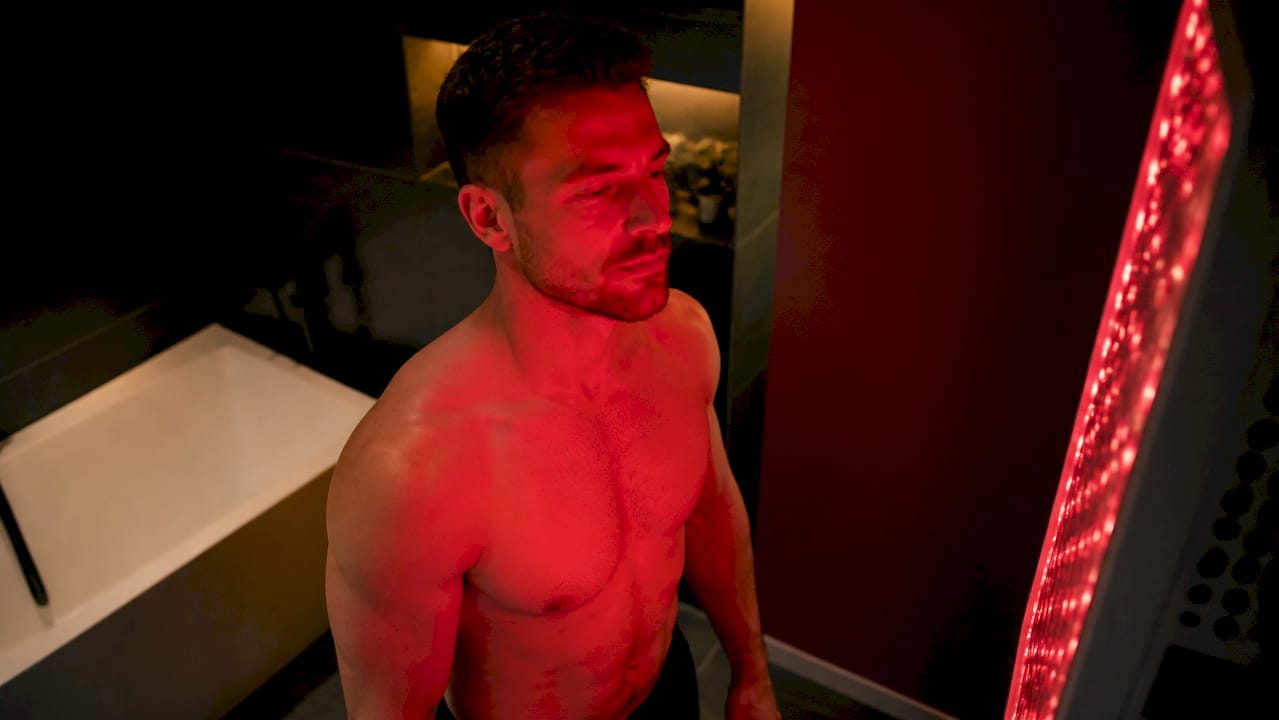
Set your expectations early. Red light supports energy and recovery as part of a routine. It is not a testosterone injection, and nobody should promise you a lab-verified hormone bump without actual blood work to confirm it. What consistent users report is steadier energy and better recovery, built over weeks, not overnight.
If you have a darker skin tone, start conservatively. Clinical reviews note higher Fitzpatrick phototypes carry more risk of prolonged hyperpigmentation from visible light exposure, so shorter sessions at first make sense.
Pro Tip: Track energy and mood on a simple 1 to 10 scale alongside your session log. Numbers catch trends your memory will miss.
Red light is a support tool, not a replacement for diagnosing or treating clinically low testosterone. Our deeper dive on what red light actually does for men covers realistic outcomes in detail.
A Nurse's Take on What Actually Matters
Red light therapy is safe for most men when instructions are followed. That's not a hedge, it's what the pattern of clinical caution actually supports: mild, transient skin reactions if anything, and the eyes as the one area demanding real attention.
Operationally, that means three habits: goggles on every session without exception, a written log of duration and distance, and a personal stop-list (burning, blistering, sharp eye pain) that you actually honor instead of pushing through.
[author_bio]
Keeping Your Device Clean and Working Right
A red light panel that's covered in dust or skin oils doesn't just look neglected. Buildup on the lens can scatter light unevenly, which changes your actual dose without you realizing it.
Wipe the light-emitting surface with a soft, dry microfiber cloth after each use, or a slightly damp one if you've been sweating during your session. Skip household glass cleaners or alcohol-based wipes unless your manufacturer specifically approves them. Some LED lenses have coatings that harsh chemicals can degrade over time.
Check the power cord and housing periodically for cracks, fraying, or loose connections, especially if you travel with your device or store it somewhere with temperature swings. A damaged cord is an electrical risk long before it's a light-therapy risk.
Store your device somewhere dry. Humidity is not kind to LED arrays or the internal drivers that regulate output stability, and a device with drifting output is a device giving you an inconsistent dose from session to session. If your unit has a fan or vents, keep them clear of dust so it doesn't overheat during longer sessions.
Basic maintenance is not glamorous, but it protects two things at once: your skin and your investment.
What's the Long-Term Safety Picture?
The honest answer is that long-term, home-specific data is still building. Short-term and clinical trial data are strong. Multi-year, real-world data from millions of home users is the piece still catching up, which is typical for a wellness category still in its early growth years.
What we do know: no credible research links red light therapy to cancer, since it does not use ionizing UV radiation the way tanning beds or excessive sun exposure does. That distinction matters because it separates red light from the light sources dermatologists have genuinely warned about for decades.
Contraindications remain narrow but firm. Pregnancy, active photosensitizing medication use, bipolar disorder, and any suspicious lesion in the treatment area all warrant a doctor's input before starting, not after a reaction shows up. Beyond those groups, most adverse effects reported in the literature are mild: transient redness, temporary dryness, and, in darker skin tones, a risk of prolonged hyperpigmentation if sessions run too long or too frequent early on.
If you're managing a chronic condition or taking prescription medication of any kind, a quick conversation with your doctor before starting is still the safest first move, regardless of what the general safety data shows for the average user.
The Overlooked Truth About Red Light Safety
Here's what most articles on this topic get backward: they treat "is it safe" as the hard question and "how do I use it" as an afterthought. It's the opposite. The safety data on red light therapy is genuinely reassuring. What trips men up is skipping the boring operational steps, wearing no eye protection because the light doesn't feel hot, guessing at distance instead of checking the manual, or running double sessions because "more must be better."
Conventional wellness content oversells the mechanism and undersells the protocol. Red light works by signaling mitochondria to produce more cellular energy, a real and studied process, but that signal only shows up consistently when the dose is consistent. A guy who uses his device on and off, at random distances, gets random results and blames the technology.
Prioritize the boring stuff first: goggles every time, logged sessions, and a device with documented specs. The energy and recovery benefits follow from doing the unglamorous parts right, not from finding some hidden hack the safety guidelines missed.
— Nurse Rachel
Where RedRockit Fits Into a Safety-First Routine
Everything covered above, eye protection, dose consistency, documented specs, is exactly what RedRockit was built around. It's not a mystery panel with vague settings. RedRockit ships with clear session guidance, and the companion Rockit IQ app handles the logging piece most guys skip: it tracks your session duration, frequency, and distance so you're not relying on memory or guesswork.

That combination matters because the biggest safety risk in this category isn't the light itself. It's inconsistent use of unclear devices. RedRockit's specs are documented up front, which means your dose today looks like your dose next month, not something drifting because output quality varies session to session. If you're ready to build a private, repeatable restoration routine instead of guessing your way through it, take a look at RedRockit's male vitality routine and see whether it fits where you're at right now.
Key Takeaways
Red light therapy is safe for most men over 30 when they wear proper eye protection, follow their device's specific dose instructions, and log their sessions consistently.
| Point | Details |
|---|---|
| Protect your eyes every time | Wear wavelength-specific goggles since eyelids alone don't block red/NIR light from reaching the retina. |
| Follow your device's own dose | Generic timing advice doesn't override your specific device's manufacturer distance and duration guidance. |
| Know your stop signs | Burning, blistering, or sharp eye pain mean stop the session and consult a doctor immediately. |
| Check the spec sheet before buying | Confirm wavelength, irradiance stability, FDA clearance language, and IEC 62471 risk group before purchase. |
| Consult first if you're in a flagged group | Pregnancy, photosensitizing medication, bipolar disorder, or skin cancer history warrant a doctor's input before starting. |
| RedRockit builds safety into the routine | RedRockit and the Rockit IQ app provide documented specs and session logging to keep dose consistent over time. |
Sources
- Red Light Therapy: Benefits, Side Effects & Uses — Cleveland Clinic
- Red and Near Infrared Light Therapy: Safety and Effectiveness — ConsumerLab
- 5 health benefits of red light therapy — UCLA Health
- Light-emitting diode photobiomodulation in dermatology: From professional systems to consumer devices — Forum Dermatologicum
- Evidence-based consensus on the clinical application of photobiomodulation — eScholarship