
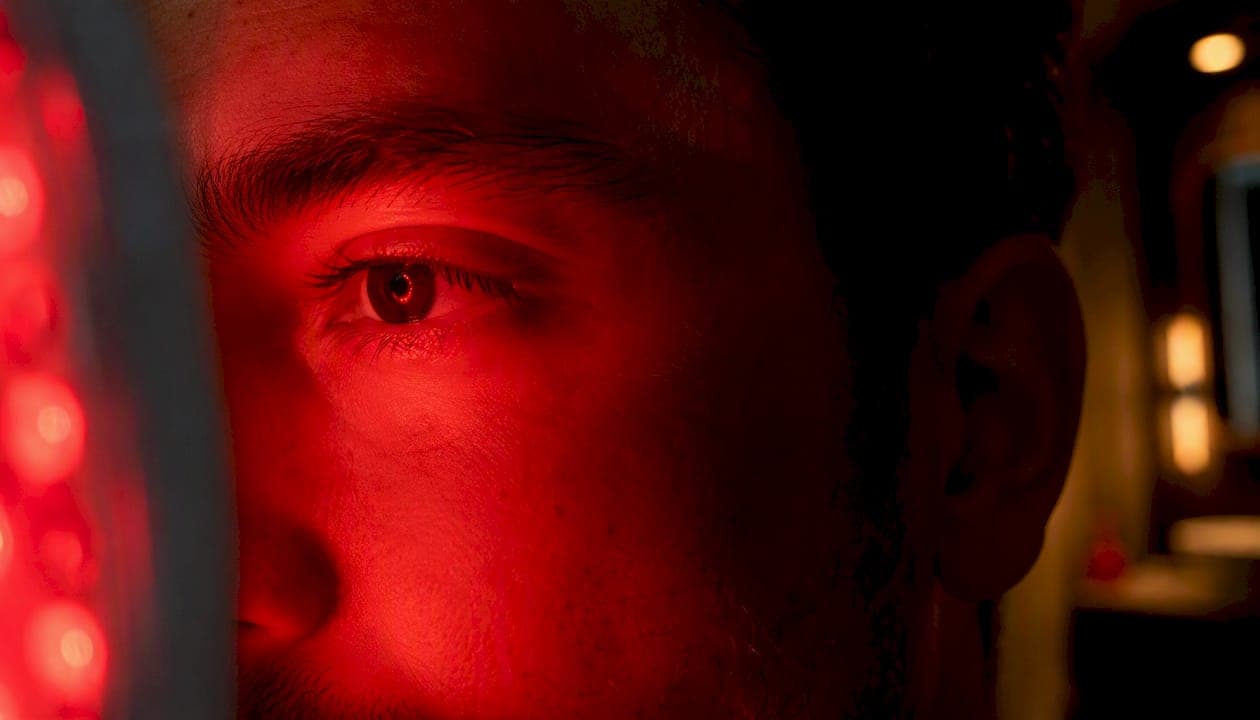
Red light therapy is broadly safe for your eyes when used correctly. That said, "correctly" carries real weight here. Close your eyes or wear goggles during any near-face session. Use certified protective eyewear if your device operates at close range or high power. And if you have an existing eye condition, take photosensitizing medications, or have had recent eye surgery, talk to an ophthalmologist before you start.
The risk level depends on four things: device power (irradiance), distance from the light source, wavelength (visible red versus near-infrared), and your personal risk factors. Get those variables right and the evidence is reassuring. Get them wrong and you are working with a different equation entirely.
- Close your eyes during any facial or near-eye red light session unless your device is specifically cleared for open-eye use.
- Use goggles for close-range panels, high-power devices, or any session where your eyes are within 12 inches of the light source.
- See an eye doctor first if you have retinal disease, recent eye surgery, or take medications that increase light sensitivity.
Key Takeaways
Red light therapy is safe for most eyes when distance, duration, and protective practices are followed consistently, but risk rises sharply for high-risk groups and high-irradiance devices used without protection.
| Point | Details |
|---|---|
| Baseline safety for healthy adults | Systematic reviews through 2017 found no consistent ocular damage in healthy, unmedicated participants, though minor complaints reached up to nearly half of participants in some studies. |
| NIR invisibility raises risk | Near-infrared wavelengths are invisible and penetrate deeper than visible red; eyelid closure helps but does not fully block NIR exposure. |
| High-risk groups need clearance first | Retinal disease, recent eye surgery, photosensitizing medications, and pediatric use all require ophthalmologist consultation before any near-eye RLT session. |
| Irradiance beats wavelength as the key risk factor | Device output in mW/cm² at your use distance determines retinal exposure risk more than color or wattage alone. |
| Primal Red Co RedRockit | Comes with documented irradiance specs, guided protocols via Rockit IQ, and transparent safety documentation for informed, protected home use. |
Table of Contents
- How red and near-infrared light interact with your eye tissue
- What the research and eye-care experts currently say
- Who faces higher risk from red light exposure near the eyes
- Concrete safety rules for home use: distance, dose, and device quality
- When you need eye protection and what actually works
- Symptoms that mean stop and see a doctor
- Why device class and specs change the safety picture entirely
- Nurse Rachel's practical checklist for safe at-home use
- The Primal Red Co perspective on safety-first red light use
- RedRockit is built with your safety in mind
- Sources
How red and near-infrared light interact with your eye tissue
Not all light is the same. Red light therapy devices typically operate in two wavelength ranges: visible red at roughly 630–660 nm and near-infrared (NIR) at 800–850 nm and above. Both are non-ionizing, meaning they lack the energy to break chemical bonds the way UV radiation does. That distinction matters for understanding why photobiomodulation mechanisms work the way they do.
At therapeutic doses, these wavelengths interact with mitochondrial photoreceptors (primarily cytochrome c oxidase) to stimulate cellular energy production. That is photobiomodulation: a signaling effect, not a burning one. The problem arises when intensity climbs high enough to shift the mechanism from cellular signaling to thermal or photochemical injury. Your retina is particularly vulnerable because the eye's lens focuses incoming light, concentrating it on a small area of retinal tissue.
Different eye structures absorb different wavelengths. The cornea and lens absorb shorter wavelengths more readily, while longer NIR wavelengths penetrate deeper and can reach the retina. Closing your eyelids attenuates visible red light significantly, but eyelid tissue does not fully block all NIR. That is the part most people miss. Near-infrared is invisible, so you feel no warning signal when your eyes are being exposed. The same closed-eye precautions that apply to visible red apply equally to NIR sessions.
Wavelength snapshot: Visible red (630–660 nm) is absorbed more at surface eye layers. Near-infrared (800–850+ nm) penetrates deeper toward the retina. Eyelid closure helps with both but does not eliminate NIR exposure entirely.
Mechanistic and experimental research on photobiomodulation confirms that high doses in some experimental contexts produced measurable retinal responses, which is the scientific basis for why dosing limits and protective practices exist in the first place.
What the research and eye-care experts currently say
The evidence base for red light eye safety is growing, but it is not yet settled. Here is where it stands.
A systematic review covering studies through 2017 found no consistent evidence of ocular damage in healthy, unmedicated participants. The key phrase is "healthy, unmedicated." That qualifier excludes many real-world users.
A more recent ophthalmology review published in Graefe's Archive reports substantial therapeutic potential across ocular conditions but flags open questions about standardized dosing and long-term safety. Several recent studies raise specific dosing concerns, including signals from repeated exposures in limited contexts. The review's conclusion is cautious optimism, not a green light for unguided home use.
The American Academy of Ophthalmology describes active research interest in red light for aging eyes while recommending careful interpretation until standardized protocols and more clinical evidence are available.
| Study type | Safety signal | Key caveat |
|---|---|---|
| Systematic review (through 2017) | No consistent ocular damage in healthy adults | Excludes high-risk groups; minor complaints in some participants |
| Recent ophthalmology review (Graefe's Archive) | Promising therapeutic potential | Dosing not standardized; long-term data limited |
| Case reports and small trials | Retinal signals at high or repeated doses | Limited populations; not generalizable |
| Clinical supervised use | Generally well-tolerated | Supervised protocols differ from consumer home use |
Cleveland Clinic's summary notes that low-level red light therapy has been used in trials without serious side effects in selected populations, while consistently advising users to consult health professionals and follow device guidance for home use.
The gap between supervised clinical use and unsupervised consumer panels is where most of the real risk lives. Ophthalmology experts are clear: clinical devices for eye conditions are administered under specific protocols by trained clinicians. A consumer wellness panel on your nightstand is a different tool operating in a different context.
Who faces higher risk from red light exposure near the eyes
Most clinical trials deliberately exclude high-risk groups, which means the reassuring safety data may not apply to you if you fall into one of these categories:
- Existing retinal disease: Age-related macular degeneration (AMD), diabetic retinopathy, or any condition affecting retinal integrity raises the stakes considerably. The retina is already under stress; additional light exposure at therapeutic doses adds a variable that has not been well-studied in these populations.
- Recent eye surgery: Cataract removal, LASIK, retinal repair, or any procedure that alters the eye's optical properties changes how light is focused and absorbed. Wait for clearance from your surgeon before using any near-eye light device.
- Photosensitizing medications: Certain antibiotics (doxycycline, tetracycline), some antidepressants, diuretics, and chemotherapy agents increase the eye's sensitivity to light. If you take any medication with a photosensitivity warning, consult your prescribing doctor and an ophthalmologist before starting red light therapy.
- Children: Pediatric eyes have clearer lenses that transmit more light to the retina than adult eyes. Consumer red light devices are not tested or cleared for pediatric use.
- Photosensitive neurologic conditions: Conditions like lupus or certain forms of epilepsy that involve light sensitivity warrant medical clearance before any light therapy.
If you recognize yourself in any of these groups, the right move is a conversation with an ophthalmologist before your first session, not after. Many trials purposely exclude these populations, so the existing evidence base simply does not cover your situation.
Concrete safety rules for home use: distance, dose, and device quality
Practical protection comes down to four variables you can actually control.
Distance and duration. Start conservative: 5–10 minutes per session at the manufacturer's recommended distance, which is typically 6–18 inches depending on the device's irradiance. Longer sessions are not automatically better. Red light therapy follows a biphasic dose-response pattern, meaning there is a therapeutic window. Too little produces minimal effect; too much can shift from benefit to stress at the cellular level. More time does not equal more results.
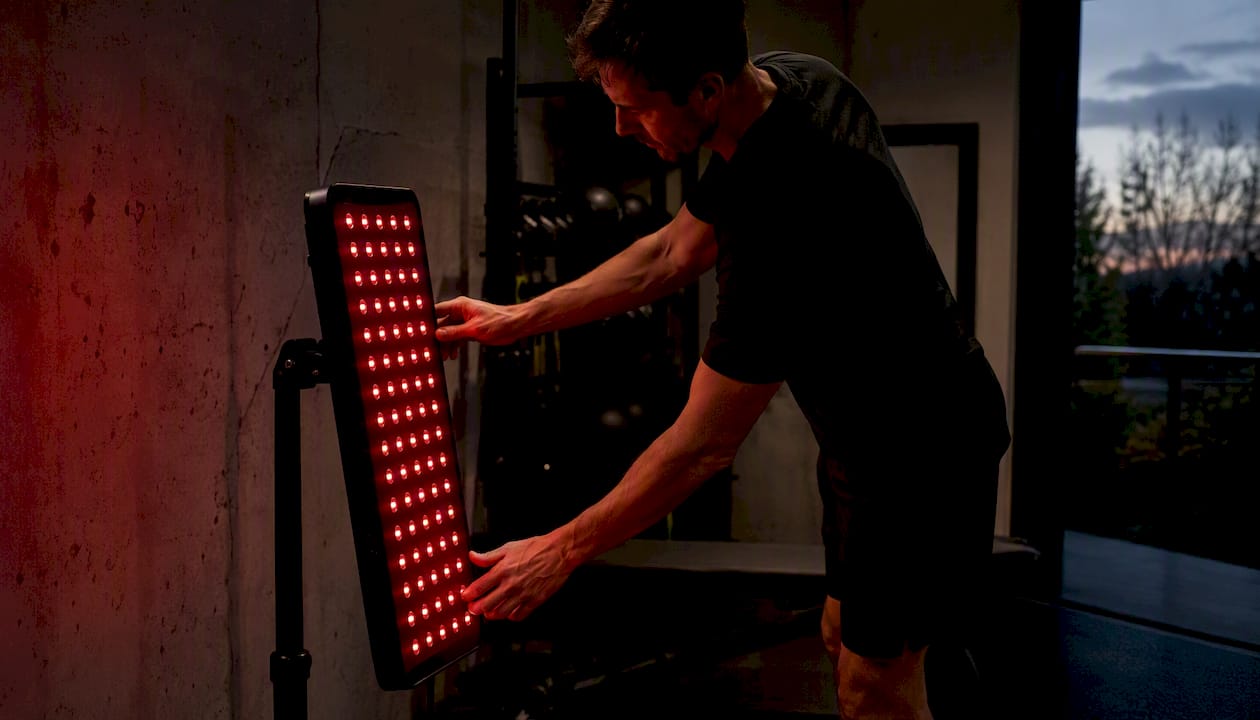
Frequency. Most consumer protocols suggest 3–5 sessions per week. Daily use is common in some protocols, but daily close-range eye exposure without protection is where cumulative risk accumulates. Follow your device's specific guidance and track your sessions. A companion app like Rockit IQ can help you log sessions and keep dosing consistent.
Positioning. For full-body panels, position the device above or below eye level rather than directly in line with your gaze. For facial masks, keep your eyes closed. Never stare directly into any red light source, even at low power.
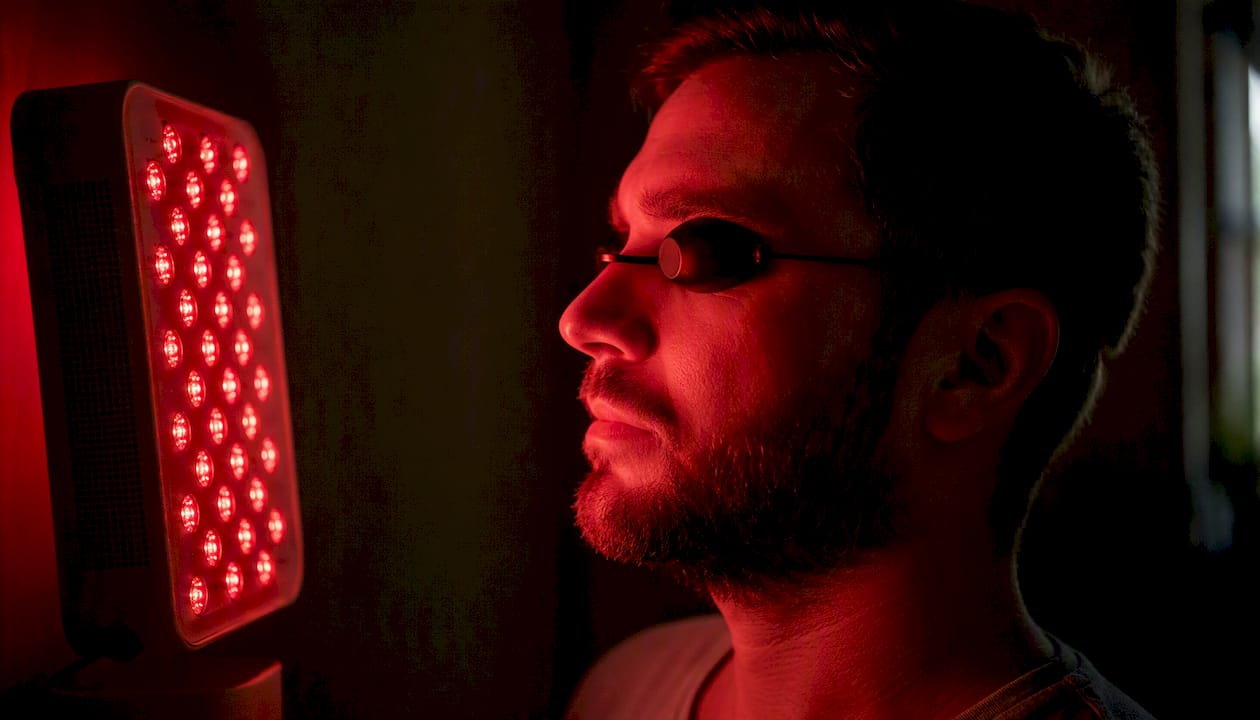
Device quality. Not all consumer devices are equal. Look for transparent irradiance specifications (measured in mW/cm²), stated wavelength ranges, and any FDA clearance or authorization documentation. A device that lists no irradiance data gives you no way to assess retinal exposure risk.
Pro Tip: Irradiance, not just wattage, determines how much energy reaches your retina. A 100W panel at 24 inches delivers far less irradiance than a 50W panel at 4 inches. Always check the mW/cm² spec at your intended use distance, not just the total wattage on the box.
Device irradiance and exposure time are the primary determinants of acute retinal risk, more so than wavelength alone. Very high irradiance at close range can produce thermal or photochemical effects regardless of color.
When you need eye protection and what actually works
Goggles are not optional in every situation, but they are non-negotiable in several.
Wear eye protection when:
- Using a close-range panel or face mask with your eyes open
- Operating a high-power professional device (above 100 mW/cm² at use distance)
- You take photosensitizing medications
- You have any diagnosed ocular condition
- Your device's manual recommends or requires it
Types of protection and what they do:
- Opaque eye covers: Block all visible light and most NIR. Simple, inexpensive, and effective for most consumer panel sessions. Not rated for high-power clinical devices.
- Certified photobiomodulation goggles: Designed specifically for RLT wavelengths, with optical density ratings that specify how much light they block at specific nm ranges. These are the right choice for high-irradiance or professional devices. You can find therapy-specific protective glasses designed for this purpose.
- Wraparound safety goggles: Provide peripheral coverage that standard goggles miss. Useful when a panel is positioned at an angle or when light scatter is a concern.
Standard sunglasses are not adequate protection for red light therapy sessions. They are not rated for the wavelengths or irradiance levels involved. Some FDA-cleared facial masks include a built-in eye-zone design that reduces direct ocular exposure, but "reduced" is not the same as "eliminated." When in doubt, close your eyes or add goggles.
Symptoms that mean stop and see a doctor
Most people who use consumer red light devices responsibly report nothing more than mild, transient warmth or brief visual afterimages that clear within minutes. Those are not red flags. These are:
- Persistent blurred vision that does not resolve within a few hours after a session
- New floaters or flashes of light, especially if sudden or numerous
- Severe eye pain during or after a session
- Lasting light sensitivity that continues beyond 24–48 hours
- Any change in your visual field (missing patches, dark spots, distortion)
Transient eye irritation or a mild headache that clears quickly warrants monitoring, not panic. If symptoms persist beyond 24–48 hours, contact your eye-care provider. Sudden vision loss or severe acute pain is an emergency. Go to an emergency ophthalmology service immediately. Do not wait to see if it resolves on its own.
General eye-strain guidance from Johns Hopkins Medicine reinforces the principle: persistent symptoms after light exposure are a signal to seek evaluation, not push through.
Why device class and specs change the safety picture entirely
A clinical photobiomodulation system used in a supervised ophthalmology practice and a consumer face mask from an online retailer are not the same tool. Treating them as equivalent is one of the most common mistakes people make when researching red light eye safety.
Device categories and what they mean for you:
- Clinical and research-grade systems: Used under medical supervision with calibrated irradiance, controlled exposure times, and trained operators. These are the devices behind most of the positive clinical trial data.
- Professional high-irradiance machines: Used in wellness clinics and spas. Higher power than consumer panels; typically require operator training. Not the same as home devices.
- FDA-authorized ocular systems: A small category of devices specifically cleared for eye-related conditions. These have gone through regulatory review for ocular safety. Consumer panels have not.
- Consumer full-body panels: The most common home-use category. Irradiance varies widely. Safety depends entirely on following manufacturer guidance, maintaining distance, and using eye protection.
- Close-fit face masks: Highest ocular exposure risk in the consumer category because of proximity. Eye-zone design matters enormously here. Check whether the mask has been tested for ocular safety or whether it simply assumes you will keep your eyes closed.
FDA clearance versus wellness marketing is a real distinction. A device marketed as "FDA-registered" has only been listed in a database. A device that is "FDA-cleared" or "FDA-authorized" has undergone premarket review. For near-eye devices, that difference is worth understanding before you buy. Always read the device manual and safety statements before your first session, not after. For a broader look at home red light therapy safety, including how clinical protocols compare to consumer use, that resource covers the full picture.
Nurse Rachel's practical checklist for safe at-home use
Before a patient starts any near-eye red light protocol, there are a few things worth working through together. What medications are you currently taking, including any supplements that carry photosensitivity warnings? Have you had any eye procedures, diagnoses, or symptoms in the past 12 months? Do you have a family history of macular degeneration or retinal disease?
Those questions shape the recommendation. For most healthy adults with no ocular history and no photosensitizing medications, a conservative home protocol with eyes closed or goggles worn is a reasonable starting point. For anyone in a higher-risk group, the recommendation is an ophthalmology evaluation first, not after the fact.
If you are bringing this conversation to your own eye doctor, come prepared. Bring the device model and its irradiance specs (mW/cm² at your use distance), a log of your session frequency and duration, and a clear description of any symptoms you have noticed. That information lets your clinician give you a real answer instead of a generic one.
This is educational guidance, not a medical exam. It does not replace a formal ophthalmic evaluation. If you have any doubt about whether red light therapy is appropriate for your eyes specifically, that doubt is worth resolving with a licensed eye-care provider before you start.
The Primal Red Co perspective on safety-first red light use
Safety-first is not a disclaimer. It is the whole point. At Primal Red Co, the position is straightforward: red light therapy is a tool worth understanding before you use it, not something to figure out after something goes wrong. That applies to men over 30 using devices for energy, recovery, and restoration, and it applies equally to anyone using a face mask or full-body panel for any reason. Follow your device instructions. Know your risk factors. Use protection when the situation calls for it. And if something feels off, get it checked. The goal is to stay in the game, not to sideline yourself chasing a shortcut.
RedRockit is built with your safety in mind

Most consumer red light devices give you a power switch and a vague promise. RedRockit is different. The device comes with documented irradiance specs, transparent wavelength data, and guided session protocols through the Rockit IQ companion app so you are never guessing about dose or duration. That matters for eye safety specifically: when you know your device's output and follow a structured protocol, you are working with the evidence, not against it.
Before you buy any red light device, read the specs. Check the irradiance at your intended use distance. Confirm what eye protection is included or recommended. If you are in a higher-risk group, consult your eye-care provider first. When you are ready to see what a safety-forward, protocol-driven device looks like, the RedRockit Activation Method page has the full specs and documentation. Men over 30 who want to protect what they have, without cutting corners on safety, can also explore the male vitality restoration approach that RedRockit is built around.
Sources
These are the primary clinical and expert sources used to compile this article:
- Systematic reviews up to 2017 on light therapy ocular safety (PubMed)
- Illuminating eye care: the promise and future of red light therapy in ophthalmology (Graefe's Archive / Springer)
- Red light therapy (Cleveland Clinic)
- Red light may protect aging eyes (American Academy of Ophthalmology)
- Photobiomodulation research article (PMC)
This article is general information, not a substitute for advice from a qualified doctor. Consult a qualified healthcare professional about your own circumstances before acting on anything here.