
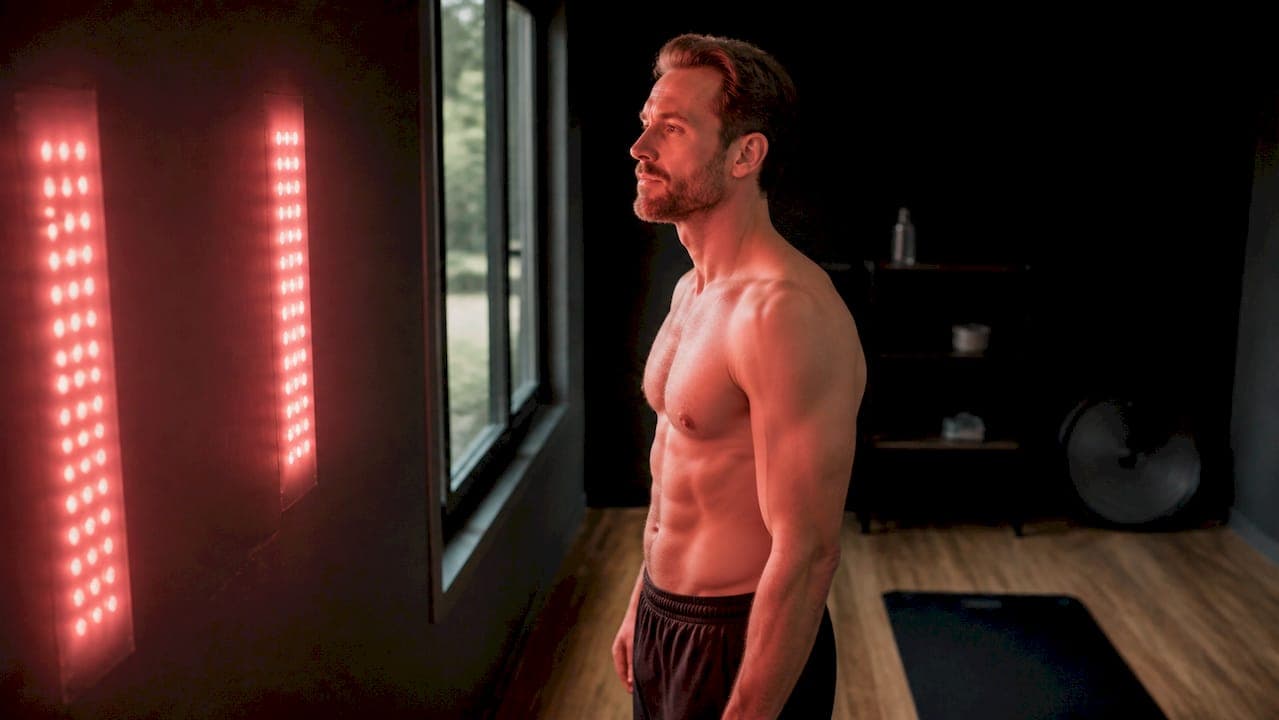
Red and near-infrared light share the same cellular mechanism, but they work at different depths. Red light (roughly 620–670 nm) stays in the skin. Near-infrared (NIR, roughly 810–850 nm) pushes several centimeters deeper, reaching muscle, joint, and connective tissue. That single difference determines which one belongs in your routine.
Quick verdict:
- For skin, collagen, and surface healing: Red light (620–670 nm) is your tool. It targets the dermis and epidermis where collagen lives.
- For deep-tissue pain, muscle recovery, and circulation: NIR (810–850 nm) is the better choice. It reaches where red light simply cannot.
- For both at once: A combined device running both wavelengths simultaneously covers surface and deep targets in a single session, which is why most serious panels include both.
Key Takeaways
Red and NIR light therapy work through the same cellular mechanism, but wavelength determines tissue depth, and tissue depth determines which health goals each modality can actually reach.
| Point | Details |
|---|---|
| Match wavelength to your goal | Red (620–670 nm) targets skin; NIR (810–850 nm) reaches muscle, joints, and deeper tissue. |
| Combined devices cover both | A 660 nm + 850 nm panel treats surface and deep targets simultaneously without extending session time. |
| Dose control matters | Follow irradiance and time specs; the biphasic dose response means more light is not always better. |
| Evidence is real but uneven | Skin and musculoskeletal outcomes have the strongest clinical support; allow 4–12 weeks for measurable results. |
| RedRockit for daily restoration | RedRockit runs both wavelengths with app-guided protocols, designed for men over 30 building a consistent routine. |
This article is general information, not a substitute for advice from a qualified doctor. Consult a qualified healthcare professional about your own circumstances before acting on anything here.
Table of Contents
- What do "red light," "NIR," and "infrared" actually mean?
- How wavelength determines how deep the light reaches
- How photobiomodulation works at the cellular level
- What red light and NIR are each best for
- What the clinical research actually shows
- Device types and how to use them correctly
- Safety, side effects, and who should consult a clinician first
- Using red and NIR together: when it makes sense
- How to choose between red, NIR, or both
- A practical routine for men over 30
- What I actually think about this technology
- RedRockit is built for exactly this kind of routine
- Sources
What do "red light," "NIR," and "infrared" actually mean?
The labels on devices can be confusing. Here is what they actually refer to.
Red light therapy uses visible red wavelengths, typically 620–670 nm. You can see this light. It sits just inside the visible spectrum and has been studied extensively for skin rejuvenation, wound healing, and collagen stimulation. When people say "red light therapy," they almost always mean this range.
Near-infrared (NIR) sits just beyond what the human eye can detect, usually 700–900+ nm. It is invisible. Despite being called "infrared," NIR is not heat therapy in the traditional sense. It activates the same cellular machinery as red light, just deeper in the body. Both red and NIR fall inside what researchers call the therapeutic optical window, roughly 600–1100 nm, where light can penetrate tissue without being immediately absorbed or scattered.
Mid- and far-infrared are a different story entirely. Far-infrared (FIR, above roughly 3000 nm) is absorbed almost immediately by water molecules in the skin. The effect is thermal, meaning it heats tissue. This is what infrared saunas and heating pads use. It feels good, it drives circulation through warmth, and it has its own wellness applications. But it does not activate mitochondria the way red and NIR do. Far-infrared modalities work through heating, not photobiomodulation, and conflating the two leads to a lot of marketing confusion.
The short version: red and NIR are photobiomodulation (PBM) tools. Mid- and far-infrared are thermal tools. Different mechanisms, different targets, different devices.
How wavelength determines how deep the light reaches
Wavelength is not just a number on a spec sheet. It determines which tissues actually receive photons, and that determines what the therapy can do for you.
| Wavelength Range | Approximate Penetration | Primary Target Tissue |
|---|---|---|
| 620–670 nm (red) | shallow (surface skin layers) | Epidermis, upper dermis |
| 700 nm (deep red) | moderate (upper to mid dermis) | Full dermis, superficial capillaries |
| 810–850 nm (NIR) | 5–30+ mm | Muscle, fascia, joint capsule |
| 900–1100 nm (NIR extended) | variable, deeper tissues depending on type | Deeper muscle, bone surface |
| 3000+ nm (mid/far-IR) | absorbed mostly at skin surface | Thermal effect only |
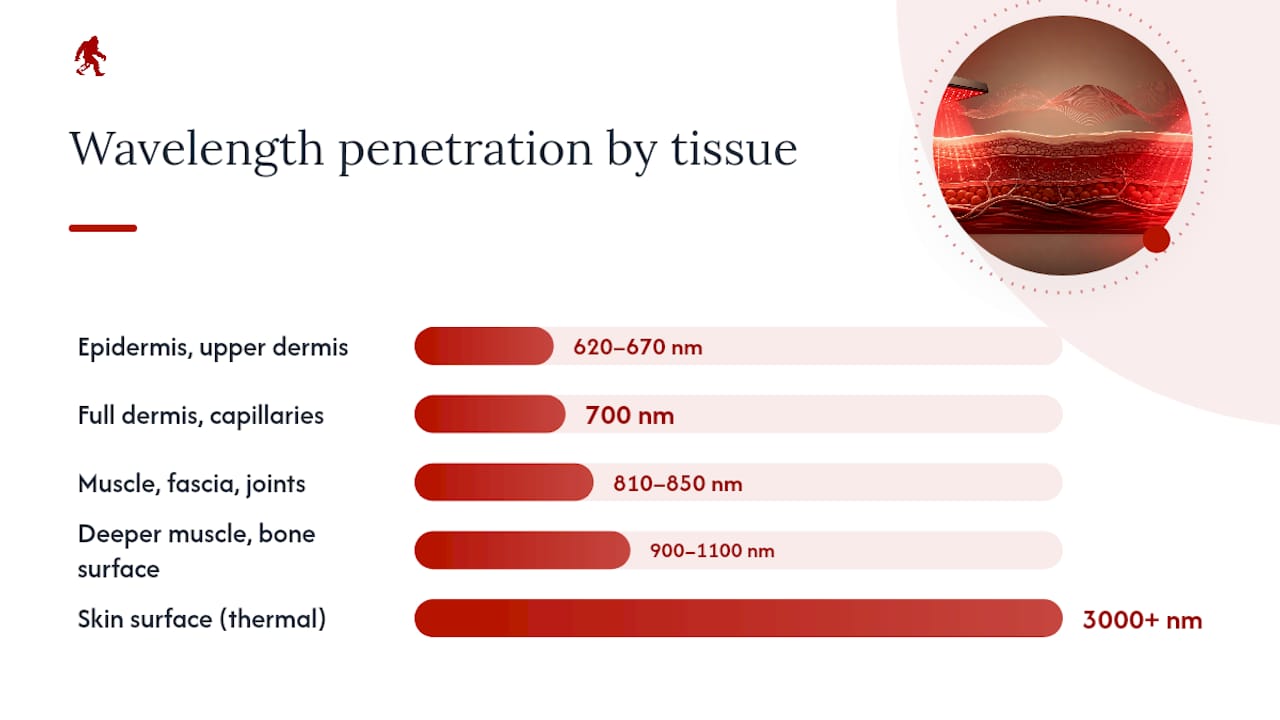
NIR wavelengths around 810–850 nm penetrate multiple centimeters, making them suited for reaching muscles, joints, and even superficial brain tissue, while red wavelengths focus their energy on the dermis. That is not a minor distinction. If your goal is a sore knee or a tight hamstring, red light at 660 nm is not reaching the tissue you care about.
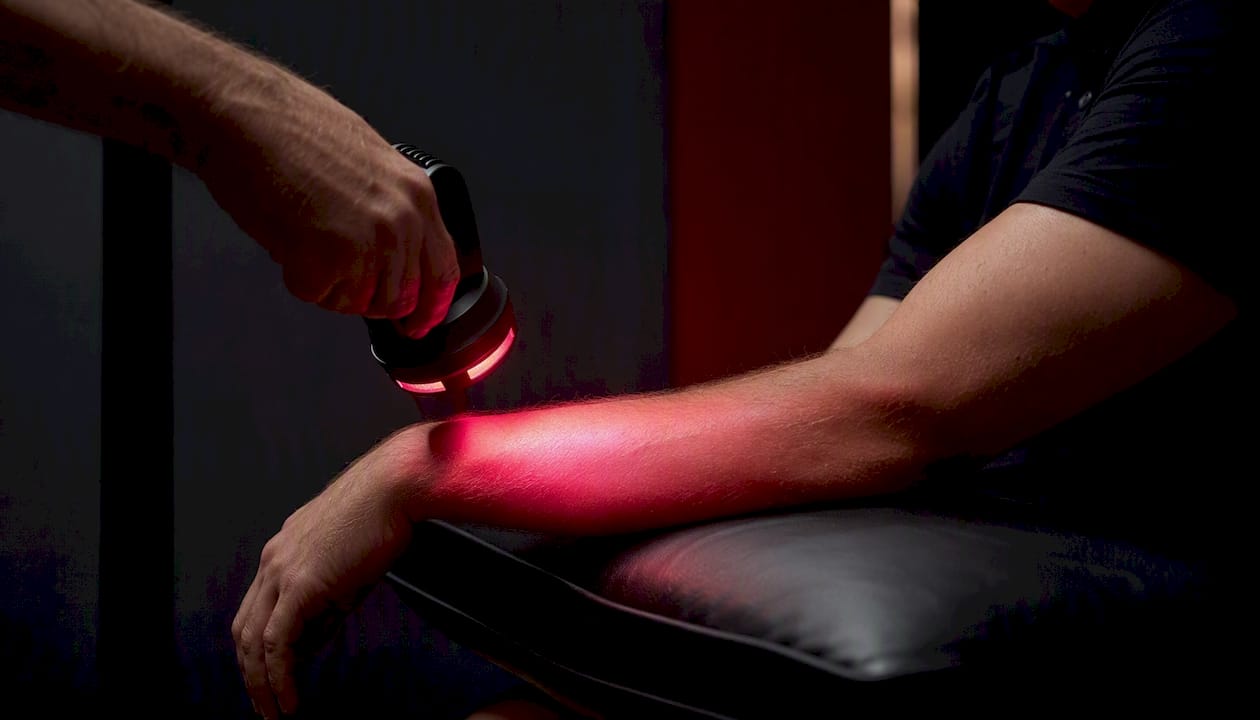
Penetration is also influenced by molecules called chromophores, such as melanin, hemoglobin, and water, which absorb light at specific wavelengths. These absorption properties affect how deeply light of different wavelengths penetrates tissue, with NIR wavelengths around 810–850 nm benefiting from relatively lower absorption allowing deeper tissue reach.
How photobiomodulation works at the cellular level
Both red and NIR light trigger the same fundamental process. The primary target is cytochrome c oxidase (CCO), an enzyme in the mitochondrial electron transport chain. When photons hit CCO, they displace nitric oxide that has been inhibiting the enzyme, allowing it to resume normal function. ATP production increases. Cellular energy goes up. Downstream, you get reduced oxidative stress and modulated inflammation.
The wavelength does not change this cascade. It only changes which cells receive the photons. Red light activates CCO in skin cells. NIR activates it in muscle cells, joint tissue, and deeper structures. Same signal, different recipients.
One concept worth understanding before you start any protocol: the biphasic dose response. More light is not always better. Research documents that PBM follows a hormetic curve, meaning too little light produces minimal effect, the right dose produces the therapeutic response, and too much light can actually reduce benefit or cause mild adverse effects. This is why session time, distance from the device, and irradiance (the power density hitting your skin) all matter. A device with no irradiance data is a device you cannot dose correctly.
What red light and NIR are each best for
The cellular mechanism is shared. The clinical applications diverge based on tissue depth.
Red light tends to perform best for:
- Skin rejuvenation and anti-aging (fine lines, texture, tone)
- Collagen stimulation and dermal remodeling
- Acne reduction and surface inflammation
- Wound healing and scar tissue remodeling
- Hair follicle stimulation (scalp applications)
- Post-procedure skin recovery
NIR tends to perform best for:
- Muscle soreness and post-exercise recovery
- Chronic joint pain (knees, shoulders, lower back)
- Deep tissue inflammation
- Circulation support in deeper vascular beds
- Transcranial applications (cognitive and mood research, still preliminary)
- Nerve tissue support
Randomized controlled trials report improvements in fatigue, soreness, and functional recovery with NIR PBM in athletic settings, particularly when applied before or after training. For skin, clinical papers cite improved collagen synthesis, reduced inflammation, and faster tissue repair with consistent red and NIR treatment.
Combined therapy, running both wavelengths in the same session, is common precisely because most real-world goals are not purely surface or purely deep. A man dealing with shoulder pain and wanting to maintain skin health does not need to choose. One session with a dual-wavelength device covers both.
What the clinical research actually shows
Honest answer: the evidence is promising but uneven. Here is where it stands.
| Indication | Evidence Strength | Typical Timeline |
|---|---|---|
| Skin rejuvenation / collagen | Moderate evidence from clinical trials | Often requires several weeks of use |
| Wound healing | Moderate evidence with some variability | Depends on wound characteristics |
| Muscle recovery / soreness | Moderate evidence in athletes | Effects may appear within days |
| Chronic joint pain | Moderate evidence with some clinical trials | Benefits generally noted in weeks |
| Transcranial / cognitive | Early-stage evidence from small studies | Not yet well established |
| Fat reduction / body composition | Limited and preliminary evidence | Not conclusively determined |
Systematic reviews report positive outcomes for skin and musculoskeletal pain, but they consistently flag the same limitations: small sample sizes, inconsistent dosing across studies, and wide variation in device types. A study using a 10 mW/cm² panel at 10 cm is not directly comparable to one using a 100 mW/cm² panel at 5 cm, even if both call it "red light therapy."
Realistic expectations matter. You are not going to feel a dramatic shift after one session. Skin outcomes typically require 8–12 weeks of regular use. Muscle recovery benefits can show up acutely within 24–48 hours of a session, which is why athletes use it around training. Chronic pain conditions generally need 4–8 weeks before meaningful change is measurable.
Device types and how to use them correctly
Knowing the wavelength is step one. Knowing how to dose it is step two.
Common device categories:
- Full-body panels deliver the highest irradiance over large surface areas. Best for whole-body recovery, skin, and systemic effects. Typically wall-mounted or freestanding.
- Targeted panels and handhelds focus on specific areas: a knee, a shoulder, the face. Lower cost, more portable, but limited coverage per session.
- NIR bulbs and lamps are low-cost options that emit NIR without the precision of LED panels. Irradiance varies widely and is rarely specified by manufacturers.
- Infrared saunas use far-infrared for thermal therapy. Beneficial for circulation and relaxation, but they are not PBM devices and should not be marketed as such.
- Combination panels (660 nm + 850 nm) are the most practical choice for most users. Combination devices with 660 nm and 850 nm LEDs are common in both consumer and clinical settings because the wavelengths are genuinely complementary, not a marketing decision.
Basic dosing concepts:
- Irradiance (mW/cm²): Power density at the skin surface. Higher irradiance means shorter sessions for the same dose.
- Dose (J/cm²): Total energy delivered. Calculated as irradiance × time. Most therapeutic protocols target 10–60 J/cm² depending on the indication.
- Distance: Irradiance drops sharply as you move away from the device. Follow manufacturer specs exactly.
- Session time: Typically 10–20 minutes per area for most consumer panels at recommended distances.
Sample starting protocols:
- Skin and anti-aging (660 nm): 10–15 minutes at 6–12 inches, 5 days per week. Consistent daily use drives collagen outcomes.
- Muscle recovery (850 nm): 10–20 minutes over the target muscle group, applied within 30–60 minutes post-exercise.
- Joint pain (850 nm): 15–20 minutes over the affected joint, once daily, for a minimum 4-week trial.
- Combined session (660 + 850 nm): 15–20 minutes total. When both wavelengths run simultaneously, you do not need to extend the session, but you do need to confirm your device's irradiance output at your chosen distance.
Always follow your specific device's instructions. Protocols in research settings use calibrated equipment. Consumer devices vary significantly. For a deeper look at at-home device usage and safety, the practical guidance applies regardless of which wavelength you are using.
Safety, side effects, and who should consult a clinician first
Red and NIR light therapy has a strong safety profile for most healthy adults. That said, there are real considerations to know before you start.
Common mild side effects:
- Temporary skin redness or warmth at the treatment site (usually resolves within an hour)
- Eye discomfort or temporary visual disturbance if eyes are unprotected during sessions
Eye protection is non-negotiable. Both red and NIR light can cause retinal damage with direct or prolonged exposure. Use appropriate goggles rated for the wavelengths your device emits. Closing your eyes is not sufficient for NIR, which is invisible and still reaches the retina.
Consult a clinician before starting if you:
- Take photosensitizing medications (certain antibiotics, retinoids, NSAIDs, and psychiatric medications increase light sensitivity)
- Are pregnant or trying to conceive
- Have active cancer or a history of cancer in the treatment area
- Have a condition affecting light sensitivity (lupus, porphyria)
- Are using the device near implanted electronic devices (pacemakers, cochlear implants)
For men specifically, if you are considering targeted applications, the evidence and clinician guidance on specific use cases is worth reading before you start. EMF considerations for at-home devices are also worth understanding, and what men need to know about red light EMF covers that ground directly.
Using red and NIR together: when it makes sense
Combined use is not just allowed. For most men, it is the smarter approach.
Running 660 nm and 850 nm in the same session means you are treating the skin and the tissue beneath it simultaneously. You get the collagen and surface benefits of red light alongside the muscle, joint, and circulatory benefits of NIR. That is why combining 660 nm with 810–850 nm is the most common scientific approach to covering both surface and deep targets in a single session.
Two practical combined protocols:
Simultaneous (most common): Use a dual-wavelength panel that emits both 660 nm and 850 nm at the same time. Set your distance per manufacturer specs. A 15–20 minute session covers both depths without extending your time commitment.
Sequential (for targeted work): Apply red light to a surface area first (10 minutes at 660 nm for the face or a wound site), then shift to NIR over a deeper target (10–15 minutes at 850 nm over a joint or muscle group). Total session runs 20–25 minutes.
The key dosing caution with combined sessions: you are accumulating dose across both wavelengths. If your panel runs both simultaneously at high irradiance, a 20-minute session may already be delivering a full therapeutic dose. Doubling up by adding a second device or extending the session significantly can push you past the optimal range on the biphasic curve. Start with the manufacturer's recommended session length and adjust based on your response over 2–4 weeks.
How to choose between red, NIR, or both
The decision is simpler than the marketing makes it look. Work through these questions.
Step 1: Define your primary goal.
- Surface skin (anti-aging, acne, texture, collagen): red light is your priority.
- Deep tissue (muscle soreness, joint pain, recovery): NIR is your priority.
- Both: get a combination device.
Step 2: Match goal to wavelength.
- Anti-aging and skin: 630–660 nm
- Acne and surface inflammation: 630–660 nm
- Muscle recovery: 810–850 nm
- Chronic joint pain: 810–850 nm
- Cognitive or mood support (preliminary): 810 nm
- General restoration and vitality: 660 nm + 850 nm combined
Step 3: Evaluate any device before buying.
- Does it list specific wavelengths in nm? If not, walk away.
- Does it provide irradiance data (mW/cm²) at a specified distance? If not, you cannot dose it correctly.
- Does it have third-party testing or published output data?
- Is the treatment area large enough for your target tissue?
Red flags to avoid:
- Devices that only say "infrared" with no nm specification
- Claims of results in days for chronic conditions
- No irradiance data anywhere on the product page
- Marketing that conflates far-infrared sauna effects with PBM
For a detailed breakdown of the best red light devices for men over 30, the evaluation criteria above translate directly into what to look for in practice.
A practical routine for men over 30
You do not need a complicated protocol. You need one you will actually do consistently.
Sample weekly routine (660 nm + 850 nm combined device):
- Monday, Wednesday, Friday: Full 15–20 minute session targeting your primary concern (face for skin, lower back or knees for joint pain, quads or shoulders for recovery).
- Tuesday, Thursday: Optional shorter 10-minute session if soreness or recovery is the goal.
- Saturday: Rest or a light 10-minute skin-focused session.
- Sunday: Rest.
Tracking progress:
- Take photographs every two weeks in consistent lighting for skin goals.
- Use a simple 0–10 pain or soreness scale before and after sessions for musculoskeletal goals.
- Log energy and sleep quality weekly. Recovery improvements often show up in sleep metrics before they show up in performance.
Pro Tip: Pair your red light session with the end of your workout or the 30 minutes before bed. Post-exercise NIR application supports muscle repair when tissue is already primed. Pre-sleep sessions may support recovery through improved circulation and reduced cortisol. Either timing works; consistency matters more than perfect timing.
If you are not seeing any change after 8 weeks of consistent use, that is the signal to consult a provider. Not because the therapy failed, but because chronic pain or persistent fatigue sometimes has an underlying driver that light therapy alone will not address. Understanding what changes after 40 can feel like is worth knowing before you assume the device is the problem.
What I actually think about this technology
Most men who come to red and NIR light therapy are not looking for a miracle. They are looking for something that works, something they can do at home, and something that does not require a prescription or a clinic visit every week.
Here is what I want you to understand: the cellular mechanism behind photobiomodulation is real and well-documented. The biphasic dose response is real. The difference between red and NIR penetration is real. What is not real is the idea that any single device will replace sleep, nutrition, strength training, or addressing a genuine hormonal issue if one exists.
Where I see men get the most out of this technology is when they treat it as a consistent restoration tool, not a rescue. Ten to twenty minutes, four or five days a week, with a device that actually reports its wavelength and irradiance. That is the protocol that shows up in the research. That is the protocol that produces results over weeks and months, not days.
The men who get frustrated with red light therapy are usually the ones who bought a vague "infrared" device with no specs, used it twice, and expected to feel like they were 25 again. The men who stick with it and track their progress are the ones who quietly notice their recovery is faster, their skin looks better, and their joints are less of a daily complaint.
That is not a miracle. That is biology responding to a consistent, appropriate signal.
RedRockit is built for exactly this kind of routine
If you have read this far, you already know what to look for in a device: specific wavelengths, real irradiance data, and a protocol you can actually follow. RedRockit delivers both 660 nm and 850 nm, covering surface skin and deep tissue in a single session, with the Rockit IQ app guiding your protocols so you are not guessing at timing or distance.

This is not a clinical device. It is a private-use restoration tool built for men over 30 who want to stay ahead of the decline, not react to it. The men using RedRockit are not broken. They are paying attention early, which is exactly the right time to start. If you are ready to add a consistent, evidence-informed light therapy routine to your week, the RedRockit Activation Method is where to start.
Sources
- Red Light Therapy vs Infrared Therapy: Key Differences Explained | SeekRedLight
- Redlighttherapy
- Red Light Therapy vs Infrared: Wavelengths, Benefits & Applications
- PMC article on photobiomodulation mechanisms and dosing
- PubMed entry (clinical trials and reviews on photobiomodulation)