
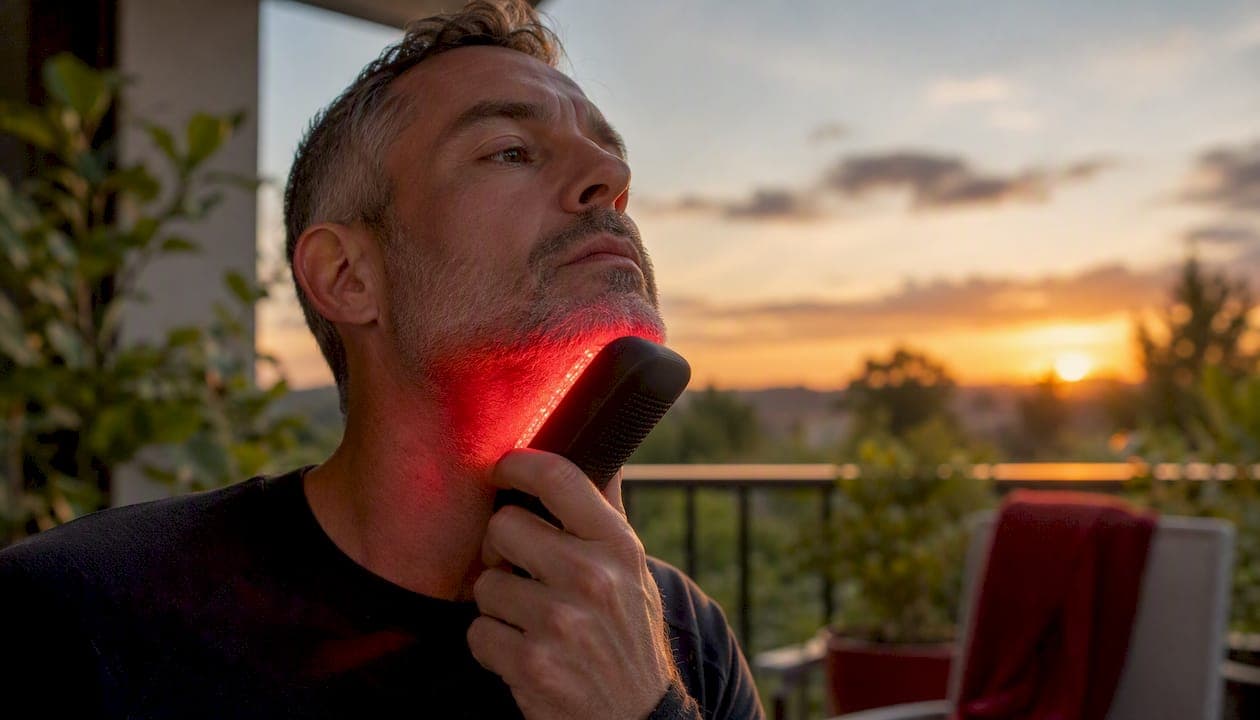
Red light therapy is generally low risk when used correctly, but it is not risk-free. Side effects exist, they are usually mild and short-lived, and most are preventable with the right approach. According to the Cleveland Clinic, short-term use as directed is not associated with increased cancer risk, though misuse can damage skin or eyes.
- Most side effects are mild and temporary — transient redness, warmth, and minor pigment changes that resolve within hours to days.
- Higher risk exists for specific groups — people with photosensitive conditions, those on photosensitizing medications, and those with darker skin tones (Fitzpatrick IV–VI) need extra caution and lower starting doses.
- Stop and consult a clinician if you experience blistering, spreading redness, intense pain, or any sudden vision change after a session.
Table of Contents
- What red light therapy is and how it actually works
- Common red light side effects and how to manage them
- Eye risks and how to protect yourself
- Home devices vs. clinical treatments: what the safety difference looks like
- Does red light therapy increase cancer risk?
- When to stop and see a healthcare professional
- Interactions with other skin treatments and medications
- Key Takeaways
- What the evidence actually means for men over 30
- RedRockit: a private-use option built for daily restoration
- Useful sources and further reading
What red light therapy is and how it actually works
Red light therapy, also called photobiomodulation (PBM), uses visible red light (typically 630–700 nm) and near-infrared light (700–900+ nm) to stimulate cellular energy production. The light penetrates the skin and is absorbed by mitochondria, prompting cells to produce more adenosine triphosphate (ATP). Think of it as sending a signal your cells have been waiting for.
Wavelength matters more than most people realize. Visible red light penetrates a few millimeters into the skin, making it effective for surface-level concerns like wound healing and skin texture. Near-infrared goes deeper, potentially reaching muscle and connective tissue. Neither wavelength is ionizing radiation. Unlike UV light, red and near-infrared light do not break DNA bonds the same way. That distinction is why RLT does not carry the same skin-cancer risk profile as sun exposure.
Non-ionizing does not mean consequence-free, though. Dose, device quality, and session length all shape whether you get a benefit or a burn. Stanford Medicine's review notes that home devices typically do not deliver the irradiance levels needed to affect deep tissue, which also means systemic claims about sleep or joint inflammation lack strong support for standard at-home panels. Realistic expectations matter here.
Pro Tip: If you want to understand the science behind how photobiomodulation works for men specifically, the red light therapy science guide breaks it down without the jargon.
Common red light side effects and how to manage them
Most people tolerate red light therapy well. The American Medical Association confirms that for most people, side effects are mild and temporary. Here is what you might actually experience:
| Side Effect | Typical Timeline | Management |
|---|---|---|
| Transient erythema (redness) | Minutes to a few hours | Cool compress; reduce session length next time |
| Warmth or mild burning sensation | During or just after session | Increase device distance; shorten session |
| Itching or tingling | Hours after session | Usually self-resolving; stop if it worsens |
| Temporary hyperpigmentation | Days to weeks | Reduce dose; consult dermatologist if persistent |
| Blistering | Within hours of overexposure | Stop immediately; seek medical care |
| Mild transient pain | During session | Increase distance; lower irradiance setting |
A few things worth calling out specifically:
- Prolonged hyperpigmentation in darker skin tones is a real risk, not a footnote. The STARS clinical trials identified different maximum tolerated fluences by skin phototype, with dose-limiting adverse events occurring at different fluences in different groups.
- Device misuse causes burns — Pressing a panel directly against skin, or folding a flexible device so it concentrates light, converts a safe dose into a harmful one. This has caused focal blistering in clinical trial settings.
Eye risks and how to protect yourself
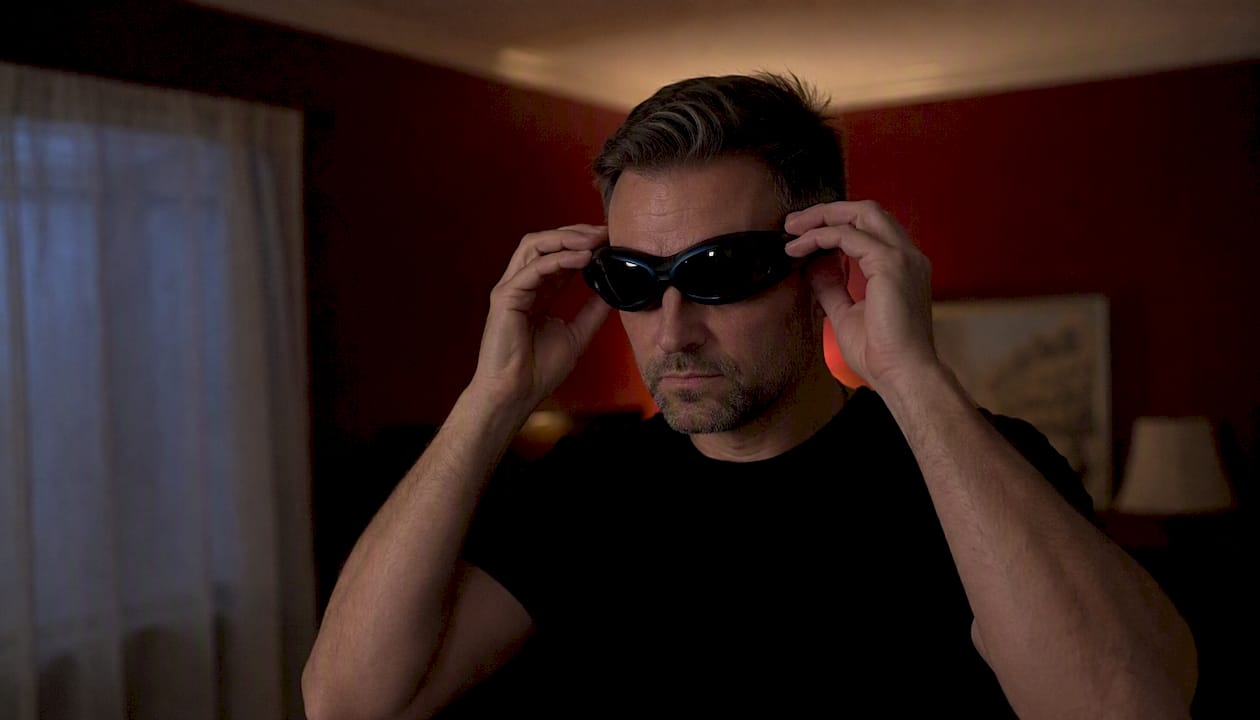
This is the one area where "mild and temporary" does not apply. The retina does not regenerate. Focused or prolonged red or near-infrared light exposure near the eyes can cause retinal damage, and the risk is real even when the light does not feel intense.
Practical protections:
- Use certified light-blocking goggles rated for the wavelengths your device emits. Not sunglasses. Not a sleep mask. Purpose-built goggles.
- Keep the device at the manufacturer's recommended distance from your face.
- Never stare directly into an active device, even briefly.
- Follow manufacturer guidance for any face or scalp treatment protocol.
Pro Tip: Closing your eyes is not adequate protection. The Cleveland Clinic explicitly notes that proper eye protection is required — eyelids do not block enough light to protect the retina from a high-output panel. When in doubt, wear the goggles.
Home devices vs. clinical treatments: what the safety difference looks like
The gap between a home panel and a clinical LED system is not just about price. It is about power, dosing control, and supervision.
| Feature | Typical home device | Clinical LED/laser system |
|---|---|---|
| Irradiance (power density) | Lower; often not labeled | Higher; measured and calibrated |
| Tissue penetration | Surface to shallow | Deeper, wavelength-dependent |
| Dosing control | User-set; often imprecise | Clinician-controlled, protocolized |
| Supervision | None | Trained provider present |
| Adverse event response | Self-managed | Immediate clinical response |
Stanford Medicine is direct: home devices usually do not deliver clinic-level irradiance or the controlled dosing required for deep penetration. FDA clearance for a home device addresses safety for a low-risk device category. It does not validate specific efficacy claims for deep-tissue or systemic effects.
Home-device safety checklist before your first session:
- Confirm the device has FDA clearance (not just "FDA registered")
- Check that irradiance and recommended distance are labeled
- Read the full session-length and frequency guidance in the manual
- Have certified goggles ready before you power it on
- Do a patch test on a small skin area first
- Confirm the device has adequate ventilation and does not overheat
- Know the return/warranty policy before you commit
For a deeper look at red light therapy at home, including practical safety and dosing comparisons, that guide covers the specifics.
Does red light therapy increase cancer risk?
No. Current evidence does not link red or near-infrared photobiomodulation to increased cancer risk when used correctly. The Cleveland Clinic states clearly that short-term use as directed is not associated with increased cancer risk. The mechanism explains why: red and near-infrared light are non-ionizing. They do not break DNA bonds the way UV radiation does.
That said, a few honest caveats:
- Long-term surveillance data are limited. Most safety conclusions come from short-to-medium term trials. Decades-long safety profiles do not yet exist, as Medical News Today notes.
The absence of evidence for harm is not the same as proven long-term safety. Conservative use, documented sessions, and periodic check-ins with your clinician are the right posture.
When to stop and see a healthcare professional
Some reactions tell you to pause and reassess. Others tell you to stop immediately and call someone.
Stop immediately and seek medical care if you experience:
- Blistering or open skin at the treatment site
- Severe or spreading redness beyond the treated area
- Intense pain during or after a session
- Fever combined with a skin reaction
- Any sudden vision change after a session near your face or eyes
Immediate steps:
- Stop using the device.
- Photograph the affected area with a timestamp.
- Keep the area clean and covered if blistered.
- Contact your clinician and bring: device model, session log, photos, and timing of the reaction.
For vision changes, go to urgent care or an emergency room. Do not wait for a scheduled appointment. For skin reactions that are severe or worsening after 48 hours, a dermatologist is the right call. For mild reactions that resolve within a day, reduce your dose and monitor.
Interactions with other skin treatments and medications
Photosensitivity is the most discussed interaction, but it is not the only one worth knowing about.
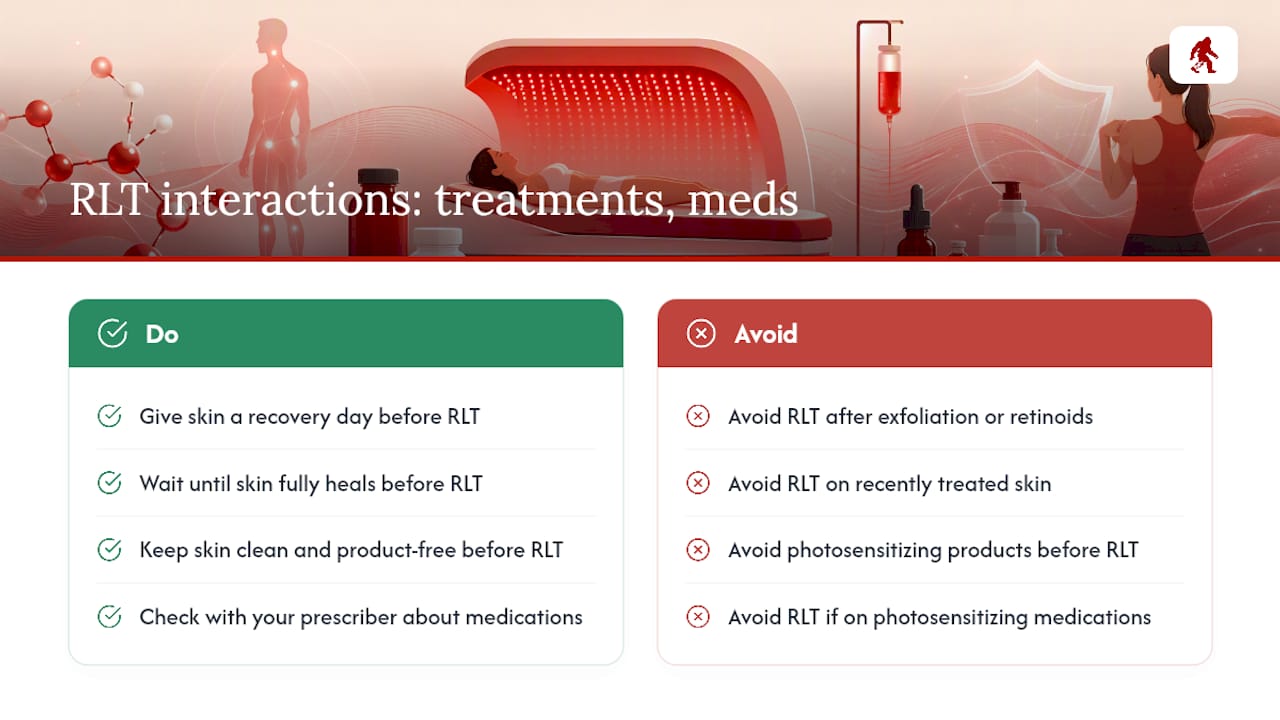
Retinoids and exfoliating acids (tretinoin, AHAs, BHAs) thin the skin barrier and increase sensitivity to any energy-based treatment. Using red light therapy on freshly exfoliated or retinoid-treated skin raises the risk of irritation and hyperpigmentation. Give your skin a recovery day between aggressive topical treatments and an RLT session.
Recent laser resurfacing, chemical peels, or microneedling leave skin in a compromised state. Layering red light therapy on top of an active wound or a recently treated surface can disrupt healing rather than support it. Wait until the skin has fully recovered before resuming RLT.
Topical photosensitizers applied before a session, including some vitamin C serums and certain botanical extracts, can amplify light absorption unpredictably. Keep your skin clean and product-free before treatment unless a clinician has specifically prescribed a photosensitizer as part of a protocol.
Oral medications beyond the obvious photosensitizers: some chemotherapy agents, antifungals (voriconazole), and St. John's Wort all increase photosensitivity. This list is not exhaustive. If you take any prescription medication regularly, a quick conversation with your prescriber before starting RLT is worth the five minutes.
Key Takeaways
Red light therapy is generally safe for most adults when used conservatively, but eye protection, skin-type-appropriate dosing, and medication review are non-negotiable before you start.
| Point | Details |
|---|---|
| Start low and slow | Begin with short sessions 2–3 times per week and escalate only after confirming no adverse reaction. |
| Eye protection is mandatory | Certified light-blocking goggles are required near the face; closed eyes do not protect the retina. |
| Skin tone changes your risk | Fitzpatrick IV–VI skin has lower tolerance thresholds; hyperpigmentation risk is higher at standard doses. |
| Cancer risk is not supported by current evidence | RLT is non-ionizing; short-term use is not linked to increased cancer risk, though long-term data remain limited. |
| Primal Red Co's RedRockit | Designed for conservative daily restoration routines with guided protocols to help men over 30 stay within safe, effective dose ranges. |
What the evidence actually means for men over 30
The clinical picture on red light therapy is more nuanced than most content lets on. The side effect profile is genuinely mild for the majority of users, and the cancer concern is not supported by current evidence. But "generally safe" is not the same as "safe for everyone at any dose."
What I see missing from most conversations about RLT is the dose question. Men over 30 who are building a restoration routine tend to assume that more sessions equal faster results. The STARS trial data tells a different story: exceeding your skin's maximum tolerated fluence does not accelerate recovery. It produces adverse events. The therapeutic window is narrow enough that consistency at a conservative dose outperforms aggressive overuse every time.
For men with darker skin tones, this matters even more. The one-size-fits-all assumption is clinically incorrect. Melanin content changes how your skin absorbs light energy, and that changes where your safe threshold sits. Starting lower and escalating slowly is not timid. It is the smarter protocol.
Individual medical history changes the risk-benefit balance more than any device spec sheet. If you are on prescription medications, managing an autoimmune condition, or have had any cancer treatment, that conversation belongs with your clinician before you start, not after your first reaction.
RedRockit: a private-use option built for daily restoration

If you are a man over 30 looking for a private-use red light device designed around a consistent, guided routine, RedRockit is worth a look. Primal Red Co built it specifically for men who want to maintain their energy, drive, and recovery without walking into a clinic every week. The companion app, Rockit IQ, provides session protocols so you are not guessing at dose or duration.
RedRockit is not a medical device and is not intended to diagnose or treat any condition. For men with specific health concerns, photosensitive conditions, or active medical treatment, consult your clinician before starting any light therapy routine. Learn more about what a daily restoration routine looks like for men over 40, or explore the guided protocol that comes with the device.
Useful sources and further reading
The following sources informed this article. Each is worth bookmarking if you want to go deeper.
- Red Light Therapy: Benefits, Side Effects & Uses
- Red light therapy: What the science says
- Safety of light emitting diode-red light on human skin: two randomized controlled trials
- 6 things patients should know about red light therapy | American Medical Association
- Red Light Therapy: Benefits and side effects
This article is general health information, not medical advice. Confirm current guidance and your personal risk factors with a qualified healthcare professional before starting red light therapy.