
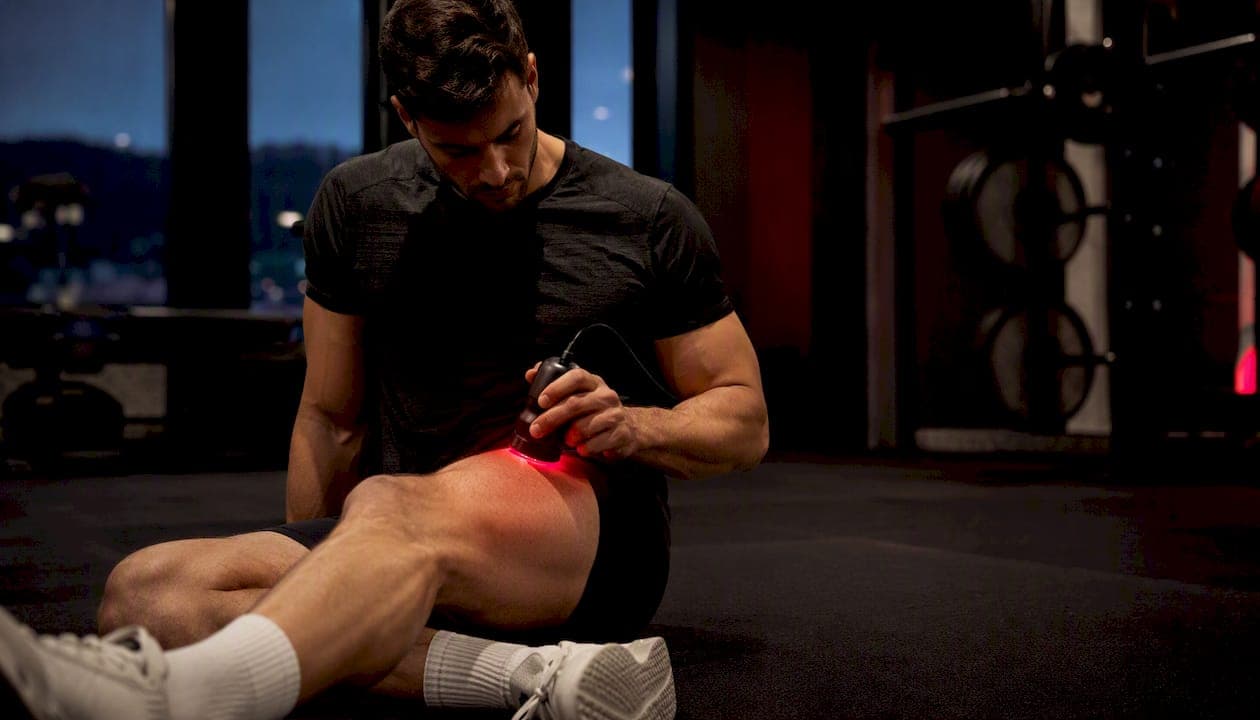
Red light therapy is a legitimate adjunct to physical recovery, not a miracle. The clinical term is photobiomodulation (PBM), and multiple randomized trials and systematic reviews show it can reduce markers of muscle damage, ease delayed-onset muscle soreness, and support tissue repair when the device specs actually match research conditions. Men who train consistently, deal with localized muscle soreness, or feel like their recovery tank never quite fills are the most likely to notice a difference. Men with photosensitizing medications, active cancer lesions, or implanted devices should talk to a clinician before starting.
Three things to do right now: confirm any health conditions or medications with your doctor before your first session, check that any device you consider lists its exact wavelength and irradiance output, and commit to a consistent 3-to-4-week trial before judging results.
Key Takeaways
Red light therapy is a legitimate adjunct for recovery when device specs match research conditions and it is used consistently alongside sleep, nutrition, and training.
| Point | Details |
|---|---|
| Core verdict | PBM reduces muscle damage markers and DOMS in multiple RCTs, but only with correctly specified devices and consistent use. |
| Wavelength check | Confirm your device covers both 600–700 nm (red) and 800–900 nm (NIR) for surface and deep tissue recovery. |
| Dosing calculation | Multiply your device's irradiance (mW/cm²) by session seconds, then divide by 1,000 to get J/cm² delivered. |
| Safety headline | Photosensitizing medications, active cancer lesions, implanted devices, and pregnancy all require clinician clearance before use. |
| Timeline to expect | Most trials showing measurable effects ran 3–8 weeks of consistent use; do not judge results after one or two sessions. |
| RedRockit | Primal Red Co's RedRockit covers research-relevant wavelength bands and pairs with the Rockit IQ app for guided, protocol-driven recovery sessions. |
Further reading and primary sources
- Photobiomodulation and muscle performance/recovery (PMC5167494) — the primary systematic review on PBM's effects on muscle damage markers, DOMS, and performance outcomes
- Red-light photons and the mechanism of photobiomodulation (Frontiers in Photonics) — detailed mechanistic review covering wavelength, chromophores, and cellular pathways
- Red Light Therapy and Post-exercise Recovery (ACE Fitness) — practitioner-level overview of physiology, device considerations, and realistic expectations
- Red Light Therapy: Benefits, Side Effects & Uses (Cleveland Clinic) — clinical overview of uses, safety, and evidence strength by indication
- What the Science Says About Red Light Therapy for Athletic Recovery (Lifehacker) — balanced journalistic review covering marketing overclaims and realistic positioning
- N-of-1 light therapy trial for fatigue (JMIR Formative Research) — feasibility trial illustrating individual response variability and the case for personalized trialing
- Bright light therapy meta-analysis for cancer-related fatigue (PubMed 37797569) — systematic review and meta-analysis on light-based interventions for fatigue outcomes
- Bright white vs. dim red light RCT for fatigue (PubMed 29127575) — blinded RCT illustrating placebo effects and the importance of controlled comparisons in light therapy research
This article is general information, not a substitute for advice from a qualified doctor. Consult a qualified healthcare professional about your own circumstances before acting on anything here.
Table of Contents
- How does red light recovery work at the cellular level?
- What do clinical trials actually show about muscle recovery?
- What device specs and dosing parameters actually matter?
- Is red light therapy safe, and who should avoid it?
- How do you evaluate at-home devices vs. clinical systems?
- Conditions and medications that reduce red light therapy effectiveness
- A practical red light routine for men over 30
- RedRockit brings research-aligned recovery home
- Sources
How does red light recovery work at the cellular level?
The short answer: red and near-infrared light photons reach your mitochondria, trigger a chain of cellular events, and the downstream effects are what make recovery feel different.
Here is how that chain actually works. A photon at the right wavelength hits a chromophore inside the mitochondria, most notably cytochrome c oxidase. That interaction stimulates mitochondrial activity, increases ATP production, and modulates nitric oxide in a way that relaxes blood vessels and improves local circulation. More blood flow means faster clearance of metabolic waste and better delivery of oxygen and nutrients to damaged tissue. That is the signal your body has been waiting for.
The downstream effects relevant to recovery include:
- Increased ATP production — more cellular energy available for repair processes
- Reduced oxidative stress — lower levels of reactive oxygen species that slow tissue healing
- Nitric oxide modulation — vasodilation that improves microcirculation in treated areas
- Reduced inflammatory markers — lower levels of pro-inflammatory cytokines in treated tissue
- Enhanced collagen synthesis — relevant for connective tissue repair after training stress
Wavelength matters more than most marketing copy admits. Red light in the 600–700 nm range penetrates skin effectively and drives the surface-level cellular effects. Near-infrared light in the 800–900 nm range goes deeper, reaching muscle tissue and joints. Most recovery-focused protocols use both bands together, which is why devices that list only a single wavelength deserve a second look.
What do clinical trials actually show about muscle recovery?
The evidence is real, but it is not uniform. That distinction matters when you are deciding whether to invest time and money.
Systematic reviews and randomized controlled trials report that PBM can reduce creatine kinase (CK), reduce DOMS scores, and improve maximal voluntary isometric contraction (MVIC) and torque in some populations according to several trials. The strongest signals come from trained athletes and from protocols that applied PBM either before or immediately after exercise, not hours later.
The outcomes trials typically measured:
- Creatine kinase (CK) — blood marker of muscle fiber damage
- DOMS scores — self-reported soreness ratings at 24, 48, and 72 hours post-exercise
- MVIC / torque — objective measures of muscle force output
- Blood lactate — metabolic fatigue marker
- Pain scales — visual analog or numeric rating scales for localized pain
Results are heterogeneous. Different devices, wavelengths, irradiance levels, and dosing protocols make direct comparison difficult. Recreational exercisers show more variable results than trained athletes, likely because baseline inflammation and damage levels differ. A feasibility N-of-1 randomized crossover trial on light therapy for fatigue found small but statistically significant improvements with both bright and dim light interventions, and it highlighted something important: individual responses vary enough that a personal trial period is more informative than population averages.
One comparison worth knowing: some trials have tested PBM against cryotherapy for post-exercise recovery. PBM generally performed comparably or slightly better on CK reduction in those head-to-head comparisons, though the evidence base is small. One consideration from that research is that combining PBM with cryotherapy may actually reduce PBM's effectiveness, since cold vasoconstriction works against the vasodilation PBM promotes. Use them separately, not stacked.
The light therapy fatigue literature adds useful context. A meta-analysis of bright light therapy trials reported significant reductions in cancer-related fatigue and insomnia, with subgroup analyses pointing to protocol specifics (duration, intensity) as key variables. And a 4-week blinded RCT found that bright white light produced greater fatigue reductions than dim red light, though both groups improved. That placebo and expectancy effect is real in light therapy research, which is why blinded trials matter and why you should track your own results objectively rather than relying on how you feel after session one.
What device specs and dosing parameters actually matter?
This is where most buyers go wrong. They pick a device based on price or an influencer post, and then wonder why they are not seeing results. The specs are the whole game.
Wavelength and penetration depth
| Wavelength Band | Range | Primary Target | Typical Dose Range |
|---|---|---|---|
| Red | 600–700 nm | Skin, superficial tissue | A typical dose range used in protocols is often reported without a specific maximum |
| Near-infrared (NIR) | 800–900 nm | Muscle, joint, deeper tissue | Varies by device and protocol |
Red wavelengths at 600–700 nm drive surface-level cellular effects and skin repair. NIR wavelengths penetrate deeper, reaching muscle and connective tissue. For recovery from training, you want a device that covers both bands.
Understanding irradiance vs. energy dose
Irradiance is the power hitting your skin per unit area, measured in mW/cm². Energy dose (fluence) is how much total light energy you deliver, measured in J/cm². The relationship is simple:
J/cm² = (mW/cm² × seconds) ÷ 1,000
So a device delivering 50 mW/cm² run for 200 seconds delivers 10 J/cm². A device delivering 20 mW/cm² needs 500 seconds to reach the same dose. If a vendor cannot tell you the irradiance at your treatment distance, you cannot calculate your dose, and you are guessing.
Device spec checklist
Before you buy or book, confirm these:
- Exact wavelength(s) listed in nanometers (not just "red" or "infrared")
- Irradiance in mW/cm² at the distance you will actually use it
- Panel or treatment area size relative to the body part you are targeting
- Any FDA clearance or registration statement
- Published clinical evidence or peer-reviewed studies using that specific model or comparable specs
Pro Tip: If a device's marketing page leads with celebrity endorsements and lifestyle photos but buries or omits irradiance specs, that is your signal to keep looking. Professional guidance is clear that many consumer devices are underpowered compared with research tools. A device that cannot match research-grade irradiance will not replicate research-grade results.
Timing: pre-conditioning vs. post-exercise
PBM has been tested in both pre- and post-exercise protocols. Pre-conditioning (applying PBM before training) appears to reduce subsequent muscle damage markers in some trials. Post-exercise dosing (within 30–60 minutes after training) targets the acute inflammatory response. Most practical home protocols use post-exercise application because it fits naturally into a cooldown routine. Session frequency in trials typically ranges from 3 to 5 sessions per week during active training blocks.
Is red light therapy safe, and who should avoid it?
For most healthy adults, red light therapy at typical consumer device parameters carries a low side-effect profile. Trials rarely report anything beyond mild skin warmth or transient redness at the treatment site, and serious adverse events are not a feature of the published literature for standard PBM devices.
That said, there are clear situations where you need to pause and talk to a clinician first.
Contraindications and caution points:
- Photosensitizing medications — drugs like certain antibiotics (tetracyclines), diuretics, retinoids, and some antidepressants can increase skin sensitivity to light. If you are on any of these, consult your prescribing physician before using a PBM device.
- Active cancer lesions — applying light directly over a known or suspected malignant lesion is not recommended without oncology guidance. This is a caution, not a blanket ban on PBM for cancer survivors, but it requires clinical supervision.
- Implanted electronic devices — pacemakers and similar devices warrant a conversation with your cardiologist before starting any light therapy protocol near the chest.
- Pregnancy — there is insufficient safety data for use during pregnancy. Skip it until after delivery and consult your OB.
- Serious systemic illness — if you are managing an active autoimmune flare, severe infection, or similar condition, get clearance first.
Eye protection is non-negotiable. Even LEDs at therapeutic intensities can cause retinal stress with direct exposure. Wear the protective goggles that come with your device, or close your eyes and look away from the panel during treatment.
How do you evaluate at-home devices vs. clinical systems?
The gap between a $60 handheld and a $3,000 clinical panel is real, but price alone does not tell you which one is worth your time. The spec sheet does.
Numbered steps to compare two options
- Run the spec check. Get the exact wavelength(s), irradiance at your treatment distance, and panel size from both options. Calculate the J/cm² dose you would receive in a realistic session length.
- Check the trial or return policy. A vendor confident in their device offers a meaningful trial window. If the return policy is 7 days or less, that is a red flag.
- Ask about clinical evidence. Does the vendor cite peer-reviewed studies using their specific device or comparable specs? Generic "studies show red light works" copy is not the same as evidence tied to that product's actual output.
- Start with a localized trial. Before committing to full-body sessions, apply the device to one muscle group for 3–4 weeks and track soreness, recovery time, and performance. Objective data beats subjective impressions.
What to expect on cost and timeline
At-home LED panels designed for recovery typically range from a few hundred dollars to over a thousand, depending on panel size and irradiance output. Clinical systems used in sports medicine settings run higher. For a home setup guide that covers what to look for in 2026, the key benchmark is irradiance: panels delivering under 20 mW/cm² at your treatment distance are unlikely to match research conditions.
Timeline expectations from trials: most studies showing measurable effects on CK or DOMS ran for 3–8 weeks of consistent use. Do not judge a device after two sessions. Give it a structured trial, track your numbers, and reassess.
Red flags in marketing claims:
- "Clinically proven" with no linked study
- Wavelength listed as a color name only, not a nanometer range
- Irradiance claims without specifying the measurement distance
- Before/after photos as the primary evidence
Conditions and medications that reduce red light therapy effectiveness
Some situations do not just make PBM less safe. They make it less effective, or they change how you should approach it.
Medications that affect light sensitivity or tissue response:
Photosensitizing drugs are the most important category. Tetracycline antibiotics, fluoroquinolones, certain NSAIDs (like naproxen at high doses), thiazide diuretics, and some antidepressants (particularly tricyclics) can alter how skin and tissue respond to light. The effect is not always predictable, and it is not always a contraindication, but it changes the risk-benefit calculation. Talk to your prescriber.
Immunosuppressants are another consideration. If your immune response is pharmacologically blunted, the inflammatory modulation that PBM relies on may be altered. The mechanism still operates at the mitochondrial level, but downstream tissue effects may differ.
Conditions that warrant modified protocols or clinical supervision:
- Thyroid disorders — avoid direct application over the thyroid gland. Some practitioners extend this caution to the anterior neck generally.
- Active skin conditions (psoriasis flares, eczema, open wounds) at the treatment site may respond unpredictably. Healed skin is a better target than actively inflamed or broken skin.
- Epilepsy — flicker rates in some LED devices can theoretically trigger photosensitive responses. Check device specifications and consult your neurologist.
- Lupus and other photosensitive autoimmune conditions — these are relative contraindications. Clinical supervision is appropriate before starting any light therapy protocol.
The honest framing here is that PBM is not a high-risk intervention for most healthy adults. But "most healthy adults" is doing real work in that sentence. If you have a chronic condition, are on a medication list, or are managing anything beyond routine training stress, a five-minute conversation with your doctor before your first session is worth more than any amount of online research, including this article.
A practical red light routine for men over 30
Red light therapy works best when it sits inside a recovery system, not when it replaces one. Sleep, nutrition, and progressive training are the foundation. PBM is the signal amplifier, not the signal itself.
Here is how to build it into a real week without overthinking it.
The basic routine structure:
Use your red light device post-workout, within 30–60 minutes of finishing training. Target the muscle groups you just worked. A session of 10–20 minutes at the appropriate irradiance for your device is a reasonable starting point based on trial protocols. On rest days, a shorter maintenance session (5–10 minutes) over areas of chronic tightness or previous injury can support ongoing tissue health.
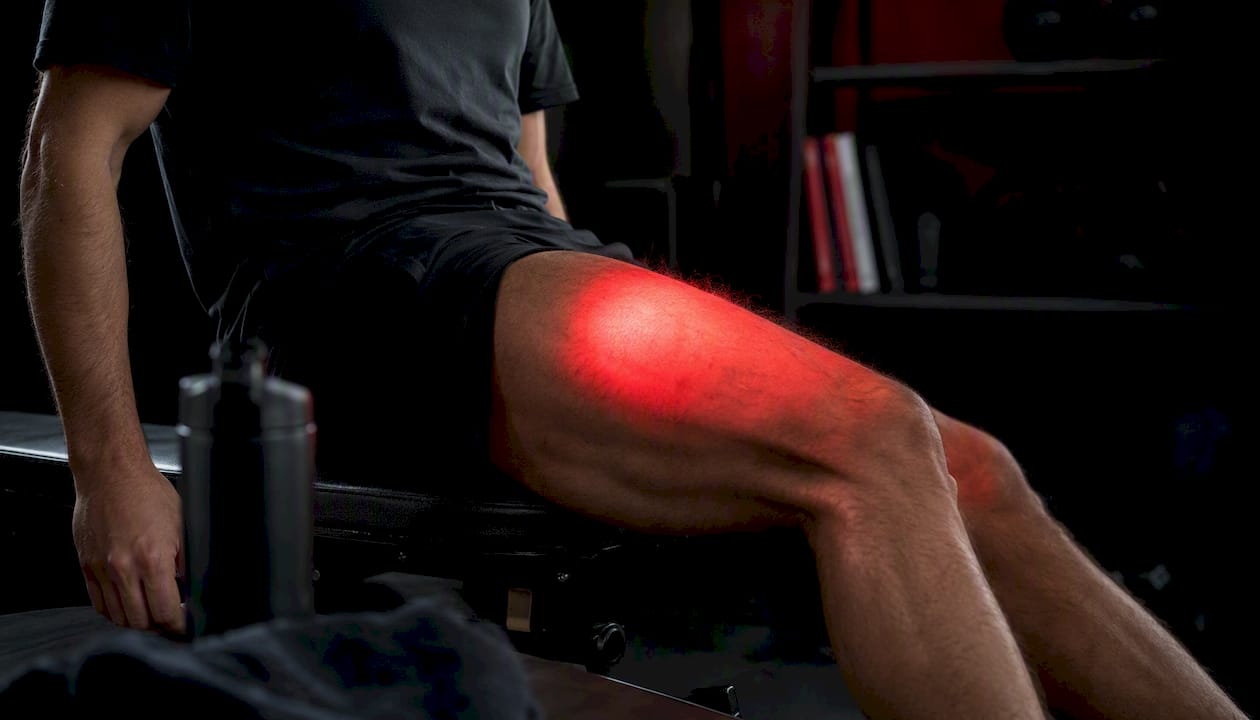
A session frequency of a few times per week during active training is commonly used in trials. Consistency matters more than any single session length.
What to track during your first 4 weeks:
- Soreness rating (1–10) at 24 and 48 hours post-training
- Time to feel "ready" for the next session of the same muscle group
- Sleep quality (subjective, 1–10)
- Energy level mid-afternoon (the hour when most men over 30 feel the dip)
On combining modalities:
Cold therapy (ice baths, cold plunges) and PBM both have evidence behind them, but stacking them in the same session may undercut PBM's vasodilation mechanism. If you use both, separate them by at least a few hours. Massage and PBM pair well, with no known interaction concerns. Some men find PBM before a massage session loosens tissue and makes the manual work more effective.
For men who want to understand how this fits into a broader restoration picture, including what happens to energy, drive, and recovery as testosterone shifts after 30, the science behind red light therapy for men over 30 is worth reading alongside this article.
The Rockit IQ app that pairs with RedRockit provides guided session protocols mapped to research-informed dosing, which removes the guesswork from timing and session length.
RedRockit brings research-aligned recovery home
Most men over 30 are not looking for a clinic appointment. They want something they can use consistently, at home, without a prescription or a waiting room.

RedRockit is Primal Red Co's private-use red light wellness device built specifically for that gap. It covers both red and near-infrared wavelength bands relevant to recovery protocols, and it pairs with the Rockit IQ companion app for guided sessions that map to research-informed timing and dosing. No guessing how long to sit in front of it. No wondering if you are hitting the right parameters.
This is not TRT. It is not a clinical device. It is a restoration tool for men who want to stay ahead of the decline, not react to it after the fact. For men who feel the shift in recovery, energy, and drive and want to do something about it before bigger decisions are on the table, the RedRockit Activation Method is the practical next step. Check the product page for current specifications, warranty details, and what the Rockit IQ protocol looks like in practice.
Sources
- Photobiomodulation and muscle performance/recovery review (PMC5167494)
- Red-light photons on skin cells and the mechanism of photobiomodulation
- Red Light Therapy and Post-exercise Recovery
- Red Light Therapy: Benefits, Side Effects & Uses
- What the Science Says About Red Light Therapy for Athletic Recovery (so Far) | Lifehacker
- A Series of Personalized Virtual Light Therapy Interventions for Fatigue: Feasibility Randomized Crossover Trial for N-of-1 Treatment
- Effect of bright light therapy on cancer-related fatigue and related symptoms: A systematic review and meta-analysis of randomized controlled trials
- Randomized trial of bright white light vs dim red light for cancer-related fatigue (PubMed 29127575)