
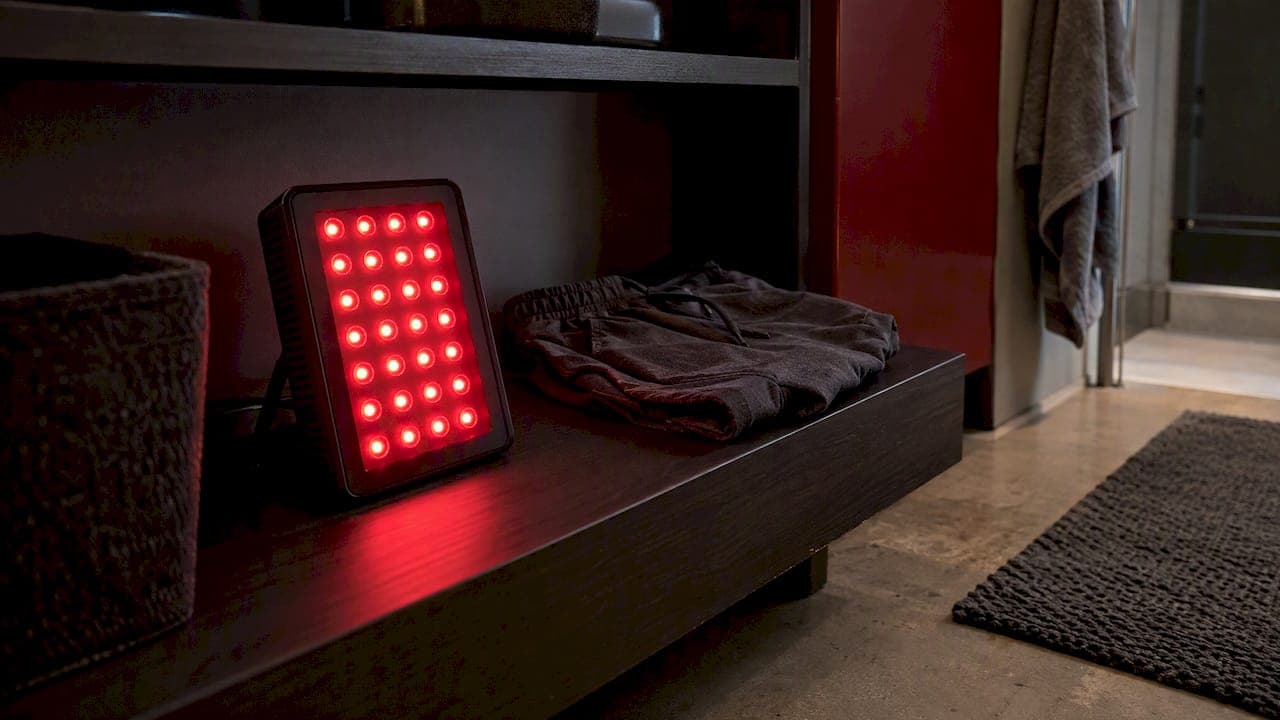
Testicle tanning is the trend of aiming red light, or sometimes sunlight, at the scrotum in the hope of raising testosterone. The honest answer: there is no good evidence it works in humans, and there are real reasons for caution. If you are asking because you feel your drive, energy, or recovery slipping, that question deserves a better answer than a heat lamp and a hunch. Here is the straight version.
TL;DR
- "Testicle tanning" is mostly a nickname for pointing red light at the testicles. Reporting on the trend calls it a misnomer and finds no scientific evidence that light on the scrotum raises human testosterone.
- The studies fans cite are old, tiny, or done in animals. Urologists also warn that heat near the testicles can hurt sperm health and testosterone production.
- UV exposure is a separate and worse idea: it has been linked to genital tumors and lower sperm counts.
- Real low testosterone is diagnosed with symptoms plus two early-morning blood tests, not with a lamp.
- Feeling the shift after 30 is real. The smart move is to get your numbers, fix the basics, and build a routine you can keep.
Table of Contents
- What testicle tanning actually is
- Where the idea came from
- Does red light on the testicles raise testosterone?
- The risks nobody puts in the thumbnail
- Red light, UV, near-infrared: not the same thing
- Why men went looking for this in the first place
- What to do instead: a sane path
- What we think
- A private routine built for men over 30
- FAQ
- Sources
What testicle tanning actually is
The name sounds like a joke, and the internet treated it like one. But men were serious about it. The idea took off after media coverage and an influencer pushed it, and researchers who tracked public interest saw searches climb right after.
Two things get lumped together under the label:
- Red light therapy on the scrotum. This is the original version. The same research describes the practice as first being exposure of the scrotum to red-light therapy.
- Sunning, or UV exposure. Some men skip the device and expose the area to sunlight. That is a different thing with different risks, covered below.
People also search for it as "red light on balls." Same idea, blunter words. The claim is always the same: light hits the testes, the testes make more testosterone, you feel like yourself again.
It is a tidy story. Tidy stories are where men get burned.
Where the idea came from
Proponents usually point to a 1939 study of men with depressive mental states. It reported higher urinary androsterone, which is a testosterone metabolite. That is the study the trend leans on.
Look at what that is. A study from the late 1930s. Men with depression, not men with low testosterone. A urine marker, not a blood measurement of testosterone. And it was not about aiming red LEDs at the scrotum the way people do today.
Other items get cited too: small studies, outdated ones, inconclusive ones, and work done on animals. Fact-checkers who dug into the claim found no controlled study showing red light therapy raises testosterone. The human bright-light study often quoted was small, and its researchers said a larger study was needed before anyone made clinical recommendations.
That is not the same as proof it does nothing. It means nobody has shown it does something. Those are very different positions, and anyone selling certainty in either direction is ahead of the data.

Does red light on the testicles raise testosterone?
On the evidence we have: no, nobody has shown that it does.
The Skeptic write-up states plainly that there is no scientific evidence that exposing the testicles or scrotum to red light, or any light therapy, increases testosterone in humans. Medical experts quoted in the fact-check coverage say the practice is not backed by scientific research and is not a medically approved treatment.
The wider picture is just as sobering. A 2025 appraisal in the Canadian Urological Association Journal found a significant gap between media claims and the scientific literature on alternative therapies for men's health, and called for larger trials so doctors can counsel patients properly.
So if a video tells you a few minutes of red light on your testicles will fix your T, ask one question: where is the controlled human trial? You will not find it.
The risks nobody puts in the thumbnail
Here is where we stop being neutral. We think men should hear this part loudly.
Heat
The testicles hang outside the body for a reason. They like to run cooler. Urologists quoted in the fact-check report warn that red light devices used on the scrotum may produce heat, which could hurt testosterone production and sperm health. Dr. Amin Herati, director of male infertility at Johns Hopkins, is quoted saying the potential for heat damage makes these devices a possible risk rather than a benefit for male hormone health.
This fits the broader literature. Heat stress from external sources has been clinically linked to temporary testicular derangements. Temporary is better than permanent. It is still the opposite of what you are trying to achieve.
UV and sunning
If the plan is to lie in the sun with your shorts off, stop. Excessive UV exposure may lead to higher rates of genital tumor formation and decreased sperm counts. The skin down there is thin and rarely exposed. It is not built for tanning.
The hidden cost: time and false hope
The same researchers described testicle tanning as an evidence-lacking and potentially dangerous health trend. The danger is not only physical. A man who spends six months aiming a lamp at his groin is a man who did not get his blood drawn, did not check his sleep, did not ask about thyroid, medications, or sleep apnea. Months pass. The tank keeps not filling.
If you do have a skin condition, are on photosensitizing medication, or are trying to conceive, talk to a urologist before putting any light or heat source near the area. Our own pages on red light side effects and contraindications walk through the questions a clinician would ask.
Red light, UV, near-infrared: not the same thing
Men mix these up constantly, so here is a quick sorting table.
| Type of light | What it is | What the evidence says for testosterone | Main concern near the scrotum |
|---|---|---|---|
| Red light | Visible light at the red end of the spectrum, used in wellness devices | No human evidence of a testosterone increase | Heat from the device |
| Near-infrared | Invisible light just past red, often paired with red in devices | No human evidence of a testosterone increase | Heat from the device |
| Sunlight or UV | Ultraviolet from the sun or tanning beds | The 1930s sunning study is the origin story, nothing modern | Genital tumors, lower sperm counts |
The takeaway: none of the three has earned a place on your testicles. Dose matters too. We wrote about what happens when exposure stacks up in our piece on red light overexposure. More is not better.
Why men went looking for this in the first place
Let's be fair to the guys trying it. They are not stupid. They are tired.
They notice the workout that used to bounce back in a day now takes three. Morning energy that came automatically now takes coffee and willpower. Drive at work, drive at home, drive in the bedroom: all a notch lower. A wife notices her husband getting quieter, more distant, more couch than man. Nobody told them it was coming, and the main answer from the culture is "get the shot or accept it."
So when a clip says there is a cheap, private, natural fix, of course it spreads. The need is real. The proposed fix is the problem.
What to do instead: a sane path

Step 1: Find out whether your testosterone is actually low
Symptoms alone cannot tell you. Fatigue, low drive, and poor recovery have many causes. Guidelines from the American Urological Association say a diagnosis of low testosterone needs relevant symptoms and signs plus two separate early-morning blood tests showing low levels. The Endocrine Society sets the same bar.
So: book an appointment, ask for morning labs, ask for them twice. That is the starting line, and it is free of hype.
Step 2: Do the unglamorous basics
The same AUA guideline recommends physical activity and weight management for men concerned about low testosterone. That is the boring truth. Lift. Walk. Sleep seven to eight hours. Cut the habits that drain you. Get your sleep checked if your partner says you snore.
Step 3: Bring your partner in
If you are the wife or partner reading this: you are not imagining the change, and you are not nagging. Offer to go to the appointment. Ask what he has noticed. Low energy, withdrawal, and less interest in intimacy can come from testosterone, stress, sleep, mood, or something else. The only way to know is to measure and talk.
Step 4: Add a routine you can actually keep
Once you have a baseline and a clinician in the loop, a restoration routine is the sustainable part. Not a stunt. A habit. We cover what that looks like in our guides to red light therapy for men and red light therapy and testosterone. For a closer read of this exact trend, see our breakdown of testicular red light therapy.
If you want to understand how professional red light sessions are typically structured, some facilities offer red light therapy sessions of 10 to 20 minutes, which gives you a sense of how short and controlled a proper protocol is compared with a lamp aimed wherever the internet suggests. And for context on the wider category of unproven treatments marketed for hormone health, a physician-led men's health treatments page shows what a medically supervised conversation looks like.
What we think
We built Primal Red Co. for men over 30 who feel the shift coming and want to act before bigger decisions land on the table. We are not a clinic. We are not TRT. We do not diagnose, prescribe, or tell any man he is broken.
And we will not tell you to tan your testicles.
Here is our view. The testicle tanning wave proves something we already knew: men are hungry for options between "do nothing" and "start hormone therapy." That hunger is legitimate. But hunger is exactly when bad ideas travel fastest. A trend with no human trials and a heat risk is not a restoration plan. It is a gamble with the one part of your body you least want to gamble with.
YOU HAVEN'T LOST IT. Your body is sending a signal, and you are right to listen. Listening means getting labs, tightening up sleep, training, and eating, and choosing tools that are designed for private daily use with a clear routine behind them. It means understanding your options before TRT, not skipping the questions.
We would rather lose a click than send a man down a path that costs him months and maybe more. If it helps you, we will say it again: measure first, then build.
— Nurse Rachel
A private routine built for men over 30
If you are looking for a non-prescription way to support daily energy, drive, and recovery, that is what we make. RedRockit is a private-use red light wellness device with a companion app, Rockit IQ, that guides your session protocols, so you are following a plan instead of improvising. It is not a drug, not a supplement, and there are no subscriptions or medical appointments required to use it.

It is a wellness tool, not a treatment for low testosterone, and it is not a substitute for lab work. See how it fits a routine on the RedRockit page, or read about male vitality after 40 if you want the bigger picture first.
FAQ
Does testicle tanning increase testosterone?
There is no evidence that it does in humans. Studies cited by supporters are small, old, inconclusive, or done in animals. Medical experts say the practice is not supported by scientific research.
Is red light on the balls dangerous?
It can be. Urologists warn that red light devices on the scrotum may produce heat, which could harm sperm health and testosterone production. UV or sun exposure is worse, since it has been linked to genital tumors and lower sperm counts. If you are trying to conceive or have skin concerns, see a urologist first.
How do I know if my testosterone is actually low?
You need a clinical evaluation. Guidelines call for relevant symptoms plus two separate early-morning blood tests showing low levels. Ask your doctor or a urologist to order them.
What can I do for low energy and drive without TRT?
Start with labs to rule out a medical cause. The AUA guideline recommends physical activity and weight management for men concerned about low testosterone, and sleep is a close third. After that, build a consistent routine you can keep, and talk through any tool you add with your clinician.
Sources
- Testicle Tanning and Perineal Sunning (Skeptic)
- No, red light therapy isn't a medically approved treatment for testosterone (NewsCenter Maine)
- Evaluating the Public's Interest in Testicle Tanning (PMC)
- A systematic appraisal of emerging alternative therapies in men's health (CUAJ, 2025)
- Testicular Cancer: Genes, Environment, Hormones (PMC)
- Evaluation and Management of Testosterone Deficiency: AUA Guideline
- Red light therapy sessions
- Men's health treatments