
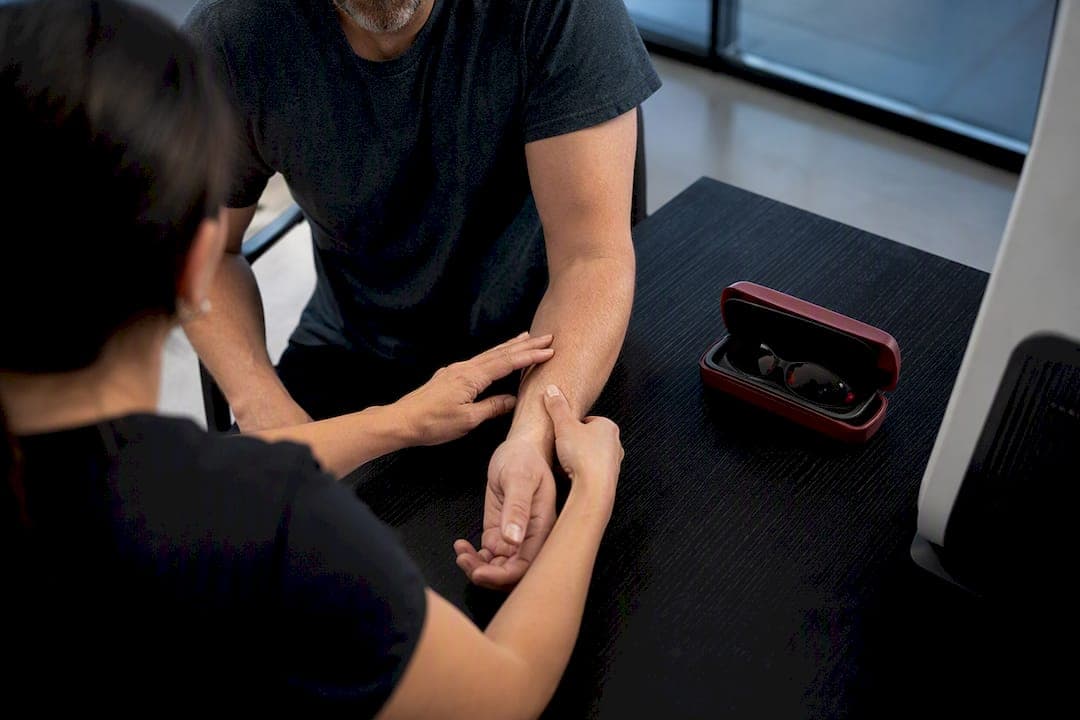
Red light therapy is off the table if you have active cancer or a suspicious lesion in the treatment zone, a known photosensitivity disorder, or you're taking photosensitizing medication. The same goes for treating over the abdomen during pregnancy, a history of photosensitive epilepsy, or recent eye surgery. If any of that applies to you, stop and get medical clearance before your next session. Once you're cleared, stick to FDA-cleared devices, follow the manual, and wear protective eyewear when it's recommended.
TL;DR:
- Red light therapy is contraindicated for active cancer, suspicious lesions, photosensitivity disorders, and during pregnancy over the abdomen or breasts without medical approval.
- Absolute contraindications include current or suspected malignancies and diagnosed photosensitive epilepsy, while relative ones involve conditions like autoimmune disease or dark skin near the treatment area, requiring clinician clearance or protocol adjustments.
- Those taking photosensitizing medications such as tetracyclines, retinoids, or certain antifungals must consult their prescriber before continuing therapy, as these increase photosensitivity risks.
- Precautions for people with tattoos, darker skin tones, or recent eye surgery include starting with lower doses, patch testing, and seeking ophthalmology or dermatologist advice to prevent adverse reactions.
- Always document device settings, skin responses, and discuss medical history to ensure safe use, especially because dosing standards still vary, and many risks are not fully understood.
Table of Contents
- Absolute Vs. Relative Red Light Therapy Contraindications
- The Full List: Conditions and Situations That Call for Caution
- What To Tell Your Clinician Before You Start
- What FDA Clearance Actually Tells You (And What It Doesn't)
- How Primal Red Co Approaches Safety at Home
- The Real Gap In Most Red Light Therapy Advice
- Where This Information Comes From
- Sources
- FAQ
Absolute Vs. Relative Red Light Therapy Contraindications
Not every red flag means "never." Clinicians split contraindications into two buckets, and knowing which bucket you're in changes everything about how you move forward.
Absolute contraindications mean don't treat, period, until the underlying issue is resolved or a specialist signs off. Relative contraindications mean you might still be a candidate, but only with a clinician's clearance, a modified protocol, or both.
The biology behind this split matters. Photobiomodulation works by stimulating activity inside cells, mitochondria pick up the signal and ramp up energy production. That's the whole appeal for recovery and skin health. It's also exactly why clinicians get nervous about pointing light at tissue that might already be growing where it shouldn't. Stimulating cellular activity in healthy tissue is the goal. Doing it over an undiagnosed lump is a gamble nobody should take without answers first.
Here's how the two categories typically break down in practice:
- Absolute (do not treat): active or suspicious malignancy in the treatment area, diagnosed photosensitive epilepsy, undiagnosed skin lesions of unknown origin.
- Relative (treat only with clearance or adjusted settings): pregnancy, recent surgery, autoimmune conditions, photosensitizing medication use, darker skin tones near the treatment site.
A clinician facing an absolute contraindication excludes the area entirely. A relative one gets a judgment call: lower the fluence, shorten the session, avoid pulsed settings, or wait until a specialist weighs in. That distinction is the difference between "no" and "not yet, not like this."
The Full List: Conditions and Situations That Call for Caution
This is the part most articles skim past. Here's the detail, condition by condition, so you know exactly what to flag before you ever turn a device on.
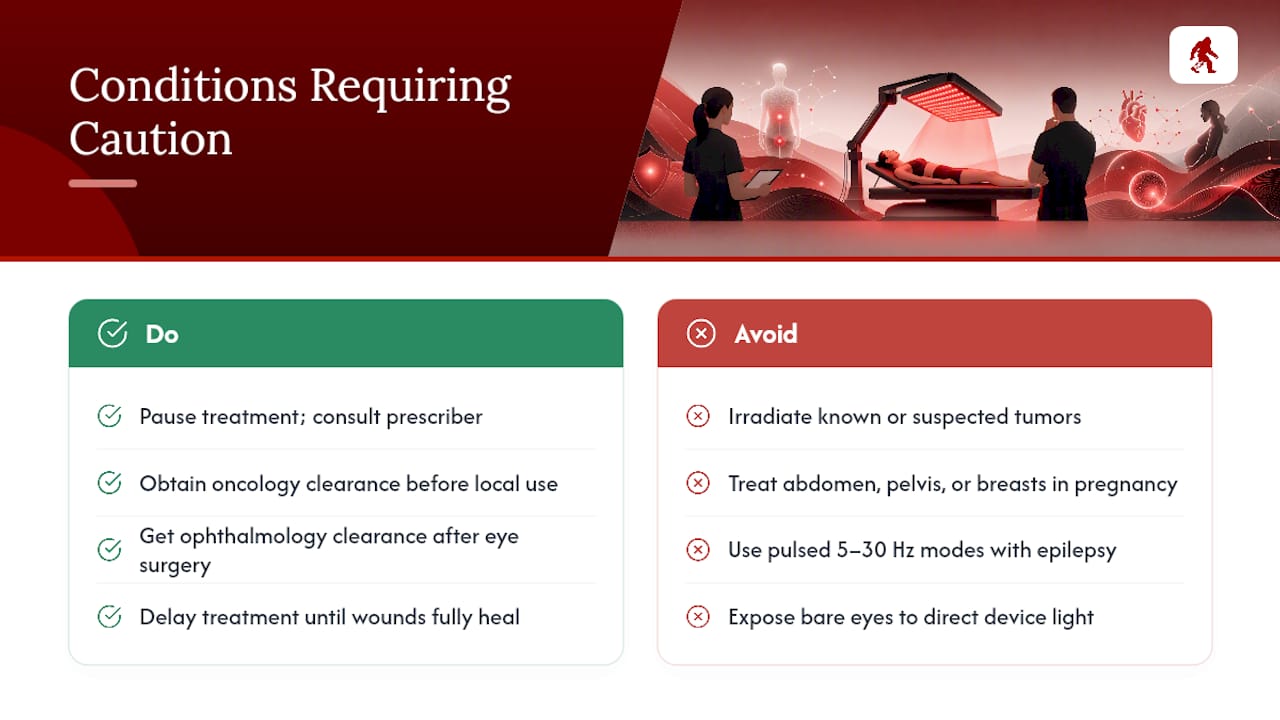
Photosensitivity disorders and photosensitizing medications. Conditions like lupus or porphyria make skin react abnormally to light exposure, and red light therapy is not exempt from that risk. Medications complicate things further. Common culprits include tetracycline antibiotics, fluoroquinolones, retinoids (topical or oral), certain antifungals, some diuretics, and even the herbal supplement St. John's Wort. If you're on any of these, pause treatment and talk to your prescriber before restarting.
Active cancer or suspicious lesions. This is the contraindication clinicians take most seriously. Photobiomodulation is used safely in some oncology settings, but only on non-tumor areas and under direct clinician supervision, for things like managing radiation-induced skin damage. Irradiating a known or suspected tumor is a different story entirely. The theoretical concern is straightforward: if light stimulates cellular activity, you don't want that happening in tissue that might already be proliferating abnormally. Get oncology clearance before any local treatment near a current or recent cancer diagnosis.
Pregnancy and lactation. Avoid direct treatment over the abdomen, pelvis, or breasts. This isn't because researchers have found harm. It's because they haven't studied it enough to rule it out, and "unknown" is not the same as "safe." Err conservative here.
Epilepsy and photosensitive seizures. Pulsed light settings, particularly in the 5 to 30 Hz range, carry a documented seizure risk for people with photosensitive epilepsy. If that's part of your history, avoid pulsed modes altogether and stick to steady, continuous light only after a clinician confirms it's appropriate.
Eye safety and recent eye surgery. Never expose bare eyes to direct light from a device. If you've had recent eye surgery, cataract removal, LASIK, retinal procedures, get ophthalmology clearance before treating anywhere near your face, and use the eye protection that came with your device every time.
Open wounds, infections, recent burns, or steroid-treated skin. Delay treatment until the area has healed. Broken skin barriers and inflamed tissue respond unpredictably to added light exposure, and layering a new stimulus onto an already-compromised area rarely ends well.
Tattoos and darker skin tones. This one surprises people. Tattoo ink absorbs light differently than surrounding skin, which raises the risk of localized heating and blistering. Separately, clinical research on LED red light has found that people with darker skin pigmentation tolerate lower maximum doses before blistering occurs than people with lighter skin, which means starting parameters need to shift accordingly. If you have tattoos or deeper skin tones, start low, patch test first, and don't assume the "standard" setting applies to you.
Thyroid region. Avoid pointing devices directly at the neck over the thyroid without medical advice. This gland is sensitive to a lot of external inputs, and there isn't enough data to call this a low-risk zone by default.
Other situations worth flagging. Immunosuppression, active autoimmune disease, or a personal history of systemic cancer all warrant a conversation with your doctor before you start a routine, even if none of the absolute contraindications technically apply.
Pro Tip: Keep a simple log every time you use a device: date, body area, duration, distance from skin, and how your skin looked 24 hours later. If something goes sideways, that log is the fastest way for a clinician to figure out what happened.
The through line across every one of these categories: start low, patch test small areas first, and document what you see. Red light therapy hasn't been linked to skin cancer the way UV exposure has, but dosing standards still aren't fully settled, which means conservative defaults protect you better than optimistic ones. Our guide to red light therapy side effects covers what mild irritation actually looks like versus something that needs medical attention.
What To Tell Your Clinician Before You Start
A five-minute conversation before your first session beats a confused phone call after a bad reaction. Here's what to bring to that conversation, whether it's with your doctor, a dermatologist, or a spa operator running the intake.
- List every medication and supplement you're taking, especially antibiotics, retinoids, diuretics, antifungals, and herbal products like St. John's Wort.
- Disclose your full relevant medical history: any current or recent cancer diagnosis, known photosensitivity disorders, epilepsy, current pregnancy, recent surgeries (especially eye surgery), and any immunosuppressive condition or medication.
- Know your device's basic specs: wavelength range, whether it runs continuous or pulsed light, its FDA-clearance status, and the manufacturer's recommended session duration and distance from skin.
- Run a patch test first. Treat a small one to two centimeter patch of skin for a short burst at a low setting, then wait 24 to 48 hours and check for redness, blistering, or pigment changes before treating a larger area.
- Ask for a specialist referral when it applies. An oncologist for any cancer history, a dermatologist for skin conditions or darker skin tones starting a new routine, and an ophthalmologist after any recent eye procedure.
Bringing this list to your clinician does more than protect you. It gives them the specific information they need to say yes with confidence instead of a vague, hedged maybe.
What FDA Clearance Actually Tells You (And What It Doesn't)
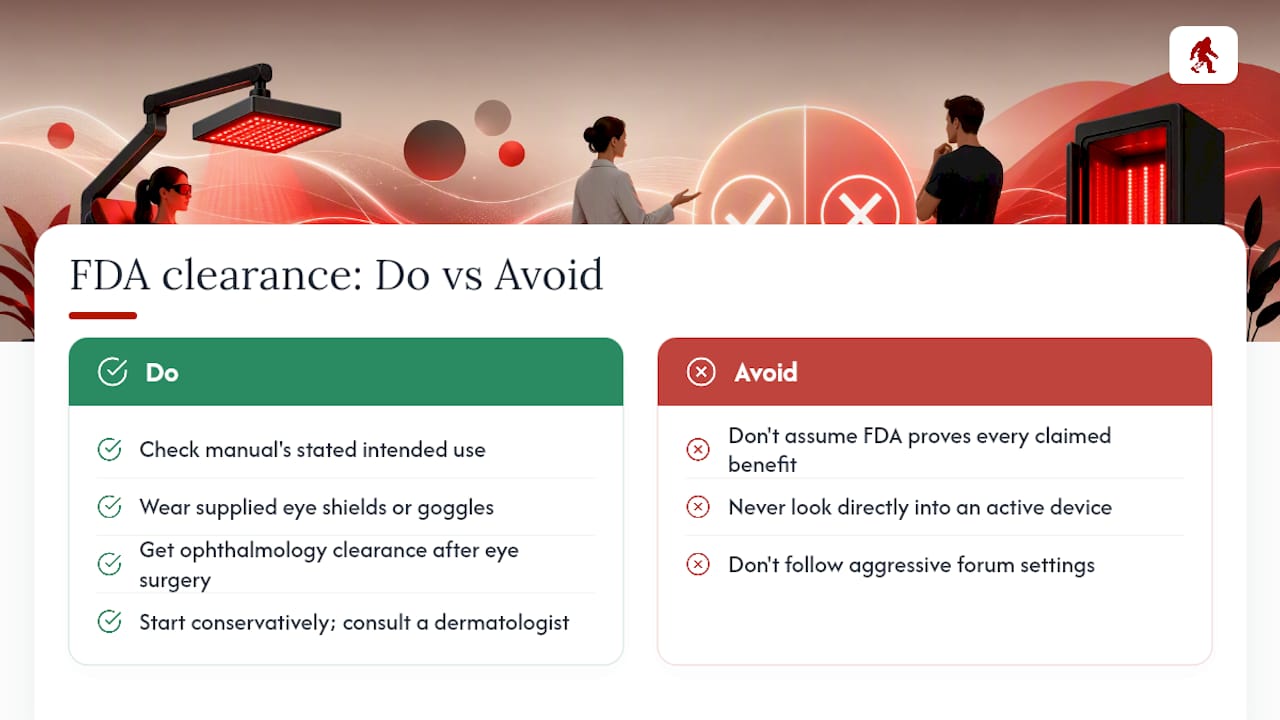
Here's a detail most people get wrong: FDA 510(k) clearance for a photobiomodulation device confirms the device is substantially equivalent to something already on the market and meets baseline safety standards. It does not confirm the device works for every benefit listed on the box. Check the manual's stated intended use before assuming a device does what the marketing implies.
Eye protection deserves its own callout here. Never look directly into an active device, and use whatever shields or goggles came with it, every session, no exceptions. If you've had any kind of eye surgery recently, get ophthalmology clearance before treating your face at all. Our breakdown of red light eye safety walks through why this matters more than people assume.
Dosing is the other piece nobody's fully nailed down. Clinical research shows tolerated fluence varies by skin pigmentation, with darker skin tolerating lower doses before blistering shows up. Harvard Health puts it plainly: optimal dosing still isn't clearly established across the board, which is exactly why conservative defaults and a dermatologist consult make sense for anyone starting out, especially with a higher-powered device.
A few practical rules follow from that uncertainty. If you're using a high-fluence device, lean toward clinician oversight rather than guessing your way to the "right" setting. Follow the manufacturer's instructions to the letter, not the aggressive end of what forum posts suggest. And write down your settings and skin response every session so you have a record if anything changes.
How Primal Red Co Approaches Safety at Home
Primal Red Co built RedRockit for men who want a restoration routine they can actually stick with, not a device they have to gamble with. That starts with a safety-first mindset: if you fall into a higher-risk category, active cancer, photosensitivity, epilepsy, recent eye surgery, get clearance before you start.
The at-home checklist we recommend is simple. Log your device model and settings. Patch test before a full session. Wear eye protection every time. Skip tattoos, the thyroid area, and any active lesion. Start with shorter, conservative sessions before working up.
A companion app is built around that same logic, guiding session length and frequency instead of leaving you to guess. For more on how this fits into a broader routine, see our guide on red light therapy for men over 30.
The Real Gap In Most Red Light Therapy Advice
Most red light therapy content treats safety as a footnote, a disclaimer buried under the benefits. That's backwards. The men who get the most out of a restoration routine are the ones who screen themselves honestly before they start, not the ones chasing the fastest results.
Here's what I'd push back on: the idea that "natural" or "low-risk" means "no screening needed." Red light isn't UV light, and it hasn't shown the same cancer risk profile. But that's not the same as saying it's risk-free for everybody in every condition. If you're on a photosensitizing medication, if you've got a family history of skin cancer, if your skin runs darker and you're starting at full power because that's what the box recommends, you're skipping a step that actually matters.
The men I'd worry about most aren't the ones asking these questions. They're the ones who never think to ask at all. Do the patch test. Read your own medication list before you read the marketing copy. That's not overcaution. That's just doing this right.
— Nurse Rachel
Where This Information Comes From
This guide draws on FDA device clearance guidance, peer-reviewed research on photobiomodulation dosing and oncology use, and patient-facing safety pages from Harvard Health and Cleveland Clinic. For a broader patient-facing overview, this contraindications summary is also worth a read.
This article is general information, not a substitute for advice from a qualified doctor. Consult a qualified healthcare professional about your own circumstances before acting on anything here.
Sources
- Photobiomodulation in oncology: effects on cancer cells and immune function (PMC article)
- Photobiomodulation (PBM) devices: FDA premarket notification (510(k)) guidance
- Red light therapy for skin care — Harvard Health
FAQ
Who shouldn't do red light therapy?
Anyone with active cancer or a suspicious lesion in the treatment area, known photosensitivity disorders, photosensitive epilepsy, or recent eye surgery should avoid it until a clinician clears them. Pregnant individuals should also avoid direct treatment over the abdomen or breasts.
Why don't doctors recommend red light therapy for everyone?
Because dosing standards aren't fully settled and tolerance varies by skin type, medication use, and underlying health conditions, doctors tend to recommend it selectively rather than as a blanket solution. Clearance depends on ruling out the contraindications covered above first.
What should you avoid with red light therapy?
Avoid treating over active lesions, tattoos, the thyroid area, or eyes without protection, and avoid pulsed light settings if you have a history of photosensitive seizures. Also avoid starting treatment while on photosensitizing medications like tetracyclines or retinoids without checking with your prescriber.
Where should you not put red light therapy?
Skip direct application over the eyes, the thyroid region of the neck, active wounds or infections, tattoos, and the abdomen or breasts during pregnancy. Each of these areas carries a specific, documented reason for caution rather than a blanket "avoid everything" rule.
Can you use red light therapy with medication?
It depends on the medication. Photosensitizing drugs like tetracyclines, fluoroquinolones, retinoids, certain antifungals, diuretics, and St. John's Wort call for a pause and a conversation with your prescriber before starting or continuing treatment.