
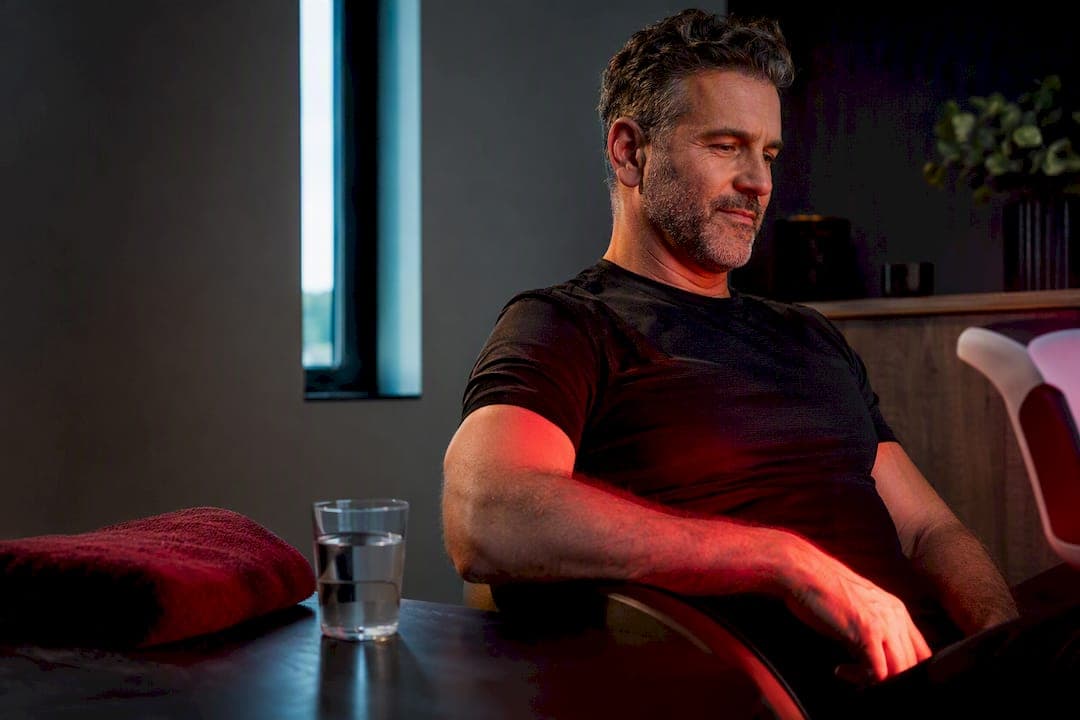
Yes, at-home red and near-infrared light can plausibly support the circulation, cellular energy, and tissue quality that feed into drive and mild erectile-related function, but treat it as an adjunct, not a cure. The signal it works on is real. It's just not the whole signal. Safety guidance and a practical weekly routine follow below.
TL;DR:
- Red light therapy supports tissue repair and circulation but is not a proven treatment for diagnosed erectile dysfunction or a quick hormone boost.
- Optimal use requires careful dosing, with sessions lasting 5 to 10 minutes, a few times weekly, and specific wavelengths that penetrate different tissue depths.
- Consistency over 6 to 12 weeks, focusing on areas like the lower abdomen and inner thighs, yields the best results, especially when combined with sleep, diet, and exercise habits.
- Men on photosensitizing medications, with recent sudden erectile declines, or experiencing cardiovascular symptoms should see a healthcare provider before starting treatment.
- Devices like RedRockit offer guided, structured protocols to ensure safe, effective use without guesswork.
Table of Contents
- Can Red Light Therapy Support Erectile Function?
- How Do You Use Red Light Safely at Home?
- What Does a Realistic At-Home Routine Look Like?
- Who Should Try This, and Who Should See a Doctor First?
- Nurse Rachel's Take on What Actually Moves the Needle
- My Honest Read on Red Light and Male Vitality
- If You Want a Simple At-Home Device: RedRockit
- Sources
- FAQ
Can Red Light Therapy Support Erectile Function?
Your body runs on a signal it sends to every cell, telling them to produce energy, repair tissue, and keep blood moving where it needs to go. That signal gets weaker as men pass 30, not because something broke, but because the volume got turned down. Red and near-infrared light, a process researchers call photobiomodulation, works directly on that signal at the mitochondrial level.
The mechanism is specific. Red and near-infrared wavelengths get absorbed by an enzyme called cytochrome c oxidase inside mitochondria, which boosts ATP production, the cellular fuel that drives everything from tissue repair to blood vessel function. That same absorption triggers downstream signaling pathways, PI3K/Akt and MAPK/ERK among them, that reduce oxidative stress and support tissue repair.
In animal models of erectile dysfunction, that cascade has shown something worth paying attention to: red and near-infrared light exposure improved cavernosal fibrosis and endothelial function, the two tissue factors most tied to how well blood fills and stays where it needs to for a firm erection. That's preclinical data, not a human clinical trial, and the distinction matters for how you read every claim that follows.
Where the human evidence sits today:
- Strongest clinical support exists for skin repair, wound healing, hair regrowth, and muscle recovery, not erectile dysfunction directly, according to a comprehensive review of photobiomodulation research.
- Testosterone claims tied to red light devices remain weak and inconsistent. Small studies have shown modest short-term shifts that haven't held up under repeated testing.
- Cleveland Clinic notes that many touted uses of red light therapy still lack strong human evidence, even where the biology is plausible.
The honest read: red light isn't fixing a diagnosed erectile problem. It's supporting the mitochondrial and vascular groundwork that erections, energy, and drive all depend on. That's a meaningfully different promise, and it's the one Primal Red Co actually makes.
How Do You Use Red Light Safely at Home?
Dosing is where most men get it wrong, usually by assuming more light means more benefit. Photobiomodulation follows a biphasic dose-response curve: too little does nothing, too much can blunt or reverse the benefit. The window that works is narrower than most marketing suggests.
Wavelength matters more than most buyers realize. Red light in the 630 to 660 nanometer range penetrates superficial tissue, skin, and shallow connective tissue. Near-infrared light in the 810 to 850 nanometer range goes deeper, reaching the vascular and connective tissue layers that matter more for circulation. A device that only offers one band is giving you half the tool.
Practical starting parameters, based on clinician guidance for at-home use:
- Session length: 5 to 10 minutes per treatment area.
- Frequency: a few sessions per week, not daily.
- Distance: roughly 6 to 8 inches from the skin, adjusted to your specific device's output.
- Build in rest days. Tissue needs recovery time between sessions just like muscle does.
Contraindications aren't optional reading. Never expose bare eyes directly to the light source; eye protection is standard practice for a reason. Skip treatment if you're on photosensitizing medications (some antibiotics and acne treatments included), if you have active cancer near the treatment site, or, for partners, over the abdomen during pregnancy. A 2025 safety consensus found photobiomodulation at therapeutic doses is generally well tolerated with no evidence of DNA damage, but those specific cautions still stand.
Pro Tip: Start conservatively and increase gradually over the first couple of weeks. Track how you feel before you touch the dial. Men who jump straight to daily, maximum-intensity sessions are usually the ones who quit after two weeks with nothing to show for it.
For a deeper breakdown of session frequency and what "safe" actually means device by device, see Primal Red Co's guide to photobiomodulation for men.
What Does a Realistic At-Home Routine Look Like?
Forget the idea that you need a complicated protocol. You need consistency applied to the right areas, for long enough to see something change.
Where to apply it: the lower abdomen, inner thigh, and perineal region get the most attention for circulation support. This is surface-level, non-clinical targeting. You're not treating a diagnosed condition here. You're supporting the tissue and blood flow patterns that feed into it.
A simple starter sequence looks like this:
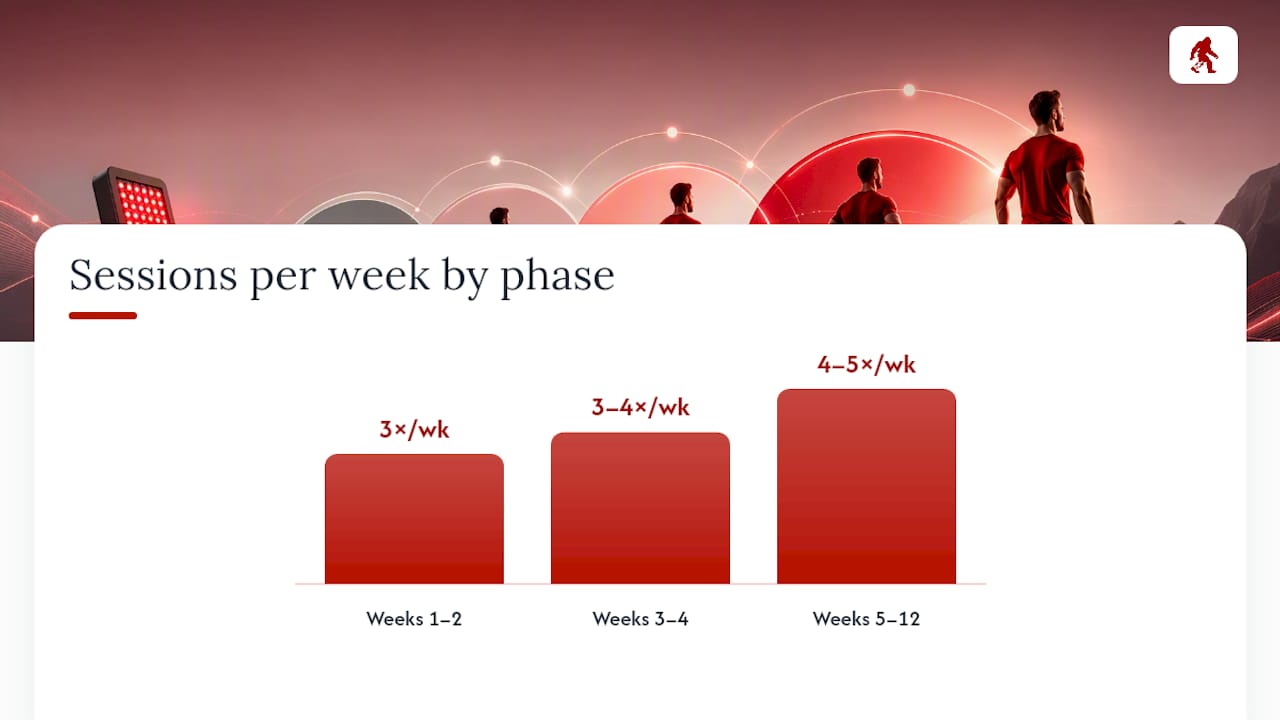
- Weeks 1 to 2: 5 minutes per area, 3 times a week. Let your skin and tissue adjust.
- Weeks 3 to 4: 8 to 10 minutes per area, 3 to 4 times a week if no irritation shows up.
- Weeks 5 to 12: Settle into a maintenance rhythm, 4 to 5 sessions weekly, and hold it there.
Timing around the rest of your day matters more than people expect. Use sessions after a workout rather than immediately before one, since the anti-inflammatory effects support recovery better post-exertion. Evening sessions, done a couple hours before bed, tend to fit naturally into a wind-down routine without disrupting sleep. Practitioner guidance on stacking red light with training and sauna consistently points to combining it with exercise and sleep quality rather than treating it as a standalone fix. Pair it with basic nutrition fundamentals: adequate protein and real hydration, not supplements chasing a shortcut.
Track four things weekly: energy on waking, recovery from workouts, morning erection frequency, and general libido. Give it a full 6 to 12 week window before deciding whether it's doing anything. That timeline lines up with what clinician guides recommend for photobiomodulation broadly, not just for this use case.
Pro Tip: Write your baseline down before session one. Men consistently underestimate small week-to-week improvement when they're relying on memory instead of a log.
Who Should Try This, and Who Should See a Doctor First?
The right candidate for an at-home red light routine is a man in his 30s, 40s, or 50s who's noticing a gradual decline, not a sudden one. Energy that used to come automatically now takes effort. Drive that used to show up on its own now needs coaxing. Nothing acute happened. Things just quietly dimmed.
That gradual pattern is exactly what this routine is built for. A sudden drop is a different story, and it needs a different response.
See a clinician before you touch a device if you notice any of the following:
- Erectile function that dropped suddenly rather than gradually.
- Pain during erection or ejaculation, or blood in semen.
- Chest tightness, shortness of breath, or other signs pointing toward cardiovascular disease.
- A timeline that matches starting a new medication.
A primary care visit with basic labs, testosterone, fasting glucose, and a lipid panel, gives you real data instead of guesswork. A urology referral makes sense if those results point that way. Red light supports the maintenance lane. It's not built for diagnosis, and it was never meant to replace one.
Nurse Rachel's Take on What Actually Moves the Needle
Here's what I want you to walk away with: the mitochondrial and circulation story is real. The testosterone story is not, at least not yet. Too many men buy a device expecting a hormone spike and quit disappointed when their labs don't move. That's not the win this tool is built to deliver.
The protocols recommended for red light therapy emphasize restraint: conservative dosing, real rest days, and a tracking window before making changes. That's not marketing caution, that's how photobiomodulation actually works based on the research linking it to libido-relevant biology. Men who stick with a simple routine for 8 to 12 weeks report more energy and steadier drive. Men chasing overnight results usually stop before the tissue-level changes even have time to show up. Adherence beats intensity here, every time.
My Honest Read on Red Light and Male Vitality
The conventional pitch around red light therapy oversells the testosterone angle and undersells everything else it's actually good at. That's backwards, and it's costing men results.
What the research supports is narrower and more useful than most marketing admits: better mitochondrial energy, improved microcirculation, and reduced inflammation in tissue that matters for erectile-related biology. That's not a hormone hack. It's groundwork.
Here's where I think most men get the priority order wrong. They chase the device before they fix sleep, before they fix protein intake, before they've built any consistency at all. Red light amplifies a foundation that's already decent. It doesn't build one from nothing. If your sleep is broken and your diet is chaos, buying a device won't save you.
Start with the boring stuff first. Then let red light do what it's actually good at: supporting recovery and circulation on top of habits that are already working. That order matters more than which device you buy.
— Nurse Rachel
If You Want a Simple At-Home Device: RedRockit
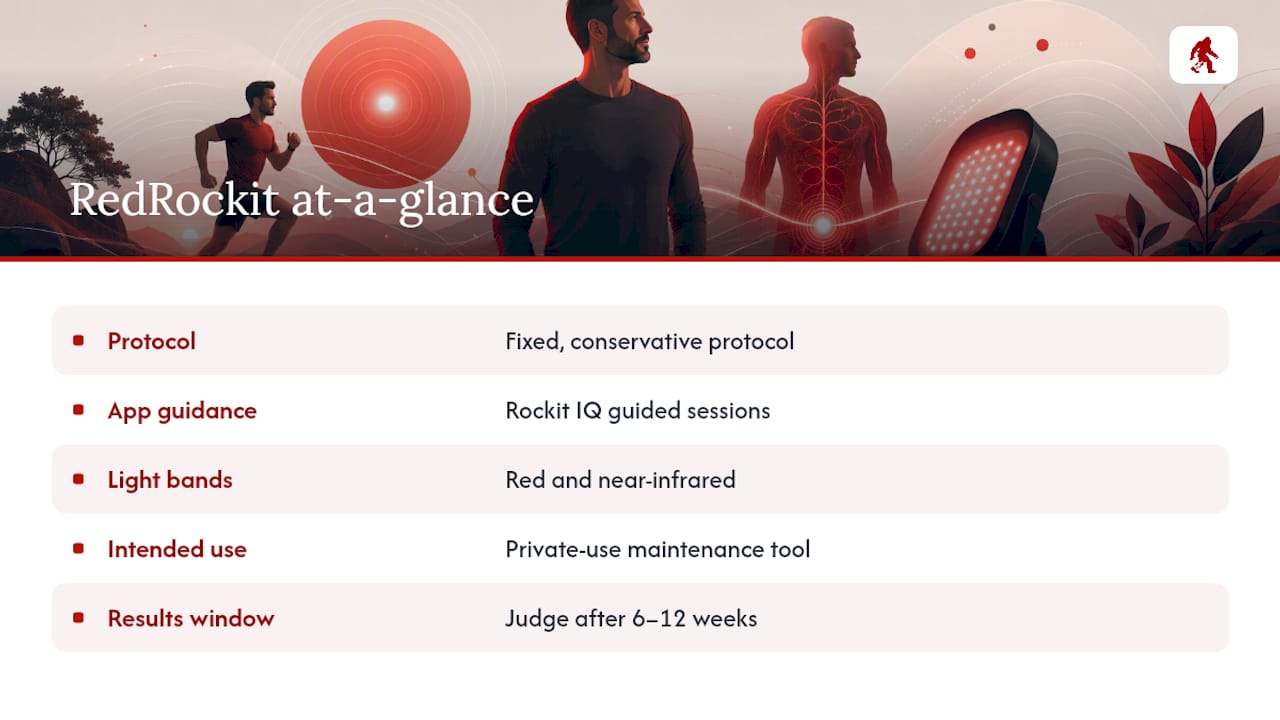
RedRockit gives you a fixed, conservative protocol instead of a dial you have to guess with. Where generic devices leave dosing up to trial and error, RedRockit pairs the hardware with the Rockit IQ app, which walks you through session length, frequency, and progression so you're not reinventing the wheel every week.

The device is built for exactly the routine outlined above: red and near-infrared bands, guided sessions instead of open-ended exposure, and a structure that matches the conservative dosing safety guidance covers. It's a private-use tool for maintenance, not a clinical device, and Primal Red Co doesn't pretend otherwise. What you should expect: a straightforward setup, a guided starter protocol, and a realistic 6 to 12 week window before judging results.
If you're weighing this against jumping straight to TRT or another clinical path, start with the male vitality restoration framework to see where an at-home routine fits before bigger decisions are on the table. Ready to build the routine yourself? Check out the RedRockit Activation Method and see the full protocol.
This article is general information, not a substitute for advice from a qualified doctor. Consult a qualified healthcare professional about your own circumstances before acting on anything here.
Sources
- Photobiomodulation review (PMC)
- Cleveland Clinic — Red light therapy
- Red light therapy safety: eye protection, dosing, and side effects
FAQ
Does Red Light Therapy Raise Testosterone?
Human evidence for testicular red light reliably raising testosterone is weak and inconsistent. Some small studies showed modest short-term rises that weren't replicated, so don't buy a device expecting a hormone jump.
How Long Before I Notice a Difference?
Clinician guidance suggests giving it several weeks to a few months of consistent use before evaluating results. Energy and recovery often shift before drive or erectile-related changes become noticeable.
Is Red Light Therapy Safe for the Eyes?
No, unprotected direct eye exposure isn't safe with any red or near-infrared device. Use eye protection every session, per safety consensus guidance.
Can Red Light Therapy Treat Diagnosed Erectile Dysfunction?
No, at-home red light is not a clinical treatment for diagnosed erectile dysfunction. It's an adjunct that supports circulation and cellular energy; sudden or severe erectile changes need a medical evaluation first.
Does RedRockit Work Differently From a Generic Panel?
RedRockit pairs red and near-infrared wavelengths with the Rockit IQ app's guided session protocols, so you follow a structured starter plan instead of guessing at dose and frequency on your own.