
Yes. When the wavelength, dose, and timing line up with the research, red and near-infrared photobiomodulation can improve real recovery markers and short-term performance. It's not magic, and it's not a fix for a body that's ignoring bigger signals. The gains depend on getting the parameters right and showing up consistently, which is exactly what the sections below break down.
TL;DR:
- Effective red light therapy requires doses around 5 to 6 joules per treatment point, with higher doses risking diminished or reversed benefits.
- Routine post-workout sessions, three times weekly over 8 to 12 weeks, reliably reduce inflammation markers and improve muscle load capacity.
- Wavelength choices matter: red light (630-680 nanometers) penetrates superficial muscles, while near-infrared (760+ nanometers) reaches deeper tissue, and combining both is optimal.
- Underpowered devices or skin pigmentation can hinder energy delivery, making consistent, research-aligned dosing crucial for results.
- Safe use involves avoiding overexposure, eye protection, and caution when treating active cancer sites, with most side effects being minor and short-lived.
Table of Contents
- Does Red Light Therapy Actually Help Muscle Recovery? The Cellular Case
- What the Research Says About Recovery and Performance Markers
- How Much Light, How Often: Dosing and Timing That Match the Research
- Is Red Light Therapy Safe? Side Effects and Who Should Be Cautious
- Building a Recovery Routine: Pre-Workout, Post-Workout, and Maintenance
- Why Primal Red Co Talks About This the Way We Do
- Who Actually Benefits From This, and Who's Wasting Their Time
- Bring Consistent Recovery Light Into Your Own Routine
- Sources
- FAQ
Does Red Light Therapy Actually Help Muscle Recovery? The Cellular Case
Your muscles don't recover because you wish them to. They recover because your cells generate enough energy to repair damaged tissue, clear waste, and rebuild stronger. That's where photobiomodulation earns its name, not as a wellness buzzword, but as a mechanism with a specific target: your mitochondria.
Red and near-infrared light in the 600 to 1100 nanometer range gets absorbed by an enzyme called cytochrome c oxidase, sitting inside the mitochondrial membrane. Light hits that enzyme, and the mitochondria respond by producing more ATP, the energy currency your cells spend on repair. More fuel available at the site of muscle damage means faster repair cycles. That's the core mechanistic pathway researchers point to when explaining why light exposure changes anything at all inside living tissue.
There's a second layer happening at the same time. The light exposure triggers a brief, controlled spike in reactive oxygen species, molecules your body normally treats as a threat. In small, managed amounts, they act as signals instead of damage. That signal kicks off anti-inflammatory pathways and tells nearby cells to start repair work. Your body is reading light as instructions, not just as a mild heat source on your skin.
Microcirculation matters too. Increased blood flow to the treated area brings oxygen and nutrients in faster and clears metabolic waste, like lactate, out faster. That's part of why athletes report less lingering stiffness after sessions timed around training.
None of this works the way "more is better" logic would suggest. Photobiomodulation follows what researchers call a biphasic dose-response curve.
- Too little light barely nudges the mitochondria and produces no measurable benefit.
- The effective window sits in a moderate dose range roughly aligned with doses used in controlled trials, typically around a few joules per treatment point.
- Beyond that window, effects flatten out or reverse, a pattern seen across cellular photobiomodulation research generally.
- Skin pigmentation, tissue depth, and device power all shift where that window actually sits for a given person.
Pro Tip: Don't assume a longer session automatically means a better one. If your device's manual gives a joule-per-point target, treat that number as the goal, not the minimum.
Darker skin absorbs and scatters more light at the surface, meaning less energy reaches the muscle tissue underneath at a given power setting. Underpowered consumer devices face the same problem in reverse. If the diode output is weak, no amount of extra minutes under it makes up for insufficient energy density reaching the target tissue.
What the Research Says About Recovery and Performance Markers
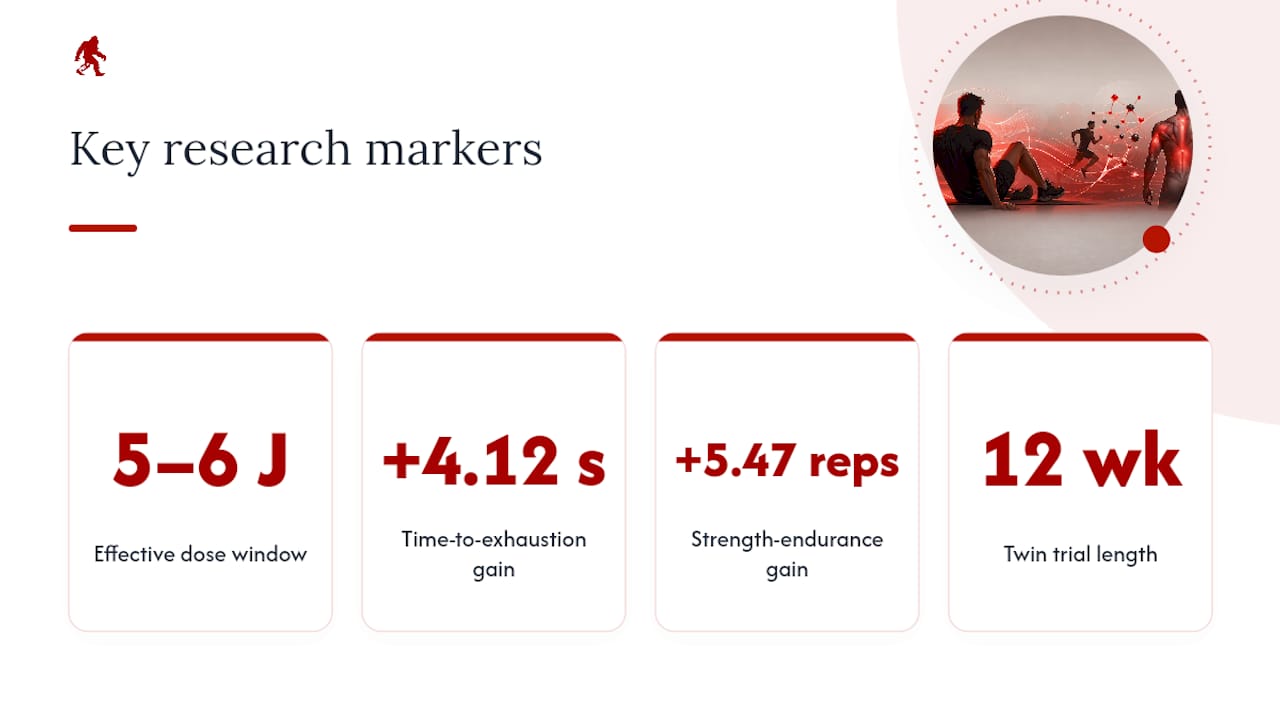
The strongest single data point in this field comes from a systematic review with meta-analysis pooling results across dozens of trials. Phototherapy applied before exercise increased time-to-exhaustion modestly and increased repetitions completed by a small but meaningful amount on average, compared to placebo. Those numbers sound modest until you consider they're averaged across trials with wildly different devices, doses, and populations. The effects were most consistent when researchers used red or infrared wavelengths at roughly 5 to 6 joules per point, which is the dose window that shows up again and again across the literature.
A pooled analysis of exercise-performance trials found phototherapy before exercise added an average of 4.12 seconds to time-to-exhaustion and 5.47 repetitions to strength endurance tasks, with red and infrared wavelengths delivering the most consistent results.
Performance is one half of the picture. Recovery biomarkers are the other, and this is where a smaller but genuinely compelling study stands out. Researchers ran a 12-week LED therapy trial using identical twins, one treated with active light three times weekly after workouts, the other with a placebo device. The treated twin showed increased maximal load capacity, lower creatine kinase (a blood marker of muscle damage), reduced IL-1β (an inflammatory cytokine), and greater thigh muscle hypertrophy. Twin studies control for genetics almost completely, which makes this a rare, clean signal that consistent post-workout application does something real over time, not just after a single session.
A broader review of photobiomodulation in human muscle tissue pulled together multiple randomized trials and found a genuine but uneven pattern. Some studies showed clear benefit. Others showed nothing. The review's honest conclusion: heterogeneity in dosimetry, meaning inconsistent wavelengths, energy doses, and application timing across studies, explains a large share of the mixed results. This isn't a field where one study disagrees with another because the underlying biology is unreliable. It's a field where "red light therapy" gets used as a label for wildly different devices and protocols, then compared as if they're the same intervention.
That inconsistency shows up sharply in elite athlete research. Trials on well-trained competitors sometimes find nothing, or close to it, when PBM is applied post-exercise with certain dosimetry. A review on maximal strength and recovery found a cluster device delivering 810 nanometer light at 60 joules per muscle improved elbow flexion endurance in some subjects, while differently timed protocols in similarly trained athletes showed no immediate benefit. Part of the explanation is a ceiling effect. Athletes training at a high level already have efficient mitochondrial function and recovery systems. There's simply less room for a light-based nudge to move the needle compared to someone training three times a week with a demanding job and inconsistent sleep.
A translational review on exercise-induced muscle damage adds the piece that ties this together: outcomes depend heavily on dose, timing relative to exercise, and individual tissue characteristics, and the review recommends staggered PBM-exercise protocols with individualized dosimetry rather than a one-size approach.
Here's the practical read on all of this. Time-to-exhaustion and repetition counts respond most reliably, and usually within a single session when timing is right. Biomarkers like creatine kinase and inflammatory cytokines respond more slowly, showing up over weeks of consistent post-workout use rather than after one visit. Soreness scores (DOMS) sit somewhere in between, often improving noticeably within the first two to three weeks of regular sessions. If you're expecting an instant transformation from one session, the research doesn't support that. If you're building a routine over 8 to 12 weeks, the data gets considerably more convincing.
How Much Light, How Often: Dosing and Timing That Match the Research
Two variables decide almost everything: wavelength and dose. Get those wrong and even a well-timed session won't do much.
Wavelength ranges. Red light around 630 to 680 nanometers penetrates well into superficial muscle tissue and skin layers. Near-infrared light in the 760 to 900+ nanometer range travels deeper, reaching muscle groups that sit farther from the surface, like larger leg muscles. Most effective devices combine both bands rather than relying on one.
Dose per point. The meta-analysis referenced earlier found the most consistent effects at 5 to 6 joules per treatment point, with device power outputs in the 50 to 200 milliwatt range. Cluster devices covering larger muscle groups scale that up, delivering tens of joules across the full treated area, but the per-point principle holds. This is the biphasic window in action: undershoot it and you're wasting your time, overshoot it and you may blunt the response entirely.
Session length. Most research-aligned protocols run 5 to 15 minutes per muscle group, depending on device power. A weak diode array needs longer exposure to hit the same joule target as a stronger one, which is why "10 minutes" means different things on different devices.
Timing relative to your workout changes what you're actually optimizing for.
- Pre-exercise sessions show the most consistent performance benefit across the research, improving time-to-exhaustion and repetition capacity. A short session, roughly 10 to 15 minutes on the primary muscle groups you're about to train, fits the protocols used in the strongest trials.
- Post-exercise sessions target recovery biomarkers rather than same-day performance. The twin study protocol, three sessions weekly for 12 weeks, is the clearest research-backed template for reducing creatine kinase and inflammatory markers over time.
- Combined pre and post protocols aren't heavily studied as a single design, but nothing in the mechanism argues against using short sessions both before and after a workout if your schedule allows it.
Frequency matters as much as any single session. A twice or three times weekly cadence sustained over 8 to 12 weeks is what shows up in the trials with the clearest biomarker changes. Sporadic, occasional use, treating it like a once-a-month recovery tool, doesn't match how any of the positive trials were designed. If you're in a heavier training block or prepping for a competition, more frequent maintenance sessions make sense; during lighter training periods, tapering down to two sessions weekly is reasonable without losing the cumulative benefit.
Pro Tip: Track your sessions the same way you'd track sets and reps. "I use my device sometimes" isn't a protocol, and it won't produce the results described in the twelve-week trials. Three sessions a week, same days, same duration, is a protocol.
For a deeper look at scheduling around specific training goals, this breakdown of timing by goal and this guide to session frequency and safety both walk through practical scheduling in more detail.
Is Red Light Therapy Safe? Side Effects and Who Should Be Cautious
An expert panel reviewing the clinical evidence concluded that photobiomodulation is generally safe and non-DNA damaging in adults, which is about as strong a safety signal as this field offers. That same panel flagged an important gap: standardized clinical protocols are still lacking, meaning dosing and application details vary widely from one device or study to another. Safety isn't in serious question. Precision is still catching up.
For most healthy adults using a reasonably dosed device, side effects are minor and short-lived.
- Transient redness or warmth at the treatment site, usually gone within an hour.
- Mild eye strain if you look directly at the diodes without protection, which is why eye protection is standard guidance for any near-eye or facial application.
- Rare mild headache reported anecdotally with longer sessions, typically resolving with reduced exposure time.
There's a shorter list of situations where caution isn't optional. Photosensitizing medications, certain antibiotics, acne treatments, and some blood pressure medications increase skin sensitivity to light and change how your body reacts to a session. Active cancer at or near the treatment site is a firm stop, given the role light exposure plays in cellular activity. Pregnancy is a gray area with insufficient dedicated research, so treatment near the abdomen isn't something to guess your way through. Implanted electronic devices, like pacemakers, warrant a conversation with your physician before starting any light-based routine, purely as a precaution given the lack of dedicated safety data on light and device interference.
None of this is a reason to avoid PBM. It's a reason to use it the way you'd use any tool that affects your body's cellular activity: with attention, not assumptions. If any of the flags above apply to you, a quick conversation with your doctor before starting beats guessing. For device-specific dosing limits and eye-safety details, Primal Red Co's safety guidance for home devices covers what to check before your first session.
Building a Recovery Routine: Pre-Workout, Post-Workout, and Maintenance
Knowing the mechanism and the dosing ranges doesn't help much if you don't know how to actually structure a week around them. Here's how the research translates into something you can repeat without overthinking it.
Pre-workout primer. Ten to fifteen minutes before training, apply light to the primary muscle groups you're about to work. Legs before a squat session, shoulders and back before an upper-body day. This is the timing most associated with the performance gains from the meta-analysis, so treat it as your default if performance is the priority.
Post-workout recovery plan. Immediately after training, or within a few hours, run a session on the muscles you just trained. If you're following the strongest research template, that means three sessions weekly, consistently, for at least 8 to 12 weeks before judging results. This is the schedule tied to reduced creatine kinase and inflammatory markers in the twin study, and it's a longer commitment than most people expect from a recovery tool.
Maintenance versus tapering. During regular training blocks, two to three sessions weekly keeps the cumulative benefits going. Heading into competition or a peak training week, some athletes taper other recovery interventions but keep PBM steady, since it's not fatiguing and doesn't interfere with tapering strategy the way, say, deep tissue work might.
None of this replaces the fundamentals. Light therapy works alongside recovery inputs your body has always needed, not instead of them.
- Sleep is still the single biggest recovery lever you control. PBM won't compensate for five hours a night.
- Protein intake spread across the day supports the same repair processes that PBM is accelerating at the cellular level.
- Active recovery, walking, light mobility work, easy cardio, keeps blood flow up between sessions and complements the microcirculation boost from light exposure.
- Hydration affects how efficiently your cells clear metabolic waste, the same waste PBM-driven blood flow is helping move out.
Inflammation management ties directly into this. If you're curious how inflammation intersects with tissue recovery more broadly, particularly for anyone also managing joint or bone-related recovery, this guide on inflammation and bone recovery covers ground that overlaps meaningfully with soft-tissue recovery science. For a fuller walkthrough of combining these routines specifically for men over 30, Primal Red Co's recovery routine guide and this piece on reducing next-day soreness both build on the framework above.
Why Primal Red Co Talks About This the Way We Do
Primal Red Co built this article the way we build everything: start with the evidence, then tell you what it actually means for a man trying to keep training hard past 30 without falling apart. This isn't clinical content, and we're not a clinic. We're a restoration brand, and RedRockit is our flagship device, built to support a consistent, at-home light routine rather than a single miracle session.
We're a device maker with a stake in this conversation, which is exactly why we're laying out the research plainly instead of dressing it up. Editorial oversight on this piece came from Nurse Rachel, whose clinical background shapes how we translate studies into routines men can actually stick with. For more on how this fits into broader vitality routines, see our science-forward guide for men over 30.
Who Actually Benefits From This, and Who's Wasting Their Time
The recreational lifter, the guy training three or four times a week with a demanding job and inconsistent sleep, is the most likely responder here. You've got room to improve, and the research backs that up. Elite athletes already sitting near their physiological ceiling see smaller, less consistent gains, and some trials on that population found nothing measurable at all.
Measure it honestly. Track time-to-exhaustion, rep counts, and a simple soreness scale over 8 to 12 weeks, not one session. If nothing's shifted by then, and you've matched the dose and timing guidance above, it's fair to stop and put your effort somewhere else. If something is genuinely off with your energy or recovery beyond training soreness, that's a conversation for a doctor, not a light panel.
— Nurse Rachel
Bring Consistent Recovery Light Into Your Own Routine
Most guys chasing better recovery end up choosing between two bad options: a $60 monthly infrared studio membership they'll stop visiting by March, or a bargain panel from an unmarked listing with no dosimetry data at all. A device built around the wavelength and dose ranges the research above actually points to aims to help you avoid guessing at joules per point every time you flip it on.

RedRockit is designed for men over 30 who want a repeatable, evidence-aligned restoration routine at home, not a spa visit they have to schedule around a work trip. No subscriptions, no monthly appointments, no dependence on someone else's calendar. Pair it with the Rockit IQ app for guided session protocols that match the pre-workout and post-workout timing this article walks through, and you've got a routine you can run for 12 weeks straight without reinventing it every time. If low energy and recovery have been on your mind beyond just sore legs, our page on male vitality after 40 digs into the bigger picture. Check out the RedRockit™ Primal Restoration device page to see specs and get started.
This article is general information, not a substitute for advice from a qualified doctor. Consult a qualified healthcare professional about your own circumstances before acting on anything here.
FAQ
How often should I do red light therapy for muscle recovery?
Two to three sessions weekly is the frequency tied to the clearest results in controlled research, particularly the 12-week twin study using a post-workout, three-times-weekly schedule. Sporadic or occasional use doesn't match the protocols behind the positive findings.
Can you overdo red light therapy?
Yes. Photobiomodulation follows a biphasic dose-response curve, meaning too much light energy can blunt or reverse the benefit instead of amplifying it. Sticking to the 5 to 6 joule per point range used in the meta-analysis on exercise performance is safer than assuming a longer session is automatically better.
What are the do's and don'ts of red light therapy?
Do match your session timing to your goal: pre-workout for performance, consistent post-workout sessions for recovery biomarkers. Don't skip eye protection, don't use it over active cancer sites, and don't assume more minutes always means more benefit, since the dose window has an upper limit.
Does red light speed up healing?
It can support faster recovery of specific markers, including reduced creatine kinase and inflammatory cytokines with consistent post-exercise use, based on the twin-controlled LED trial. It's not an instant fix. The clearest changes show up over weeks of regular use, not after a single session.
What device should I use for at-home red light therapy?
Look for a device that publishes its wavelength range and power output, since those numbers determine whether you can actually hit research-aligned doses. RedRockit is built around those parameters specifically for at-home use, and pricing and specs are listed on the product page.