
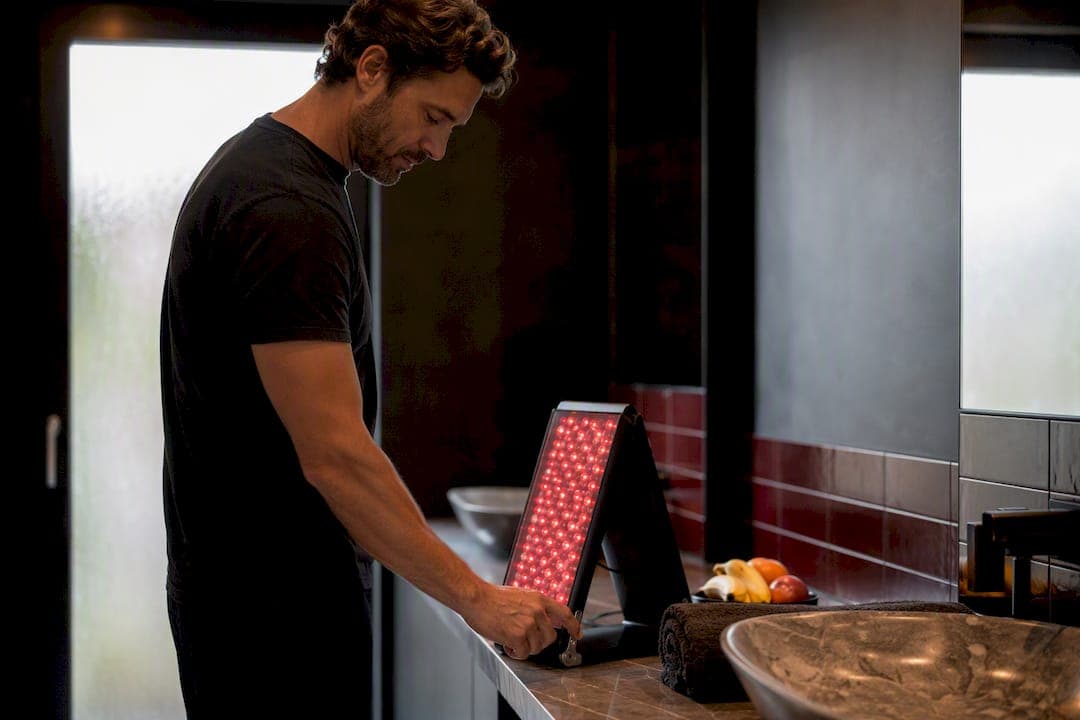
Yes, use red light in the morning. Within 30 to 60 minutes of waking, stand 6 to 12 inches from a dual-wavelength device for about 10 minutes, adjusted to your comfort and your device's specs. It won't hit you like a shot of espresso. It's a signal, not a stimulant, and the payoff builds over days and weeks, not minutes.
TL;DR:
- Consistent morning red light sessions should be performed within 30 minutes of waking, using a dual-wavelength device at 6 to 12 inches for 10 to 20 minutes.
- The effects build progressively over weeks, primarily supporting cellular energy production and reinforcing the circadian wake-up signal, not providing immediate alertness.
- Proper protocol includes using eye protection, avoiding overheating, and stacking sessions with outdoor light for maximum circadian and mitochondrial benefits.
- Red light therapy is safe for most, but caution is necessary for those on photosensitizing medications or with active health conditions; a timer and stable setup are essential.
- Regularity matters more than session length or intensity; daily or near-daily use for at least two to three weeks is needed for noticeable improvements.
Table of Contents
- Why A Morning Red Light Routine Actually Works
- What's The Best Morning Red Light Protocol?
- [## Is Red Light Therapy Safe In The Morning?](#is-red-light-therapyhttpsbrightmedicalwellnesscomservicesred-light-therapy-safe-in-the-morning)
- Three Morning Routines That Actually Fit Real Life
- The Research And Credentials Behind This Protocol
- Keeping Your Device Working The Way It Should
- Making Red Light Part Of A Bigger Morning Routine
- What The Conventional Advice Gets Wrong
- Bringing This Routine Home With RedRockit
- Sources
Why A Morning Red Light Routine Actually Works
Your body runs on signals, not willpower. Every morning, your cells are waiting for a cue that says "the day has started, get moving." Sunlight used to send that cue automatically. Now most men wake up in a dim bedroom, grab a phone, and never give their system the wake-up call it's built to expect.
Red and near-infrared light acts on the mitochondria in your cells, specifically an enzyme called cytochrome c oxidase, in a process researchers call photobiomodulation. That interaction is tied to changes in cellular energy production and has been linked to circadian and sleep effects in peer-reviewed research. Translation: you're feeding your cells a jolt of usable energy at the exact moment your body needs to switch from "asleep" to "awake."
There's a second layer here. Morning light, red light included, acts as a dawn cue to the suprachiasmatic nucleus, the master clock in your brain that governs your circadian rhythm. That's part of why timing matters more than intensity. A well-timed morning session can support your cortisol awakening response, the natural spike that's supposed to happen shortly after you open your eyes and get you moving, according to protocol guidance from red light researchers.
What this looks like in practice:
- Less sleep inertia, that groggy fog that makes the first hour of your day feel underwater
- Steadier daytime alertness instead of a mid-morning crash
- A mood lift that shows up gradually, not instantly
A realistic timeline: most guides on morning exposure note that subjective improvement in grogginess often appears within a week of consistent use, with more meaningful sleep-quality changes appearing after continuous daily sessions for several weeks, per Frequency Technology's protocol research.
Here's the limit you need to hear straight: red light isn't a caffeine substitute, and it won't reset a badly misaligned sleep schedule by itself. It's an anchor. Anchors work because you drop them every day, not because they're heavy.
What's The Best Morning Red Light Protocol?
Forget guessing. Here's the sequence that actually respects how your body reads light signals.
- Time it within 30 minutes of waking. This window lines up with your natural cortisol awakening response, so the light reinforces a signal your body is already trying to send. Wait too long and you're working against your own clock instead of with it.
- Use a dual-wavelength device. Look for 660 nanometers of red light paired with roughly 850 nanometers of near-infrared. Red light works more on skin-level tissue, near-infrared penetrates deeper for systemic effects. Together they cover more ground than either wavelength alone.
- Start at 6 to 12 inches for 5 to 20 minutes. New users should start closer to 10 minutes and shorter distance, then adjust based on comfort and how your skin feels. Warmth is a fine signal. Discomfort is not.
- Do it daily or close to it. regular sessions most days of the week builds the consistency that makes this an anchor instead of a novelty. Skipping days here and there won't undo your progress, but sporadic use won't build the habit either.
- Stack it with outdoor light. This is what some in the industry call the "Sunlight Sandwich": your red light session, followed by a session lasting a moderate amount of time outside, even on a cloudy day. The combination gives your mitochondria a cellular signal and gives your retinas a natural circadian one, according to circadian reset protocol research. If you wake before dawn, do your session, then step outside as soon as the sun's actually up.
Pro Tip: Don't eyeball your dose based on someone else's routine. Irradiance varies a lot by device and by wattage, so check your manufacturer's specs before assuming 10 minutes at 8 inches will hit the same dose on your panel as it did on someone else's. A device that looks similar can output very differently.
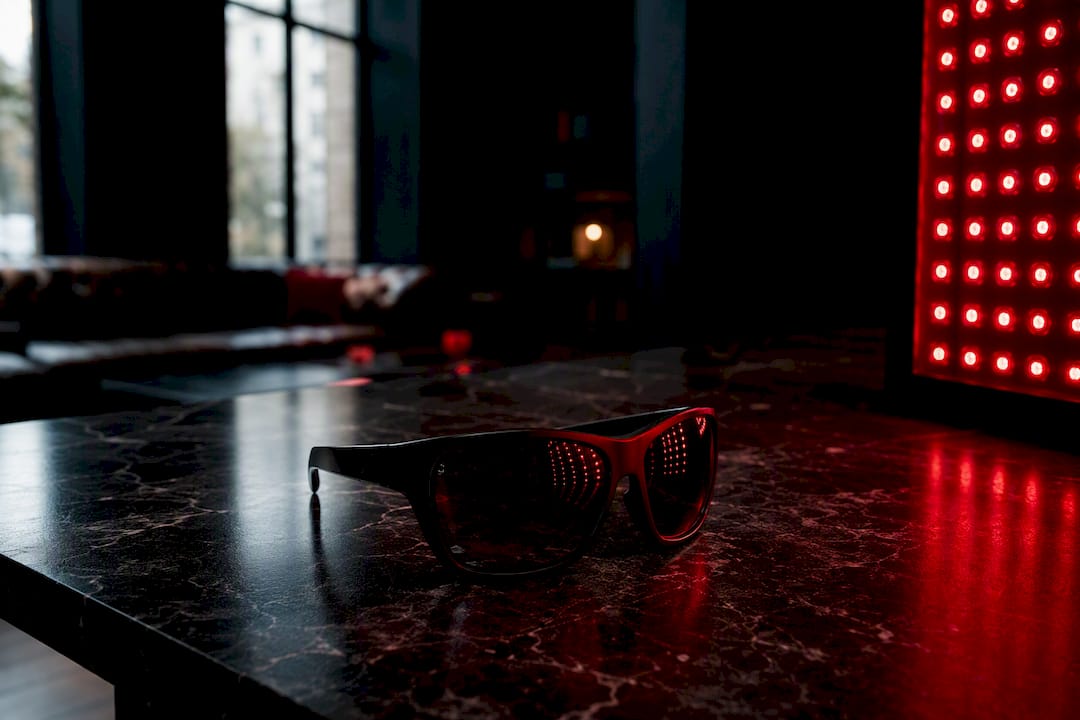
One more thing that gets skipped constantly: eye protection. Even at close range, staring straight into a panel isn't necessary for the benefit and isn't comfortable for most people. Use a timer so you're not eyeballing the clock, and set your device on something stable, not propped against a pillow where it can slip or overheat.
## Is Red Light Therapy Safe In The Morning?
Red light therapy carries a low risk profile for most healthy adults, but "low risk" doesn't mean "no rules." A few things matter enough to say directly.
Near-infrared light is invisible. You can't see it, which means you also can't visually judge how much you're getting. That's exactly why eye protection matters more than people assume. Goggles or simply closing your eyes during a session protects you from exposure you can't track by feel alone, a point echoed in Cleveland Clinic's overview of red light therapy.
Watch for these signs and setup mistakes:
- Excess heat on the skin or visible irritation after a session, both signs to dial back distance or duration
- Devices propped on soft bedding, which blocks airflow and creates an overheating risk
- Dozing off mid-session in bed, which can turn a 10-minute dose into an unplanned hour
If you're on photosensitizing medications, undergoing active cancer treatment, or managing an uncontrolled endocrine condition, talk to a clinician before starting. Stanford Medicine's clinical overview frames red light therapy as a widening but still developing area of clinical use, which is exactly why caution beats assumption when you've got a condition in play.
The fix for most of this is boring but effective: set a timer, use a stable stand, follow your manufacturer's instructions, and stop if something feels off. Curious about the fuller list of what can go wrong and how to avoid it? This side-effect breakdown covers it in more depth.
Three Morning Routines That Actually Fit Real Life
You don't need a 45-minute wellness ritual to make this stick. You need a version that survives contact with your actual schedule.
- The commuter version (5 to 8 minutes). Wake up, brush your teeth, stand in front of your device at 8 inches for 5 to 8 minutes while you check your calendar or drink water. No candles, no meditation app, just light and momentum before you're out the door.
- The at-home ritual (a session lasting an appropriate amount of time). Pour a glass of water, do some light stretching or a few mobility drills, and let your session run for an appropriate amount of time. Some men use this window to journal or plan the day. The session becomes the anchor that the rest of the ritual hangs on.
- The recovery-focused version (15 to 20 minutes). If you trained hard the day before, extend the session slightly and target sore areas directly, shoulders, lower back, knees, in addition to your standard morning exposure. Recovery-focused routines built around this approach tend to pair morning energy work with targeted soreness relief in the same session.
Whichever version you pick, the habit tips are the same: use a timer so the session doesn't become a guessing game, keep the device in the same spot every morning so it becomes automatic instead of a decision, and give yourself two to three weeks before judging whether it's working. Most men adjust to the routine faster than they expect, but the compounding benefits take longer than the habit itself.
The Research And Credentials Behind This Protocol
This protocol isn't guesswork. It's built on how photobiomodulation is understood in the peer-reviewed literature, backed by institutional guidance from sources like UCLA Health, and shaped by clinical caution from academic centers like Stanford Medicine.
Nurse Rachel, a healthcare professional and the founder behind Primal Red Co, built this approach around a simple idea: men over 30 don't need to wait for a crisis to start paying attention to their energy, their drive, or their mood. Primal Red Co created the RedRockit device as a practical way to apply this exact protocol at home, but the underlying advice here holds regardless of what device you use.
A few things worth knowing as you dig deeper:
- Want more on the science itself? This deeper explainer covers the mechanism in more detail.
- Wondering how this applies specifically to men's vitality and energy? This breakdown separates what actually works from what doesn't.
- If you have a diagnosed medical condition or take prescription medication, talk to your doctor before starting any new light therapy.
Keeping Your Device Working The Way It Should
A red light panel that's been gathering dust and skin oil for six months isn't giving you the same dose it gave you on day one. Treatment efficacy depends on the light actually reaching your skin unobstructed, and buildup on the LED surface cuts into that.
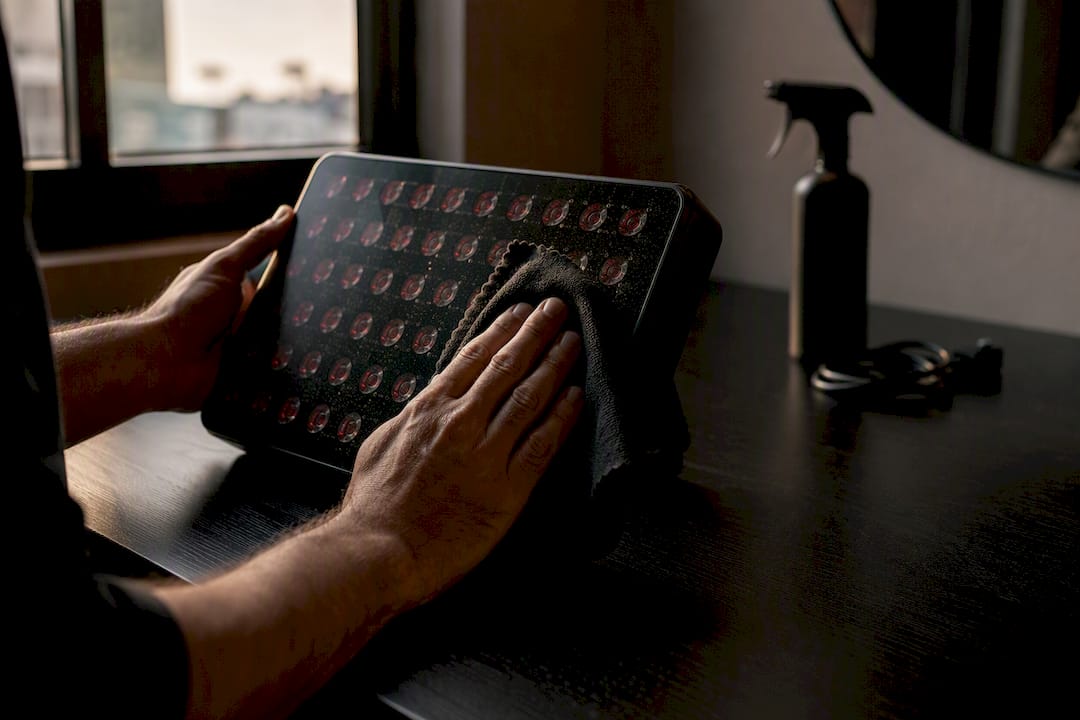
Wipe the panel down weekly with a dry or slightly damp microfiber cloth. Skip harsh chemical cleaners, they can degrade the lens coating over time and reduce output. Check the cord and connections periodically for fraying, especially if you're moving the device daily between a bedroom stand and a bathroom counter.
Ventilation matters more than most people assume. LED arrays generate heat during operation, and panels need airflow around the back and sides to avoid thermal stress that shortens the diode lifespan. Never operate a device pressed against bedding or stuffed in a case.
Store your device somewhere it won't get knocked around, ideally upright on a stand rather than tossed in a drawer with cables tangled around the panel face. If your device has a companion app, like Primal Red Co's Rockit IQ, use it to track session history. A drop in your usual session length or a sudden change in how the device feels against your skin is often the first sign something's off mechanically, not just a fluke morning.
Replace protective eyewear if lenses become scratched. Scratches scatter light unpredictably and reduce the protection you're counting on.
Making Red Light Part Of A Bigger Morning Routine
Red light works best as one piece of a morning sequence your body recognizes, not as an isolated five-minute event floating in the middle of your day.
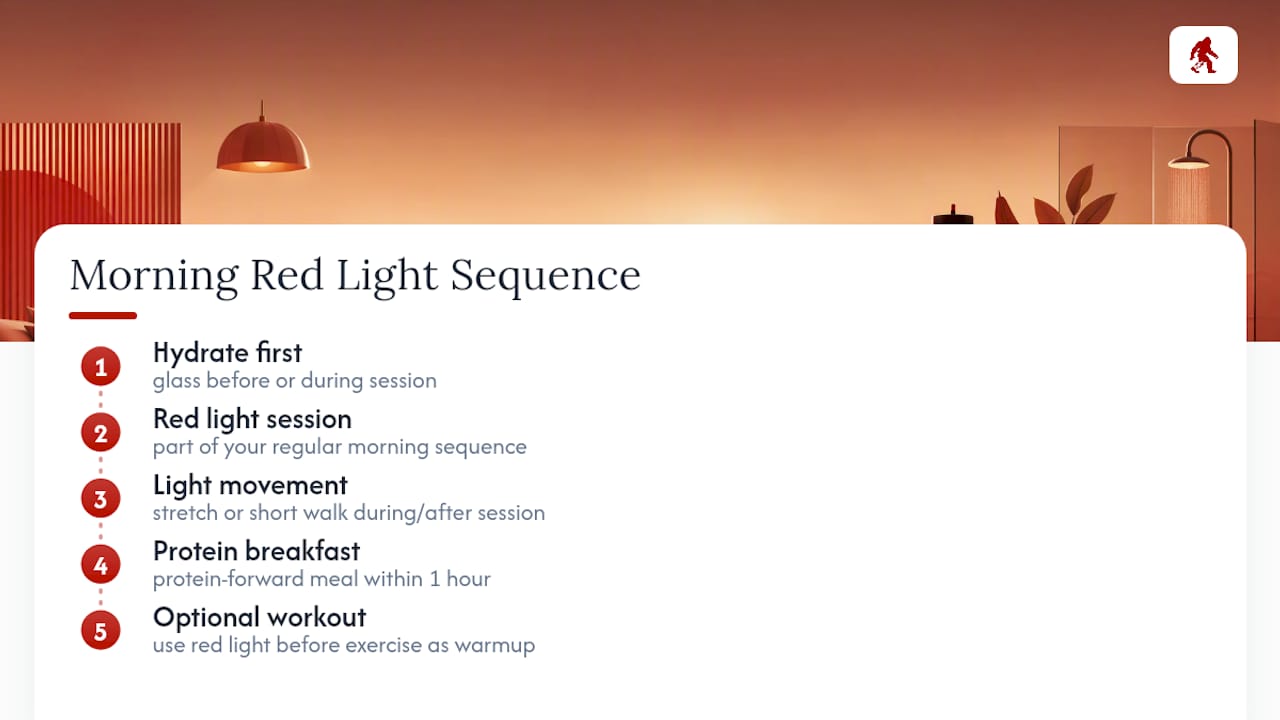
Pair it with water first. You've been fasting for six to eight hours overnight, and a glass of water before or during your session supports the cellular processes photobiomodulation is trying to kickstart. Dehydrated cells don't respond to any signal as efficiently as hydrated ones.
Light movement afterward compounds the effect. A short walk, some mobility work, even just stretching while your session finishes, gets blood moving to the areas you just exposed to light and reinforces the "we're awake now" message your circadian system just received.
Nutrition timing matters too, though less rigidly than people assume. A protein-forward breakfast within an hour of your session supports the same energy availability that photobiomodulation is nudging at the cellular level. You're not trying to perfectly sequence every input, you're trying to stack signals that all point the same direction: awake, fed, moving.
If you exercise in the morning, red light before your workout can serve as part of your warmup routine, not a replacement for one. The goal isn't complexity. It's a short stack of habits, done in the same order most days, that together tell your body it's time to perform.
What The Conventional Advice Gets Wrong
Most red light content treats morning sessions like a magic switch: flip it on, feel different immediately, done. That's not how circadian biology works, and setting that expectation sets people up to quit in week one, right before the real benefit shows up.
The bigger miss is treating red light as a standalone fix instead of what it actually is: a consistency tool. The men who see the clearest results aren't the ones with the fanciest panel. They're the ones who show up at roughly the same time every morning for three weeks straight. That's unglamorous advice, and it's also the honest answer.
I'd also push back on the idea that more light or longer sessions always means better results. The body responds to signals, not brute force. Overdoing distance or duration doesn't accelerate the anchor effect, it just risks skin irritation and burns out your patience before the habit sticks.
If you take one thing from this: prioritize timing consistency over perfect technique. A slightly imperfect session done daily beats a flawless one done twice a month.
— Nurse Rachel
Bringing This Routine Home With RedRockit
RedRockit is built to make the exact protocol above simple to run every morning, without needing to calculate irradiance math or hunt down separate timers and stands. The device pairs 660 nanometer red light with near-infrared output in the range this article covers, and its companion app, Rockit IQ, walks you through guided sessions with built-in timing so you're not guessing at distance or duration.

Starting is simple: run a short session, 8 to 10 minutes at a comfortable distance, within your first half hour awake, and check the app's guidance against your own comfort as you go. The manual covers spec details worth reading before your first use, and RedRockit's stand keeps the panel stable so you're not improvising with pillows or furniture. Real results build over weeks of daily use, not overnight, so give the habit room to compound before judging it.
If you're ready to build this into your actual morning instead of just reading about it, check out the RedRockit Activation Method and see how the guided protocol fits your routine.
This article is general information, not a substitute for advice from a qualified doctor. Consult a qualified healthcare professional about your own circumstances before acting on anything here.
Sources
- PMC article on photobiomodulation and circadian/sleep implications
- Red light therapy — Cleveland Clinic
- Red light therapy clinical overview — Stanford Medicine
- Red Light Therapy for Sleep: Morning Exposure and Circadian Rhythm | Frequency Technology
- 5 health benefits of red light therapy — UCLA Health