
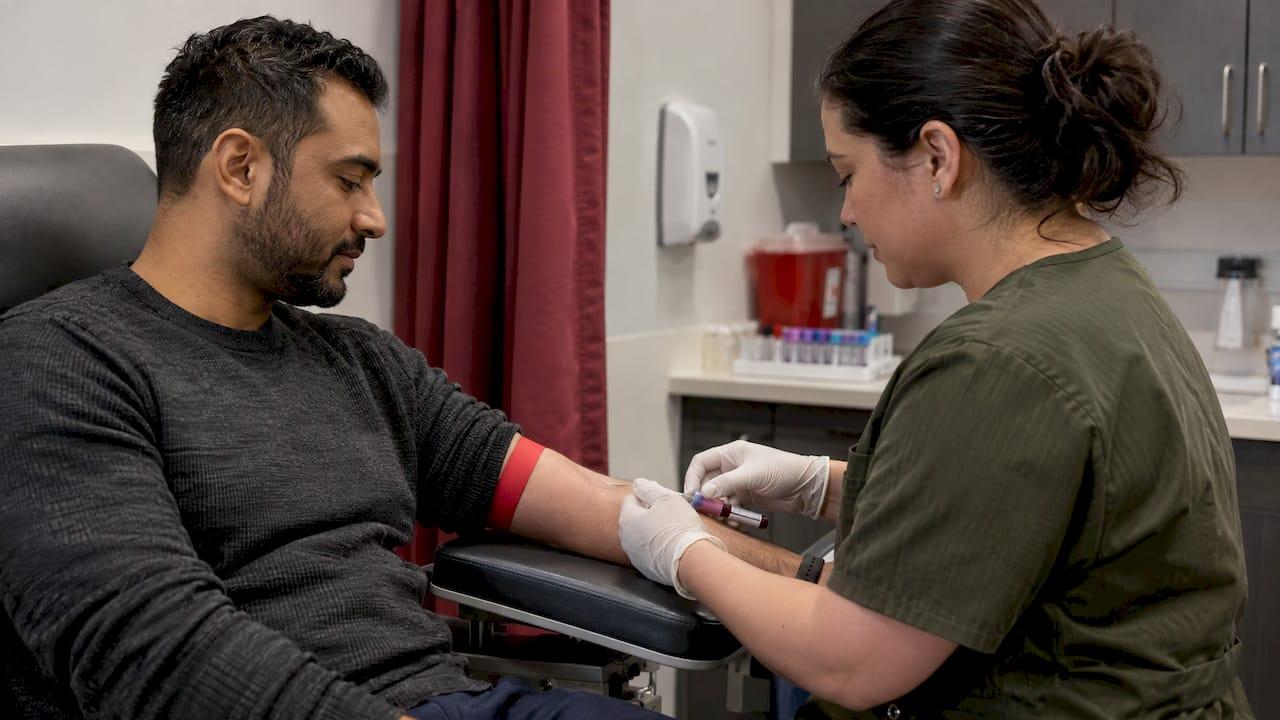
High prolactin in men is a hormone problem, not a character flaw. It can push testosterone down, kill your sex drive, and make erections unreliable. It usually has a specific, findable cause: a medication, a thyroid issue, or a small pituitary tumor. The first step is a blood test, then a doctor who looks for the cause. Everything else comes after that.
If your drive has gone quiet and your testosterone number does not explain it, prolactin is one of the things worth ruling out. Here is what it does, what causes it, how it is confirmed, and what you can do.
TL;DR
- Prolactin is a pituitary hormone. When it runs high, it can lower testosterone and cause low libido, erectile dysfunction, infertility, and breast enlargement.
- In men, a normal level is generally under 20 μg/L, though lab ranges differ. Very high readings (above 200 μg/L, with no interfering medication) point toward a pituitary tumor called a prolactinoma.
- Common causes: prolactinomas, other pituitary tumors, certain medications, an underactive thyroid, and kidney or liver disease.
- Treatment depends on the cause. Doctors may switch a medication, treat the thyroid, or prescribe a dopamine agonist such as cabergoline.
- Sleep, stress, and routine matter for how you feel. They do not replace a workup or treatment for a confirmed tumor.
Table of Contents
- What prolactin does in a man's body
- Symptoms of high prolactin in men
- What counts as a high prolactin level?
- What causes high prolactin in men
- How high prolactin is tested and confirmed
- How doctors bring prolactin down
- Can you reduce prolactin naturally?
- Our perspective
- Where a restoration routine fits
- When to see a doctor
- FAQ
- Sources
What prolactin does in a man's body
Most people link prolactin to breastfeeding. Men make it too. It comes from the pituitary gland, the small control center at the base of your brain that also manages thyroid signals and the hormones that tell your testes to make testosterone.
Think of it as a signal chain. The brain sends a message, the pituitary relays it, and the testes respond. When prolactin climbs too high, that chain gets interrupted. The NIDDK explains that excess prolactin, called hyperprolactinemia, can lower sex hormone levels in both women and men.
That is why a man with high prolactin often looks like a man with low testosterone. Sometimes he is. But treating the testosterone number alone misses the real problem. Fix what is pushing prolactin up, and the rest of the chain can often recover.
Symptoms of high prolactin in men
The Cleveland Clinic lists the usual picture in men: erectile dysfunction, loss of libido, infertility, breast enlargement (gynecomastia), and low testosterone.
In real life, men describe it like this:
- Drive that used to come automatically is just gone.
- Erections are softer, less frequent, or harder to keep.
- Energy sags and recovery from workouts drags.
- Sperm count or fertility problems show up when you and your partner are trying for a baby.
- Tender or enlarged tissue around the nipples.
- When a larger pituitary tumor is involved, headaches and sometimes vision changes can appear. The prolactin guide for GPs lists headaches among the symptoms in men.
Notice how much of this overlaps with low testosterone, stress, poor sleep, and plain aging. That overlap is the trap. A man blames his age or his job for a year or two, when a single blood test would have pointed somewhere specific.
If you are a wife or partner reading this because he has gone flat, tired, and distant: these symptoms are physical. They are not about you, and they are not a lack of effort on his part. A prolactin test is a reasonable thing to ask him to bring up with his doctor.
What counts as a high prolactin level?
Numbers matter here, and units trip people up. Prolactin is reported either in μg/L or ng/mL. For prolactin, those two are numerically equivalent, so 20 μg/L is 20 ng/mL. Check which unit your lab report uses and use the reference range printed on it.
A 2025 review of how clinicians work up the condition puts normal prolactin in men below 20 μg/L. Some labs set their upper limit a bit lower or higher, so your own report is the benchmark.
A rough guide to what readings suggest:
| Level | What it often suggests |
|---|---|
| Under about 20 μg/L | Normal range in men, per most references |
| 20 to 200 μg/L | Mild to moderate elevation. Medications, thyroid problems, stress at the time of the draw, or a smaller pituitary tumor are all possible |
| Above 200 μg/L | In the absence of interfering medications, suggestive of a prolactinoma |
So what does a prolactin level of 200 mean? It sits right at the line where doctors start thinking seriously about a pituitary tumor. It is not a diagnosis by itself. It is a reason for follow-up with an endocrinologist.
What causes high prolactin in men
The Cleveland Clinic names prolactinomas, other pituitary tumors, certain medications, hypothyroidism, kidney or liver disease, and chest wall injuries as common causes. Here is how to think about each.
Medications
This is the cause men most often miss. The Endocrine Society says prescription drugs that can raise prolactin include antipsychotics, antidepressants, some high blood pressure medications, and medicines for nausea and vomiting.

If you started a new prescription and your drive dropped within weeks or months, tell your prescriber. Do not stop a medication on your own. Some of these drugs protect your mental health or your heart, and stopping suddenly can do harm. Your doctor can adjust the dose, switch to another option, or confirm the drug is the cause.
If an antidepressant is part of your story, our breakdowns of SSRIs and testosterone and SSRI libido in men walk through the questions to bring to that conversation.
Thyroid problems
Can high TSH cause high prolactin? Yes, in primary hypothyroidism. An underactive thyroid raises TRH, the brain signal that pushes the pituitary to make TSH. That same signal also stimulates prolactin release. Long-standing primary hypothyroidism can even enlarge the pituitary.
This is good news in one way. If your thyroid is the driver, treating it can fix the prolactin. A reported case of hyperprolactinemia from subclinical hypothyroidism saw thyroid hormone replacement return both TSH and prolactin to normal.
Pituitary tumors
A prolactinoma is a benign tumor of the pituitary that makes too much prolactin. The NIDDK describes it as noncancerous. Benign does not mean harmless to your hormones, though. This is the cause behind the very high readings, and it is treatable.
Kidney, liver, and chest wall issues
Kidneys and liver clear hormones from the blood, so serious disease in either can push prolactin up. Chest wall injuries or irritation can also raise it. These are less common than medications or thyroid problems, but they are on the checklist your doctor will run through.
Stress, sleep, and the draw itself
Physical stress, a hard workout, or a rough morning before the blood draw can nudge prolactin up temporarily. That is part of why doctors often repeat the test before drawing conclusions.
How high prolactin is tested and confirmed
It starts with a simple blood test. Expect your doctor to check prolactin alongside total and free testosterone, TSH, and often kidney and liver markers. If your fatigue or low drive is the reason you are being tested, our guide on two morning tests for low libido in your 30s covers the timing basics.
For a mildly raised result in a man with no clear symptoms, the 2025 workup review suggests repeating the prolactin in 2 to 4 weeks and testing for macroprolactin. Macroprolactin is a large, mostly inactive form of the hormone that can inflate the number on paper without causing symptoms. The same review notes that guidelines caution against jumping to pituitary imaging when there are no symptoms, since incidental findings are common and can cause needless worry.
Practical steps before your draw:
- Ask your doctor whether to fast and what time to come in. Morning is typical.
- Avoid hard exercise the day before and anything that stresses your chest area.
- Bring a full list of everything you take, prescription and otherwise.
- Rest quietly for a few minutes before the sample is taken, if the lab allows it.
- If the result is high, ask about a repeat test and about macroprolactin.
If your prolactin is markedly high, or you have headaches or vision changes, an MRI of the pituitary and a referral to an endocrinologist are the usual next steps. That is the specialist to see for pituitary disease.
How doctors bring prolactin down
Treatment follows the cause, and the goals are clear: normalize prolactin, restore gonadal function, and reduce or stabilize tumor size where a tumor exists.
- Medication-related: your prescriber may adjust or switch the drug.
- Thyroid-related: treating the underactive thyroid can normalize prolactin.
- Prolactinoma: dopamine agonists are the standard approach. An Endotext chapter on management states that cabergoline is generally more effective and better tolerated than bromocriptine. Your endocrinologist decides on drug and dose.
- Few or no symptoms: the Cleveland Clinic notes that people with high prolactin and few or no symptoms may not need treatment, so monitoring can be a legitimate plan.
What about the best drug for high prolactin? There is no single answer. The best option is the one that fits the cause. A man whose prolactin is high because of a thyroid problem does not need the same treatment as a man with a pituitary tumor.
A word on testosterone therapy. If prolactin is the real culprit, adding testosterone on top does not address it. Getting the cause identified first is what lets you make a smart decision later. Our look at Clomid for low testosterone and our piece on high estrogen in men cover two other hormone pieces that often get tangled up in the same conversation.
Can you reduce prolactin naturally?
Here is the honest answer. Sleep, stress management, and healthy routines matter for how a man feels and functions. They are most relevant for mild, "functional" elevations. They are not a substitute for dopamine agonist treatment when a prolactinoma is confirmed. That distinction is worth knowing, and it is where you should not gamble.
What you can do without waiting:
- Get the test first. Guessing wastes months.
- Review your medications with your prescriber, not on your own.
- Protect your sleep. Consistent sleep timing is the most basic recovery habit you have.
- Manage stress deliberately. Walks, lifting, time outdoors, and real downtime all count.
- Skip supplements that promise to "lower prolactin." The evidence for them is thin, and a confirmed elevation needs a medical answer.
- Retest after changes, so you know whether they worked.
Our perspective
We hear from men every week who say the same thing: "I just don't feel like myself." Often they have been told it is age, stress, or "just get the shot." Sometimes that is where the conversation ends.
Here is what we believe. You deserve to know what is actually driving the shift before you make a big decision. If your prolactin is high, that is a medical finding that belongs with your doctor. We are not a clinic, we do not diagnose, and we do not treat pituitary conditions. Get the labs. Find the cause.
But labs are only half of the story. Once the medical basics are handled, you still have a body that runs on signals, and you still have daily habits that decide whether those signals get stronger or fade. That is the space we work in. RedRockit was built as a private-use red light routine for men over 30 who want to support their energy, drive, and recovery from home, with no subscriptions and no appointments. It is designed to support a restoration routine. It is not a replacement for medical care.
YOU HAVEN'T LOST IT. But you do need to look under the hood, then build a routine you will actually keep.
Nurse Rachel
Where a restoration routine fits
Once you and your doctor know what is going on, the next question is what you do every day. Men who have been tested and treated, or who have ruled out the big medical causes, often tell us the same thing: they want a simple routine that supports energy, drive, and recovery, and that they control.
That is what RedRockit is for. It is a private-use red light wellness device designed to support daily restoration, with a companion app, Rockit IQ, for guided session protocols. It is not a drug, not a supplement, and not a prescription. It comes with our lifetime craftsmanship guarantee.

See how it works on the RedRockit Primal Restoration page. If you are weighing your options before any hormone therapy, our honest look at alternatives to TRT lays out how to think it through.
When to see a doctor
Book a visit soon, rather than waiting it out, if you notice any of these:
- Erectile dysfunction or low libido that has lasted more than a few weeks and has no obvious reason.
- Breast enlargement or discharge from the nipple.
- Persistent headaches, or any change in your vision. Tell your doctor right away.
- Fertility trouble, with or without other symptoms.
- A new prescription followed by sexual or energy changes.
Start with your primary care doctor. Ask for prolactin, total testosterone, and TSH. If results point to the pituitary, ask for a referral to an endocrinologist.
FAQ
What is a dangerous prolactin level in a man?
There is no single "dangerous" number, but readings above 200 μg/L without an interfering medication are suggestive of a prolactinoma and need specialist follow-up. Mild elevations are often caused by medications, thyroid problems, or a stressful blood draw. Your doctor interprets the number alongside your symptoms.
Can high prolactin cause low testosterone?
Yes. High prolactin is linked to low testosterone in men, along with low libido and erectile dysfunction, according to the Cleveland Clinic. It interrupts the signals that tell the testes to make testosterone. That is why prolactin is worth checking when a low testosterone result has no clear cause.
Can high TSH cause high prolactin?
It can. In primary hypothyroidism the brain releases more TRH, which stimulates the pituitary to make both TSH and prolactin, as described in this review. Treating the thyroid can bring prolactin back down.
Do I always need treatment for high prolactin?
Not always. Men with high prolactin and few or no symptoms may not need treatment, and doctors often repeat the test first. If you have symptoms, a tumor, or fertility concerns, treatment is more likely. Your endocrinologist will guide that decision.
Which medications raise prolactin?
The Endocrine Society lists antipsychotics, antidepressants, some blood pressure medications, and nausea medicines. Do not stop any prescription on your own. Talk to the prescriber about alternatives.
Sources
- Hyperprolactinemia: What It Is, Symptoms & Treatment, Cleveland Clinic
- Hyperprolactinemia, Endocrine Society
- Prolactinoma, NIDDK
- Workup of hyperprolactinemia, 2025 review
- Role of hypothyroidism and associated pathways, 2020
- Prolactinoma management, Endotext
- Hyperprolactinaemia: diagnostic and management challenges, 2014