
Short answer: SSRIs are linked to sexual dysfunction, and some clinical studies show lowered testosterone or disrupted HPT-axis signaling in men taking them, but depression itself also drags testosterone down, which muddies the picture. Don't stop your medication on your own. Track your symptoms, talk to your clinician, and ask about morning testosterone testing if things aren't adding up.
TL;DR:
- Depression can lower testosterone before treatment, so persistent low libido, erectile difficulty, fewer morning erections, or severe fatigue cannot identify the SSRI as the cause.
- Clinicians should confirm low testosterone with two reliable morning tests, ideally fasting before 10 AM, and assess LH, FSH, and prolactin when levels are low.
- Discuss persistent sexual symptoms with your prescriber before changing medication; dose adjustment, timing changes, or switching antidepressant classes may come before hormone treatment.
- Testosterone therapy is reserved for confirmed hypogonadism and requires discussing fertility with a clinician, plus ongoing hematocrit, PSA, and testosterone monitoring.
- A systematic review reported reduced sperm concentration and motility after roughly three months of continuous SSRI use; discuss fertility concerns with your prescriber.
Table of Contents
- What the research actually shows about SSRIs and testosterone
- How SSRIs can disrupt hormone signals and sexual function
- Symptoms that warrant a testosterone check and how testing works
- Treatment paths when SSRIs and low testosterone overlap
- Restoration habits you can start before the next lab draw
- Our take on testing first, treating second
- Where RedRockit fits into your restoration plan
- FAQ
- Sources
What the research actually shows about SSRIs and testosterone
Here's the honest version, not the social media version. The research on SSRIs and testosterone isn't a single clean study. It's a patchwork of clinical cohorts, systematic reviews, and treatment trials, and they don't all point the same direction with the same certainty.
Start with what's solid. A clinical cohort study of depressed men on SSRIs found significantly lower LH, FSH, and testosterone compared to healthy controls, pointing to altered hypothalamic-pituitary-testicular axis function. That's not nothing. That's a real signal showing up in real bloodwork.
Then there's the sexual dysfunction side, which is better documented and frankly harder to argue with. A clinical review published in PMC reports that SSRIs and SNRIs are frequently tied to treatment-emergent sexual symptoms, which vary widely depending on the drug and the population studied. That's a massive range, and it tells you something important: this isn't rare, and it isn't universal either. Some men sail through SSRI treatment with no sexual side effects. Others feel like someone cut the wire.
Where the evidence gets interesting is on the treatment side. A meta-analysis of 27 randomized controlled trials involving 1,890 men found that testosterone treatment was associated with a statistically significant reduction in depressive symptoms, with an efficacy odds ratio of 2.30 (95% CI, 1.30 to 4.06). That number matters because it suggests the testosterone and mood connection runs both directions. Low T can worsen depression, and depression can suppress testosterone, and SSRIs sit right in the middle of that loop.
A few things the research consistently flags:
- Study populations are small and heterogeneous, which is why rates and findings vary so widely between papers.
- Time course matters: some reproductive effects, like changes in semen parameters reported in a systematic review on SSRIs and semen quality, don't show up immediately. They can emerge after roughly three months of continuous use.
- Causal direction is genuinely unclear in a lot of studies. Is it the SSRI lowering testosterone, or is it the underlying depression that was already doing that before treatment even started?
That last point is the one men get wrong most often. You can't just blame the pill. Depression on its own is associated with lower testosterone in multiple studies, which means some of what you're feeling might have started before you ever filled the prescription. That doesn't let the SSRI off the hook. It just means the real answer requires actual testing, not guessing.
How SSRIs can disrupt hormone signals and sexual function
Your body runs on signals. Testosterone production isn't a switch, it's a chain of communication running from your brain down to your testes, and SSRIs can interfere with more than one link in that chain.
The first link is the HPT axis, short for hypothalamic-pituitary-testicular axis. Your brain sends LH and FSH down to your testes to keep testosterone production running. Some clinical studies of SSRI-treated men have found lower LH and FSH alongside lower testosterone, suggesting the signal itself gets dampened somewhere upstream. Think of it like a radio tower broadcasting at lower power. The receiver still works. It's just not getting the full message.

Second, SSRIs increase serotonin availability, and serotonin has a complicated relationship with prolactin and dopamine, both of which influence libido and erectile function. Elevated prolactin has been linked to reduced sexual desire in men, and heavy serotonin activity can also blunt dopamine signaling, the neurotransmitter most tied to drive and motivation. Less dopamine tone, less drive. That's not a metaphor, that's chemistry.
Third, there's the nitric oxide piece. Erections depend on nitric oxide relaxing blood vessel walls to allow blood flow. SSRIs can interfere with that pathway, which helps explain why erectile difficulty and delayed ejaculation show up so often on SSRI side effect lists, including in FDA prescribing information, which lists sexual dysfunction as a known adverse effect.
A few mechanisms worth knowing in plain terms:
- HPT-axis suppression: reduced LH and FSH signaling can translate to lower downstream testosterone production.
- Prolactin and dopamine shifts: altered serotonin activity can raise prolactin and reduce dopamine tone, both tied to libido.
- Nitric oxide interference: a key pathway for erections can be blunted by SSRI activity on serotonin receptors.
None of this means every man on an SSRI will experience every symptom. It means the plumbing is more connected than most men realize, and depression itself can be pulling on the same pipes from a different angle.
Symptoms that warrant a testosterone check and how testing works
Not every bad week on an SSRI means your testosterone tanked. But certain patterns are worth paying attention to, especially when they stick around.
Watch for these signs:
- Declining libido that doesn't track with your mood improving, meaning your depression is better but your drive hasn't come back.
- Persistent erectile difficulty that shows up consistently, not just occasionally.
- Fewer spontaneous or morning erections, which can be a more reliable marker than performance-based ones.
- Severe, unexplained fatigue that goes beyond typical SSRI adjustment side effects.
Here's the catch: depression causes almost identical symptoms on its own. Low energy, low libido, flat mood. That overlap is exactly why testing matters more than assuming.
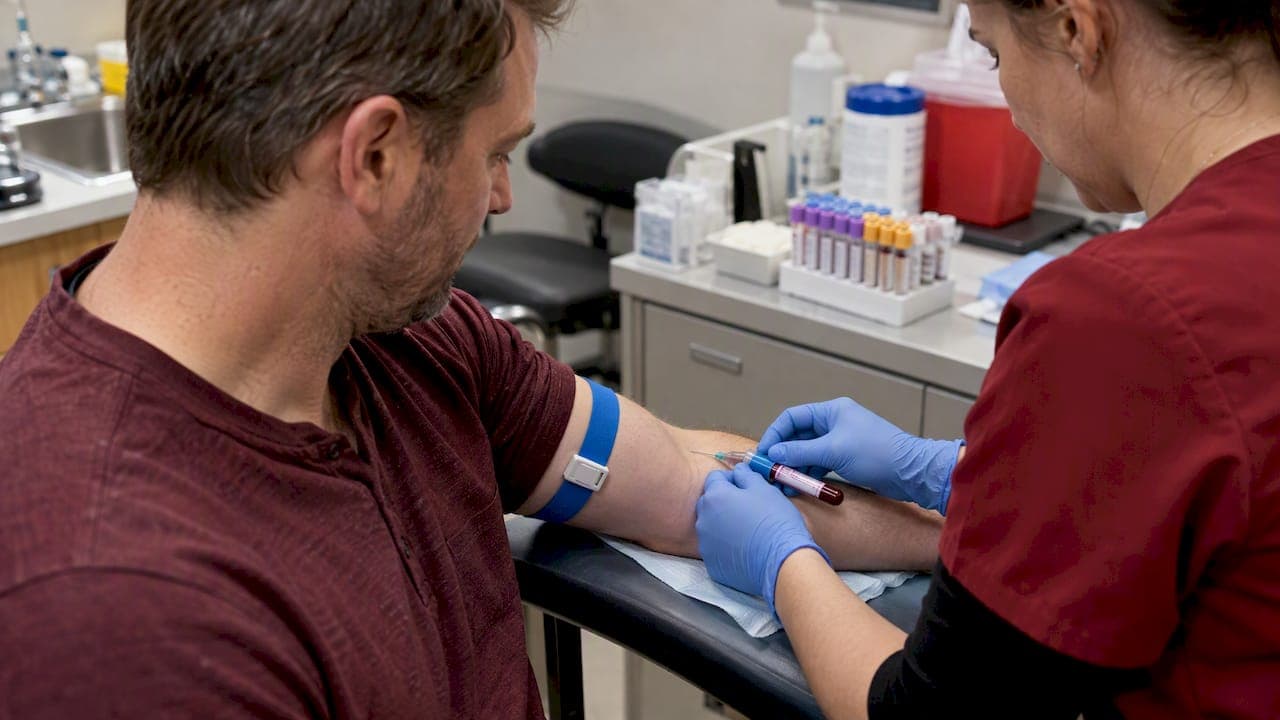
When testing is warranted, accuracy depends on doing it right, and many turn to specialized clinics for hormone therapy and diagnostic services to guide their treatment plans (Hormone Therapy | Green Circle Wellness). Endocrine Society guidelines recommend confirming hypogonadism only after consistent symptoms plus unequivocally low serum testosterone, measured with a reliable assay and confirmed on repeat testing. Testosterone follows a daily rhythm, peaking in the morning, which is why a 2026 Endocrine Society statement calls for morning fasting draws, ideally before 10 AM, since a single afternoon test can misclassify a man entirely. If total testosterone comes back low, clinicians typically add LH, FSH, and prolactin to figure out whether the problem starts at the testes or further up the chain in the brain. Our guide to distinguishing depression from low testosterone walks through what that morning test actually involves.
Pro Tip: Ask your clinician for total testosterone, free testosterone, LH, FSH, and prolactin in the same blood draw instead of testing one marker at a time across multiple visits.
If numbers come back genuinely low and symptoms match, that's when a referral to endocrinology or urology makes sense, along with baseline hematocrit and PSA if testosterone therapy becomes part of the conversation.
Treatment paths when SSRIs and low testosterone overlap
If your bloodwork and symptoms point to a real problem, there's a sequence most clinicians work through, and it doesn't start with testosterone therapy.
The first moves are usually about the SSRI itself. That can mean adjusting the dose, changing the timing, or switching to a different class of antidepressant that carries a lower reported rate of sexual side effects. These conversations belong with your prescriber, not a forum thread, because abruptly stopping an SSRI carries its own risks.
When hypogonadism is confirmed through repeat morning testing, testosterone therapy enters the conversation as a legitimate option, not a first resort. The meta-analysis of 27 randomized controlled trials found that testosterone treatment was associated with a significant reduction in depressive symptoms in men who had confirmed low testosterone, with an efficacy odds ratio of 2.30. That's a meaningful finding, but it's specific to men who actually qualify for treatment, not a blanket case for every man feeling low on an SSRI.
Endocrine Society guidelines are clear that testosterone therapy is appropriate only for men who meet diagnostic criteria, following a shared discussion of risks and benefits between patient and clinician.
Before starting, men should understand the ongoing commitments:
- Regular monitoring of hematocrit, since testosterone therapy can thicken the blood.
- PSA checks, particularly in men over 40.
- Follow-up testosterone levels to confirm the dose is actually working as intended.
- A frank conversation about fertility, since testosterone therapy suppresses natural sperm production and isn't the right choice for men planning to conceive in the near term.
This is also where Endocrine Society experts have pushed back on the trend of prescribing testosterone without a proper diagnostic workup first. Treatment without testing isn't treatment. It's a guess with a prescription attached.
Restoration habits you can start before the next lab draw
While the diagnostic process runs its course, there's real ground you can cover on your own, and none of it requires a prescription pad.
Sleep is the foundation most men skip. Testosterone production is tied closely to sleep cycles, and chronic short sleep is one of the fastest ways to tank your numbers regardless of what medication you're on. Resistance training comes next. Lifting heavy, consistently, is one of the more reliable levers a man has over his own hormonal environment. Add in weight management, since excess body fat is linked to lower testosterone, moderate your alcohol intake, since heavy drinking suppresses production directly, and keep protein intake steady to support training recovery.
Red light therapy fits into this picture as a supportive, non-pharmaceutical tool, not a replacement for diagnosis or treatment. Our deep-dive on red light therapy and testosterone breaks down what the evidence actually supports and what it doesn't. It's one piece of a restoration routine, not a substitute for bloodwork.
Before your next clinic visit, here's what's worth tracking:
- Sleep quality and duration over the past two to four weeks, not just last night.
- Libido changes specifically tied to timing with your SSRI dose or dose changes.
- Morning erection frequency, since this marker tends to be more objective than others.
- Alcohol intake and training consistency, since both directly influence testosterone.
Pro Tip: Bring a written symptom log to your appointment instead of trying to recall two months of changes from memory. Clinicians move faster with specifics.
Our guide on testing testosterone at home also walks through what at-home screening can and can't tell you before you book a formal lab draw.
Our take on testing first, treating second
We built this brand on a simple belief: diagnose before you treat. Too many men hear "low energy" and jump straight to "I need testosterone" without ever seeing a lab result. That's backward, and it's expensive in more ways than money.
SSRIs are a legitimate, often necessary tool for men fighting depression, and depression itself is a testosterone thief in its own right. Pretending one explanation covers everything does you a disservice. The real answer requires bloodwork, a clinician who takes your symptoms seriously, and a willingness to separate what the medication is doing from what the depression already did.
Nurse Rachel built our educational content around that principle: understand your body before you make permanent decisions about it.
— Nurse Rachel
Where RedRockit fits into your restoration plan
If your labs come back normal but you still feel like your drive left the room, that's exactly the gap we built RedRockit to address. It's a private-use red light device designed for men over 30 who want a daily restoration routine, not a prescription or a clinic visit.

RedRockit isn't TRT, and it isn't a diagnosis. It's a tool for men who've already talked to their clinician and want something concrete to do while they rebuild energy, drive, and recovery on their own terms. Check out RedRockit's product page to see if it fits your routine.
FAQ
Do SSRI sexual side effects go away over time?
For some men, sexual side effects ease as the body adjusts to the medication, while for others they persist as long as treatment continues. A clinical review notes that treatment-emergent sexual symptoms vary widely between individuals and drugs, so the honest answer is that it depends, and it's worth discussing persistent symptoms with your prescriber rather than waiting them out indefinitely.
Do SSRIs make it harder to build muscle?
SSRIs aren't a direct block on muscle growth, but if they're contributing to lower testosterone or persistent fatigue, that can indirectly affect training recovery and performance. A clinical cohort study found lower testosterone in some SSRI-treated men, and testosterone plays a role in muscle protein synthesis, so addressing hormone levels through proper testing matters if your gains have stalled.
What causes the biggest drop in testosterone in men?
There isn't one universal answer, since testosterone decline is typically driven by a combination of factors including poor sleep, excess body fat, chronic stress, and underlying health conditions rather than a single cause. Medications, including some SSRIs, can contribute in certain men, which is why guideline-based testing with repeat morning draws is the only reliable way to identify what's actually driving a specific man's numbers.
What are the potential long-term effects of taking SSRI antidepressants?
Long-term SSRI use is associated with persistent sexual dysfunction in some men, and certain studies report changes to reproductive markers like semen quality after extended use. A systematic review on SSRIs and semen quality found reduced sperm concentration and motility emerging after roughly three months of continuous use, underscoring why ongoing conversations with your prescriber matter for men on long-term treatment.
Sources
- Association of Testosterone Treatment With Alleviation of Depressive Symptoms in Men: A Systematic Review and Meta-analysis (PubMed)
- The association of hypogonadism with depression and its treatments - PMC
- Evaluation of endocrine profile and HPT axis in male depressed patients with SSRI-induced sexual dysfunction (PubMed)
- Testosterone Therapy in Men With Hypogonadism: An Endocrine Society Clinical Practice Guideline
- PAXIL CR prescribing information (FDA)