
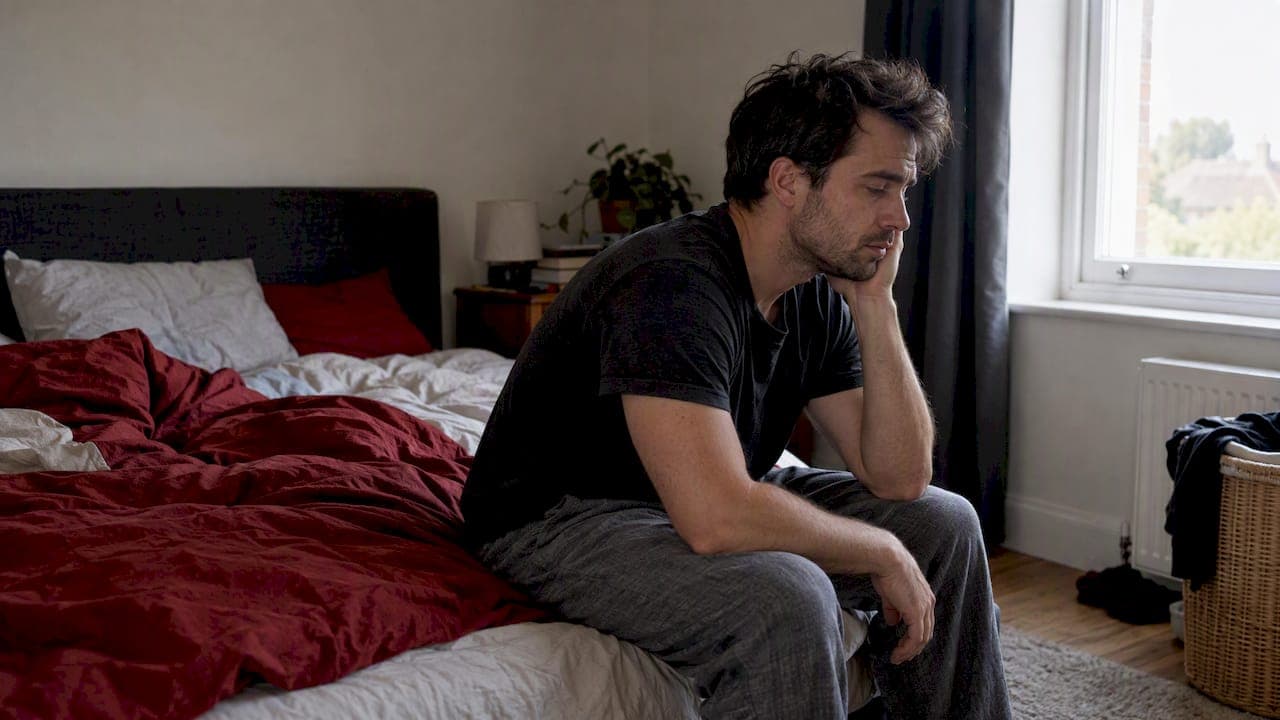
A drop in sex drive in your 30s is common, and most of the time it's fixable: poor sleep, chronic stress, certain medications, or carrying extra weight are the usual suspects. True testosterone deficiency is less common and needs specific testing to confirm, not a feeling or a guess. If the dip sticks around for more than a few weeks, start with the basics before you start asking bigger questions.
TL;DR:
- A diagnosis requires symptoms plus two separate morning testosterone tests before 10 AM, each below roughly 300 ng/dL; one low result is insufficient.
- Gradual changes alongside weight gain, snoring, or daytime fatigue point toward sleep or metabolic problems; sudden changes after a prescription warrant a medication review.
- Clinicians may check free testosterone, LH, prolactin, blood sugar, and sleep apnea, since total testosterone alone can miss causes or misrepresent usable hormone levels.
- Try consistent sleep, strength training two to four times weekly, adequate food, and stress reduction; never stop a suspected medication without its prescriber.
- Testosterone therapy is reserved for documented symptoms and consistently low results; guidelines discourage routine screening and advise weighing fertility and long term treatment tradeoffs.
Table of Contents
- 1. What actually causes low libido in your 30s
- 2. How clinicians test for low testosterone and what the numbers mean
- 3. Practical steps to try before or alongside testing
- 4. Nurse Rachel's restoration routine and where non-TRT options fit
- You haven't lost it, you've just lost the signal
- Where a red light restoration routine fits in
- FAQ
- Sources
1. What actually causes low libido in your 30s
Your drive doesn't drop for one reason. It's usually a stack of smaller things that pile up until you notice the change. Think of libido as a signal your body sends when everything else is running smoothly. When sleep, stress, hormones, or your relationship are out of sync, that signal gets weaker, and some men lose it almost entirely without realizing why.
Hormonal and metabolic causes sit near the top of the list. Testosterone naturally declines with age, but in your 30s a steep drop is more often tied to weight gain, insulin resistance, or undiagnosed obstructive sleep apnea than to age itself. Sleep-disordered breathing can lower testosterone independently of body weight, which means a man who looks fit on paper can still be running on empty hormonally.

Psychological causes are just as powerful, and they're the ones men talk about least. Chronic stress raises cortisol, and elevated cortisol can suppress libido while also masking your true androgen status on a blood test. Depression and anxiety do the same thing from a different angle: they flatten desire before they touch anything else. Performance pressure, porn-driven expectations, and friction with a partner all feed into this category too.
Medications and substances are an underrated cause. Several common prescriptions quietly dial down desire:
- SSRIs and other antidepressants, which are well known for blunting libido and delaying orgasm.
- Opioid pain medications, which suppress the hypothalamic signals that drive testosterone production.
- Certain blood pressure medications, particularly older beta blockers.
- Heavy or regular alcohol use, which depresses both hormone production and arousal.
- Recreational drug use, which affects desire through multiple pathways depending on the substance.
Lifestyle contributors round out the picture: a sleep debt that never gets repaid, training so hard that your body stays in a stress response, or a diet that leaves you under-fueled all work against you. According to UCSF's urology department, a careful history that includes relationship stress, life changes, sleep habits, and current medications is the first step any clinician should take, because these reversible factors are far more common than a hormonal diagnosis.
Here's how to triage yourself before you book an appointment. If the change arrived suddenly after a new prescription, suspect the medication first. If it came on gradually alongside weight gain, snoring, or daytime fatigue, suspect sleep and metabolic health. If it tracks with a stressful stretch at work or tension at home, the psychological route is more likely. If none of that fits and the drop is steady, unexplained, and paired with low energy or fewer morning erections, that's when hormonal testing earns a closer look.
2. How clinicians test for low testosterone and what the numbers mean
Getting an accurate answer requires more discipline than most men expect. A single blood draw, especially one taken in the afternoon, tells you very little.
Clinical guidelines from the American Urological Association define testosterone deficiency as symptoms paired with at least two separate early-morning total testosterone measurements that consistently fall below roughly 300 ng/dL. Both tests need to happen before about 10 AM, because testosterone follows a daily rhythm and a single low afternoon reading can be a false alarm rather than a diagnosis.
One below-300 ng/dL morning reading suggests a problem, but two consistent morning readings confirm it, according to the AUA's testosterone guideline. That repetition matters because lab assays vary and a single number out of context can send a man down the wrong path entirely.
A thorough workup usually includes more than the headline number:
- Total and free testosterone, drawn fasting and before 10 AM.
- LH to help distinguish a testicular problem from a pituitary one.
- Prolactin, since an elevated level can independently suppress libido.
- A metabolic panel and HbA1c to check for insulin resistance or diabetes.
- A sleep assessment when snoring, daytime fatigue, or witnessed pauses in breathing suggest sleep apnea.
Timing is everything here. Testosterone peaks in the early morning and afternoon or evening values can run meaningfully lower, which is exactly why guidelines insist on morning sampling before drawing any conclusions. Checking SHBG alongside total testosterone can also change the picture, since a man with high SHBG may have a misleadingly normal total number while his free, usable testosterone runs low.
As for when testosterone replacement enters the conversation, the Endocrine Society recommends treating only when symptoms and unequivocally low testosterone are both documented, and it specifically warns against routine screening or casual prescribing in otherwise healthy men. That caution exists for good reason: TRT is a long-term commitment with fertility and dependency trade-offs worth understanding fully before you start.
3. Practical steps to try before or alongside testing
You don't need a diagnosis to start fixing the fixable parts. Most of what drags libido down responds to changes you can start this week.
- Fix your sleep window first. Go to bed and wake up at consistent times, and if you snore or wake up gasping, ask about an OSA screening: treating sleep apnea can raise morning testosterone and restore some of what sleep debt took away.
- Lower your baseline stress load. Short, consistent practices, brief CBT-style reframing exercises, a daily walk, or regular therapy, chip away at the cortisol that's quietly suppressing desire.
- Train for strength, not exhaustion. Resistance training two to four times a week supports hormonal health better than marathon cardio sessions that push your body into a constant stress state.
- Eat enough, and eat well. Chronic under-eating or crash dieting can tank libido just as fast as being overweight; steady, adequate protein and a sustainable calorie approach serve you better than extremes.
- Review your medications with whoever prescribed them. If an SSRI, blood pressure medication, or anything else lines up with the timing of your symptoms, ask about alternatives. Never stop a prescription on your own.
- Talk to your partner before you talk yourself out of trying. Open communication about what's changed, reducing performance pressure, and even scheduling intimacy instead of waiting for spontaneity can rebuild connection faster than most men expect. When the strain runs deeper, a couples therapy resource like The Pursuit Counseling can help rebuild intimacy with professional support.
Pro Tip: Track mornings, not moods: note how often you wake with an erection over two weeks. It's a rough but useful proxy for whether sleep, stress, or hormones are the bigger lever to pull.
Set realistic timelines. Sleep and stress fixes can shift things in a matter of weeks. Weight loss and metabolic improvements take longer, often a few months, before testosterone and desire catch up, though research on lifestyle change shows those gains are real for many men without needing hormone therapy at all. If you're also dealing with erection quality alongside libido, a structured plan can address both at once.
4. Nurse Rachel's restoration routine and where non-TRT options fit
This is educational guidance, not a diagnosis. If your symptoms are severe, sudden, or paired with other red flags like unexplained fatigue or mood changes, see a clinician before trying anything else.
With that said, here's the daily rhythm I walk men through when they want to rebuild their signal instead of waiting for it to disappear completely:
- Wake at a consistent time and get sunlight in your eyes within 30 minutes, it anchors your circadian rhythm and supports the morning testosterone peak.
- Strength train three to four times a week, with at least one full day of real rest.
- Eat a protein-forward breakfast instead of skipping straight to coffee.
- Wind down screens an hour before bed and keep your room cold and dark.
- Check in on stress daily, even if it's just two minutes of honest reflection.
Some men add a private-use red light session into that routine as a recovery and circadian cue, and the honest evidence on red light therapy and libido is still developing. It belongs in the routine as a supporting habit, never as a replacement for sleep, strength work, or a clinician's evaluation when something deeper is going on.
Pro Tip: Consistency beats intensity. A 15-minute routine you actually repeat for 60 days outperforms a perfect plan you abandon in week two.
You haven't lost it, you've just lost the signal
Here's what I want you to sit with: feeling this shift doesn't mean something is broken in you. It means your body is asking for attention it hasn't gotten in a while. Men come to me convinced they're failing at something, when really they're just exhausted, under-slept, and quietly stressed in ways they've stopped noticing.
Start with the fixable stuff. Sleep, stress, movement, honest conversation with your partner. Give it real weeks, not days. If the signal still won't come back, get the morning bloodwork and let the numbers, not your worry, tell you what's actually happening.
And talk about it. With your partner, with a clinician, with someone. Silence is the thing that makes this feel bigger than it is.
— Nurse Rachel
Where a red light restoration routine fits in
We built RedRockit™ Primal Restoration for exactly the stage you're in: the moment you feel the shift and want to do something about it before you're staring down bigger decisions. This device is intended to support daily routines targeting energy, recovery, and drive, without the need for pills, prescriptions, or subscriptions.

A simple way to work it in:
- Run a session in the morning alongside your sunlight and movement routine, or in the evening as a wind-down cue.
- Pair it with the strength training and sleep habits already covered here, it's an adjunct, not a substitute for either.
- Keep it consistent for several weeks before judging results, the same way you would with any restoration habit.
We're not a clinic and we don't diagnose or prescribe. If your symptoms are persistent or severe, see a clinician and get the morning testosterone testing described above. For the men who want a tool to support the routine while they figure out what's next, check out RedRockit.
FAQ
Is it normal for a 30-year-old man to have low libido?
Yes, temporary dips in libido are common in your 30s and are usually tied to stress, sleep, relationship changes, or medications rather than a hormonal condition, according to UCSF's urology program. If it persists for more than a few weeks despite addressing those factors, it's worth getting evaluated.
What are common causes of low libido in men in their 40s?
The same categories apply as in the 30s, hormonal decline, metabolic issues like insulin resistance, medication side effects, and psychological stress, but age-related testosterone decline becomes a somewhat larger factor. Clinics increasingly frame this decade around deciding between lifestyle-first approaches and exploring testosterone options before considering TRT.
How can I increase libido in my 30s?
Prioritize consistent sleep, regular strength training, stress reduction, and an honest medication review with your prescriber, since these reversible factors drive most cases. Mayo Clinic notes there's no FDA-approved libido pill for men, so addressing root causes works better than chasing a quick fix.
Can low libido be fixed?
In most cases, yes, especially when the cause is sleep debt, stress, weight, or a medication side effect that can be adjusted with a clinician's guidance. When testing confirms true testosterone deficiency using two morning measurements under 300 ng/dL, treatment options exist, though guidelines recommend lifestyle changes and caution before jumping straight to hormone therapy.
Sources
- AUA guideline / related publication on testosterone testing
- Endocrine Society recommendations on testosterone prescribing practices
- UCSF patient information on decreased libido
- Review on sleep, OSA, and testosterone
- Mayo Clinic expert answers on loss of sex drive