
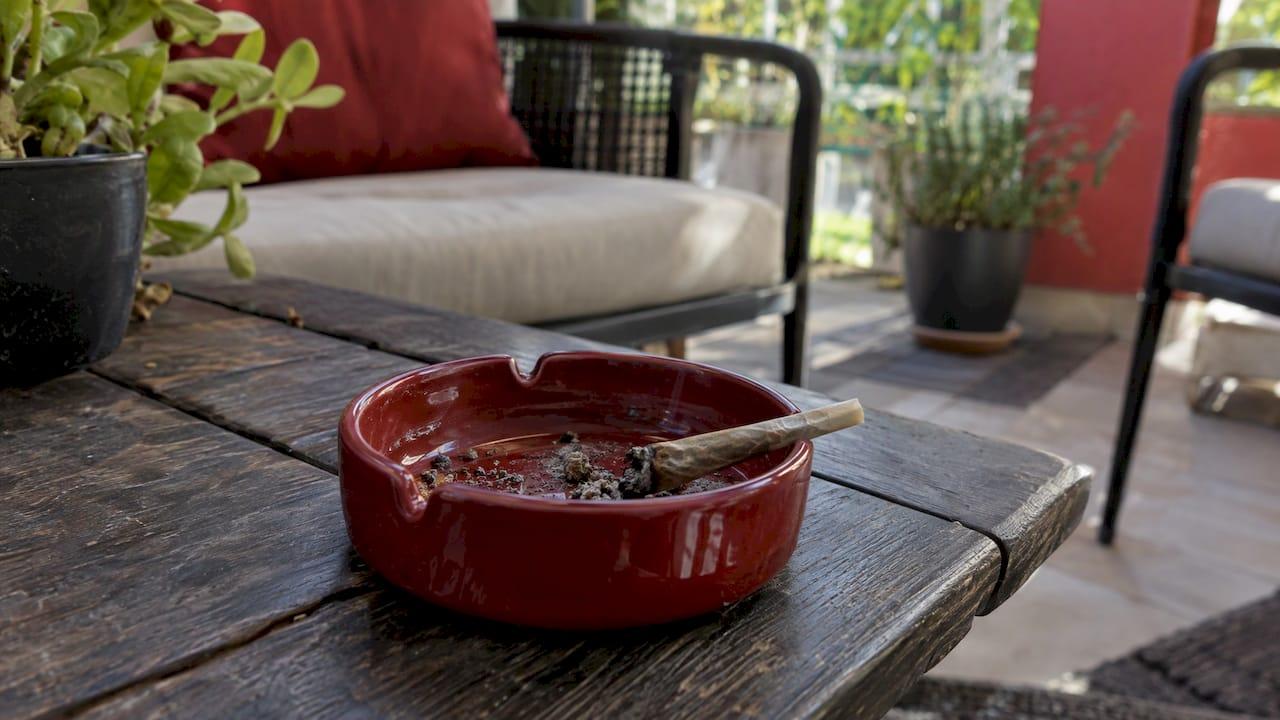
Does marijuana lower your testosterone? In humans, the evidence says probably not in the simple way the headlines claim. Most human studies find no meaningful drop. A few find higher levels in recent users. The scary numbers mostly come from animals. If you feel flat, tired and unlike yourself, weed is rarely the whole story, and a blood test beats guessing.
That's the short version. Here's the long one, for the man who smokes and wonders, and for the wife who has noticed a change and is trying to work out why.
TL;DR
- Large U.S. data found no difference in testosterone between ever and never marijuana users, and slightly higher levels with more recent use.
- A systematic review concluded that the case for lower testosterone leans heavily on animal studies, while most human studies show no significant change.
- Dose and frequency did not predict testosterone in the biggest U.S. analysis. Timing of last use did.
- Low energy, low drive and slow recovery have many causes. Get a morning blood test and look at sleep, training load and stress before blaming one habit.
Table of Contents
- What human studies actually found
- Where the "weed kills testosterone" idea comes from
- Dose, frequency and timing
- Does quitting raise testosterone?
- Testosterone, fertility and erections are different questions
- If you're tired and flat, look wider than weed
- Perspective
- Build a restoration routine that sticks
- FAQ
- Sources
What human studies actually found
The question sounds simple. The data is not tidy. But a pattern shows up when you line the human studies up.
The big U.S. snapshot. A 2017 analysis of 1,577 U.S. men from the 2011–2012 national health survey (NHANES) compared ever users and never users. Adjusted average testosterone was 3.69 ng/mL for ever users and 3.70 ng/mL for never users. That's no difference. Testosterone was actually higher the more recently a man had used regularly, especially in men aged 18–29. The study was cross-sectional, a single snapshot, so it can't prove cause and effect.
A large clinic cohort. A single-center study of 7,809 men seen from 2008 to 2017 found cannabis use was not associated with serum testosterone after adjusting for other factors. The authors concluded cannabis use does not negatively affect testosterone levels.
An Italian cohort. In an Andrology study of a large group of men, after adjusting for age, chronic disease, BMI, smoking and alcohol, neither men smoking 1–2 joints a week nor those smoking more than 2 showed a significant change in total testosterone versus controls.
Swiss young men. A 2026 Communications Medicine study found testosterone and androstenedione were significantly higher in THC-positive young men. There was no significant difference between chronic and occasional users. An earlier 2023 Andrology study in young Swiss men found slightly higher testosterone in cannabis consumers overall, though not significantly so, and the authors noted that any effect looked more pronounced in young men.
The old classics. A 1974 New England Journal of Medicine study followed 27 men aged 21 to 26 through 21 days of marijuana use. Casual users smoked an average of 54 cigarettes and heavy users 119. Plasma testosterone didn't change significantly during or after. A 1991 study of frequent, moderate and infrequent users measured testosterone, LH, FSH, prolactin and cortisol and found no significant effect of chronic use on hormone levels.
Put it together and the honest reading is this: across decades and very different groups, human data mostly fails to show a testosterone crash from marijuana. That surprises a lot of men who've heard the opposite.

Where the "weed kills testosterone" idea comes from
The claim isn't invented. It has roots.
The 2019 systematic review by Payne and colleagues notes that evidence for cannabis depressing testosterone relies heavily on animal studies. Most human studies support the idea that levels aren't significantly changed, though large cohorts keep giving conflicting or inconclusive results.
That last part matters. "Not significantly changed" at the group level doesn't mean every man responds the same way. Averages hide individuals. A man with borderline levels, poor sleep and a heavy drinking habit is a different case than a healthy 22-year-old in a study.
So you'll see headlines on both sides. One says weed tanks T. Another says it raises T. Both are picking from a messy pile. Neither is the full picture.
Dose, frequency and timing
This is where men expect a clean rule: more weed, lower T. The data doesn't give you one.
In the NHANES analysis, no dose-response relationship showed up for how often men used, how many joints or pipes per day, or how many years they'd used regularly. What mattered most was recency. Current users had a slightly higher adjusted mean of 3.96 ng/mL versus 3.70 for never users, but the confidence intervals overlapped widely, so don't read too much into the gap.
A 2019 Fertility and Sterility study by Fantus and colleagues used NHANES data on 5,146 U.S. men and found an inverse U-shaped link between THC use in the past year and testosterone. Men who smoked THC in the past year averaged 497 ng/dL versus 414 ng/dL for non-users. The biggest bump, about 67 ng/dL, appeared in regular users at two to three times a month. The authors also concluded that larger amounts of THC appear to have a detrimental effect, and called for prospective work using specific doses to confirm it.
Read that carefully. It is a signal worth watching, not a verdict. The inverse U suggests light-to-moderate use and heavy use might not behave the same. It does not prove heavy use lowers your numbers, and it can't show cause.
Is one joint a day heavy use?
Depends who's defining it. In epidemiology, heavy or regular use usually means daily or near-daily use, a pattern that, sustained over years, is linked to a range of health effects. One clinician brief defines heavy use as the equivalent of five or more joints a week, with light use below that.
By those yardsticks, a joint every day lands in heavy territory. But no study gives a reliable testosterone number for it. Be wary of any site that says weed lowers T by an exact percent. The research here doesn't support a figure like that.
One more thing about methods. A study of 989 adults using cannabis daily for chronic pain split use into light (1–2 times a day), moderate (3–4) and heavy (5 or more). Groups like this are defined differently from study to study, which is one reason results clash.

Does quitting raise testosterone?
This is the question men really want answered. The honest answer: there's no solid human trial showing a rebound.
The best "quit" data comes from monkeys. In a 2023 rhesus macaque study, chronic THC dosing significantly lowered total testosterone and estradiol and raised FSH. After THC stopped, there was partial recovery, including a significant rise in total testosterone of 1.3 ng/mL. Testicular volume fell 59% on the dosing and recovered to 73% of the original after 140 days of abstinence.
Those are animals given controlled doses. Useful for biology, not a prediction for you. It would be a mistake to promise a man that quitting will raise his testosterone by any amount.
Here's what is fair to say. If you're using heavily and your levels are low, stopping is a reasonable thing to discuss with your doctor, and a repeat test a few months later tells you what actually changed for you. Your own numbers beat any study average.
Testosterone, fertility and erections are different questions
Men lump these together. Researchers don't.
The Swiss work suggests cannabis might affect gonadal androgen synthesis selectively, since androstenedione, testosterone and DHT rose while adrenal-type androgens didn't change. The authors point to possible direct effects on the testes or disruption of the brain-to-testes signaling axis. That's a hypothesis, not a finished answer.
Sperm quality and sexual function have their own literature. A man can have normal testosterone and still struggle with erections or fertility, and the reverse is true too. A report on cannabis dependence and erectile dysfunction is not the same thing as a study of casual use and T, so don't mix them up. Dependence is its own picture.
If fertility is your concern, see a urologist and get a semen analysis. Testosterone alone won't answer it.
If you're tired and flat, look wider than weed
Here's where we get practical. A man says he smokes and feels like a shadow of himself. He blames the weed. Maybe. But the same symptoms show up with:
- Short or broken sleep
- Too much training and too little recovery. We cover that in overtraining and low testosterone
- Alcohol, stress and long work weeks
- Weight gain around the middle
- Nutrient gaps. See what the evidence says on zinc and testosterone
- Real medical issues that only a clinician can sort out
So what should you do?
- Get a morning blood test. Testosterone is highest early in the day, so ask your doctor for a morning draw and for the full picture, not just one number.
- Write down your pattern. How much you use, when, how you sleep, how you train. Bring it to the appointment.
- Talk to your doctor or a urologist about persistent low drive, erection changes, loss of muscle or mood changes. Those aren't things to white-knuckle alone.
- Fix the basics for 8 to 12 weeks. Sleep, strength training, protein, less alcohol. Then retest.
- Ask about changing your use only if your numbers and symptoms point that way. Don't make a big change on rumor.
Wives and partners, you're often the first to see it. He's quieter. Less spark. Less touch. Don't make it an accusation about weed. Make it an invitation: "Let's get your levels checked." It lands softer, and it gets answers.
Curious how everyday habits move the needle? Our pieces on sex and testosterone and sauna and testosterone separate what changes from what doesn't.
Perspective
Men write to us worried that one habit has wrecked their drive. Usually it's more than one thing, stacking up quietly over years. Poor sleep. Stress. Too little recovery. A body that stopped sending the signal it used to send on its own.
Here's what the marijuana research tells us: the story is not as simple as "weed kills testosterone." It also isn't a green light to ignore how you feel. YOU HAVEN'T LOST IT. But you do need to know where you stand.
That's why we build around restoration, not panic. We're not a clinic. We're not TRT. We don't diagnose or prescribe. We make RedRockit, a private-use red light wellness device designed to support a daily restoration routine for men who want to keep their energy, drive and recovery as they age, with no subscriptions and no appointments to maintain it.
Test first. Fix the basics. Build a routine you can actually keep. Then decide what's next, with your eyes open.
Nurse Rachel
Build a restoration routine that sticks
Whatever you decide about cannabis, the next step is the same: stop drifting. Pick a routine and run it every day.
RedRockit is our private-use red light wellness device, designed to support a simple daily restoration routine for energy, drive, recovery and vitality. A companion app, Rockit IQ, guides your session protocols so you aren't guessing. It isn't medical treatment and it doesn't replace your doctor. It's a tool for men who want to do something before bigger decisions land on the table.

See how it works on the RedRockit Primal Restoration page. Not sure where you stand yet? Read what to try before TRT first. And if you're researching for him, there's a page written for her too. For more on how red light is discussed in men's health, see our look at testicular red light therapy.
FAQ
Is marijuana good or bad for testosterone?
The human evidence doesn't show it's clearly bad. Large U.S. and clinic studies found no difference in testosterone between users and non-users, and some found higher levels in recent users. Animal studies show drops with chronic high-dose THC, which is why the debate continues.
Does quitting marijuana increase testosterone?
No human trial proves it will. In monkeys, stopping chronic THC led to partial recovery of testosterone and testicular volume. If you quit, a repeat blood test a few months later will show what changed for you.
Does weed or THC affect testosterone differently by dose?
Possibly, but it's unsettled. One analysis found an inverse U-shaped pattern, with the biggest rise in occasional regular users and a possible detrimental effect at higher amounts. The authors say prospective dose studies are still needed.
Is one joint a day considered heavy use?
By common research definitions, yes or close to it. Daily or near-daily use counts as heavy or regular, and one clinician brief sets heavy at five or more joints a week. No study gives a reliable testosterone figure for that level.
What should I do if I think my testosterone is low?
See your doctor and ask for a morning blood test. Bring notes on your sleep, training, alcohol and cannabis use. Persistent low drive, erection changes or fatigue deserve a clinician's eyes, not just a guess.
Sources
- Marijuana use and serum testosterone concentrations among U.S. males
- The impact of cannabis use on male sexual function
- Is marijuana a foe of male sexuality? (Andrology, 2023)
- Cannabis consumption is associated with altered steroid profiles (Communications Medicine, 2026)
- Gonadotropin axis and semen quality in young Swiss men (Andrology, 2023)
- Plasma Testosterone Levels before, during and after Chronic Marihuana Use (NEJM, 1974)
- Effects of chronic marijuana use on testosterone, LH, FSH, prolactin and cortisol (1991)
- Cannabis and Male Fertility: A Systematic Review
- The effect of tetrahydrocannabinol on testosterone among U.S. men (Fertility and Sterility, 2019)
- High frequency medical cannabis use study (2019)
- Hall, research over the past two decades on cannabis health effects (2013)
- Cannabis and Cognition, Cannabis Evidence clinician brief
- Cessation of chronic delta-9-tetrahydrocannabinol partially reverses reproductive effects (2023)