
One drink at dinner isn't rewiring your hormones. But regular heavy drinking does lower testosterone, and the effect is measurable, not theoretical. Volume and frequency matter far more than what's in the glass. Recovery is possible, but how far you can bounce back depends on how long and how hard you've been drinking.
TL;DR:
- Heavy and frequent alcohol consumption significantly lowers testosterone levels, with effects lasting weeks or longer depending on drinking history.
- Chronic drinking increases estradiol and suppresses the hypothalamic pituitary gonadal axis, affecting hormonal balance and reproductive health.
- One night of heavy drinking causes only a temporary drop in testosterone, which typically recovers within a day or two.
- Alcohol damages sperm development by impacting Sertoli and Leydig cells, reducing fertility and sperm quality for several months.
- Reducing drinking frequency and volume, combined with healthier lifestyle habits, can help restore testosterone levels over time.
Table of Contents
- What Alcohol Does to the HPG Axis, Liver, and Inflammation
- Does One Night of Drinking Lower Testosterone the Next Day?
- What Happens to Testosterone With Long-Term Heavy Drinking?
- Can Alcohol Hurt Sperm Count and Fertility?
- How Long Does It Take Testosterone to Recover After You Stop Drinking?
- When Should You See a Doctor About Low Testosterone?
- Does Drinking Interfere With Testosterone Replacement Therapy?
- What Can You Actually Do About This Starting Today?
- What Primal Red Co and Nurse Rachel Recommend
- Key Takeaways on Alcohol and Testosterone
- The Real Problem Isn't the Drink, It's the Denial
- Sources
What Alcohol Does to the HPG Axis, Liver, and Inflammation
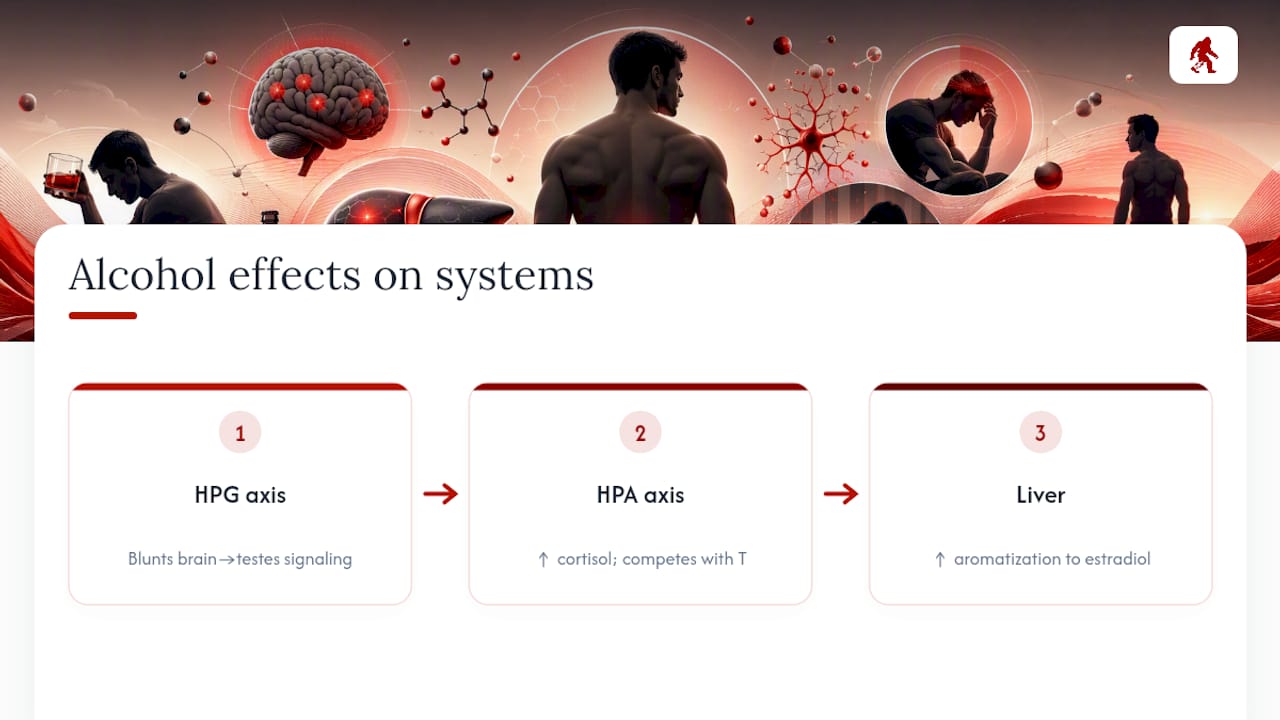
Testosterone production runs on a chain of command called the hypothalamic pituitary gonadal (HPG) axis. Your hypothalamus releases GnRH, which tells the pituitary to release LH and FSH, which then signal the Leydig cells in your testes to actually make testosterone. Alcohol interferes at more than one link in that chain, not just at the testes.
Heavy drinking triggers inflammation and oxidative stress that blunt signaling all along the axis. It also activates your HPA axis, your stress response system, which raises cortisol and competes with the pathways your body uses to build testosterone. Some researchers argue this suppression is multifactorial, meaning it's not just damaged testicular tissue doing the damage. Your brain's own signaling gets dialed down too.
Your liver takes a separate hit. Chronic alcohol exposure alters how your body metabolizes steroid hormones, slows testosterone clearance, and increases the conversion of testosterone into estradiol through a process called aromatization. That's part of why heavy drinkers sometimes show both low testosterone and elevated estrogen on the same panel.
None of this hits every man equally. Genetics, baseline liver health, and body composition all shift the magnitude of the effect, which is why your buddy who drinks the same six pack as you might see a very different lab result.
Does One Night of Drinking Lower Testosterone the Next Day?
Yes, but usually only temporarily. Some experimental research has found testosterone beginning to drop within roughly 30 minutes of drinking, a suppression that can linger into the following day depending on how much you drank.
The dose matters more than most men assume. Small to moderate amounts sometimes produce a neutral effect or slight, short-lived uptick in some studies. Large single-episode drinking often produces a clear temporary drop.
This has real same-night consequences. If you've noticed weaker performance or a flatter drive after a heavy drinking session, that's not in your head. It's the transient hormonal dip talking. The good news: for an isolated night, this typically resolves on its own within a day or two as your body clears the alcohol and the HPA stress response settles back down.
What Happens to Testosterone With Long-Term Heavy Drinking?
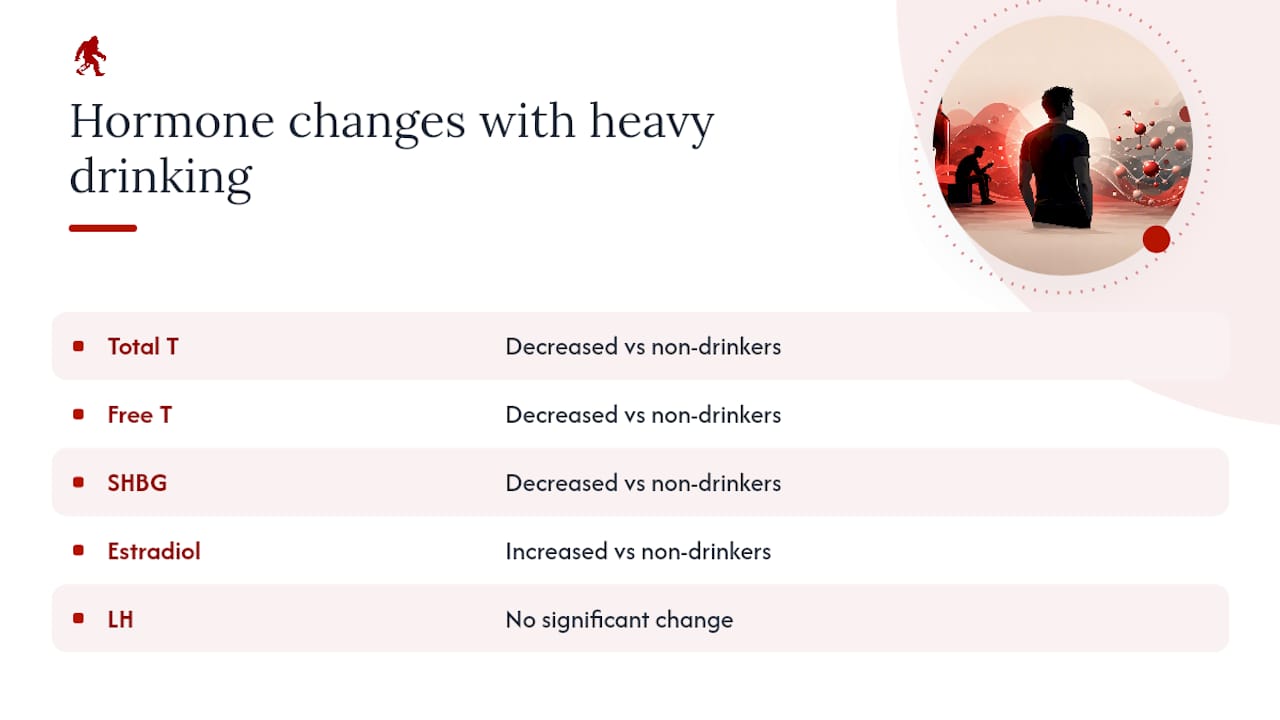
This is where the evidence turns unambiguous. A 2024 meta-analysis pooling 30 trials and over 10,000 subjects found that chronic alcohol consumption is tied to a significant, measurable drop in both total and free testosterone in otherwise healthy men, alongside lower sex hormone binding globulin (SHBG) and higher estradiol.
By the Numbers: Chronic drinkers showed a measurable drop in total testosterone, free testosterone, sex hormone binding globulin (SHBG), and an increase in estradiol compared to non chronic drinkers, according to the meta-analysis on the gonadal axis.
Oddly, LH, the pituitary signal that should rise to compensate for low testosterone, didn't budge much in these men. That absence of a compensatory response points to suppression happening at the brain level, not just testicular wear and tear.
It's worth separating "regular heavy drinker" from clinical alcohol use disorder. Studies on the two groups don't always show identical patterns, but both trend toward the same outcomes: lower libido, a higher rate of erectile dysfunction, and metabolic disruption that compounds the hormonal decline.
Can Alcohol Hurt Sperm Count and Fertility?
If you're trying to have a kid, this section matters more than any other. Alcohol damages the Sertoli cells that nurture developing sperm and disrupts the Leydig cells responsible for local testosterone production inside the testes, according to reproductive research published through the NIH.
Heavy drinking is consistently associated with lower sperm count, reduced motility, abnormal shape, and increased DNA fragmentation. Sperm takes roughly three months to fully develop, so a rough patch of drinking doesn't just affect tonight, it can echo into the sperm you're producing months from now. If you and your partner are actively trying to conceive, cutting back well before you start trying gives your body a full spermatogenic cycle to reset.
How Long Does It Take Testosterone to Recover After You Stop Drinking?
If your heavy drinking has been occasional, partial hormonal recovery can start within days to a few weeks of cutting back. If you've been drinking heavily for years, full recovery takes longer and may not be complete, especially if liver function has been affected.
Age, liver health, body weight, and other habits like smoking or certain medications all speed up or slow down that timeline. Clinicians generally recommend waiting several weeks after abstinence before retesting, so a transient drop doesn't get mistaken for your true baseline. Test in the morning, when testosterone naturally peaks, for the most accurate read.
When Should You See a Doctor About Low Testosterone?
Low libido, erectile difficulty, unexplained fatigue, shrinking muscle mass, and mood shifts are the classic red flags. If those symptoms track closely with your drinking, alcohol is a reasonable first suspect. If they show up regardless of how much you drink, something else, like sleep apnea, thyroid dysfunction, or a pituitary issue, deserves a look too.
A useful workup includes total testosterone, free testosterone, SHBG, and LH, drawn first thing in the morning. Bring an honest account of your drinking habits, frequency, and volume to that appointment. It changes how your clinician interprets the numbers, and reviewing where you stand against normal testosterone ranges for men gives you useful context before you even walk in.
Does Drinking Interfere With Testosterone Replacement Therapy?
Alcohol doesn't cancel out TRT, but heavy drinking can work against it. Your liver processes both alcohol and hormones, and chronic heavy use adds strain that can blunt how well you respond to treatment and mask whether your symptoms are actually improving.
Doctors managing TRT typically monitor liver function tests alongside hormone panels and track your symptom response over time. If you're on TRT and you drink regularly, the smartest move is straightforward: tell your doctor the real numbers, not the rounded down version, and stick to your monitoring schedule so problems get caught early instead of after they've compounded.
What Can You Actually Do About This Starting Today?
Moderate drinking, generally defined as up to one to two drinks a day for men, isn't the enemy here. Frequent heavy drinking is. And no, switching from beer to whiskey doesn't protect you. Total volume and drinking pattern matter more than beverage type.
A few moves make a real difference:
- Cut back on frequency first, not just quantity per sitting.
- Prioritize resistance training and consistent sleep, both tied to healthier testosterone levels.
- Watch the extra calories: alcohol-driven weight gain adds visceral fat and metabolic health risks that independently drags testosterone down.
- Look at zinc intake and other nutrient gaps that heavy drinking tends to create.
- See a doctor if cutting back doesn't resolve your symptoms within a few weeks, or if you suspect alcohol use disorder rather than just habit.
Pro Tip: Don't retest your testosterone the morning after a big weekend. Give yourself a clean, alcohol-free stretch of several weeks first, or you're measuring the hangover, not your real baseline.
What Primal Red Co and Nurse Rachel Recommend
Nurse Rachel's take is simple: fix the inputs before you chase the fix. Cut the drinking pattern, eat to support your levels with testosterone-supportive foods, and build a daily restoration habit. Red light therapy is one tool Primal Red Co has built its routines around for exactly this reason.
Key Takeaways on Alcohol and Testosterone
- One drink or one night out won't tank your testosterone long term.
- Chronic heavy drinking measurably lowers total and free testosterone while raising estradiol.
- The main mechanisms: HPG axis suppression, liver changes, and inflammation, not just testicular damage.
- Cut frequency, train, sleep, and retest weeks after stopping, not the morning after.
- See a doctor if fatigue, low libido, or ED persist regardless of your drinking.
The Real Problem Isn't the Drink, It's the Denial
Here's what the research actually supports, and what most men skip past: alcohol's damage to testosterone is real but it's dose-dependent, and most guys drinking socially a few nights a week aren't the population these meta-analyses are describing. The men who need to worry are the ones drinking heavily and consistently, and pretending it's "just how I unwind."
Conventional advice tends to either scare men into total abstinence or wave the whole thing off as a myth. Both miss the point. The data says pattern and volume drive the outcome, not the occasional beer.
What should you actually prioritize? Get honest about your real weekly volume before you touch a supplement or a device. No amount of zinc or red light fixes a five-night-a-week habit. Cut the pattern first. Then build the restoration routine on top of that honesty, not instead of it.
— Nurse Rachel
This article is general information, not a substitute for advice from a qualified doctor. Consult a qualified healthcare professional about your own circumstances before acting on anything here.
Sources
- The chronic alcohol consumption influences the gonadal axis in men: Results from a meta‐analysis
- Alcohol's effects on male reproduction - PMC - NIH
- Alcohol and testosterone: Effects and more