
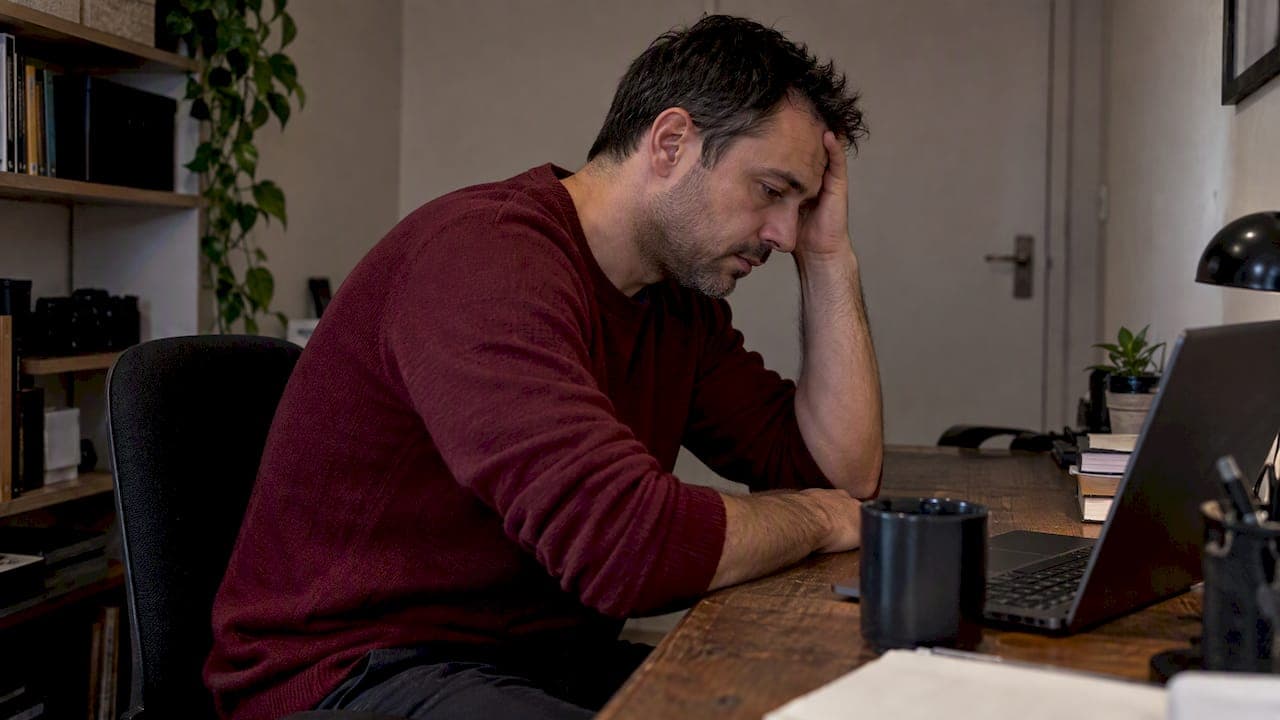
You were sharp at 9 a.m. By 3 p.m. your head is heavy, your focus is gone, and you're staring at the coffee pot like it owes you something. Most of the time, an afternoon energy crash comes from a normal body-clock dip made worse by sleep debt, a carb-heavy lunch, stress, or too little movement. All of that is fixable. Rarely, it's a signal that something medical deserves a look. Here's how to tell the difference.
TL;DR
- A mild dip between about 2 and 4 p.m. is part of your circadian rhythm. A hard crash is not the same thing, and it usually has a cause you can change.
- The big levers are sleep, what's on your lunch plate, caffeine and alcohol timing, light, and movement.
- Testosterone declines slowly with age, and low T is rarely the only reason for a crash. Don't assume it, and don't ignore it if the pattern doesn't clear up.
- Run a two-week log first. If you still crash, get bloodwork and talk to a doctor.
Table of Contents
- What's actually happening at 3 p.m.
- The usual suspects, in order of how often they bite
- Is it low testosterone?
- Our take: you haven't lost it
- A two-week experiment to find your cause
- Overtraining can look like an afternoon crash
- When to see a doctor
- Where RedRockit fits
- FAQ
- Sources
What's actually happening at 3 p.m.
Two things are layered on top of each other.
First, the baseline. Your body runs on a 24-hour clock, and it also has a smaller secondary cycle. That's why the afternoon dip typically falls between 2 and 4 p.m. even in people who slept well and skipped lunch. A little sluggishness there is normal. It's not a defect.
Second, everything you stack on top. Short sleep. A big pasta lunch. Four coffees. A desk with no daylight. Back-to-back meetings. Any one of those can turn a gentle dip into a wall.
So the question isn't "Why is my body broken?" It's "What did I pile onto a normal dip?"
The usual suspects, in order of how often they bite
1. Sleep debt
This is the one most men skip past. More than 35% of American adults report short sleep, according to CDC public health data, and daytime sleepiness is one of the most common results.
It's also not only about total hours. Research on personalized sleep-wake patterns suggests that how well your sleep window lines up with your own circadian rhythm and light exposure can predict daytime alertness better than simply logging seven or eight hours. A man who sleeps eight hours at wildly different times each night can feel worse than one who sleeps seven on a steady schedule.
There's a nasty loop here too. CDC-hosted material on sleep and metabolism notes that poor sleep can raise evening cortisol and promote insulin resistance the next morning. Translation: a bad Monday night sets up a Tuesday afternoon crash. Your body forgot to send the signal to power through, and then you wonder why the tank never fills.
If you work nights or rotate shifts, your clock is already fighting you. This plan for night and rotating shift workers walks through how to protect the sleep you do get.

2. The lunch that sets you up
A large, starchy, sugary lunch is the classic trigger. Blood sugar spikes, insulin answers, and a few hours later you're dragging. The American Diabetes Association defines low blood glucose as a level below 70 mg/dL. You don't need to hit that number for a meal to leave you flat, but it explains why some men feel shaky, foggy, or ravenous a couple of hours after eating.
What helps? Mayo Clinic Press points to eating breakfast and getting more protein, and favoring whole or minimally processed foods over highly processed ones. Harvard Health makes a similar case: swap high-glycemic carbs for protein and fiber, and the small changes add up.
Simple lunch upgrades:
- Build the plate around protein first: chicken, fish, eggs, beef, beans.
- Add fiber: vegetables, legumes, whole grains.
- Keep the white bread, big pasta bowl and soda for a day you can afford to crash.
- Don't skip lunch, then raid the vending machine at 3.
3. Alcohol, even the night before
Your liver can't multitask. It prioritizes processing alcohol over keeping blood glucose steady, which, per the American Diabetes Association, can lead to low blood sugar hours after drinking, especially if you've been active or skipped a meal. Two beers with dinner can show up in tomorrow's afternoon.
Alcohol also chops up sleep quality, so you pay twice.
4. Caffeine that backfires
Coffee works. Until it doesn't. Stack it on poor sleep and a sugary pastry and you get a bump, then a drop. Hold your last cup to early afternoon at the latest, and notice whether a 2 p.m. coffee is costing you at 11 p.m.
5. Sitting still in dim light
A windowless office and nine hours in a chair tells your body it's still evening. A short walk outside is one of the cheapest fixes there is. Harvard Health highlights that even a 15-minute daily walk can add up to real improvements in how you feel over time.

Is it low testosterone?
Let's be straight, because men ask this a lot, and the search for "energy after 30" usually ends up here.
Testosterone does decline with age. Harvard Health describes a gradual drop of roughly 1% to 1.6% per year starting in the mid-30s. That's slow. It doesn't explain a man who was fine in March and flattened every afternoon by June.
Harvard's Dr. Shalender Bhasin has also pointed out that testosterone levels are heavily influenced by weight gain, lifestyle, and chronic disease. Symptoms like low energy are nonspecific and overlap with general aging. So the smart order of operations is to fix the modifiable stuff first: sleep, weight, activity, alcohol, stress.
But don't swing too far the other way. Low energy that doesn't budge can have real medical causes. The NHS lists mood swings, irritability, loss of sex drive, and erectile problems as symptoms that can appear in men in their late 40s and early 50s, and notes that depression can look similar. If you also have low drive, erection changes, mood shifts, or persistent brain fog alongside the crashes, that's a reason to see a doctor, not a reason to guess.
Want to go deeper? We've written about telling depression from low testosterone with a morning test, what counts as a normal testosterone level, and why morning timing matters for testing.
Our take: you haven't lost it
We're not a clinic, and we're not TRT. We don't diagnose, prescribe, or tell men they're broken. Here's what we do believe, and it's the reason Primal Red Co. exists.
Most men we hear from describe the same thing. Energy and recovery used to come automatically. Now they don't. The first answer they get, from friends, ads, or sometimes a rushed appointment, is "just get the shot." No one asks about sleep. No one asks what lunch looks like, or whether you've been training six days a week on five hours of rest.
That's backwards. The factors behind low energy are the same ones that can bring it back: sleep, food, movement, stress. Harvard's own writers call these energy debts that double as the solutions. Men tend to treat a slump as a fixed fact of aging. It usually isn't. It's a signal, and signals can be answered.
So our advice is boring and powerful: build a routine you can actually keep. Track it. Get your labs if the problem doesn't move. Do it before bigger decisions are on the table, not after you've quietly disappeared into the couch.
And if you're a wife or partner reading this because he's tired, short-fused, and checked out by 4 p.m.: you're not nagging. You noticed something real. Show him this page. Then read Husband Always Tired? Two Week Log, Doctor Tests and Scripts, which gives you words for that conversation that don't start a fight.
— Nurse Rachel
A two-week experiment to find your cause
Don't change ten things and learn nothing. Change a few, write them down, and watch the pattern.
Step 1: Log the baseline (days 1 to 3)
Each day, jot down:
- Bedtime, wake time, and how you slept (1 to 5).
- What you ate for breakfast and lunch.
- Caffeine: how many cups, and when.
- Alcohol the night before.
- Your energy at 10 a.m., 2 p.m., 4 p.m. (1 to 10).
Step 2: Fix sleep timing (days 4 to 14)
Pick a wake time and hold it, weekends included. Get a bedtime that gives you a real seven hours or more. Cut the late screen scroll. Morning daylight within the first hour is a bonus. Our 7 to 14 day energy reset for men over 30 puts sleep first for exactly this reason.
Step 3: Rebuild lunch (days 4 to 14)
Protein plus fiber, moderate starch. Eat breakfast. Compare the 2 to 4 p.m. scores to your baseline.
Step 4: Move at midday
Ten to fifteen minutes outside after eating. No gym required.
Step 5: Read the result
| What you see after two weeks | What it probably means | Next move |
|---|---|---|
| Crash is smaller or gone | Lifestyle load was the main driver | Keep the routine |
| Better, but still sluggish | Partial fix, other factors in play | Tighten sleep and alcohol, keep logging |
| No change at all | Something else may be going on | Book a doctor visit with your log |
| Loud snoring, gasping, or falling asleep unintentionally | Possible sleep disorder | Ask your doctor about a sleep evaluation |
| Low drive, mood changes, erection changes, plus fatigue | Could be hormonal, thyroid, depression, or other | Ask for bloodwork |
Overtraining can look like an afternoon crash
Good men get this wrong too. Hard training, short sleep, and a calorie deficit is a recipe for flat afternoons, poor recovery, and sagging drive. If that sounds like you, take a look at how overtraining can lower testosterone and what to do about it before you chase anything else.
When to see a doctor
See a physician if:
- You feel exhausted most days despite regular sleep for two to four weeks.
- You get shaky, sweaty, or confused a couple of hours after meals. If you have diabetes or take glucose-lowering medication, ask your care team about low blood sugar right away.
- You snore heavily or wake gasping.
- You've lost interest in things, feel hopeless, or have any thoughts of harming yourself. Call or text 988, the Suicide & Crisis Lifeline, anytime.
- Low energy comes with low sex drive, erection problems, or unexplained weight change.
Bring your log. It turns "I'm tired" into data a doctor can use. Testing for testosterone is typically done in the morning, and one number rarely tells the whole story.
Where RedRockit fits
Once the foundations are in place, many men want one simple thing they do every day that signals "this is my restoration time." That's what RedRockit is for. It's a private-use red light wellness device made for men over 30, paired with the Rockit IQ app for guided session protocols. There's no prescription, no subscription, and no appointment, and it's backed by a lifetime craftsmanship guarantee.
It isn't a replacement for sleep, food, or a doctor, and we don't claim it treats any condition. It's a tool for a routine. See RedRockit Primal Restoration, or read about male vitality after 40 if you want the bigger picture on energy, drive, and recovery.
FAQ
Why do I feel exhausted every afternoon?
Often it's a mix of your natural 2 to 4 p.m. circadian dip and added load: short or irregular sleep, a heavy carb lunch, caffeine, alcohol, or sitting all day. If it lasts for weeks despite good habits, get checked for sleep apnea, thyroid problems, depression, low testosterone, and blood sugar issues.
Is a 3 p.m. crash a sign of low testosterone?
Not by itself. Fatigue is a nonspecific symptom, and testosterone falls only about 1% to 1.6% a year after the mid-30s according to Harvard Health. Look at sleep, weight, and lifestyle first. If fatigue comes with low libido or erection changes, ask a doctor for a morning blood test.
What causes energy crashes after eating?
A meal heavy in simple carbohydrates can spike blood sugar and insulin, followed by a drop that leaves you tired, hungry, or foggy. Pairing carbs with protein and fiber tends to smooth that out. If crashes come with shakiness or sweating, talk to your doctor.
What's the fastest way to beat the afternoon slump?
Step outside for a short walk in daylight, drink water, and eat a protein-based snack rather than candy. Those can take the edge off today. The lasting fix is consistent sleep and a lunch that doesn't set up a crash.
Sources
- BBC Science Focus: Why do I always get an energy crash in the afternoon?
- CDC: Sleep deprivation in U.S. adults
- PMC: Personalized sleep-wake patterns aligned with circadian rhythm
- CDC: Does lack of sleep cause diabetes?
- American Diabetes Association: Low blood glucose (hypoglycemia)
- American Diabetes Association: Alcohol and diabetes
- Mayo Clinic Press: How to prevent an afternoon crash with diet
- Harvard Health: Natural ways to boost energy
- Harvard Health: Navigating "male menopause"
- NHS: Male menopause