

Brain fog is a recognized symptom cluster characterized by slower thinking, poor focus, and memory blips that make normal tasks more effortful. In men, common contributors include poor sleep, chronic stress, blood sugar swings, and low testosterone, sometimes occurring together. Start with the foundational fixes below. If the fog persists despite lifestyle changes over several weeks, get bloodwork and talk to a clinician.
TL;DR:
- Most men find lifestyle changes like improving sleep, stabilizing blood sugar, and reducing stress can significantly reduce brain fog within a few weeks.
- Blood tests for testosterone, thyroid function, vitamin D, glucose, and inflammation are essential to identify hormonal or metabolic causes of persistent fog.
- Substance use, medications, and untreated sleep apnea often contribute to cognitive sluggishness and should be evaluated before considering hormone therapy.
- Brain training apps have limited effectiveness for reversing fog caused by hormone or metabolic issues but can support long-term brain health if other causes are addressed.
- Addressing mental health, especially anxiety and depression, is crucial, as mood issues often underlie or worsen brain fog symptoms in men.
Table of Contents
- What Brain Fog Symptoms Look Like in Men
- Lifestyle, Metabolic, Hormonal, or Something Else? Sorting the Causes
- Testosterone, Thyroid, and the Truth About Hormone Fixes
- How Sleep, Stress, and Blood Sugar Quietly Wreck Your Focus
- The Lab Checklist to Bring to Your Doctor
- Your 4-Week Restoration Plan
- Where TRT Fits and When Fog Needs Urgent Attention
- How Brain Fog Changes as Men Get Older
- Anxiety, Depression, and the Fog Men Don't Talk About
- Alcohol, Drugs, and the Cognitive Cost Men Underestimate
- Medications That Can Quietly Cause Brain Fog
- Does Brain Training Actually Clear Brain Fog?
- Fitting Focus Into a Man's Actual Workday
- Start Small, Stay Consistent
- A Daily Restoration Tool Worth Adding to the Routine
- Sources
What Brain Fog Symptoms Look Like in Men
You already know something's off. The question is whether it's ordinary fatigue or a pattern worth tracking.
Men with brain fog describe a consistent set of experiences: slowed processing (you need a beat longer to answer a simple question), trouble holding focus through a meeting, reaching for a word that used to come instantly, and short-term memory slips that feel out of character; for more detail, see Какво е brain fog: причини, симптоми и решения. UCLA Health describes this as slower thought processes, reduced concentration, and difficulty retaining new information, rather than a single named condition.
In real life, that shows up as:
- Rereading the same email paragraph three times before it registers
- Forgetting a calendar appointment you set yourself, that morning
- Losing your train of thought mid sentence in a conversation that matters
- Feeling mentally "full" by 2 p.m. even on a light workday
One bad night causes occasional fog. Fog that shows up most days for weeks, regardless of how you slept, is the pattern worth testing for.
Lifestyle, Metabolic, Hormonal, or Something Else? Sorting the Causes
Brain fog rarely has one clean cause. It's usually two or three factors stacked on top of each other, and figuring out which one is doing the most damage tells you what to fix first.
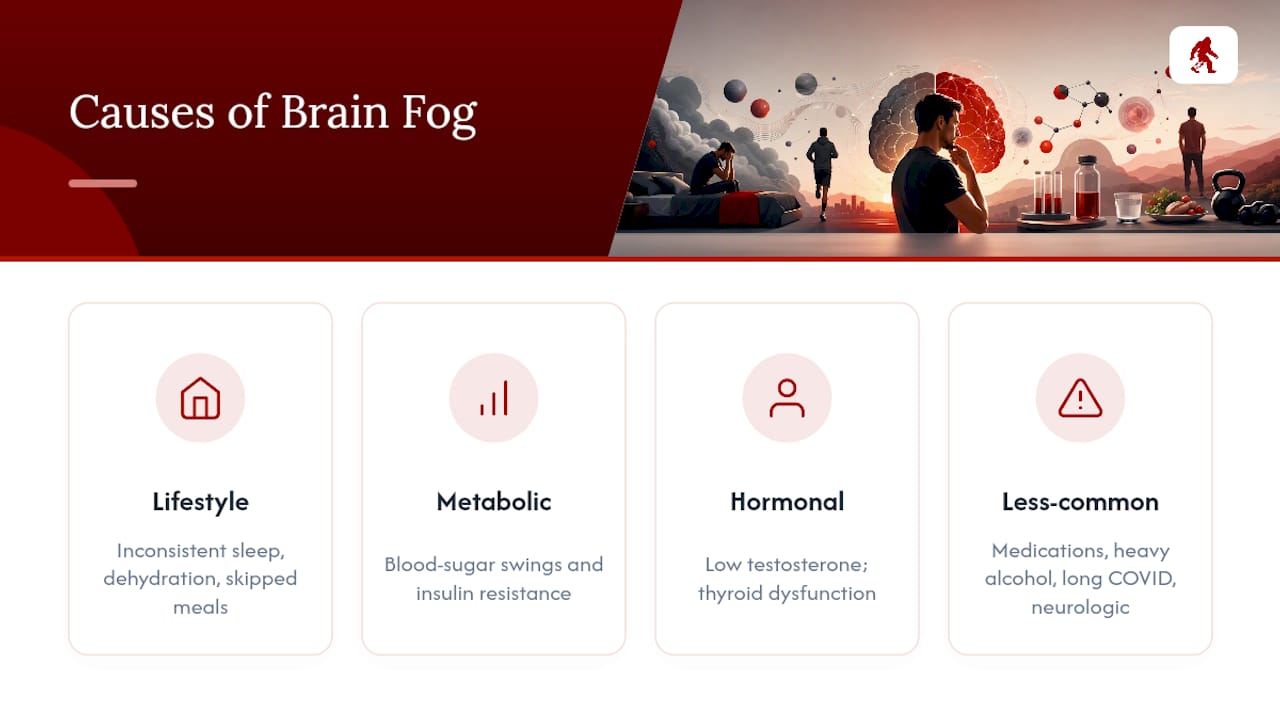
Lifestyle drivers are the most common and the most fixable. University of Rochester Medicine points to inconsistent sleep, dehydration, skipped meals, vaping or smoking, and certain medications as frequent, reversible contributors. Add stimulant overuse and constant phone switching, and you get a brain running on fumes while feeling "busy."
Metabolic drivers hit differently. Blood sugar swings from high-carb, low-protein eating create energy crashes that feel exactly like fog. Insulin resistance, especially with excess weight around the midsection, adds low-grade inflammation that dulls thinking over months, not days.
Hormonal drivers split into two distinct patterns. Low testosterone tends to bring flat motivation, low drive, and mental sluggishness alongside the fog. Thyroid dysfunction brings its own signature: cold intolerance, weight changes, hair thinning, and a heavier, slower quality of fatigue. They can overlap, which is exactly why a lab panel beats guessing.
Less common but worth ruling out: certain medications, heavy alcohol use, long COVID, and neurologic conditions. Rare compared to the first three categories, but important when fog is severe or sudden.
Testosterone, Thyroid, and the Truth About Hormone Fixes
Lower testosterone tracks with worse cognitive performance in aging research. A pooled analysis of more than 18,000 men found a hazard ratio of 1.14 for all-cause dementia as total testosterone declined, a modest but real signal across large cohorts.
The Testosterone-Cognition Link: Men with declining testosterone in large studies showed a 14% higher relative risk of dementia over time, a pattern strong enough to take seriously but not strong enough to treat testosterone as the whole story.
Here's where it gets honest. Randomized trials of testosterone replacement therapy show mixed results for actually improving cognition, according to a review of age-related male hypogonadism. TRT is not a guaranteed brain fix. It's one lever among several, appropriate when labs confirm low testosterone alongside real symptoms, not a blanket answer for every man with a foggy afternoon.
Thyroid dysfunction deserves equal attention. Hypothyroidism slows nearly everything, including thought speed, and it's often missed because the fatigue gets blamed on stress. A full thyroid panel, not just TSH alone, catches patterns testosterone testing will miss entirely.
How Sleep, Stress, and Blood Sugar Quietly Wreck Your Focus
Each of these three works through a different mechanism, but they land in the same place: a brain that can't hold a thought.
Fragmented sleep, such as from undiagnosed sleep apnea, disrupts deep sleep stages important for cognitive restoration. Loud snoring, gasping at night, and heavy daytime sleepiness are the classic screening clues, and men frequently underreport them until a partner mentions it first.
Chronic stress runs a different playbook. Sustained cortisol elevation eats into working memory and attention span, creating what's often called the "wired but tired" cycle: too keyed up to relax, too drained to focus. Stimulants make this worse. Cleveland Clinic notes that caffeine and other stimulants can mask fatigue in the moment while degrading the sleep quality that would have actually fixed it.
Watch for these blood sugar signals:
- A hard energy crash every afternoon around the same time
- Craving sugar or refined carbs just to function
- Feeling shaky or irritable between meals
Pro Tip: If you experience consistent afternoon energy crashes, adjusting breakfast to include protein and fat instead of high-carb foods may help. Protein and fat blunt the blood sugar spike that causes the crash four hours later.
The Lab Checklist to Bring to Your Doctor
Testing beats guessing, and a short, specific list gets you further than a vague complaint about feeling "off."
- Total and free testosterone — the starting point for any hormone-related fog.
- TSH and free T4 (add free T3 if TSH is borderline) — catches thyroid dysfunction that mimics low testosterone.
- 25-hydroxyvitamin D — deficiency is common and directly tied to fatigue and mood.
- Fasting glucose or HbA1c — flags insulin resistance before it becomes diabetes.
- CBC and iron studies — rules out anemia, an underrated cause of mental dullness.
- CRP — checks for the low-grade inflammation that quietly drains cognitive energy.
If you snore heavily or wake up exhausted despite eight hours in bed, ask about a sleep study. If fog comes with low mood, anxiety, or attention problems that predate the fog itself, a mental health or neurology referral belongs on the list too. Any abnormal testosterone or thyroid result usually routes to an endocrinology follow-up for confirmation and next steps.
Your 4-Week Restoration Plan
This isn't a quick fix. It's a structured way to find out what's actually reversible before you spend money on labs or supplements you don't need.
- Week 1: Fix sleep first. Same bedtime and wake time every day, screens off 45 minutes before bed. Sleep is the highest-leverage variable, and most of the other fixes work better once it's stable.
- Week 2: Stabilize blood sugar. Protein-and-fat breakfasts, no skipped meals, cut back on refined carbs at lunch.
- Week 3: Add consistent movement and cut stimulants. Twenty to thirty minutes of daily movement, one less cup of coffee, alcohol limited to weekends at most.
- Week 4: Reassess and decide on labs. If fog is meaningfully better, keep the routine going. If not, that's your signal to get the panel above.
Hydration matters throughout, not just in week one. On supplements: test before you supplement. Vitamin D and magnesium are the most common legitimate gaps in men who eat reasonably well, but dosing should follow your actual lab numbers, not a guess. Magnesium's role in testosterone and sleep quality is worth reading before you start.
Pro Tip: Keep a one-line daily log: sleep hours, energy level 1 to 10, and one word for mental clarity. Two weeks of that log tells you more about your fog than any single "good" or "bad" day ever could.
Where TRT Fits and When Fog Needs Urgent Attention
TRT is not the default answer to brain fog, and treating it that way sets men up for disappointment. Evidence on testosterone replacement improving general cognition is mixed at best, per the hypogonadism cognitive review. TRT makes sense when confirmed low labs pair with real symptoms, not as a first response to feeling tired.
Some situations need same-day evaluation, not a four-week trial: sudden confusion, slurred speech, one-sided weakness, or any safety risk to yourself or others. Those are neurologic red flags, not ordinary brain fog.
Before assuming hormones or metabolism, rule out the common mimics: depression, undiagnosed ADHD, medication side effects, and sleep apnea. All four produce fog that looks identical from the inside but needs a completely different fix.
How Brain Fog Changes as Men Get Older
Brain fog in your 30s and brain fog in your 60s aren't the same problem wearing the same name.
In your 30s and early 40s, fog is usually reversible and lifestyle-driven: sleep debt from young kids, career stress, and diet on autopilot. Testosterone decline is typically gradual here, around 1% per year starting after 30, so hormonal contribution is usually smaller than people assume at this stage.
By the late 40s and 50s, the picture shifts. Testosterone decline becomes more noticeable for a meaningful share of men, thyroid issues rise in prevalence, and metabolic syndrome starts compounding the effect of any one factor alone. This is the decade where fog that used to clear after a good weekend starts sticking around through the week.
After age 60, normal cognitive slowing may occur, and distinguishing this from more serious causes becomes increasingly important. UCLA Health draws a useful line: occasional word-finding trouble is common aging, but fog that's rapidly worsening, paired with getting lost in familiar places, or affecting daily function warrants a full workup, not a shrug.
The practical takeaway: the younger you are, the more likely lifestyle fixes alone solve it. The older you get, the more a lab panel earns its place earlier in the process rather than after months of frustration.
Anxiety, Depression, and the Fog Men Don't Talk About
Mental health gets underdiagnosed in men, and brain fog is often the symptom that shows up first while the underlying mood issue gets ignored.
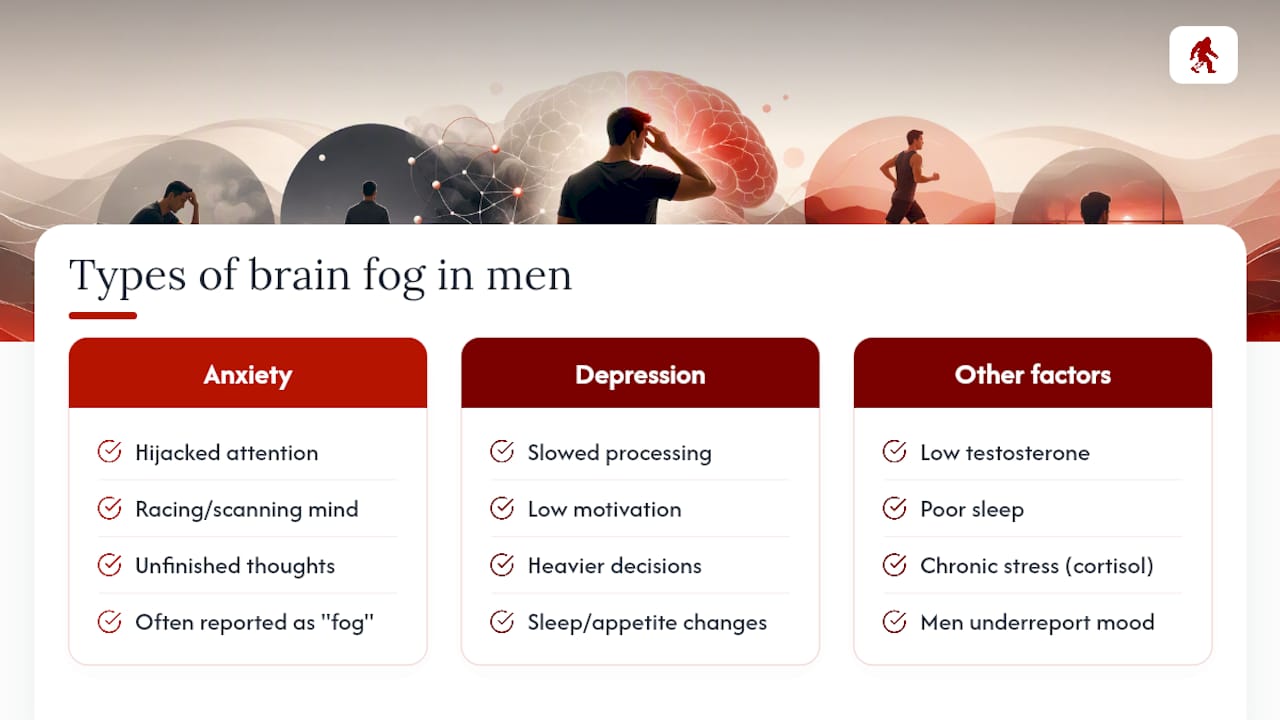
Anxiety produces a very specific kind of fog: a mind so busy scanning for problems that it can't hold a single thought long enough to finish it. That's attention getting hijacked, not attention disappearing. Depression works differently. It slows processing speed, drains motivation, and makes even simple decisions feel heavier than they should, sometimes alongside changes in sleep and appetite that make the fog worse.
Men are statistically less likely to report mood symptoms directly. Instead, they report the fog, the fatigue, the irritability, or the sense that they've "lost their edge" at work. That framing matters, because it means a lot of brain fog complaints in men are functionally anxiety or depression wearing a different name.
The overlap with hormones and sleep is real too. Low testosterone can worsen mood. Poor sleep worsens both mood and cognition. Chronic stress keeps cortisol elevated, which affects memory and emotional regulation at the same time. That's why a mental health screening question belongs on the same visit as the lab panel, not as a separate conversation only if everything else comes back normal.
If fog shows up alongside persistent low mood, loss of interest in things you used to enjoy, or anxiety that won't quiet down, that's worth naming directly to whoever you see for bloodwork. Treating the mood component often clears fog that no amount of sleep optimization ever touched.
Alcohol, Drugs, and the Cognitive Cost Men Underestimate
Alcohol is the substance most men underestimate because it's legal, social, and easy to rationalize as "just a couple drinks."
Even moderate regular drinking fragments sleep architecture, cutting into the deep-sleep stages your brain needs for overnight cognitive restoration. That's a direct line to next-day fog, even without a hangover. Heavier or more frequent use compounds this over months, contributing to nutrient deficiencies (B vitamins in particular) and liver strain that further affects mental clarity.
Recreational drug use carries its own patterns depending on the substance, but the common thread is disrupted sleep, altered neurotransmitter function, and, with regular use, a cumulative dulling effect on processing speed and memory that can persist well beyond the immediate high.
Nicotine and vaping deserve a mention too, since they're often overlooked as cognitive factors. University of Rochester Medicine lists vaping and smoking directly among common, reversible contributors to brain fog, likely through effects on blood flow and sleep quality.
The practical test: track how you feel on days after drinking versus days without. Most men who do this honestly notice a difference within a week, and it's usually bigger than they expected. If substance use is a daily habit rather than an occasional one, that's a conversation worth having with a doctor as part of any brain fog workup, not something to mention only if asked.
Medications That Can Quietly Cause Brain Fog
A lot of men rule out every other cause before checking their own medicine cabinet, and that's often where the answer is hiding.
Several drug categories commonly prescribed to men carry cognitive side effects that get mistaken for stress or aging. Antihistamines, especially older sedating ones taken for allergies, cause drowsiness and slowed thinking that can linger into the next day. Blood pressure medications, particularly beta blockers, sometimes bring fatigue and mental sluggishness as a trade-off for their cardiovascular benefit. Statins have been reported by some men to cause mental fuzziness, though the evidence here is mixed and highly individual.
Sleep aids and anti-anxiety medications in the benzodiazepine family are notorious for next-day cognitive carryover, sometimes called a "hangover effect," even after a full night's sleep. Certain antidepressants, while treating the underlying mood issue, can bring their own initial fog during adjustment periods. Pain medications, especially opioids, slow processing speed as a direct pharmacological effect, not a side issue.
None of this means stopping medication on your own. It means bringing a specific question to whoever prescribed it: could this be contributing to the fog, and is there an alternative with a better cognitive profile? Timing changes, like moving a sedating medication to bedtime instead of morning, sometimes solve the problem without changing the drug at all. This is exactly the kind of detail a lab panel won't catch, but a five-minute conversation will.
Does Brain Training Actually Clear Brain Fog?
Brain training apps promise sharper focus and better memory with a few minutes a day. The honest answer is that the evidence is thinner than the marketing suggests.
Most commercial brain-training programs show improvement on the specific tasks they train, but that improvement often doesn't transfer well to real-world thinking, work focus, or general memory. If the underlying cause of your fog is low testosterone, poor sleep, or blood sugar instability, no amount of puzzle-solving fixes the root problem, because the app isn't touching it.
That said, cognitively demanding activities aren't worthless. Learning a genuinely new skill, whether that's an instrument, a language, or a complex hobby, engages broader neural networks than a repetitive app game and has more support behind it as a general cognitive investment. The difference is novelty and difficulty, not screen time with a "brain" label attached.
The more useful frame: treat brain training as a maintenance habit for a brain that's already functioning well, not a treatment for fog with an identifiable cause. Fix sleep, stabilize blood sugar, check hormones, and address mood first. If fog clears and you want to keep your mind sharp long term, then a genuinely challenging new skill earns a spot in your routine, ahead of any app promising fifteen-minute miracles.
Fitting Focus Into a Man's Actual Workday
Most advice about focus ignores the fact that men spend eight or more hours a day in environments that actively work against clear thinking.
Screen time is the biggest offender nobody wants to hear about. Constant notification checking fragments attention throughout the day, and blue light exposure late into the evening delays the sleep that would have prevented next-day fog in the first place. A practical fix: batch email and message checking into three or four set windows instead of leaving notifications on all day, and put screens away at least 30 minutes before bed.
Workplace ergonomics matter more for cognition than most men assume. Poor posture and a screen positioned too low restrict blood flow and create the kind of low-grade physical discomfort that competes for mental bandwidth all day. A monitor at eye level and a chair that supports your lower back aren't vanity fixes, they're removing a constant, low-level distraction.
Movement breaks beat marathon desk sessions for sustained focus. A five-minute walk every 90 minutes does more for afternoon clarity than pushing through with more coffee. Lunch matters too: a heavy, carb-dense lunch eaten at a desk while scrolling a phone sets up exactly the blood sugar crash covered earlier in this article.
None of this requires a career change or a home office overhaul. It requires picking two or three of these adjustments, running them for two weeks alongside the sleep and diet fixes already covered, and paying attention to whether the 3 p.m. fog actually lifts.
Start Small, Stay Consistent
If you take one thing from this article, take this: fix sleep first. Nearly everything else, from blood sugar to mood to hormone signaling, works better once sleep is stable, and worse when it isn't.
Habit change is slow and unglamorous, and that's fine. Two weeks of tracking sleep and energy tells you more than any single good or bad day. Small, boring, consistent changes beat dramatic short-term fixes almost every time I've seen this play out in men who actually stick with a plan.
Incremental improvement is real. It's also measurable, if you're willing to write it down.
— Nurse Rachel
A Daily Restoration Tool Worth Adding to the Routine
Everything in the 4-week plan above works on its own: sleep, blood sugar, movement, hydration. There is also a private-use red light wellness device designed to support a consistent daily habit alongside the restoration work already underway, not as a substitute for it.
Think of it as reinforcement, not a fix. A few minutes with RedRockit fits into the same routine as your bedtime and your morning protein, another small, consistent input alongside the habits doing the real heavy lifting. When used alongside better sleep and diet, some men find it an easy addition, not another chore competing for willpower. Pairing red light exposure with a stabilized routine is exactly the kind of low-friction habit that's worth understanding before you try it, and the red light therapy and testosterone breakdown covers how it fits alongside natural testosterone support.
If you're past 30 and starting to feel the shift Nurse Rachel described, learn more about male vitality after 40 and see whether RedRockit belongs in your daily restoration routine.
This article is general information, not a substitute for advice from a qualified doctor. Consult a qualified healthcare professional about your own circumstances before acting on anything here.
Sources
- Brain fog and aging: what's normal and when to be concerned | UCLA Health
- Association between testosterone and cognitive outcomes (PubMed record)
- Age-related male hypogonadism and cognitive impairment: review (PMC)
- What Causes Brain Fog? | University of Rochester Medicine