

The fastest, most reliable ways to boost energy in men are not complicated: a consistent wake time, a protein-first breakfast, meals spaced every 3 to 4 hours, resistance training, and steady hydration. Some of these pay off in days. Others, like correcting a vitamin D or B12 deficiency, take weeks. Nurse Rachel and the team at Primal Red Co built this guide around what actually restores drive, not what sounds good in a headline.
TL;DR:
- Maintaining a consistent wake time and morning light exposure can improve alertness within 7 to 10 days.
- Eating protein-rich breakfasts and spreading meals every 3 to 4 hours help stabilize blood sugar and energy levels.
- Many men have underlying health issues, such as sleep apnea or nutrient deficiencies, that require medical evaluation and should not be overlooked.
- Sleep quality has the highest impact on restoring energy, with sleep improvements often noticeable within a week.
- Supplementing with vitamin D, B12, or magnesium should be based on lab testing, and resistance training boosts energy by increasing muscle and cellular function.
Table of Contents
- How Do You Boost Energy in Men Naturally, Starting Today?
- What Causes Low Energy in Men, and When Is It More Than Lifestyle?
- Why Does Sleep Fix Energy Faster Than Anything Else?
- What Should Men Eat to Avoid Energy Crashes?
- Does Exercise Increase Energy or Just Burn It?
- What Quick Fixes Actually Boost Energy Without a Crash Later?
- Which Supplements Are Actually Worth Taking for Energy?
- A 7 to 14 Day Restoration Routine to Start This Week
- Can Anxiety or Depression Drain Your Physical Energy?
- Do Hormones Other Than Testosterone Affect Energy As Men Age?
- Is Your Phone Killing Your Energy Before Bed?
- Why Do Regular Health Screenings Matter for Energy, Not Just Longevity?
- A Straight Answer on What Actually Works
- Where RedRockit Fits Into Your Energy Routine
- Sources
How Do You Boost Energy in Men Naturally, Starting Today?
Your body is not broken. It is running on a signal that got scrambled somewhere between late nights, skipped meals, and a training routine you abandoned two years ago. Fixing the signal does not require a prescription pad. It requires order.
Here is the sequence that moves the needle first, in the order most men should tackle it.
- Wake up at the same time, every day. Weekends included. Your circadian rhythm does not care that it is Saturday, and inconsistent wake times are one of the biggest silent energy killers. Expect a shift in alertness within 7 to 10 days.
- Get outside within 30 minutes of waking. Ten minutes of morning light anchors your internal clock and tells your body it is time to be alert, not groggy.
- Eat a protein-first breakfast. Skip the bowl of cereal. Eggs, Greek yogurt, or a protein shake blunt the mid-morning crash that carb-heavy breakfasts cause.
- Spread your calories every 3 to 4 hours. Long gaps between meals tank your blood sugar, and low blood sugar feels exactly like low energy because it is.
- Hydrate before you caffeinate. Even mild fluid loss can reduce alertness and physical performance, and most men are quietly dehydrated by 10 a.m.
- Move every 60 to 90 minutes. A two-minute walk or a set of bodyweight squats resets circulation and mental focus more than a second coffee.
- Train with resistance 2 to 3 times a week. Strength work builds the muscle and cellular machinery that produces energy at the source.
- Set a caffeine cutoff before 2 p.m. Caffeine has a half-life of roughly 5 to 6 hours. That 3 p.m. cup is still working against your sleep at 9 p.m.
- Limit alcohol. Even one drink close to bedtime fragments deep sleep, the phase your body relies on most for physical repair.
- Nap smart, not long. A 10 to 20 minute nap before 3 p.m. can restore alertness without leaving you groggy or wrecking that night's sleep.
Pro Tip: If you rely on coffee, pair 100 to 200 mg of caffeine with 100 to 200 mg of L-theanine. It smooths out the jittery crash and extends the alert window without the shakes. On the other end of the day, 300 to 400 mg of magnesium glycinate before bed supports deeper sleep for a lot of men.
What Causes Low Energy in Men, and When Is It More Than Lifestyle?
Most fatigue traces back to sleep, food timing, and stress. But not all of it. If you have cleaned up the basics for a few weeks and still feel flat, it is worth ruling out a medical cause before assuming you just need more willpower.
- Sleep apnea. Loud snoring, gasping at night, or waking unrefreshed points toward a sleep disorder that no amount of sleep hygiene will fix alone.
- Medication side effects. Blood pressure drugs, antidepressants, and diabetes medications commonly cause fatigue, and reviewing them with your doctor every few months matters.
- Nutrient deficiencies. Low iron, B12, or vitamin D are common, correctable, and easy to miss.
- Thyroid dysfunction. An underactive thyroid slows nearly everything down, including your energy.
- Depression or chronic anxiety. Mental health conditions drain physical energy just as effectively as any physical illness.
- Clinical hypogonadism. Low testosterone confirmed by lab work, not just a feeling.
Red flags that warrant prompt evaluation include sudden severe fatigue, shortness of breath, fainting, or unexplained weight change. A reasonable baseline panel includes a CBC with ferritin, 25(OH)D, B12, TSH, and total testosterone. If you have not touched your labs in over a year, that is your starting point, not a supplement aisle. For men wondering what a normal reading even looks like, this testosterone testing guide breaks down the ranges clinicians actually use.
Why Does Sleep Fix Energy Faster Than Anything Else?
Sleep is the single highest-leverage lever you have, and the research backs that up. Sleep loss consistently impairs mood, cognition, and physical performance more than almost any other single factor researchers have studied.
The 90-second fix that matters most: lock your wake time seven days a week and get morning light within it. That single change tends to show up as noticeably better daytime alertness within 7 to 10 days.
- Avoid alcohol within 3 to 4 hours of bed.
- Cut caffeine after early afternoon.
- Build a 20-minute wind-down ritual: dim lights, no screens, same routine nightly.
- If snoring, gasping, or unrefreshing sleep persist after two weeks of good habits, ask about a sleep study or cognitive behavioral therapy for insomnia.
What Should Men Eat to Avoid Energy Crashes?
Food timing matters as much as food choice. Long gaps between meals cause the blood sugar dips that masquerade as fatigue, while heavy, high-glycemic meals cause the opposite problem: a crash an hour later.
- Eat every 3 to 4 hours instead of three large, spaced-out meals.
- Build meals around lean protein, healthy fats, and low-glycemic carbs, with roughly half your plate as plant-forward foods.
- Quick, steady breakfasts: eggs with avocado, Greek yogurt with berries, or oatmeal with nut butter.
- Snack smart: a handful of nuts, cottage cheese, or a piece of fruit with protein.
- Limit alcohol to no more than two drinks a day, and treat that as a ceiling, not a target.
- Drink water consistently through the day rather than catching up all at once.
For food choices that also support hormonal health alongside energy, this list of testosterone-friendly foods is a useful starting point. Nutrition partner resources like Pure Blue's guide to fueling performance cover similar ground for men focused on training output.
Does Exercise Increase Energy or Just Burn It?
Counterintuitive, but true: the right kind of training gives you energy back. Strength training increases ATP production and muscle mass, which raises your baseline energy capacity, not just your gym performance.
- Train with resistance 2 to 3 times a week, focused on compound lifts.
- Add roughly 150 minutes of moderate aerobic work weekly, split however fits your schedule.
- Watch for overreaching. If you feel more drained after a week of training than before it, cut volume before you burn out.
- Workplace microbursts, like a flight of stairs or a set of push ups between meetings, count.
Pro Tip: If your energy dips for more than three or four days after a hard training block, that is your body asking for a deload week, not more caffeine.
What Quick Fixes Actually Boost Energy Without a Crash Later?
Sometimes you need something now. These work without wrecking the rest of your day.
- A brisk 5 to 10 minute walk or mobility burst to get blood moving.
- Splashing cold water on your face or wrists for a quick alertness jolt.
- A 10 to 20 minute power nap, capped so you avoid deep sleep grogginess.
- 200 mg of caffeine, ideally with L-theanine, used as an occasional tool rather than an all-day habit to avoid the afternoon crash.
Which Supplements Are Actually Worth Taking for Energy?
Test before you supplement. Guessing wastes money and sometimes masks the real problem.
- Check vitamin D, B12, and ferritin first. Correcting a documented deficiency takes weeks to show full benefit, not days.
- Creatine monohydrate at 5 grams a day is one of the better-studied options, often showing measurable improvement in perceived energy within 10 to 14 days.
- Magnesium glycinate, 300 to 400 mg at night, supports deeper sleep for many men.
- Avoid jumping to testosterone replacement therapy without confirmed hypogonadism and clinician oversight. It is a real path for some men, but it is not the first answer. This breakdown of what TRT actually commits you to is worth reading before that conversation.
A 7 to 14 Day Restoration Routine to Start This Week
You do not need to overhaul your life overnight. You need a short, focused stretch where you actually follow through.
- Days 1 to 7: Fixed wake time, morning light, protein-first breakfast, two brief resistance sessions, water before coffee, magnesium at night, naps capped at 20 minutes.
- Track: total sleep time, daytime energy on a simple 1 to 10 scale, and how you recover after training.
- Expect: sleep and alertness shifts within the first week; nutrition and hydration stabilization over 1 to 3 weeks; strength and metabolic gains building over 4 to 8 weeks.
A device like RedRockit can layer into the evening wind-down portion of this routine as a recovery tool. It complements the testing and habit work above. It does not replace either one.
Can Anxiety or Depression Drain Your Physical Energy?
Yes, and this gets overlooked constantly in energy conversations aimed at men. Mental health conditions do not just affect mood. They hit the same physical systems that regulate sleep, appetite, and motivation, which means chronic anxiety or depression can produce fatigue that looks identical to a nutrient deficiency or a bad sleep schedule.

The mechanism is straightforward once you see it. Anxiety keeps your nervous system in a low-grade state of alert, which burns through energy reserves even when you are sitting still. Depression often disrupts sleep architecture directly, cutting into the deep sleep stages your body needs for physical repair. Men are also less likely than women to name what they are feeling as anxiety or depression. It often shows up instead as irritability, low drive, or just being "tired all the time."
If you have addressed sleep, nutrition, and training and energy is still flat, especially alongside low motivation, irritability, or a loss of interest in things you used to enjoy, that combination is worth naming out loud to a doctor or therapist. Left unaddressed, chronic stress and mood disorders tend to compound the physical causes of fatigue rather than sit separately from them.
For men dealing with persistent mental fatigue that does not respond to lifestyle changes, working with a clinician who understands the connection between cognitive and physical energy is a smarter move than pushing through alone. Partner resources like this guide to treating mental fatigue walk through what a clinician-directed path looks like for more severe or lasting cases. Do not wait until it costs you your work, your marriage, or your patience with your kids to bring it up.
Do Hormones Other Than Testosterone Affect Energy As Men Age?
Testosterone gets all the attention, but it is not the only hormone shifting as men move past 30 and 40. Cortisol regulation often becomes less efficient with age and chronic stress, leaving men stuck in a low simmer of alertness that never quite resolves into real rest. Thyroid function can drift gradually, sometimes staying in a "normal" lab range while still trending toward sluggish. Insulin sensitivity tends to decline too, meaning the same meal that used to power you through the afternoon starts producing a crash instead.
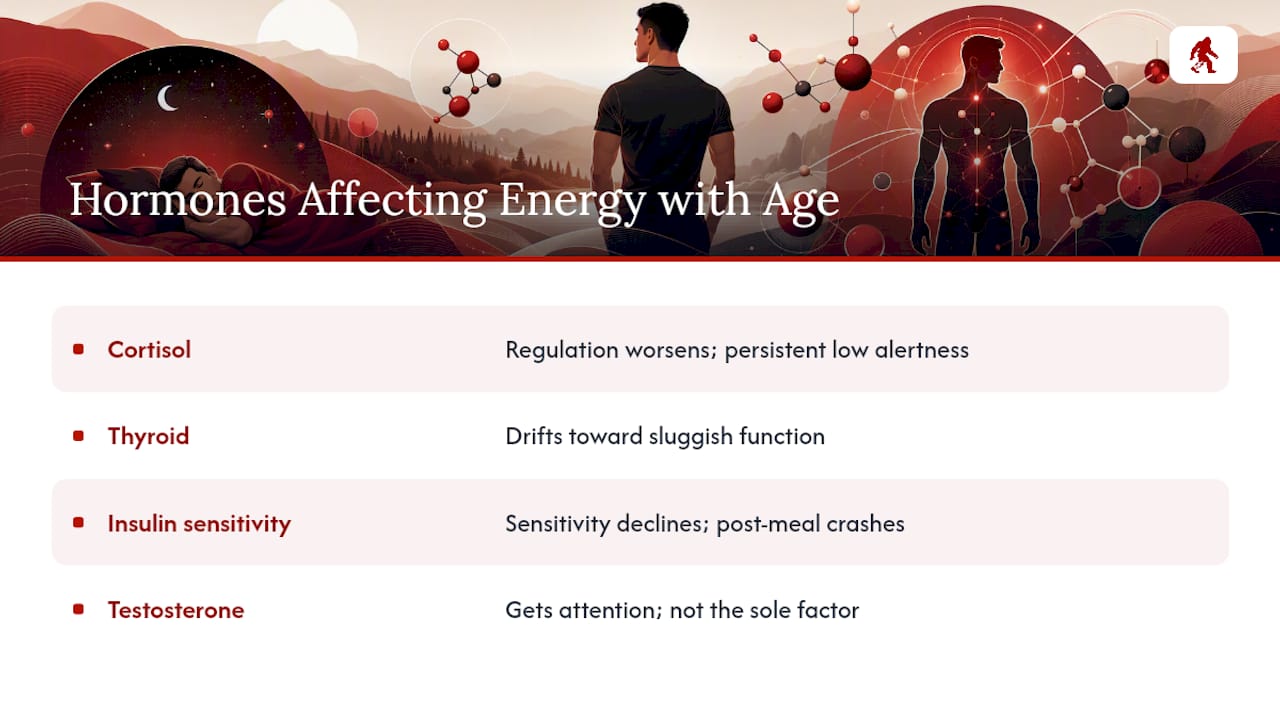
None of this means your hormones are working against you. It means the systems that used to self-regulate automatically now need more deliberate support. Consistent sleep timing helps cortisol reset properly overnight. Resistance training improves insulin sensitivity directly, which is part of why strength work shows up repeatedly in this guide. Reducing ultra-processed carbs and spacing meals every 3 to 4 hours keeps blood sugar, and by extension insulin, on a steadier curve.
The naturally-minded approach here is not about chasing one hormone number. It is about giving your whole endocrine system fewer reasons to misfire: less chronic stress, better sleep, steadier fuel. Men who want a deeper look at how this plays out specifically past 40 can start with this primer on vitality after 40.
Is Your Phone Killing Your Energy Before Bed?
Blue light exposure from phones, laptops, and TVs in the two to three hours before bed suppresses melatonin production, delaying the point where your body actually feels sleepy. The problem is not just the light itself. It is what you are doing with it: scrolling news, replying to work messages, or watching something that keeps your nervous system engaged instead of winding down.
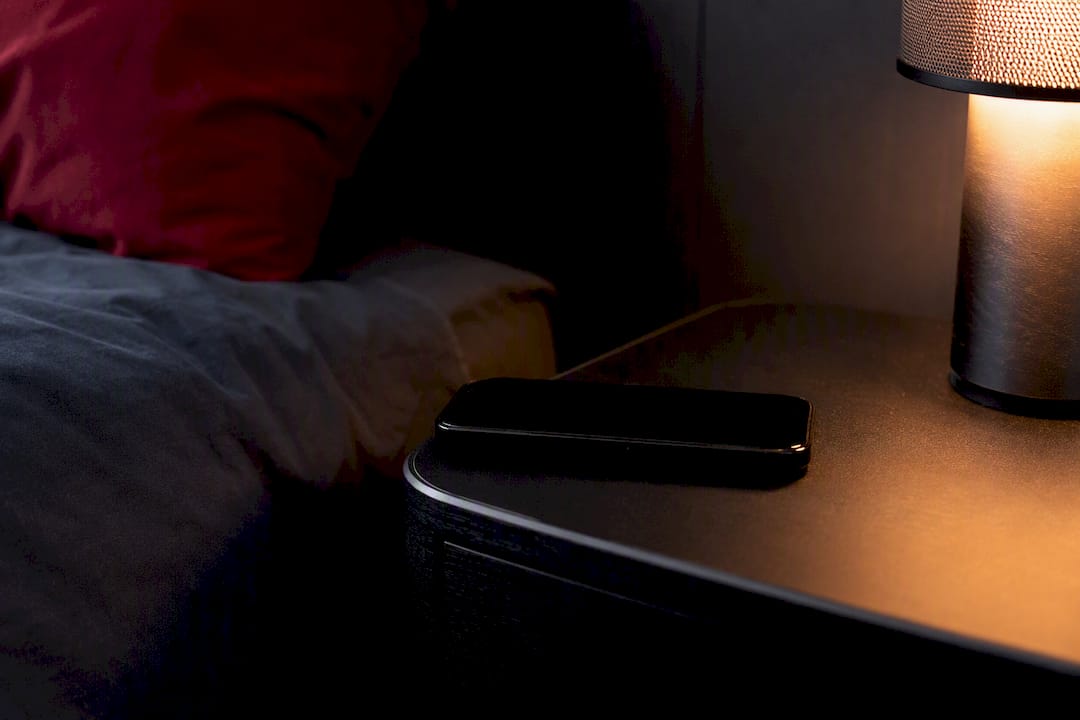
The compounding effect matters more than most men realize. A late night of screen use does not just cost you sleep onset time. It reduces the deep sleep phase your body uses to physically repair, which is the same phase tied to daytime energy and recovery from training. Do that four or five nights a week, and you are running a permanent energy deficit that no amount of coffee fully closes.
The fix does not require throwing your phone in a drawer. Push meaningful screen use to end an hour before bed. Switch devices to night mode after sunset. Keep the bedroom itself a low-light, low-stimulation space, phone charging outside arm's reach if you can manage it. Combined with a consistent wake time, cutting evening screen exposure is one of the more underrated changes in this entire guide, because it fixes the front end of the sleep problem instead of just treating the symptom the next morning.
Why Do Regular Health Screenings Matter for Energy, Not Just Longevity?
Cardiovascular and metabolic health issues develop quietly, and low energy is frequently the first symptom a man notices before anything shows up on a chart. High blood pressure, elevated blood sugar, and early insulin resistance can all sap daily energy years before they become a diagnosable condition, which is part of why fatigue that does not respond to better sleep and food deserves a real workup, not just another supplement.
An annual physical that includes blood pressure, a lipid panel, and fasting glucose or HbA1c catches most of this early, when lifestyle changes still do the heavy lifting. Add the baseline labs mentioned earlier (CBC with ferritin, vitamin D, B12, TSH, and total testosterone), and you have a fuller picture of what might be quietly capping your energy. Men who skip screenings because they "feel mostly fine" are often the ones who show up years later wondering why the fatigue never actually went away with more sleep or a cleaner diet.
A Straight Answer on What Actually Works
Most men chase a quick fix when what they need is restoration: fix sleep timing first, stabilize nutrition and hydration second, then layer in training and targeted supplements once labs confirm what you actually need. Skipping straight to a prescription or a TRT clinic without doing this groundwork usually means treating a symptom instead of the cause. Give the fundamentals two to four weeks before assuming you need anything more aggressive, and partner with a clinician the moment something does not add up.
— Nurse Rachel
Where RedRockit Fits Into Your Energy Routine
Once you have the sleep, food, and training basics in place, RedRockit is built to be the recovery layer on top of them, not a replacement for any of it. It is a private-use red light device designed to support your evening wind-down and daily recovery routine, guided by the companion Rockit IQ app so you are not guessing at session length or timing.

If sleep apnea, a thyroid issue, or confirmed low testosterone is the real driver behind your fatigue, testing and clinician care come first. RedRockit is not a diagnostic tool and it is not TRT. It is for the man who has the fundamentals working and wants a consistent, low-effort addition to his restoration routine. Take a look at the RedRockit Activation Method to see how the sessions are structured and whether it fits where you are right now.
Sources
- Increasing energy levels for sex — Harvard Health (2024-08-01)
- PMC article on sleep deprivation effects (NCBI PMC)
This article is general information, not a substitute for advice from a qualified doctor. Consult a qualified healthcare professional about your own circumstances before acting on anything here.