
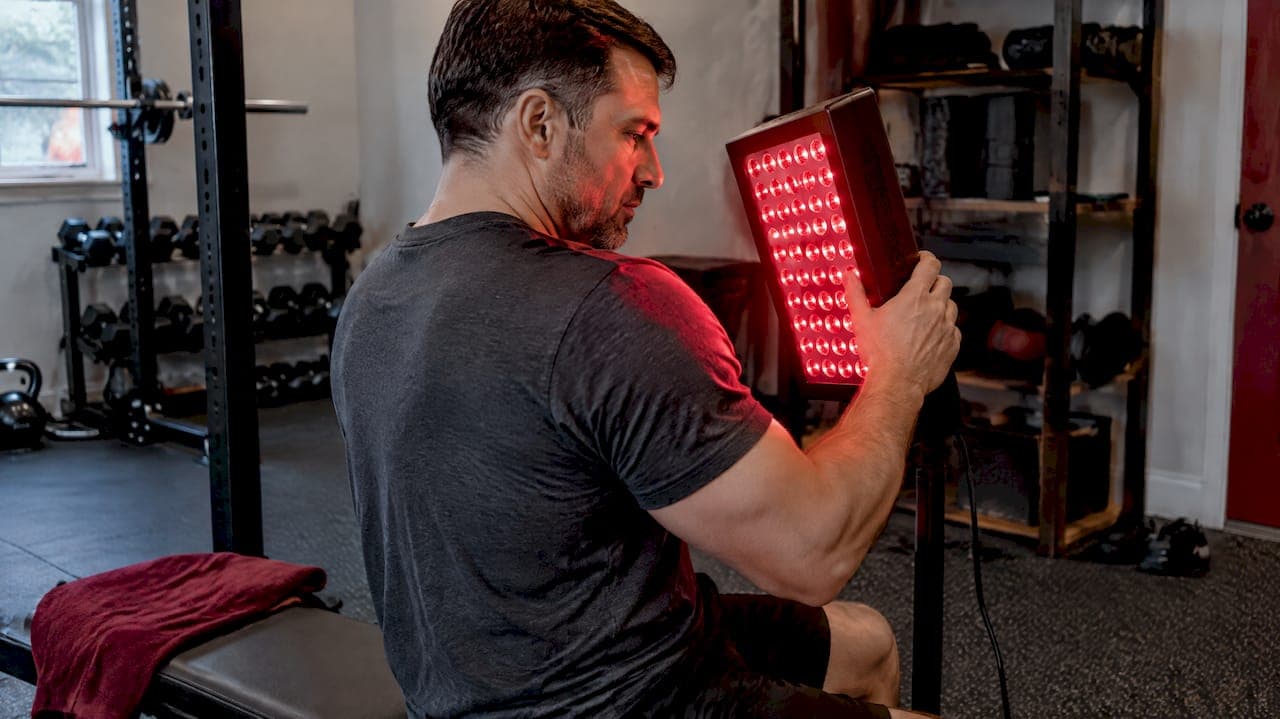
660nm red light stays near the surface, reaching the epidermis and upper dermis where skin health, collagen signaling, and wound healing happen. 850nm near-infrared light pushes deeper, into muscle, joints, and connective tissue. Many protocols use both. The real decision point isn't which wavelength wins. It's which tissue you're trying to reach, and whether you're using the right dose to get there.
TL;DR:
- Achieving effective results depends primarily on reaching the target tissue with the correct wavelength and dose, not on which wavelength is "better."
- Skin treatments typically require 660nm light due to its penetration depth of 1 to 10 millimeters, while 850nm targets deeper tissues like muscles and joints at 5 to 50 millimeters.
- Combining both wavelengths in a session addresses surface and deep tissue needs simultaneously, often yielding better outcomes than using one alone.
- Proper dosing relies on understanding device irradiance, target volume, and avoiding under- or overdosing; gradual, consistent use over weeks produces the best results.
- Always protect your eyes during sessions, check device specs carefully, and consult healthcare providers when using light therapy for specific health concerns.
Table of Contents
- How 660nm and 850nm Light Interact With Tissue
- Matching Your Goal to the Right Wavelength
- Dosing and Why Pairing Wavelengths Often Works Better
- Safety: Eyes, Medications, and Device Warnings
- Reading Specs and Building a Session That Makes Sense
- How We Think About Wavelength Choice for Men Over 30
- Where RedRockit Fits Into Your Restoration Routine
- FAQ
- Sources
How 660nm and 850nm Light Interact With Tissue
Nanometers measure where a wavelength sits on the light spectrum. 660nm sits in the visible red band, the kind you can see glowing off a panel. 850nm sits just past human vision, in the near-infrared range. That single difference, visible versus invisible, drives almost everything else about how these wavelengths behave once they hit skin.
A widely cited review on photobiomodulation mechanisms reports that 660nm typically penetrates about 1 to 10 millimeters into tissue, while 850nm reaches roughly 5 to 50 millimeters. Those are estimates built from controlled studies, not guarantees for every panel sitting on a bedroom shelf.

Both wavelengths target the same cellular switch, cytochrome c oxidase, an enzyme in mitochondria that absorbs light in bands near 660nm and again near 800 to 850nm, according to the same review. That overlap is why both wavelengths show up in mitochondrial stimulation research, even though they travel to different depths.
A few things change the real-world numbers:
- Contact lasers used in clinical studies concentrate energy directly on skin.
- LED panels spread light across a wider area, which lowers delivered intensity.
- Distance between skin and device reduces effective penetration fast.
- Skin tone, hydration, and tissue density all shift how far light actually travels.
Lab penetration figures describe what's possible under ideal conditions, not what every at-home session delivers.
Matching Your Goal to the Right Wavelength
Your target tissue should drive the choice, not a vague sense that one wavelength is "stronger." Skin concerns call for 660nm. Deep aches call for 850nm. Here's how that plays out in practice.
660nm shows up most often for:
- Fine lines, skin texture, and collagen-related skin aging support
- Acne-related redness and surface healing
- Wound care and minor skin irritation recovery
850nm shows up most often for:
- Muscle soreness after training sessions
- Joint stiffness, particularly in knees, shoulders, and lower back
- Recovery support where the target sits below the skin's surface
Face masks and smaller panels tend to run 660nm because the goal sits right at skin level. Full-body panels and devices marketed for post-exercise recovery often lean on 850nm, or combine it with 660nm so both layers get addressed in one session. If you're chasing muscle recovery specifically, near-infrared is doing most of the work.
Evidence strength varies by use case. Skin-level outcomes have a larger body of supporting research behind them. Deep-tissue and athletic recovery claims show real promise in some trials, but results shift depending on dose, device, and how consistently someone uses it. Treat early sessions as a test, not a guarantee.
Dosing and Why Pairing Wavelengths Often Works Better
Clinics frequently run 660nm and 850nm together, not because one wavelength falls short, but because skin and deeper tissue often need attention in the same session, as explained in detail by Compassion Chiropractic's red light therapy clinic approach. A sore shoulder usually has surface inflammation and deeper muscle fatigue happening at once.
Dose matters more than most people expect. A systematic review on photobiomodulation parameters found reported energy densities across studies ranging from 0.03 to 420 J/cm², with many landing in a stimulatory window around 1 to 10 J/cm². That's a wide range, which partly explains why study outcomes vary so much.
This connects to the Arndt-Schulz principle: a foundational review on low-level light therapy describes a biphasic dose response, where low to moderate doses stimulate cellular activity, but doses pushed too high start working against you. Underdosing wastes your time. Overdosing can blunt the benefit entirely.

Energy density (J/cm²) equals irradiance (mW/cm²) multiplied by time, divided by 1,000. A device delivering 50 mW/cm² for 10 minutes (600 seconds) delivers 30 J/cm², which lands above most stimulatory windows for that session.
Pro Tip: Check your device's listed irradiance before timing a session. Guessing at minutes without knowing mW/cm² is how people land outside the stimulatory window without realizing it.
Safety: Eyes, Medications, and Device Warnings
660nm is visible, so you'll notice if a panel is working. 850nm isn't, which means a device can be fully active while looking off. Never assume "no glow" equals "no output."
- Avoid direct, unprotected eye exposure to either wavelength, especially at close range.
- Pause use and check with a clinician if you take photosensitizing medications.
- People with a history of light-triggered migraines or seizure activity should get clearance first.
- Follow the manufacturer's instructions for use (IFU) exactly, including recommended distance and duration.
The FDA review of the Valeda Light Delivery System, a cleared medical device using both 660nm and 850nm, documents specific irradiance values per wavelength along with photosensitivity and neurological contraindications. That level of documentation is the standard worth holding any device to, home or clinical.
Reading Specs and Building a Session That Makes Sense
Most device listings throw numbers at you without context. Here's what actually matters and how to use it.
- Check irradiance first (mW/cm²). This tells you how much energy hits your skin per second at a given distance, usually listed for a specific distance like 6 inches.
- Confirm wavelengths are actually listed, not just "red light." A legitimate device states 660nm, 850nm, or both, with no vague substitutes.
- Note the coverage area. A small panel treating a large muscle group means multiple positioning sessions, not one.
- Measure your distance from the device. Moving twice as far away can cut delivered irradiance dramatically, which changes your real J/cm² even if the timer says the same minutes.
- Set session length by the tissue target. Skin-focused sessions often run shorter at higher irradiance; muscle and joint sessions may run longer or closer to reach adequate total energy.
Pro Tip: Keep a simple log of distance, time, and target area for the first few weeks. It's the easiest way to catch whether you're consistently landing in a useful dose range.
Most people report gradual changes over several weeks of consistent use, not overnight results. If joint pain or skin irritation worsens instead of easing, stop and talk to a healthcare provider rather than pushing through.
How We Think About Wavelength Choice for Men Over 30
We don't believe in chasing one "magic" wavelength. We believe in matching the tool to the job. A man dealing with joint stiffness from years of physical work needs something different than one trying to support skin recovery or daily energy. That's the whole premise behind a smart restoration routine: know your target, know your dose, stay consistent.
A simple daily habit, done right, beats an expensive device used randomly.
— Nurse Rachel
Where RedRockit Fits Into Your Restoration Routine
If you've read this far, you already understand the real question isn't "660 or 850." It's whether your routine actually reaches the tissue you're trying to support, at a dose that does something.

That's the thinking behind RedRockit™ Primal Restoration, our at-home device designed for a straightforward restoration routine without clinic visits or ongoing appointments. A few things worth knowing:
- RedRockit is designed to support dual-wavelength exposure as part of a daily routine.
- A companion app guides session timing so you're not guessing at minutes.
- It's built for those who want consistency over complexity, not another subscription to manage.
Before buying any device, hold its specs up against the guidance in this piece: listed wavelengths, irradiance, and coverage. Check RedRockit's full product details and see if it matches what your routine actually needs, or read more about restoring energy and drive after 40.
This article is general information, not a substitute for advice from a qualified doctor. Consult a qualified healthcare professional about your own circumstances before acting on anything here.
FAQ
Is 660nm good for red light therapy?
Yes, 660nm is one of the most studied wavelengths for skin-focused red light therapy, commonly used for collagen support, wound healing, and surface-level skin concerns. It penetrates roughly 1 to 10 millimeters, which lines up well with epidermis and upper dermis targets.
Is 660nm red light bad for eyes?
Direct, unprotected exposure to any concentrated light source, including 660nm, can strain or irritate the eyes, which is why eye protection and sensible distance matter during sessions. If you have an existing eye condition, check with an eye care provider before starting regular sessions.
Can the human eye see 850nm light?
No, 850nm sits in the near-infrared range, just past what human eyes can detect, so a device emitting it can be fully active while appearing dark. This is exactly why checking the manufacturer's instructions matters rather than assuming a device is off because you can't see a glow.
Is 850nm red light therapy effective?
850nm near-infrared light penetrates deeper than visible red, reaching roughly 5 to 50 millimeters into tissue, making it a common choice for muscle, joint, and deeper recovery support. Effectiveness depends heavily on using an adequate dose, since underdosed or overdosed sessions tend to produce weaker results.
Sources
- Photobiomodulation: mechanisms and clinical applications (review)
- DEN230083 — Valeda Light Delivery System review (FDA)