
Yes, testosterone affects your immune system. But it doesn't work like a simple "more is better" switch. Research describes testosterone as a regulator: it calms inflammation, keeps the immune system from turning on the body, and shapes how your white blood cells behave. When levels slide, that regulation can slide with it. For men over 30 who feel the shift coming, that is a good reason to pay attention to the signal early, and to the routines that support it.
This guide explains it in plain words. It also covers what it means for you, or for the man you love who has been run down, foggy and not himself.
TL;DR
- Testosterone is an immune regulator. Research reviews describe it as dampening some immune responses and calming inflammatory signals, while supporting others, like neutrophils.
- Lower testosterone is linked in studies to more inflammation and a higher risk of certain autoimmune conditions in men. Linked does not mean proven cause.
- Hospital data from COVID-19 showed men with low testosterone faced worse outcomes. Researchers are still sorting out cause and effect.
- Sleep, strength training, avoiding overtraining, blood sugar and key nutrients are the daily levers that matter most.
- If you are tired, getting sick often or have a diagnosed immune condition, get bloodwork and talk to your doctor. We support the routine, not the diagnosis.
Table of Contents
- What testosterone actually does inside the immune system
- Testosterone and inflammation
- Why men get sick differently than women
- What about vaccines and infections?
- Testosterone and autoimmune conditions
- What the internet gets wrong
- What men over 30 can control
- What it looks like at home
- Get the right checks first
- Our perspective
- A simple way to start protecting your signal
- FAQ
- Sources
What testosterone actually does inside the immune system
Most men think of testosterone as a muscle and libido hormone. It is also a messenger that immune cells listen to. Many immune cells carry receptors for androgens (the family of male sex hormones), so when testosterone rises or falls, those cells hear about it.
A 2016 review on immunity and the endocrine system describes testosterone's overall effect as immune-suppressive. It is linked with reduced T cell growth, shrinkage of the thymus (the gland where T cells mature), and lower antibody production. The same review notes testosterone supports parts of the first-line defense, including neutrophils and patrolling monocytes.
Now the part that matters. That "suppression" isn't a flaw. The immune system is powerful, and without brakes it can attack your own tissue. The review suggests this restraint helps protect males from autoimmunity. A 2024 review of androgens and immune cell function goes further and calls androgens immunomodulatory rather than simply suppressive. Their effects depend on the cell type and the tissue, and the exact pathways are still being mapped.
So the honest answer to "does testosterone help the immune system?" is: it tunes it. Think of a dial, not a gas pedal.
Testosterone and inflammation
Inflammation is where this gets practical. Short bursts of inflammation fight infection. Low-grade inflammation that never shuts off wears you down. Tired. Slow recovery. A tank that never fills.
The research on this is consistent:
- A 2023 review on male sex hormones, aging and inflammation reports testosterone lowers the pro-inflammatory activity of macrophages (immune cells that clear debris and trigger inflammation), reduces toll-like receptor 4 expression, and lowers the release of the inflammatory messengers TNF-α and IL-1β.
- A 2018 review by Traish and colleagues describes studies in men with low testosterone in which inflammatory markers such as TNF-α, IL-1β and CRP fell as levels were restored, and concludes testosterone attenuates inflammatory signaling.
- A 2022 review reports lower production of IL-1β, IL-6 and TNF-α in immune cells of men with type 2 diabetes and partial testosterone deficiency.
You don't need to memorize those abbreviations. They are all chemical alarm signals. Healthy testosterone signaling is tied to a quieter alarm system.
That connection runs both ways. Chronic inflammation can push testosterone down, and low testosterone can let inflammation run. That loop is why men often describe it as "everything went at once." Our article on insulin resistance and testosterone shows the same feedback loop in blood sugar.
Why men get sick differently than women
Women generally mount stronger immune responses than men. Part of that is genetics, part is hormones. A 2023 review on sex hormones and the immune system concludes men are more prone to some microbial infections and less proficient at clearing viruses, while being more protected than women against autoimmune disease.
That is a trade-off, not a verdict. Men get a tighter leash on self-attack. Women get a sharper response to threats but more autoimmune conditions.
For wives and partners reading this: if he gets knocked flat by every bug that goes around, or never seems to bounce back, that doesn't mean he is weak. His biology just runs on a different set of tradeoffs, and those tradeoffs shift with age.
What about vaccines and infections?
The 2015 review on how sex and age affect immune responses reports that men with high testosterone made fewer neutralizing antibodies after an influenza vaccine. That fits the broader picture of testosterone as a brake on antibody production. It does not mean high testosterone is bad for you. It means the immune system is a balancing act.
The larger real-world test came with COVID-19. The 2026 EAU Guidelines on Sexual and Reproductive Health summarize the findings: a cohort study of 723 men with COVID-19 found hypogonadism (clinically low testosterone) carried a higher risk of hospitalization, and a meta-analysis found low testosterone at hospital admission was associated with a four- to five-fold higher risk of ICU admission or death.
The guidelines also add an important caution. Testosterone can drop during a serious acute illness as an adaptive response, so it is still under investigation whether low testosterone causes worse outcomes or is a sign of how sick someone already is. Take it as a reason to know your numbers, not as a prediction.

Testosterone and autoimmune conditions
This is the area with the strongest numbers. Autoimmune disease means the immune system attacks the body's own tissue. Rheumatoid arthritis and lupus are two examples.
The Traish review describes a large analysis of nearly 500,000 men by Baillargeon and colleagues. Among the 123,460 men with hypogonadism and no earlier rheumatic autoimmune disease, untreated low testosterone was associated with a higher risk of any rheumatic autoimmune disease (hazard ratio 1.33), rheumatoid arthritis (1.31) and lupus (1.58). The pattern held at one and two years of follow-up.

The 2023 review adds that testosterone increases regulatory T cells, the cells that tell the immune system to stand down and tolerate the body's own tissue. It also links low testosterone with severe psoriasis, and a higher estradiol-to-testosterone ratio with autoimmune thyroid disease in men.
What that means for you: these are associations from observational data. They show that testosterone and immune balance travel together. They do not prove that a man with low testosterone will develop an autoimmune condition. If you already have a diagnosed autoimmune condition, your rheumatologist or primary care doctor owns that plan. Bring up your testosterone results with them. Annual bloodwork at a men's health and annual physical exam is a sensible place for a man to start getting his numbers on paper.
What the internet gets wrong
Search this topic and you will find pages that say testosterone "boosts" immunity, and others that say it "suppresses" it. Both are half-right and both flatten the science.
| Claim you will see | What the research supports |
|---|---|
| "Testosterone strengthens your immune system" | It supports some innate defenses and calms inflammation, but also restrains T cell and antibody activity |
| "Testosterone suppresses immunity, so it's bad" | The restraint helps protect against autoimmunity. It's regulation |
| "Fix testosterone and you fix your immune system" | No review in our research says so. Immune health has many inputs |
| "Low T explains every infection" | Low levels are associated with worse outcomes in some settings, and cause is still being studied |
The takeaway: don't chase a number. Chase balance, and the daily habits that keep the whole system steady.
What men over 30 can control
You can't rewrite your genetics. You can stack the deck. These are the levers we see at the center of every conversation about male vitality:
- Recovery. Training hard without recovering drives stress hormones up and can drag testosterone down. Read our piece on overtraining and low testosterone if you've been grinding and feel flat.
- Blood sugar. Insulin resistance and testosterone feed each other, and both link to inflammation.
- Nutrients. Gaps in key minerals and fats show up in energy and recovery. See what the evidence says about zinc, iron and omega-3.
- Sleep and stress. The unglamorous basics still carry the most weight.
- A routine you can actually keep. Consistency beats intensity. The best protocol is the one you will still be doing in six months.
What it looks like at home
He is dragging by 2 p.m. He catches every cold that comes through the office. Workouts that used to feed him now flatten him. She notices he's quieter, less playful, less himself.
That is not a character flaw, and it isn't a sign he's broken. It is a signal worth taking seriously. If this is your house, our piece on low testosterone and marriage speaks to what it does between two people and what to do about it.
Get the right checks first
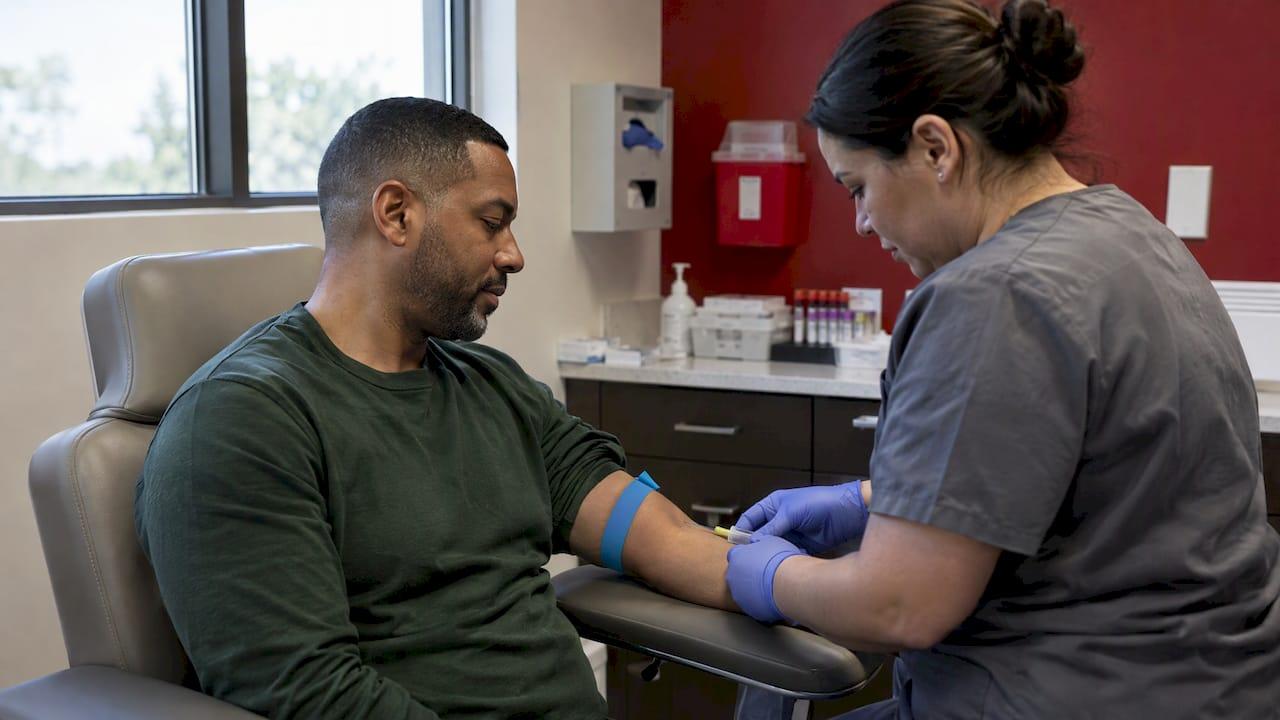
Before you change anything, know your baseline. See a doctor if you have frequent or unusually long infections, unexplained fatigue, joint pain or swelling, skin or gut symptoms that keep coming back, or any diagnosed autoimmune condition. Those need a medical workup, and a restoration routine is not a replacement for one. Ask for a morning testosterone test, since levels are highest early in the day, and ask what else they are checking.
Primal Red Co is not a clinic, and we don't diagnose or prescribe. What we do is help men who feel the shift coming build a daily restoration routine, so the bigger decisions aren't the first ones on the table.
Our perspective
Here is what we tell the men and the wives who write to us. Immunity and testosterone are connected, and the connection is about balance and signaling. Your body runs on messages. When that signal gets weaker with age, stress and a life that gives you no time to recover, everything downstream gets quieter: energy, drive, recovery, mood.
The usual first answer is "just get the shot." We believe men deserve more than that as a starting point. We built RedRockit as a private-use red light wellness device for a simple at-home restoration routine. Our approach is designed to target the cellular signal tied to male vitality. It isn't a pill, a supplement or a prescription, and it comes with no subscriptions and no appointments to keep up.
The research on testosterone and the immune system tells us the body wants balance, not extremes. That is how we think about restoration. Show up daily, protect what you still have, and give the body the conditions it needs to do its job. YOU HAVEN'T LOST IT. The signal just needs support.
Nurse Rachel
A simple way to start protecting your signal
RedRockit is our private-use red light wellness device, designed to support a daily restoration routine for men over 30 who want to maintain energy, drive, recovery and vitality. It comes with the Rockit IQ companion app, which guides your session protocols, so you aren't guessing. It is backed by a lifetime craftsmanship guarantee.

If you want to see how it fits into your routine, start with RedRockit Primal Restoration. If you are weighing your options first, read what to try before TRT or our guide to male vitality after 40.
FAQ
Does testosterone help the immune system?
It regulates it. Reviews describe testosterone as restraining some responses, such as T cell and antibody activity, while calming inflammatory signals and supporting innate cells like neutrophils. That balance helps protect men from attacking their own tissue.
Does low testosterone make you sick more often?
Research links low testosterone with more inflammation and, in some settings such as COVID-19, with worse outcomes. Researchers are still working out cause and effect. If you get sick often, see your doctor and have your levels and other basics checked.
Is testosterone connected to autoimmune disease?
Yes. A large analysis described in a 2018 review found men with untreated hypogonadism had a higher risk of rheumatoid arthritis and lupus. These are associations, not proof of cause. If you have an autoimmune diagnosis, talk to your doctor about your hormone levels.
Can lifestyle changes support healthy testosterone and immune balance?
Sleep, strength training with proper recovery, steady blood sugar and good nutrition all matter, and they work together. A simple routine you can keep up counts for more than a perfect one you abandon. That is the idea behind how we designed our restoration approach.
What should my wife or partner look for?
Look for the pattern, not one symptom: low energy, slow recovery, getting sick more, less drive, a flatter mood. Encourage him to get morning bloodwork and a physical. Then support a routine he can stick with.
Sources
- Immunity and the Endocrine System (2016)
- RISING STARS: Androgens and immune cell function (2024)
- Male sex hormones, aging, and inflammation (2023)
- Do Androgens Modulate the Pathophysiological Pathways of Inflammation? (2018)
- The Similarities and Differences between the Effects of Testosterone and DHEA on the Innate and Adaptive Immune Response (2022)
- Gender-Specific Impact of Sex Hormones on the Immune System (2023)
- How sex and age affect immune responses (2015)
- EAU Guidelines on Sexual and Reproductive Health (2026)
- Men's Health & Annual Physical Exams