
Here is the routine: 150 minutes of moderate activity a week, strength training three days a week, 7 to 8 hours of sleep on a steady schedule, protein at every meal, and supplements only with caution. The Physical Activity Guidelines and the FDA's supplement warnings are your guardrails. We built the rest of this article around them.
TL;DR:
- Use squats, presses, rows, hip hinges, and carries; increase weight or reps only after every set reaches its target, leaving two reps in reserve.
- Add easy, conversational cardio on off days, but trim it before planned lifting when energy is low or sleep has been short.
- Test vitamin D levels before supplementing, choose independently tested brands, and avoid vitality products that may contain undeclared drugs, the FDA warns.
- Ask a clinician about testosterone, SHBG, vitamin D, glucose, lipids, and age appropriate PSA testing; seek care for sudden energy loss or chest pain.
Table of Contents
- What are the five habits that build male vitality?
- How do you build a strength plan that protects muscle and drive?
- What does a daily and weekly routine look like?
- Which supplements are worth considering, and what should you avoid?
- What should you track, and when should you see a clinician?
- What backs this routine up?
- How does stress management protect your hormones?
- Why does mindset matter for male vitality?
- Where does red light therapy fit in a restoration routine?
- How does hydration affect your energy and vitality?
- Why we say routine beats quick fixes
- How RedRockit supports your restoration routine
- FAQ
- Sources
What are the five habits that build male vitality?
You haven't lost it. Most of the time, the body just stopped getting the signals that keep it strong. Five habits send those signals back: movement, sleep, food, stress control, and hydration. Start with the first two.
The 2018 Physical Activity Guidelines call for 150 to 300 minutes of moderate aerobic activity or 75 to 150 minutes of vigorous activity each week. They also call for muscle-strengthening work on at least two days. The same source links regular activity to better sleep quality and more time in deep sleep.
Sleep is the other half of that loop. Research on sleep, testosterone, and cortisol balance in aging men finds that sleep loss and disrupted sleep are associated with lower testosterone and higher late-afternoon cortisol. Short nights cost you recovery, not just mood.
For food, an integrative review points to Mediterranean-style eating, protein-forward meals, and attention to zinc and vitamin D. Our guide to foods that boost testosterone turns that into a grocery list.
Daily anchors that make it stick:
- Take a short walk after your biggest meal.
- Keep a fixed sleep window, even on weekends.
- Put protein first at breakfast.
- Make time for a wind-down without screens.
- Carry a water bottle and finish it twice.
Pro Tip: Stack new habits onto old ones. Do your calf raises while the coffee brews. Small wins are what keep a busy man in the game.
How do you build a strength plan that protects muscle and drive?
Strength work is the backbone of this routine. The integrative review names resistance training as a core piece of supporting testosterone and overall vitality without pharmaceutical therapy. We go deeper on why in our piece on strength training versus chasing testosterone spikes.
Run this template regularly, allowing time to recover between sessions:
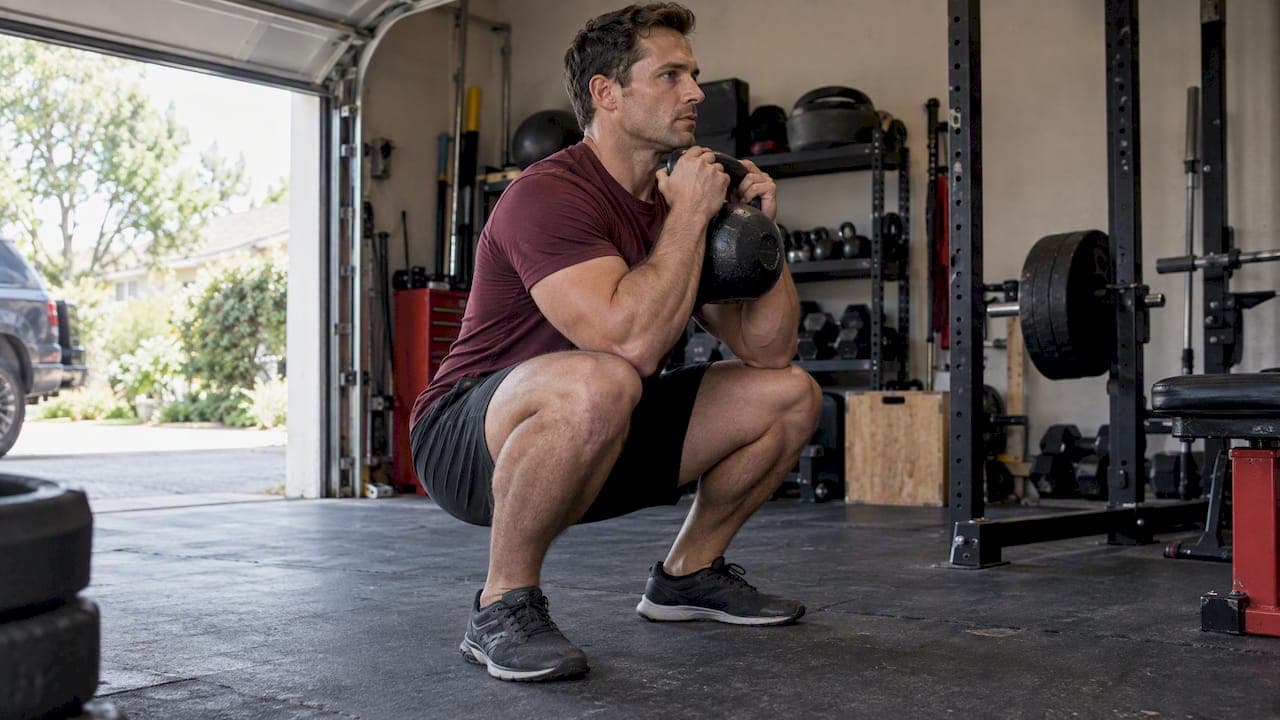
- Squat or leg press: 3 sets of 6 to 8 reps.
- Bench press or push-ups: 3 sets of 6 to 10 reps.
- Row or pull-up: Do a manageable number of sets and reps.
- Deadlift or hip hinge: 2 to 3 sets of 5 to 6 reps.
- Loaded carry or plank: 2 rounds of 30 to 45 seconds.
For progressive overload, add a little weight or one rep once you hit the top of the range on every set. Keep two reps in reserve on most sets. More isn't better. Piling on volume without recovery is a fast way to stall, and our guide on overtraining and low testosterone explains the warning signs.
Add Zone 2 cardio, an easy pace where you can still hold a conversation, on your off days. When energy is low or sleep was short, protect the lifting and trim the cardio first.

Pro Tip: Training at home? Swap barbell squats for goblet squats or split squats, bench for push-ups with a backpack, and rows for a towel row on a sturdy door.
What does a daily and weekly routine look like?
A routine only works if you can repeat it on a bad Tuesday. Here is a simple version.
- Morning: Eat a protein-first meal, move lightly, and get daylight in your eyes. Timing matters, and our article on circadian rhythm and testosterone shows why mornings are your best lever. A short morning energy routine can also help you get moving.
- Training days: Eat a real meal an hour or two before lifting, train in a consistent window, and eat protein and carbs afterward.
- Non-training days: Walk, do some mobility work, and treat sleep as the main event.
- Evening: Dim the lights, stop work talk, and head to bed at the same time every night.
- Routine checklist: Aim to move regularly, complete your planned lifting sessions, and keep bedtime consistent.
Write the checklist on paper or in a notes app. What you measure, you repeat.
Which supplements are worth considering, and what should you avoid?
Be skeptical here. The reasonable foundation is short: vitamin D if you're actually low, magnesium glycinate for sleep and recovery, and omega-3s. The integrative review discusses these kinds of bioactives alongside training and nutrition, not instead of them. Our explainer on magnesium and testosterone covers that one in detail. Test first when you can, and don't guess.
Now the hard truth. The FDA warns that many products marketed as male vitality or energy supplements contain undeclared drugs such as anabolic steroids, SARMs, or ED drugs, with risks that include liver damage, heart attack, and stroke. Those products show up most on social media and online marketplaces. The FDA also reports that some bodybuilding and "male enhancement" products have caused severe adverse effects.
Safer habits:
- Choose brands with third-party testing.
- Ignore influencer hype and "secret blend" labels.
- Talk to a clinician before anything that touches hormones.
- Add one product at a time. Stacking several from unregulated sources compounds the risk of hidden interactions.
What should you track, and when should you see a clinician?
Tracking turns guessing into a plan. Ask your clinician about these labs:
- Total testosterone and SHBG
- Vitamin D
- Fasting glucose or insulin
- A lipid panel
- PSA, in context and by age
Between labs, watch sleep quality, heart rate variability if you wear a tracker, strength progress, mood, and sex drive.
Red flags need care, not another supplement: sudden energy loss, loud snoring with daytime exhaustion (a possible sleep apnea sign), or chest pain, yellowing skin, or unusual symptoms after starting a product. Stop the supplement and call your doctor. If hormone therapy ever comes up, read our overview of overtraining and testosterone first so you walk in informed.
What backs this routine up?
We kept the evidence base tight:
- Activity: The Physical Activity Guidelines for Americans say adults should move more and sit less, and that muscle-strengthening on two or more days adds benefit.
- Sleep: The sleep and testosterone paper ties sleep loss to a poorer testosterone-cortisol balance.
- Integration: The integrative review concludes that combining resistance training, Mediterranean-style eating, and targeted bioactives can support endogenous testosterone.
How does stress management protect your hormones?
Stress is the silent drain. When you run hot all day, your body keeps cortisol high, and the research on sleep and the testosterone-cortisol balance shows how tightly those two hormones are linked to rest and recovery. You can't out-train a nervous system that never powers down.
You don't need a retreat. You need small, repeatable resets:
- Breathe slowly. Try slow nasal breathing, breathing in gently and out for longer, as part of your routine.
- Walk outside. A midday walk without your phone breaks the stress loop better than another coffee.
- Lift on purpose. Training is a stress outlet, as long as you don't pile it on top of a brutal week. Cut volume when life is heavy.
- Draw a hard line on work. Pick a cutoff time and protect it.
- Protect your sleep. It is the single best stress tool you own.
The pattern is simple. Chronic stress eats your sleep, your sleep feeds your recovery, and your recovery feeds your drive. Fix the first link and the chain gets stronger. If you've been grinding and feel flat, don't assume you're broken. Assume you're overloaded, and unload.
Why does mindset matter for male vitality?
Your body keeps score, but so does your head. Some men notice changes in recovery, energy, or mood over time, and may think this is just how it goes. That voice is not a diagnosis, and it isn't a life sentence.
Mindset doesn't replace sleep, lifting, or good food. It decides whether you keep showing up for them. Men who quit usually don't fail at the plan. They fail at the first missed week, then decide they're done. Build the opposite habit: never miss twice.
A few practical moves:
- Set a floor, not a ceiling. Decide on a manageable minimum, such as a short walk and a protein breakfast, and aim for it even when everything falls apart.
- Track wins. Write down one thing each night that went right.
- Talk to someone. Low mood, constant irritability, or losing interest in things you used to love deserve a conversation with a clinician or counselor. They can also be signs that need real medical attention, not a bigger workout.
- Drop the shame. Wanting to feel like yourself again is not weakness. It's the reason you're reading this.
Vitality is partly physical and partly the decision to stay in the game for your family, your work, and yourself.
Where does red light therapy fit in a restoration routine?
Red light therapy is a newer addition to many men's routines, and we want to be straight about it. It isn't a replacement for lifting, sleep, or a clinician. It's one tool inside a routine, and the routine does the heavy lifting.
The idea behind red light wellness devices is simple: low-level red light exposure as a consistent daily practice, used at home and in private. Our approach with RedRockit is to treat it as a habit you stack onto the others, such as a session after a meal or before your wind-down. Follow the device instructions and make the routine manageable.
How to use it well:
- Anchor it to a habit. Pair it with something you already do every day.
- Keep your expectations honest. We don't promise a medical outcome, and a device doesn't cancel out poor sleep or an unlucky week of takeout.
- Follow the instructions. Use the session guidance that comes with the device, and pay attention to your eyes and skin comfort.
- Pair it with the foundations. The best results come when training, sleep, and nutrition are already moving in the right direction.
Think of it as support, not a shortcut. If you want to go deeper on the topic, our page on male vitality after 40 lays out what we believe and how we think about restoration.
How does hydration affect your energy and vitality?
Hydration is an easily overlooked habit. Not drinking enough fluid may affect how you feel, including your focus and workouts.
Your body uses water for temperature control, joint comfort, digestion, and moving nutrients around. When you train, you lose fluid through sweat, so drink according to your needs and the conditions. This is why we put water in the foundations and not as an afterthought.
Easy ways to get it right:
- Drink early. Have a glass of water before your first coffee.
- Pay attention to thirst and how you feel. If you are concerned about hydration, ask a health professional for guidance.
- Hydrate around training. Drink according to your needs and the conditions, especially in heat.
- Eat your water. Fruit, vegetables, and soups count toward your total.
- Go easy on alcohol. It can affect hydration and sleep, which may influence recovery.
Needs vary with your size, climate, and activity level, so use your body's signals as your guide. If you're constantly thirsty or urinating far more than usual, tell your doctor. That can point to something worth checking.
Why we say routine beats quick fixes
We'll say this plainly: the miracle pill does not exist. The men who feel like themselves again in their 40s and 50s didn't find a secret. They lifted, slept, ate real food, and showed up on the boring days. At Primal Red Co., we exist for the man who feels the shift coming and wants to act before bigger decisions are on the table. Start small. Stay consistent. Protect what you still have, and rebuild what you've let slide. You can do this without a prescription or a gimmick.
— Nurse Rachel
How RedRockit supports your restoration routine
Our flagship device, RedRockit, is a private-use red light wellness device for men over 30. It fits into a daily restoration routine as a simple, non-prescription habit you can repeat at home, alongside your lifting, sleep, and nutrition. Ready to see how it fits your day? Explore RedRockit and build it into your routine.
This article is general information, not a substitute for advice from a qualified doctor. Consult a qualified healthcare professional about your own circumstances before acting on anything here.
FAQ
What is the best male vitality supplement?
No single supplement wins for every man. Vitamin D (if you're low), magnesium, and omega-3s are common foundations, and testing first beats guessing. Avoid any product promising instant results, since the FDA has warned that many such products hide undeclared drug ingredients.
What are male vitality pills for?
They're marketed to boost energy, drive, and performance. Many have no safety or efficacy review, and some contain unlisted drugs. Talk to a clinician before taking anything that claims to affect hormones.
What should a man do every day?
Aim to move daily, eat protein at each meal, drink enough water, get daylight, and keep a steady sleep window. Add strength training three days a week, as in the Physical Activity Guidelines approach of muscle-strengthening on two or more days.
What does "male vitality" mean?
It's a plain-language way to describe energy, strength, drive, mood, and recovery in men. It isn't a single medical diagnosis. If you notice a sudden or lasting drop, a clinician can check for underlying causes.
How long does a routine take to work?
How quickly you notice changes in sleep, energy, or strength varies by person and by the habits you adopt. Track your progress rather than chasing overnight results.
Sources
- Pubmed
- Fda
- Sleep, testosterone and cortisol balance, and ageing men
- Integrative Natural Approaches for Age-Related Testosterone Decline: A Synergistic Framework Combining Exercise, Nutrition, and Bioactive Compounds