
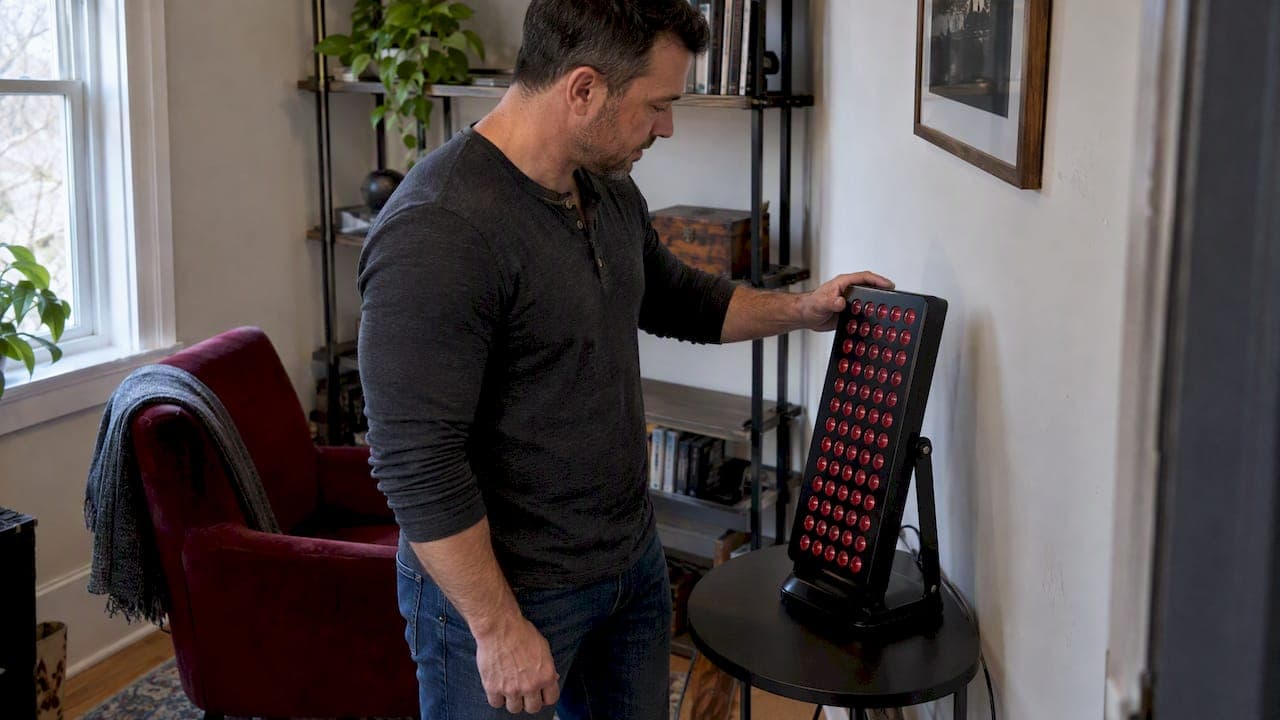
A private-use red light device can be a reasonable non-pharmaceutical tool to support energy, drive, and recovery for some men over 30, but it is not a treatment for low testosterone or erectile dysfunction. If you're feeling the shift, check the device features that actually matter, then get tested if your symptoms point to something clinical. We'll walk through the science, the safety rules, and the buying checklist next.
TL;DR:
- Wavelengths around 600 to 660 nanometers are essential for shallow tissue, while 800 to 900 nanometers target deeper tissue layers, and mismatched wavelengths will not reach the intended area.
- Devices should publish radiance exposure in joules per square centimeter, session length, and recommended frequency, with unlisted data indicating a lack of proper design.
- Red light therapy may support energy and recovery, but it cannot diagnose or treat low testosterone or erectile dysfunction without clinical testing and proper medical oversight.
- A consistent at-home routine over 8 to 12 weeks, combined with tracking baseline symptoms, sleep, diet, and exercise, improves chances of observing meaningful effects.
- Devices marketed as "clinical-grade" or with vague claims lack verified scientific backing, and users should prioritize proven specifications and consult a healthcare professional before use.
Table of Contents
- What we mean by a red light device for male restoration
- What the science actually says about red light and male vitality
- How to choose a red light device: the checklist that actually matters
- Safety, contraindications, and when to stop and get tested
- A realistic at-home routine and what to track
- Where a device fits in a real restoration plan
- A guided option if you want this built for you already
- FAQ
- Sources
What we mean by a red light device for male restoration
When we talk about a red light device here, we mean private-use red and near-infrared tools built to support the cellular signal behind energy, drive, and recovery. We are not talking about skin panels, anti-aging masks, or pain-relief wands. Most of what you'll find searching this topic online covers those categories, and none of it answers what you're actually asking.

The goal of a male-restoration device is narrower: support mitochondrial function in tissue tied to vitality, not smooth wrinkles or soothe a sore shoulder. Realistic goals include steadier energy, better recovery between workouts, and support for drive. What it cannot do is replace a hormone panel or reverse a diagnosed deficiency. That distinction matters for how you use one and what you expect from it.
What the science actually says about red light and male vitality
The honest answer: promising, not proven. Preclinical animal studies show that near-infrared light can affect mitochondrial activity in cavernous tissue, the kind involved in erectile function. Researchers used specific radiant exposures, in some preclinical animal studies at doses reported around a few joules per square centimeter, but that is a lab protocol, not a human treatment plan.
Human evidence is thinner. Some randomized trials in narrow urologic contexts, like chronic testicular pain or sperm motility, report benefit using red and infrared wavelengths between 633 and 820 nanometers. These studies are small, specific, and do not add up to a general claim that red light restores male vitality.
A few things to keep in mind before you trust any marketing page:
- Preclinical animal data suggests a biological mechanism worth watching, not a finished treatment.
- Human trials exist for specific conditions, not for "low T" or broad vitality restoration.
- The FTC requires competent, reliable evidence, typically randomized controlled trials, before a company can make disease-treatment claims.
- Clinical diagnosis of testosterone deficiency requires standardized morning fasting total testosterone measurements and accompanying symptoms, not symptoms alone.
A device that publishes its radiant exposure numbers in joules per square centimeter is telling you something a vague "clinical-grade" label never will.
On diagnosis: the established clinical standard requires two separate early-morning fasting total testosterone readings below approximately 300 ng/dL, plus symptoms, before a man is diagnosed with deficiency. A red light device, however well built, sits outside that process entirely.
How to choose a red light device: the checklist that actually matters
Most of the men we talk to get stuck comparing marketing copy instead of specs. Here's what to check instead, in order of importance:
- Wavelength range. Look for red light around 600 to 660 nanometers for shallow tissue and near-infrared around 800 to 900 nanometers for anything deeper. Mismatched wavelength means the light never reaches the tissue you're targeting.
- Published dose data. A device should state radiant exposure in joules per square centimeter, session length, and recommended frequency. If that information is nowhere on the product page, that's a gap worth noticing.
- Form factor and coverage. The device's shape should match where you're applying it. A panel built for a back or shoulder isn't built for pelvic or torso use.
- Guided protocols. A companion app with preset programs and session logging helps you stay consistent, which matters more than raw power output.
- Safety engineering. Eye-safety design, output limits, and thermal controls should be standard, not an afterthought. Check the warranty and return policy too.
- Marketing language. Watch for disease-treatment claims, single-study "clinical proof," or vague references to "clinical-grade" tech with no data behind it. That language is a red flag, not a selling point.
Pro Tip: Before buying, ask the seller directly for their radiant exposure and session-time numbers. If they can't answer in plain terms, assume the device wasn't designed with that data in mind.
Our practical guide to the science behind wavelengths and dosing breaks this down further if you want the mechanics.
Safety, contraindications, and when to stop and get tested
Red light devices are generally low risk when used as directed, but "as directed" is the operative phrase. Eye protection matters, and improvised close-range exposure to sensitive tissue is never a shortcut worth taking.
- Men on photosensitizing medications, undergoing active cancer treatment, or with implanted electronic devices should talk to a clinician before starting.
- The FDA generally treats these tools as general wellness products when labeling avoids disease claims, which means they are not regulated or marketed as medical treatments.
- Any claim that a device treats erectile dysfunction or low testosterone outright is not backed by the kind of human trial evidence the FTC requires for that language.
- If low libido, erectile trouble, or fatigue persist or worsen despite consistent use, stop relying on the device alone and seek formal clinical testing involving two early-morning fasting testosterone measurements.
A partner clinic resource on contraindications covers this ground in more clinical detail if you want a second source.
A realistic at-home routine and what to track
Consistency beats intensity here. Start with whatever session length and frequency the device maker recommends, usually daily or every other day, and stick with it rather than chasing a stronger dose out of impatience.
- Log your baseline first. Morning energy, libido, sleep quality, and training recovery, before you start, so you have something to compare against.
- Stay on protocol for 8 to 12 weeks. Photobiomodulation research suggests effects build with repetition, not a single session, so judging too early gives you a false negative.
- Pair it with the basics. Sleep, diet, exercise, and a review of any medications that might be dragging down energy or drive matter as much as the light itself.
- Reassess at the end of the window. If you see no change, or if symptoms get worse, that's your signal to stop and ask for real bloodwork instead of guessing.
Pro Tip: Track your notes in the same place every time, a notes app or a simple notebook works, so you're comparing real data at week 12, not a vague impression.
Our full at-home protocol guide walks through sample schedules if you want a structured starting point.
Where a device fits in a real restoration plan
We built Primal Red Co. on one idea: you don't have to wait until you crash to start paying attention. A red light device is a tool, not a verdict on your manhood, and it's not a replacement for a doctor when something is actually wrong.
Used right, it's a routine-support habit, something you do consistently while you watch for real change. If your symptoms look like a clinical issue, pair the device with an actual conversation with a clinician instead of hoping the light handles it alone. That's not weakness. That's just being smart about your own body.
— Nurse Rachel
A guided option if you want this built for you already
If the checklist above sounds like a lot to vet on your own, RedRockit is our answer to that exact problem. It pairs a private-use red and near-infrared device with Rockit IQ, a companion app that runs guided session protocols so you're not guessing at dose or frequency.

- Built with published wavelength ranges and session guidance instead of vague "clinical-grade" language.
- No subscriptions or ongoing appointments required.
- Designed for a man who wants a consistent routine, not another prescription to manage.
If you want to see the specs and start your own routine, the RedRockit product page has what you need to decide.
This article is general information, not a substitute for advice from a qualified doctor. Consult a qualified healthcare professional about your own circumstances before acting on anything here.
FAQ
Can a red light device replace testosterone replacement therapy?
No. A private-use device may support energy and recovery as part of a routine, but it does not meet the clinical standard for diagnosing or treating low testosterone, which requires two fasting morning blood tests plus symptoms.
How long before I'd notice a difference from red light therapy?
Most protocols suggest tracking consistently for 8 to 12 weeks before judging results, since photobiomodulation effects build with repeated sessions rather than appearing after one use. Logging energy, sleep, and recovery during that window gives you something real to compare.
Is red light therapy safe for everyday use at home?
For most healthy men, yes, when used as the manufacturer directs, with attention to eye protection and recommended session limits. Men on photosensitizing medications, in active cancer treatment, or with implanted electronic devices should talk to a clinician first.
What wavelength should a male restoration device use?
Look for red light in the 600 to 660 nanometer range for shallow tissue and near-infrared in the 800 to 900 nanometer range for deeper targets. A device that doesn't publish its wavelength or dose data makes it hard to know what you're actually getting.
Does RedRockit treat erectile dysfunction or low testosterone?
RedRockit is a private-use wellness device meant to support a restoration routine, not a treatment for diagnosed conditions. We built it as a non-pharmaceutical tool for men who want to maintain their drive and energy, not a replacement for clinical care when something more serious is going on.
Sources
- UrologyHealth: Low testosterone
- PubMed: Preclinical NIR effects on cavernous tissue
- FTC: Notice of Penalty Offenses Concerning Substantiation of Product Claims
- Journal of Lasers in Medical Sciences: low-level laser trials (testicular pain)