
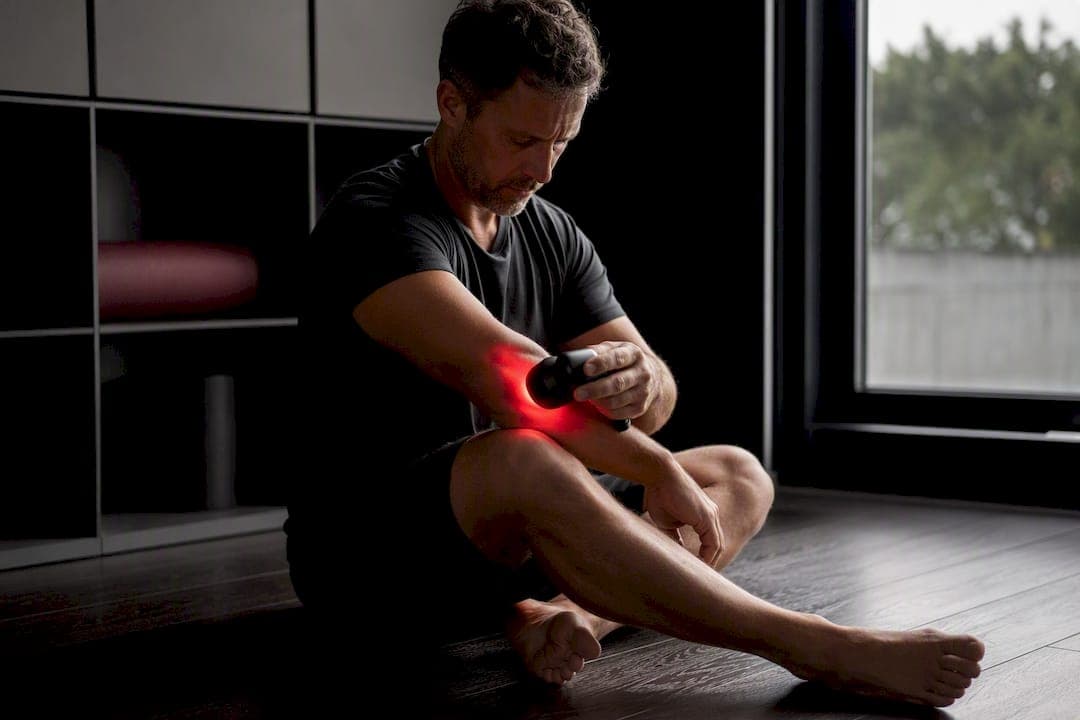
Yes, red light therapy can reduce joint pain for many people, and the evidence is strongest for osteoarthritis and general musculoskeletal pain when sessions are consistent and dosed correctly. Systematic reviews and meta-analyses report clinically meaningful improvements in pain and function for some joint conditions, and clinical guidance from University Hospitals confirms it can lower inflammation without the risks of a needle or a prescription pad. This isn't a miracle fix. It's a tool. Your next move: talk to a clinician about your specific diagnosis, then pair that guidance with an evidence-aligned protocol, whether that's a clinic laser or a private-use LED device.
Who tends to respond best:
- Mild-to-moderate osteoarthritis, especially in the knee
- Inflammatory joint conditions like rheumatoid arthritis, used alongside standard medical care
- Tendinopathy and general stiffness from overuse or aging joints
Who shouldn't expect much:
- Advanced structural joint degeneration, bone-on-bone arthritis, or joints that already need surgical repair
Pro Tip: Start with a device that discloses its wavelength and irradiance specs, and follow the manufacturer's dosing schedule for the first month rather than improvising your own. Consistency beats intensity here.
Key Takeaways
Red light therapy reduces pain and inflammation for mild-to-moderate osteoarthritis and general musculoskeletal pain when used consistently with proper wavelengths and dosing.
| Point | Details |
|---|---|
| Evidence supports select conditions | Systematic reviews show clinically meaningful pain and function gains for knee osteoarthritis specifically. |
| Mechanism runs through mitochondria | Photobiomodulation boosts ATP production and lowers inflammatory cytokines like TNF-alpha and IL-6. |
| Dual wavelengths cover more ground | Red light (630 to 660 nm) treats surface tissue; near-infrared (810 to 850 nm) reaches deeper joint structures. |
| Consistency beats intensity | Benefits typically build over 4 to 8 weeks of regular sessions, not a single powerful treatment. |
| RedRockit offers a structured at-home path | RedRockit combines dual wavelengths with app-guided Rockit IQ protocols for evidence-aligned private use. |
Table of Contents
- How Red Light Therapy Works on Joint Pain at the Cellular Level
- What the Clinical Evidence Actually Shows for Arthritis and Joint Pain
- Key Trials and Reviews Worth Knowing About
- Wavelength, Dose, and Session Length: What the Research Supports
- Is Red Light Therapy Safe for Joint Pain, and What Are the Risks?
- Clinic Treatment vs. At-Home Devices: What to Check Before You Choose
- How Long Before You Notice Results, and What's Realistic
- Fitting Red Light Therapy Into a Full Joint-Pain Plan
- A Practical At-Home Protocol Worth Following
- Why I Recommend Red Light Therapy as Part of the Plan, Not the Whole Plan
- A Private-Use Option Built Around the Evidence
- Frequently Asked Questions
- Sources
How Red Light Therapy Works on Joint Pain at the Cellular Level
Red and near-infrared light penetrates skin and soft tissue, gets absorbed by a mitochondrial enzyme called cytochrome c oxidase, and that absorption kicks off a chain reaction that ends in less inflammation and more repair signaling in the joint. This process, known as photobiomodulation, is the mechanism behind most of the pain-relief claims you'll hear about red light therapy.
Here's the chain in plain terms. Cytochrome c oxidase speeds up ATP production, the energy currency your cells run on. More available energy means your cells can do the repair work they're already trying to do, just faster and more completely. Mechanistic reviews document downstream effects on inflammatory cytokines like TNF-alpha, IL-1beta, and IL-6, the same molecules that keep a swollen knee angry and stiff. When those cytokines drop, so does the inflammation driving your pain.
Wavelength determines how deep that effect reaches. Visible red light, typically in the 630 to 660 nanometer range, works well on superficial structures like skin and shallow tendons. Near-infrared light, usually 810 to 850 nanometers, travels further into tissue and reaches deeper joint structures including cartilage and subchondral bone. That's why practical guides on joint applications tend to recommend a dual-wavelength approach rather than picking one or the other. A knee joint isn't just skin. It's layers of tissue at different depths, and each layer needs a different kind of light to get the benefit.
The clinical translation matters more than the biology lecture. Reduced synovial inflammation shows up as less swelling and better range of motion. Improved collagen signaling supports tendon and connective tissue repair over weeks, not days. And short-term reductions in pain and morning stiffness are the outcomes most trials actually measure, because they're the ones patients notice first.
Quick terms worth knowing before you read further:
- Photobiomodulation (PBM): the broader scientific term for what most people call red light therapy
- Irradiance: how much light power hits the tissue per square centimeter, measured in mW/cm²
- Fluence: total light dose delivered over a session, measured in J/cm², which combines irradiance and time
Some researchers also point to secondary photochemical effects, like localized nitric oxide release and changes in cellular water viscosity, that may add to the anti-inflammatory picture. These ideas are still being investigated and shouldn't be treated as settled science, but they round out why light exposure does more at the cellular level than simply warming tissue.
Statistic Callout: Reviews pooling multiple randomized trials on photobiomodulation report clinically significant improvements in pain and function scores for certain joint conditions compared to sham treatment, though the same reviews note substantial variation in dosing protocols across studies, which limits how precisely any single number can be applied to your situation.
What the Clinical Evidence Actually Shows for Arthritis and Joint Pain
The honest verdict: red light therapy has real, published support for osteoarthritis and general musculoskeletal pain, moderate support as an adjunct for rheumatoid arthritis and tendinopathy, and a research base that's still maturing in terms of protocol consistency. Systematic reviews and meta-analyses find meaningful pain and function improvements for knee osteoarthritis specifically, which is where the bulk of the strongest data lives.
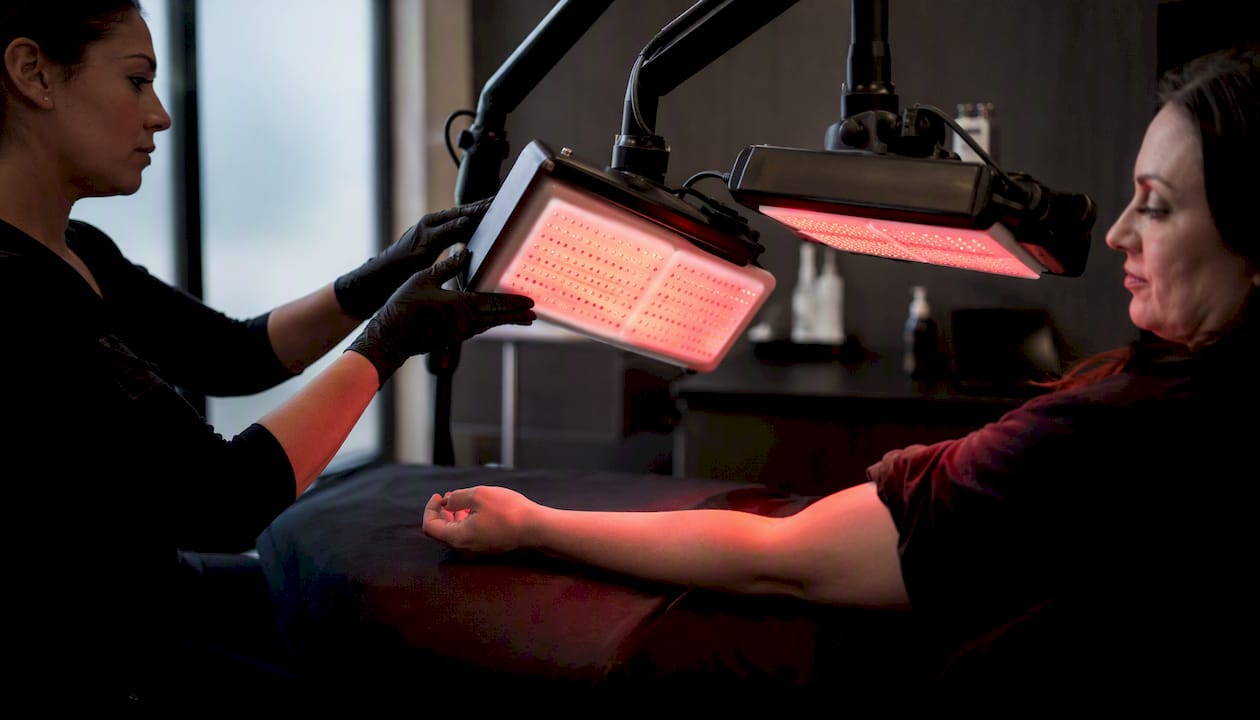
For rheumatoid arthritis and other inflammatory joint conditions, the picture is more nuanced. WebMD's clinical overview notes that reviews and small trials show mostly positive results for pain driven by inflammation, but researchers consistently call for more work before treating it as a primary therapy. It works best layered on top of standard disease management, not instead of it. Mayo Clinic's arthritis guidance reinforces this point directly: adjunctive light-based therapies shouldn't replace disease-modifying treatments for autoimmune joint conditions.
Tendinopathy sits somewhere in between. Trials tend to be smaller, but the mechanistic case for collagen repair and reduced local inflammation is solid, and clinical reports describe real functional gains when sessions are frequent and sustained.
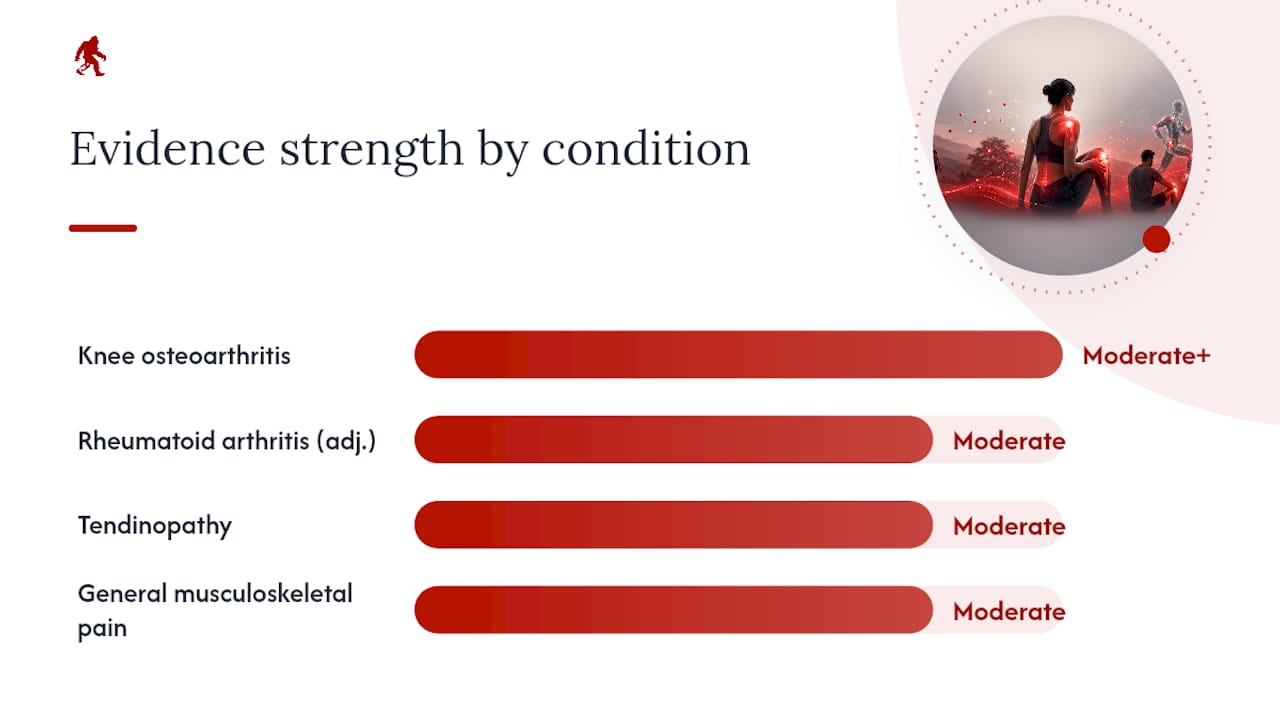
Here's how the evidence stacks up by condition:
| Condition | Evidence Strength | What Reviews Typically Show |
|---|---|---|
| Knee osteoarthritis | Moderate to high | Pain reduction and improved function vs. sham treatment |
| Rheumatoid arthritis (adjunctive) | Moderate | Reduced inflammation markers; not a substitute for disease-modifying drugs |
| Tendinopathy | Moderate | Improved collagen repair signaling and reduced local pain |
| General musculoskeletal pain | Moderate | Mostly positive results, though study quality varies widely |
The limitations are real and worth naming plainly. Dosing protocols vary enormously from one trial to the next, some using a single session, others running daily treatments for months. Sample sizes in many of the higher-quality randomized trials are small, often under 100 participants. Blinding is difficult with light-based therapy, since patients can sometimes tell whether a device is active, which introduces bias risk. Follow-up periods in many studies stop at 8 to 12 weeks, so long-term durability data is thinner than anyone would like.
Statistic Callout: Pooled results from reviews of photobiomodulation trials describe clinically significant improvements in pain and function for a subset of joint conditions, while the same body of research consistently flags heterogeneity in dosing and study design as the main barrier to firmer, universal treatment guidelines.
None of this means the therapy is unproven. It means the research is still catching up to how popular the therapy has become, and that gap between clinical enthusiasm and rock-solid consensus is exactly why an evidence-aligned protocol matters more than chasing the flashiest device on the market.
Key Trials and Reviews Worth Knowing About
You don't need to read every study to understand where the evidence is strongest. A handful of trial types keep showing up across the literature, and knowing their shape helps you judge any new claim you run into.
Randomized controlled trials on knee osteoarthritis are the most common design in this space, typically enrolling adults with mild-to-moderate OA and comparing active red or near-infrared light against a sham device that looks identical but emits no therapeutic dose. The main finding across several of these trials: participants receiving active treatment report lower pain scores and better function on standardized scales compared to the sham group, usually measured over 4 to 8 weeks of treatment.
Trials on rheumatoid arthritis and inflammatory joint conditions tend to be smaller and shorter, often used as an add-on to existing medication rather than a standalone intervention. The practical takeaway from this body of work: photobiomodulation appears to reduce localized inflammation and stiffness, but it's studied and used as a complement to disease-modifying therapy, not a replacement.
Tendinopathy studies, particularly on Achilles and patellar tendons, often use near-infrared wavelengths specifically for their deeper tissue penetration. These trials frequently note faster reported pain relief when sessions are paired with a progressive loading exercise program, which lines up with how physical therapists already treat tendon injuries.
A distinction worth flagging: many of the higher-powered positive trials used clinic-grade lasers delivering higher irradiance than most consumer LED panels can produce. That doesn't make at-home devices useless. It does mean at-home users typically need longer or more frequent sessions to approach a comparable cumulative dose, which is a big part of why consistency matters so much more than any single session.
Reviews of this literature repeatedly circle back to the same caveat: results are promising for pain and function, but heterogeneous dosing, small sample sizes, and short follow-up windows keep researchers from issuing one-size-fits-all treatment guidelines.
Industry funding shows up in a portion of the device-manufacturer-sponsored trials, which is worth knowing when you read a glowing headline. It doesn't invalidate the findings, but it's one more reason independent systematic reviews carry more weight than any single study.
Wavelength, Dose, and Session Length: What the Research Supports
The simple rule of thumb: use red light around 630 to 660 nanometers for surface-level tissue and near-infrared around 810 to 850 nanometers for deeper joint structures, and don't assume one wavelength does both jobs. Practical guidance on joint-focused protocols consistently recommends this dual-wavelength approach because red and near-infrared light behave differently once they hit skin.
Irradiance is the power delivered per square centimeter at any given moment. Fluence, or dose, is the total energy delivered over the full session, calculated as irradiance multiplied by time. A higher-irradiance clinic laser can deliver the same fluence in a shorter session than a lower-powered consumer LED panel needs to reach over a longer one. Neither approach is inherently better. They're just different ways of arriving at a similar cumulative dose.
There's no single universally agreed fluence target for joint applications, and dosing guidance from Harvard Health is explicit that optimal dose remains an open question even in well-studied applications like skin. Ranges reported across clinical protocols vary by device, condition, and treatment goal, so treat the following as a starting framework, not a fixed prescription.
Clinical devices generally deliver higher irradiance, which is why sessions run shorter. At-home LED panels compensate for lower power with longer or more frequent sessions, which is a normal and expected tradeoff, not a sign of an inferior device.
A few practical habits matter more than the exact numbers:
- Keep the device at the manufacturer's recommended distance. Closer isn't automatically stronger once you're within the effective range.
- Decide whether you're treating one joint or using a full panel for broader coverage. Targeted treatment concentrates dose; full-panel sessions cover more area but may dilute intensity per spot.
- Prioritize near-infrared wavelengths when the target is a deeper structure like the knee joint capsule or hip, since red light alone may not reach that depth effectively.
- Limit sessions to one or two joints at a time if you're using a smaller handheld device, so each area gets adequate exposure time.
Pro Tip: More light is not automatically better. Excessive or overly frequent sessions can produce diminishing returns rather than faster results, so stick to a structured schedule instead of stacking extra sessions when you're impatient for change.
Is Red Light Therapy Safe for Joint Pain, and What Are the Risks?
Red light therapy carries a strong safety record. Cleveland Clinic describes it as generally safe and noninvasive, without the skin-damaging ultraviolet exposure that comes with tanning beds or excessive sun. The most common side effect reported is mild, temporary skin redness, which usually resolves within a few hours.
That said, a few groups need to pump the brakes and check with a provider first:
- Anyone with a photosensitivity condition, such as lupus or certain porphyrias
- People taking light-sensitizing medications, including some antibiotics and acne treatments
- Anyone pregnant, out of general caution, since research in this population is limited
- Anyone treating a joint near the eyes or using a device without proper eye protection guidance
Overuse isn't dangerous in the way a medication overdose is, but it isn't free either. Stacking excessive sessions on top of each other can lead to diminishing returns, and some practitioners describe a kind of cellular fatigue where additional exposure stops producing additional benefit. If your pain isn't improving after a few weeks of consistent use, more sessions aren't the fix. A change in protocol, or a conversation with a clinician, is.
Cleveland Clinic's guidance also recommends discussing red light therapy with a provider before starting, particularly to confirm your diagnosis and make sure it fits into your broader treatment plan rather than replacing something it shouldn't.
Pro Tip: Stop self-treating and see a clinician if you notice new or worsening symptoms, signs of infection like warmth and spreading redness, or any sense of joint instability. Red light therapy treats inflammation and pain signaling. It does not fix a mechanically unstable joint.
Clinic Treatment vs. At-Home Devices: What to Check Before You Choose
Clinic-based lasers deliver higher irradiance and professional dosing oversight, which can mean fewer sessions to reach a therapeutic dose. At-home LED devices trade some of that power for convenience and the ability to treat consistently over months without scheduling around anyone else's calendar. Given how much consistency matters for results, that tradeoff often favors the at-home route for long-term joint maintenance.
Before booking a clinic session or buying a device, verify a few things:
- Whether the device has FDA clearance or a documented clearance claim, and for what specific use
- The exact wavelengths it emits, ideally both red and near-infrared
- Published irradiance specifications, not just marketing claims about "powerful" light
- Warranty and customer support terms, since these devices are a multi-month commitment
- Whether the manufacturer provides a documented protocol or app-guided sessions
If you're evaluating a clinic, ask directly about the device model, the wavelengths used, and the session protocol they follow. A clinic that can't answer those questions specifically probably isn't tracking outcomes carefully either.
One financial note: clinic-based red light therapy is sometimes covered by insurance when it's part of a documented, medically indicated treatment plan, though coverage varies by provider and diagnosis. Consumer at-home devices are almost never covered, which makes the upfront purchase price the real cost comparison to weigh against months of clinic copays.
How Long Before You Notice Results, and What's Realistic
Most people using an evidence-aligned protocol report noticing initial changes within 2 to 4 weeks, with a more complete picture forming by the 4 to 8 week mark, which is also when many clinical trials schedule their primary outcome check. That timeline reflects a cumulative process, not an instant fix. Your joint isn't responding to one session. It's responding to weeks of repeated exposure building on itself.
The magnitude of benefit is best described as modest to moderate for most people, and it varies by how advanced your joint condition already is, along with which device and protocol you're using. Someone with early-stage knee osteoarthritis has a very different ceiling than someone with years of cartilage loss.
Set expectations honestly: red light therapy will not reverse advanced cartilage loss or severe structural degeneration. University Hospitals is direct about this limitation. It works as an adjunctive therapy, layered into a broader plan, not as a standalone cure for a joint that's already structurally compromised.
Track progress with something more concrete than "it feels better":
- A simple 1 to 10 pain scale, logged at the same time each day
- Duration of morning stiffness, in minutes
- A basic function test, like how far you can walk or how many stairs you can climb without pain
- Whether you're relying less on over-the-counter pain medication over time
Fitting Red Light Therapy Into a Full Joint-Pain Plan
Red light therapy works as a complement to your existing joint-pain management, not a replacement for physical therapy, weight management, or medical treatment. Think of it as one more input into a system that already includes movement, load management, and, when needed, medication.
In practice, that looks like using red light sessions alongside a progressive loading program from a physical therapist, pairing it with topical anti-inflammatory agents or NSAIDs when your doctor recommends them, and keeping up with any weight management goals that reduce mechanical load on weight-bearing joints like knees and hips.
Know when to loop in a clinician instead of continuing to self-manage:
- Progressive mechanical instability, like a knee that buckles or gives way
- Severe pain that wakes you up at night, independent of activity
- Any red-flag symptom: fever, unexplained swelling, or sudden loss of joint function
- No meaningful improvement after 6 to 8 weeks of consistent, evidence-aligned use
Clinicians evaluating a patient's fit for this approach commonly ask questions like: what's the underlying diagnosis, how long has the pain been present, what treatments have already been tried, and is the joint mechanically stable? Those same questions are worth asking yourself honestly before you commit to any protocol.
A Practical At-Home Protocol Worth Following
Here's a straightforward, evidence-aligned starting protocol for at-home joint treatment:
- Treat the affected joint 4 to 5 times per week, using both red and near-infrared wavelengths in the same session.
- Spend 10 to 15 minutes per joint area, positioned at the distance your device manufacturer recommends.
- Reassess your pain scale and stiffness log every 2 weeks, and commit to a full 4 to 8 week evaluation window before judging results.
- Adjust frequency only after that window, based on what your tracking actually shows.
A quick way to think about irradiance and time together: if a device delivers roughly 50 mW/cm² at your treatment distance, reaching a moderate cumulative dose over a 10 to 15 minute session is a reasonable, protocol-consistent target, without needing to chase an exact universal number that doesn't exist in the research yet.
When you're comparing devices, check for:
- Dual-wavelength output covering both red and near-infrared bands
- Published irradiance or FDA clearance information, not vague marketing language
- Clear distance guidance for proper dosing
- A durable panel or pad design built for repeated use over months
- App-guided protocols that help you stay consistent instead of guessing
Pro Tip: Adherence beats intensity every time. A device used consistently four times a week for two months will almost always outperform a more powerful device used sporadically. Build the habit before you obsess over the specs.
Why I Recommend Red Light Therapy as Part of the Plan, Not the Whole Plan
The evidence earns a cautious, genuine endorsement for select joint conditions, particularly mild-to-moderate osteoarthritis and general musculoskeletal pain, when the therapy is used consistently and paired with the rest of a real treatment plan. What frustrates me about how this topic gets covered elsewhere is the false choice presented to men: either accept the slow decline or go straight to injections and pharmaceutical intervention. That's not the whole menu.
Private-use devices exist precisely for the men in between those two extremes, the ones who feel the stiffness creeping in but aren't ready to hand their body over to a prescription pad without trying something evidence-backed first. That's exactly where Primal Red Co built RedRockit: a tool for men who want to protect what they've got before bigger decisions land on the table.
Here's my honest caveat, though. This is not a replacement for medical care, and I'll say that plainly every time. If your joint pain is new, severe, or worsening, see a clinician first, get a real diagnosis, then decide where light therapy fits into your plan. Used that way, consistently and with clear eyes about what it can and can't do, it's one of the more defensible tools available for a man managing joint pain on his own terms.
A Private-Use Option Built Around the Evidence
If everything above sounds right but you don't want to book weekly clinic visits for months, RedRockit is built to bring that same evidence-aligned approach home. It delivers dual red and near-infrared wavelengths in one device, so you're not choosing between superficial and deep tissue coverage. You're getting both in a single session.

RedRockit pairs with the Rockit IQ app, which walks you through guided session protocols instead of leaving you to guess at distance, timing, or frequency. That matters more than it sounds like, because the research is clear that consistency and correct dosing drive results, not raw device power. Expect a real evaluation window, not overnight change. Most men following a structured protocol give it 4 to 8 weeks before judging results, in line with how the clinical trials themselves are timed. The device comes backed by manufacturer support and warranty coverage, so you're not gambling on a mystery product from an anonymous listing.
If you're ready to build a private-use restoration routine instead of waiting for things to get worse, check out the RedRockit Activation Method and see how the protocol maps to what your joints actually need.
Frequently Asked Questions
Does red light therapy help arthritis pain specifically? Evidence is strongest for osteoarthritis, where reviews show meaningful pain and function improvements. For rheumatoid arthritis, it works best as an adjunct alongside standard disease-modifying treatment, not a replacement for it.
How is red light therapy different from infrared saunas or heating pads? Photobiomodulation uses specific wavelengths absorbed by mitochondria to trigger cellular signaling changes, not just surface heat. A heating pad relaxes muscles through warmth alone, without the same cytochrome c oxidase activation.
Can I use red light therapy alongside NSAIDs or other pain medication? Generally yes, and many people use both together as part of a broader management plan. Confirm with your doctor first, especially if you're on any light-sensitizing medication.
How often should I use a red light device for joint pain? Most at-home protocols recommend 3 to 5 sessions per week, with a 4 to 8 week evaluation window before adjusting frequency or judging results.
Will red light therapy reverse joint damage I already have? No. It can reduce pain and inflammation, but it will not reverse advanced cartilage loss or severe structural joint degeneration. It works as an adjunctive therapy, not a structural fix.
Is red light therapy safe to use every day? For most people, yes, though sessions should follow manufacturer guidance rather than being stacked excessively. More frequent use doesn't always translate to faster results and can produce diminishing returns.
Sources
- Red light therapy: Benefits, Side Effects & Uses — Cleveland Clinic
- What You Should Know About Red Light Therapy — University Hospitals
- Red light therapy for skin care — Harvard Health
- Red Light Therapy: Effectiveness, Treatment, and Risks — WebMD
- PMC article — systematic reviews/meta-analyses on photobiomodulation