

If tadalafil (Cialis) isn't the right fit, your prescription alternatives are sildenafil (Viagra and generics), vardenafil (Levitra), and avanafil (Stendra). Beyond pills, alprostadil works as an injection or urethral suppository when oral options fail. Nonprescription approaches range from supplements like Panax ginseng and L-arginine to vacuum erection devices. Every path has tradeoffs. The right one depends on your health history, how often you need it, and what your body can handle.
One rule that never bends: never combine any PDE5 inhibitor with nitrates (nitroglycerin, isosorbide). The blood pressure drop can be life-threatening. If you experience chest pain during sex, stop and call 911. If you develop a painful erection lasting more than four hours (priapism), go to an emergency room immediately.
Quick tradeoffs at a glance:
- Onset: Sildenafil and vardenafil typically start working within about half an hour to an hour; avanafil may have a faster onset; tadalafil generally starts between half an hour and two hours and lasts substantially longer
- Duration: Sildenafil and vardenafil usually last several hours; avanafil has a similar duration; tadalafil's effects can extend much longer, especially when taken daily at low doses
- Spontaneity: Daily low-dose tadalafil or avanafil offers the most flexibility; sildenafil requires more planning around meals
- Side effects: Headache and flushing are common across the class; tadalafil uniquely causes back pain and muscle aches due to PDE11 activity; avanafil tends to have a cleaner side-effect profile at lower doses
Key Takeaways
Prescription alternatives to tadalafil (sildenafil, vardenafil, avanafil, and alprostadil) are safe and effective when matched to your health profile, but no ED medication is safe with nitrates.
| Point | Details |
|---|---|
| Prescription alternatives exist | Sildenafil, vardenafil, and avanafil are the main oral alternatives; alprostadil works when pills fail. |
| Nitrate interaction is absolute | Never combine any PDE5 inhibitor with nitrates — the blood pressure drop can be fatal. |
| Supplements carry real risk | Many OTC "natural" ED products contain hidden PDE5 analogs; evidence for most herbs is limited and inconsistent. |
| Non-pill options are clinically valid | Vacuum devices, alprostadil injections, and implants are effective alternatives when oral medications don't work. |
| Primal Red Co's role | RedRockit supports energy, drive, and recovery as a complementary restoration routine — not a replacement for medical ED treatment. |
Table of Contents
- How prescription Cialis alternatives compare side by side
- Safety, contraindications, and when to call for help
- What the evidence actually says about OTC supplements
- How to choose the right alternative for your situation
- What prescription alternatives actually cost and how to pay less
- What men actually need to hear about switching ED medications
- RedRockit supports the restoration work that happens between prescriptions
- Useful sources for further reading
How prescription Cialis alternatives compare side by side
The four FDA-approved oral PDE5 inhibitors differ in ways that genuinely matter for your daily life. FDA structured product labeling provides the official prescribing details behind the comparison below.
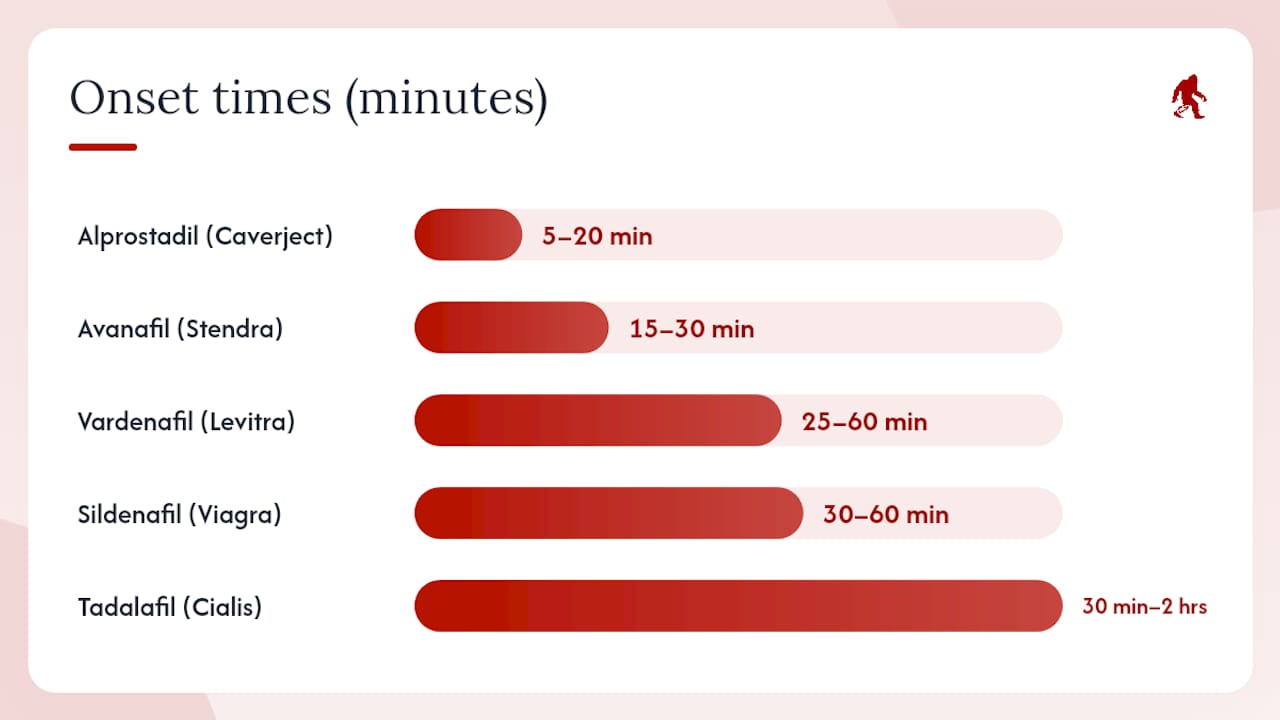
| Drug | Onset | Duration | Dosing | Common Side Effects | Key Interactions | Cost & Availability | Best For |
|---|---|---|---|---|---|---|---|
| Sildenafil (Viagra / generic) | Typically 30–60 min | Several hours | PRN | Headache, flushing, nasal congestion, visual tint | Nitrates (absolute), alpha-blockers, CYP3A4 inhibitors | Generic widely available; low cost | Budget-conscious, infrequent use |
| Vardenafil (Levitra / Staxyn) | Approximately 25–60 min | Several hours | PRN | Headache, flushing, dyspepsia | Nitrates (absolute), some antiarrhythmics | Generic available; moderate cost | Men with mild diabetes, QT-sensitive patients |
| Avanafil (Stendra) | Around 15–30 min | Several hours | PRN | Headache, flushing, nasal congestion | Nitrates (absolute), strong CYP3A4 inhibitors | Brand only; higher cost | Men wanting fastest onset, fewer side effects |
| Tadalafil (Cialis / generic) | 30 min–2 hrs | Extended duration | PRN or daily | Headache, back pain, muscle aches, flushing | Nitrates (absolute), alpha-blockers | Generic available; moderate cost | Frequent sex, spontaneity, BPH symptoms |
| Alprostadil (Caverject / Edex / MUSE) | Usually within 5–20 min | Up to an hour | PRN (injection or suppository) | Penile pain, urethral burning, prolonged erection | Anticoagulants, other vasoactives | Brand and generic; moderate-high cost | PDE5 inhibitor failures, post-prostatectomy |
Sildenafil is the most affordable entry point, especially as a generic, but it works best on an empty stomach. High-fat meals can delay absorption by up to an hour.
Avanafil is the fastest-acting oral option, which matters when spontaneity is the priority. The tradeoff is cost: no generic version is currently available in the U.S.
Vardenafil sits close to sildenafil in profile but may be slightly better tolerated in men with mild diabetes, based on clinical trial evidence showing variable response rates across ED etiologies.
Alprostadil bypasses the PDE5 pathway entirely. It works even when oral pills have failed, making it a real option for post-prostatectomy patients or men with severe vascular disease. It requires training to administer correctly.
Safety, contraindications, and when to call for help
The most dangerous mistake with any PDE5 inhibitor is taking it alongside nitrates. The combination causes a steep, potentially fatal drop in blood pressure. This isn't a theoretical risk. It applies to all nitrate forms: sublingual nitroglycerin, long-acting nitrate patches, isosorbide mononitrate, and even recreational amyl nitrite ("poppers").
Absolute contraindication: Do not take sildenafil, vardenafil, avanafil, or tadalafil if you use any form of nitrate medication. If you take nitrates for chest pain and want to discuss ED treatment, talk to your cardiologist first — the conversation about stopping nitrates is a medical one, not a self-managed one.
Other conditions that require a clinician's clearance before starting:
- Unstable angina or recent heart attack or stroke (within 6 months)
- Severe hypotension (resting blood pressure below 90/50 mmHg)
- Uncontrolled hypertension (above 170/110 mmHg)
- Severe hepatic impairment
- Hereditary degenerative retinal conditions (e.g., retinitis pigmentosa)
- Concurrent use of strong CYP3A4 inhibitors (ketoconazole, ritonavir) — these can dramatically increase drug levels
Common side effects across the class:
- Headache and facial flushing (most frequent)
- Nasal congestion
- Dyspepsia or stomach upset
- Temporary visual changes (blue tint, blurred vision — more common with sildenafil)
- Back pain and muscle aches (tadalafil specifically)
Rare but serious events:
- Non-arteritic anterior ischemic optic neuropathy (NAION) — sudden vision loss; stop the drug and seek urgent care
- Sudden hearing loss
- Priapism (erection lasting more than 4 hours) — go to an emergency room; delayed treatment can cause permanent damage
Pro Tip: Before your first prescription, bring a complete medication list to your appointment. Flag any antihypertensives (especially alpha-blockers like tamsulosin), antifungals, HIV protease inhibitors, and any cardiac medications. CYP3A4 interactions can double or triple drug exposure and turn a standard dose into an overdose.
What the evidence actually says about OTC supplements
Here's the honest answer: the evidence for most natural alternatives to Cialis is limited and inconsistent. A systematic review of herbal and nutraceutical ED treatments retrieved 42 studies and found mixed quality across the board. A few supplements showed promising signals. Most didn't clear the bar for clinical confidence.

| Supplement | Evidence Grade | Key Safety Concern |
|---|---|---|
| Panax ginseng | Promising (limited) | Insomnia, GI upset; interacts with warfarin |
| L-arginine | Modest (small trials) | GI discomfort; caution with nitrates and antihypertensives |
| L-citrulline | Modest (very small trials) | Blood pressure drop risk with vasodilatory drugs |
| Pycnogenol / Prelox | Promising (limited) | Generally well-tolerated; limited long-term data |
| Tribulus terrestris | Insufficient | Liver and kidney concerns at high doses |
| Yohimbe | Insufficient | Anxiety, hypertension, tachycardia; significant interaction risk |
| DHEA | Insufficient | Hormonal effects; not appropriate without lab testing |
| Ginkgo biloba | Insufficient | Bleeding risk; interacts with anticoagulants |
The bigger problem isn't just weak evidence. It's what's actually in the bottle. Research has found that a substantial portion of marketed "natural" ED supplements contain hidden synthetic PDE5 analogs not listed on the label. If you're on nitrates and you take one of those products thinking it's herbal, you're exposed to the same life-threatening interaction as a prescription drug, with none of the dosing control.
Mayo Clinic warns that supplements marketed as "herbal Viagra" lack the regulatory oversight of prescription drugs. Ingredients and doses vary widely between batches and brands. That inconsistency isn't a minor inconvenience. It's a real safety issue.
If you're curious about what the supplement evidence looks like for men over 40 more broadly, Primal Red Co's men's vitality supplement guide covers the evidence and regulation landscape in plain language.
For adaptogens like ginseng and ashwagandha, the best adaptogen supplements guide from The Functional Sip provides a consumer-facing breakdown of what's worth considering.
How to choose the right alternative for your situation
The right Cialis alternative isn't the one with the best marketing. It's the one that fits your body, your habits, and your medical history.
Decision checklist before your appointment:
- How often do you have sex? (Daily tadalafil makes sense above 2–3 times per week; PRN dosing works for less frequent use)
- Do you take any nitrates, alpha-blockers, or antifungals?
- Do you have cardiovascular disease, diabetes, or a history of stroke?
- Have you tried a PDE5 inhibitor before? What happened?
- Does timing and spontaneity matter more than cost?
- Are you post-prostatectomy or dealing with nerve damage?
Questions to ask your prescriber:
- Which drug fits my cardiovascular risk profile?
- What onset and duration should I realistically expect?
- What's the trial period before we decide it's not working?
- Should I try PRN dosing or daily low-dose first?
- What do I do if I get a headache or back pain every time?
- When do we consider a referral to urology?
Red flags that require specialist care, not a primary care prescription:
- Unstable angina or chest pain at rest
- Heart attack or stroke within the past 6 months
- Severe hypotension or uncontrolled hypertension
- Severe retinal disease (ask your ophthalmologist before starting)
- Priapism history
Lifestyle changes aren't optional background advice. Exercise, weight loss, smoking cessation, and alcohol reduction have direct effects on erectile function through vascular health and testosterone levels. Clinical guidance consistently recommends treating those underlying drivers alongside any medication.
Pro Tip: Keep a simple log for the first 4–6 weeks: which drug, what dose, timing relative to food and sex, and what happened. That data makes your follow-up appointment 10 times more useful than "it kind of worked sometimes."
What prescription alternatives actually cost and how to pay less
Cost is a real barrier. Here's what drives it and how to work around it.
Cost drivers:
- Brand vs. generic: Generic sildenafil can cost as little as $1–2 per pill at major pharmacies with a GoodRx coupon; branded Viagra runs significantly higher
- Avanafil (Stendra) has no generic in the U.S. yet, making it the most expensive oral option
- Daily dosing (low-dose tadalafil) adds up faster than PRN dosing if you're paying out of pocket
- Devices like vacuum pumps range from around $50 for basic models to $300+ for medical-grade versions
- Alprostadil injections are moderate to high cost and may require specialty pharmacy sourcing
Practical ways to reduce what you pay:
- Ask for generic sildenafil or tadalafil first. They are therapeutically equivalent to the branded versions.
- Use GoodRx, RxSaver, or manufacturer discount cards. Prices vary dramatically between pharmacies on the same street.
- Telemedicine clinics can prescribe and connect you to mail-order pharmacy pricing, often lower than retail. Check that the clinic is licensed in your state and uses a real prescriber.
- Discuss whether daily low-dose tadalafil (5 mg) or PRN higher-dose is more cost-effective for your frequency of use.
- Insurance coverage varies widely. Some plans cover generic sildenafil; most don't cover branded ED drugs. Call your insurer before filling.
For a broader look at telemedicine and OTC options for men's vitality, Primal Red Co's guide to men's vitality alternatives covers the access landscape in more detail.
What men actually need to hear about switching ED medications
The conversation around ED medications tends to flatten into a simple question: which pill works? But the more useful question is which pill works for you, given your cardiovascular history, your medications, your schedule, and how much you're willing to pay.
What gets missed in most guides is the role of expectation management. Men often try a PDE5 inhibitor once, don't get the result they expected, and conclude it doesn't work. What actually happened, in many cases, is a timing issue, a food interaction, or an anxiety response that blunted the drug's effect. The drug didn't fail. The conditions weren't right.
The other thing worth saying plainly: ED is frequently a vascular signal. It often shows up before cardiovascular disease becomes obvious. That's not meant to scare you. It's meant to reframe the conversation. Getting this addressed isn't just about sexual function. It's about understanding what your body is telling you and doing something about it before the bigger decisions land on the table.
Lifestyle changes, specifically exercise, weight management, and sleep quality, have documented effects on erectile function independent of medication. They're not a replacement for a prescription when one is needed, but they change the baseline your body is working from. Psychological factors, including performance anxiety and relationship stress, are also real drivers that therapy or couples counseling can address directly. A pill doesn't fix those.
If you've tried one PDE5 inhibitor and it didn't work, that's not the end of the road. Different drugs, different doses, different timing, and non-oral options are all still on the table. Work with a clinician who will actually troubleshoot with you.
RedRockit supports the restoration work that happens between prescriptions
Prescription ED medications treat a specific physiological response. What they don't address is the broader picture: energy, drive, recovery, and the daily habits that either support or undermine your vitality over time.

That's where Primal Red Co fits. The RedRockit Activation Method is a private-use red light wellness device built for men over 30 who want to support their restoration routine at home. It's not a drug. It's not an ED treatment. It's a tool for the daily work of maintaining energy, recovery, and drive as part of a consistent routine.
If you're managing ED with a prescription and want to support the broader vitality picture alongside it, the male vitality restoration guide is a good starting point. RedRockit is designed to complement medical care, not replace it. Men with ED should prioritize medical evaluation and evidence-based treatment first.
Useful sources for further reading
- Alternative medicine and herbal remedies in the treatment of erectile dysfunction: A systematic review - PMC
- Erectile dysfunction: Do herbal remedies or supplements help? - Mayo Clinic
- Choosing the Right Pill to Treat ED | Sexual Medicine
- Erectile Dysfunction and L-Citrulline: What You Should Know - Healthline
- pubmed.ncbi.nlm.nih.gov
- ncbi.nlm.nih.gov
- ncbi.nlm.nih.gov
This article is general health information, not medical advice. Confirm current prescribing guidelines, drug interactions, and your personal suitability for any treatment with a licensed healthcare provider.