
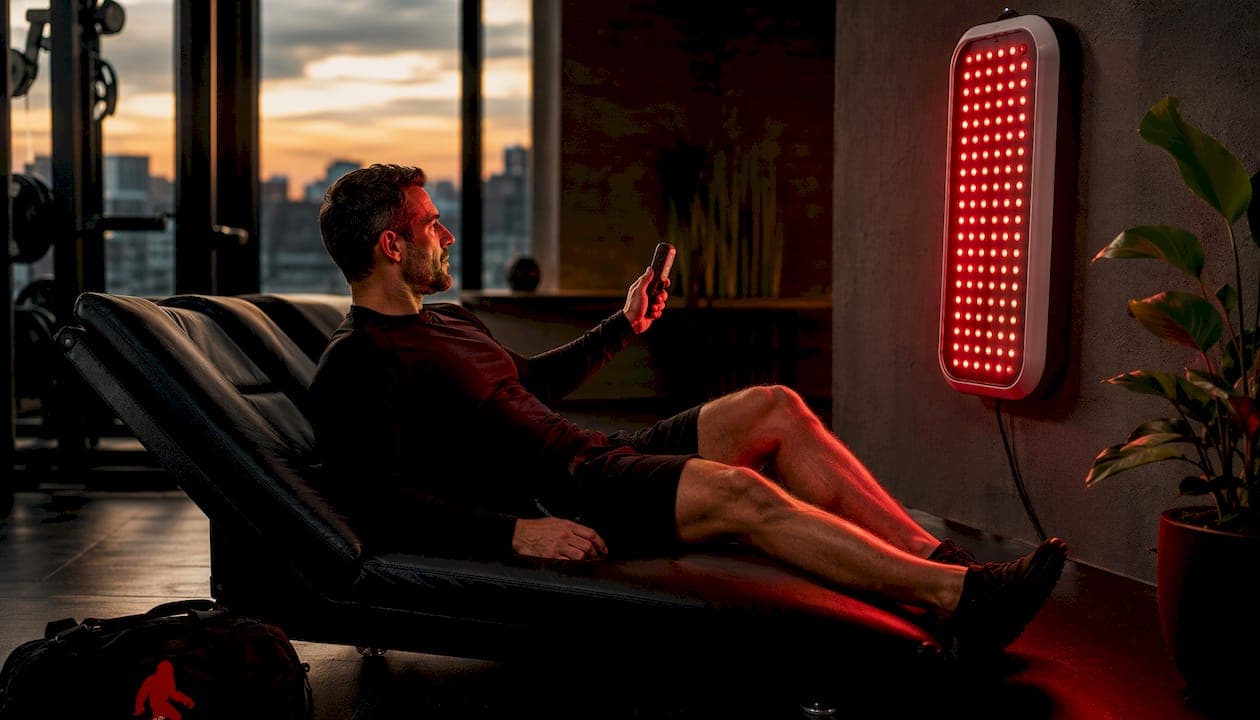
Red light therapy devices emit extremely low frequency (ELF) electromagnetic fields, and the science is clear: at typical home-use levels, these emissions are not harmful. The ELF-EMF frequencies produced by red light panels fall in the 50–60 Hz range, the same band as your refrigerator, your laptop charger, and the wiring inside your walls. Non-ionizing radiation at these frequencies does not damage DNA or cells. That is not a marketing claim. That is the scientific consensus.
Here is what you need to know upfront:
- Red light therapy devices produce non-ionizing ELF-EMFs, not ionizing radiation like X-rays
- The National Cancer Institute classifies these fields as low- to mid-frequency radiation with no identified mechanism for direct cellular damage
- EMF exposure from a red light panel is comparable to standing near a microwave, a TV, or a power strip
- Red light therapy uses LED-emitted red spectrum light that produces zero UV radiation
- FDA-cleared devices are designed to keep EMF emissions well within established safety thresholds
If you have been wondering whether your red light device is quietly working against you, the answer is no. But understanding why is worth your time.
Table of Contents
- What are EMFs and why do they matter for red light therapy?
- How EMFs are measured and what the numbers actually mean
- Are EMF emissions from red light therapy devices actually harmful?
- How Primal Red Co thinks about EMF and male vitality
- Practical steps to reduce EMF exposure during red light therapy
- RedRockit is built for men who want answers, not anxiety
- Key Takeaways
What are EMFs and why do they matter for red light therapy?
Electromagnetic fields are generated wherever electricity flows. Every device that draws power creates both an electric field (from voltage) and a magnetic field (from current). Together, those two components form an EMF. The relevant question for red light therapy is not whether a device produces EMFs, because every powered device does. The question is what type and at what level.
The World Health Organization divides the electromagnetic spectrum into two broad categories:
- Non-ionizing radiation: Radio waves, infrared, visible light, and ELF fields. These do not carry enough energy to break chemical bonds or strip electrons from atoms. Your red light panel sits here.
- Ionizing radiation: X-rays, gamma rays, and ultraviolet radiation. These carry enough energy to damage DNA directly. Your red light panel does not sit here.
Red light therapy devices generate ELF-EMFs through their power supplies, LED drivers, and internal wiring. The EMF sources in a red light panel are structurally identical to those in any other household appliance: alternating current running through a circuit at 50–60 Hz. Nothing exotic. Nothing uniquely dangerous.
Common everyday EMF sources for comparison:
- Electric blankets and heating pads
- Laptop computers and phone chargers
- Microwave ovens (when operating)
- Fluorescent and LED lighting
- Power lines and home electrical wiring
- Wi-Fi routers and Bluetooth devices
The point is not to scare you about your kitchen. The point is that red light therapy devices belong in the same low-risk category as the devices you already use without a second thought.
How EMFs are measured and what the numbers actually mean
Understanding EMF measurement cuts through a lot of the noise online. Two primary units matter here.
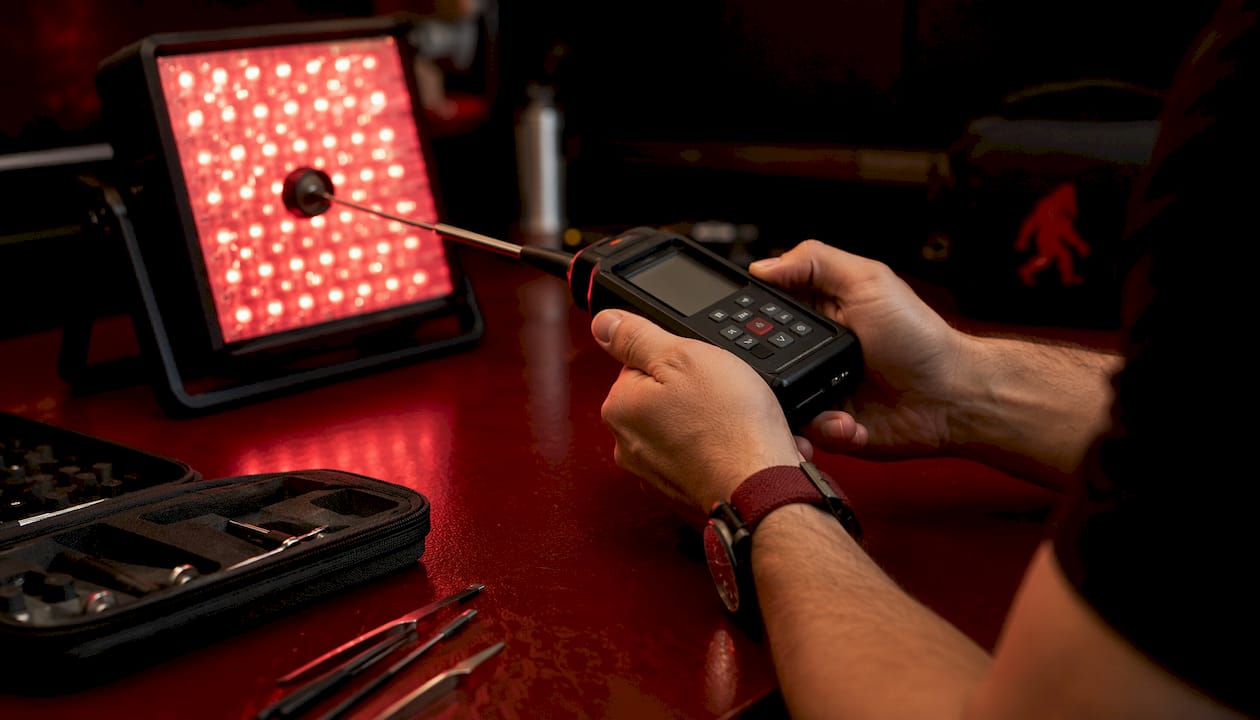
Frequency is measured in hertz (Hz). ELF fields operate from 3 Hz up to 300 Hz. Red light panels powered by standard US household current operate at 60 Hz, the same as your wall outlet.
Magnetic field strength is measured in milliTesla (mT) or microtesla (µT), and sometimes in milligauss (mG). The EPA and international bodies use these units to set exposure guidelines for the general public.
| Source | Typical ELF-EMF Level | Frequency |
|---|---|---|
| Red light therapy panel | — | 60 Hz |
| Laptop computer | 2 µT at 30 cm | 60 Hz |
| Microwave oven | 4 µT at 30 cm | 60 Hz |
| Electric blanket | — | 60 Hz |
| Power lines (near) | — | 60 Hz |
| ICNIRP public limit | 200 µT | Reference level |
The International Commission on Non-Ionizing Radiation Protection (ICNIRP) sets the general public reference level at 200 µT for 50–60 Hz magnetic fields. A well-designed red light panel at a typical use distance of 6–12 inches produces emissions that fall far below that threshold. The ELF-EMF exposure limits from authoritative bodies consistently exceed what well-designed devices actually emit.
To measure EMF from your own device, you can use a gaussmeter or triaxial EMF meter, available from electronics retailers. Hold it at your intended use distance, typically 6–12 inches from the panel surface, and take readings with the device powered on. Most quality red light panels will read well under 2 µT at that distance.
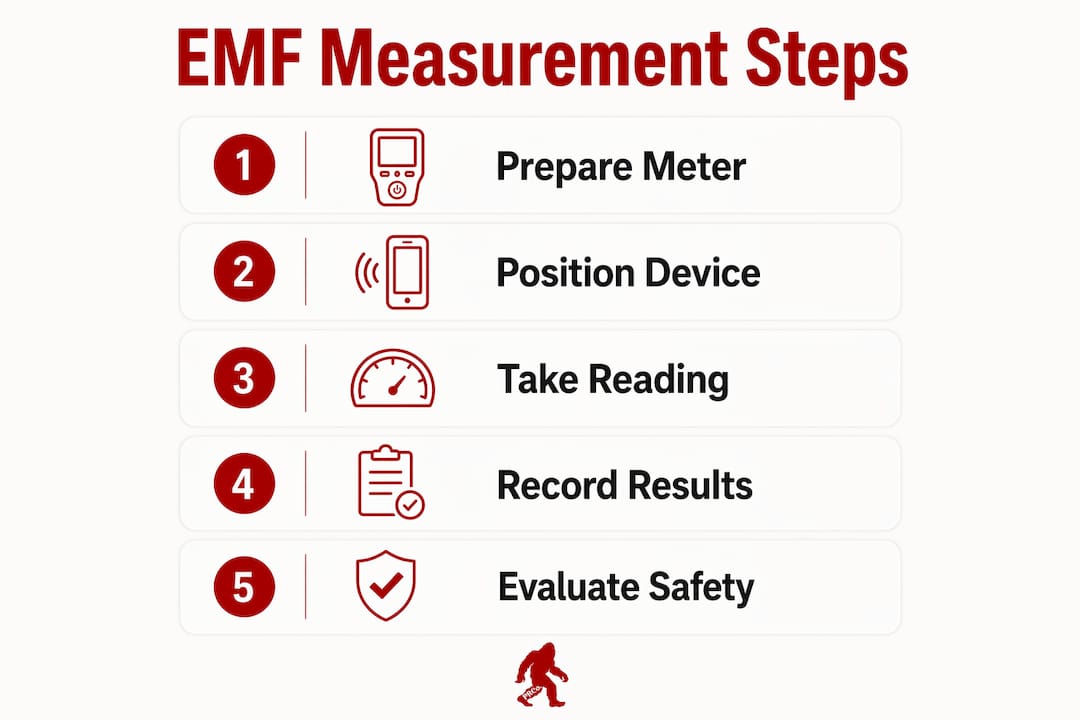
Pro Tip: Test your device at the distance you actually use it, not at the surface. Magnetic field strength drops off sharply with distance, often following an inverse-square relationship, so even a few extra inches makes a meaningful difference.
Are EMF emissions from red light therapy devices actually harmful?
Short answer: no, not at typical exposure levels. Here is the longer version, because you deserve more than a dismissal.

The scientific consensus is that ELF-EMFs are non-ionizing and have no identified mechanism for directly damaging DNA or cells. Decades of research have not produced a confirmed biological pathway through which low-frequency fields at household appliance levels cause cancer or cellular harm. The National Cancer Institute states plainly that no such mechanism has been identified.
There is one area where researchers have speculated: melatonin. Some studies have explored whether ELF-EMF exposure might reduce melatonin production, and since melatonin may play a role in suppressing tumor development, the theory goes that reduced melatonin could indirectly affect cancer risk. The evidence here is limited and inconclusive. No causal link has been established.
Red light therapy adds another layer of reassurance. The light itself, operating in the 630–850 nm wavelength range, is non-ionizing visible and near-infrared radiation that stimulates mitochondrial function and supports cellular repair. It does not produce UV radiation. Research published in peer-reviewed journals, including work indexed at PubMed, supports the therapeutic profile of red and near-infrared light without flagging EMF-related harm at standard device parameters.
One more thing worth saying directly: infrared and red light are actually associated with anti-inflammatory and antioxidative effects. The light spectrum used in red light therapy is not fighting against you. It is working for you.
Common myths, cleared up:
- "Red light therapy emits dangerous radiation." False. It emits non-ionizing light and ELF-EMFs, both well within safe parameters.
- "EMFs from red light panels are stronger than from other devices." Not supported. Emissions are comparable to standard household appliances.
- "You need to stand far away to be safe." Unnecessary at normal use distances. Proximity guidelines exist for optimal therapeutic effect, not EMF avoidance.
How Primal Red Co thinks about EMF and male vitality
At Primal Red Co, the conversation about red light therapy has never been about fear. It has been about signal.
Men over 30 are not broken. But the signals do get quieter. Energy that used to come automatically starts requiring effort. Recovery takes longer. Drive fades in ways that are hard to name but impossible to ignore. That is the gap Primal Red Co was built to address, and it is why the RedRockit device was designed the way it was.
RedRockit is a private-use red light wellness device built for men who want a daily restoration routine they can actually stick with. The device is designed with low EMF emissions as a baseline expectation, not a premium feature. The companion app, Rockit IQ, guides users through session protocols that optimize therapeutic benefit while keeping sessions practical for real life.
Nurse Rachel's background in men's health shapes how Primal Red Co approaches EMF education. The goal is not to dismiss concerns or paper over them with reassurance. The goal is to give men the actual science so they can make confident decisions. If you are exploring male vitality after 40 and wondering whether a red light device fits into that picture, the EMF question is a reasonable one to ask. The answer, grounded in current evidence, is that it fits.
Pro Tip: Consistency matters more than session length. A 10-minute daily session with RedRockit at the recommended distance delivers more cumulative benefit than an occasional long session. Build the routine first; optimize the details second.
Practical steps to reduce EMF exposure during red light therapy
Even when the risk is low, smart habits cost nothing. Here is how to use your red light device with confidence.
- Follow the manufacturer's distance guidelines. Most red light panels are designed for use at 6–12 inches. This is primarily for therapeutic dosing, but it also keeps you at a distance where EMF levels are lowest.
- Use FDA-cleared devices. FDA-cleared red light devices are reviewed for safety and are designed to operate within established emission parameters. Clearance is not a guarantee of zero EMF, but it is a meaningful quality signal.
- Keep sessions to recommended durations. Typical protocols run 10–20 minutes per session. Longer is not always better, and staying within recommended windows keeps cumulative exposure sensible.
- Wear eye protection. This is about light intensity, not EMF. Red and near-infrared light at close range can stress the eyes. Most reputable devices include protective eyewear or recommend it.
- Do not sleep with the device running. Prolonged, unmonitored exposure is unnecessary. Use the device intentionally, then power it off.
- Check your device with a gaussmeter if you want certainty. A basic triaxial EMF meter costs under $50 at most electronics retailers. Testing your specific device at your specific use distance takes two minutes and removes all guesswork.
- Position the device away from your head during lower-body sessions. If you are targeting legs or lower torso, there is no reason to have the panel near your face. Simple positioning reduces any theoretical exposure to sensitive areas.
- Avoid stacking multiple high-draw devices in the same space. Running a red light panel, a space heater, and a laptop in a small room simultaneously raises the ambient ELF-EMF level modestly. Not dangerously, but unnecessarily.
The FCC and EPA both maintain that non-ionizing radiation at household appliance levels poses negligible risk to the general public. These steps are about being intentional, not fearful.
RedRockit is built for men who want answers, not anxiety
You came here with a real question. That is exactly the kind of man Primal Red Co was built for.

The EMF science is settled: red light therapy devices emit low-frequency, non-ionizing fields that fall well within every established safety standard. What is not settled for most men over 30 is the bigger question underneath this one. The energy question. The drive question. The "why does recovery take so long now" question. Those are the questions RedRockit was designed to help you address, with a daily restoration routine built around red light therapy, guided protocols through the Rockit IQ app, and education that treats you like an adult who can handle the truth.
If you are already looking at what to try before TRT, or you are just starting to pay attention to what your body is telling you, RedRockit is a practical first step. No clinic visits. No prescriptions. No waiting until things get worse before you do something. Visit The Signal to see how the routine works and whether it fits where you are right now.
Key Takeaways
Red light therapy devices emit non-ionizing ELF-EMFs in the 50–60 Hz range, comparable to household appliances, and current scientific evidence confirms these emissions pose no identified risk to DNA or cellular health.
| Point | Details |
|---|---|
| EMF type from red light devices | ELF-EMFs at 50–60 Hz, classified as non-ionizing radiation with no identified DNA damage mechanism. |
| Exposure levels vs. safety limits | Typical panel emissions fall far below the ICNIRP public reference level of 200 µT at normal use distances. |
| Melatonin speculation | Some research has explored a possible melatonin link, but no causal connection to harm has been established. |
| Smart usage habits | Use FDA-cleared devices, follow distance guidelines, wear eye protection, and keep sessions to recommended durations. |
| Primal Red Co and RedRockit | RedRockit is designed with low EMF emissions as a baseline, with Rockit IQ app protocols built for consistent daily restoration. |
Recommended
- How to Increase Testosterone After 40: What Men Search Before TRT | RedRockit
- Low Testosterone Symptoms in Men: What Changes After 40 Can Feel Like | RedRockit
- The Signal: RedRockit’s Consistent Restoration Routine for Men | RedRockit
- TRT Side Effects: What Men Search Before Starting Testosterone | RedRockit