

No morning wood, the absence of spontaneous morning erections, is one of the body's quieter signals. And when that signal goes missing, it deserves your attention. Persistent absence can point to underlying health issues including erectile dysfunction, hormonal shifts, sleep disruption, or vascular problems. It is not a diagnosis on its own, but it is not something to brush off either.
Here is what you need to know:
- Occasional absence is normal. Stress, a bad night's sleep, or a few drinks can all quiet the signal temporarily.
- Persistent absence (weeks or months) paired with low libido, fatigue, or difficulty with erections during sex warrants a real conversation with your doctor.
- Key conditions linked to missing morning erections include erectile dysfunction, low testosterone, sleep apnea, cardiovascular disease, and diabetes.
- Medications like antidepressants and blood pressure drugs are common culprits that often go unexamined.
The bottom line: no morning wood is a red flag, not a verdict. Treat it as a clue your body is sending, not a reason to spiral.
What actually causes morning erections?
Morning erections are not about sex drive. They are a byproduct of Nocturnal Penile Tumescence (NPT), a biological process that happens during REM sleep. Your parasympathetic nervous system takes over during REM cycles, increasing blood flow to the penis. Testosterone levels are generally higher in the early morning hours, which can amplify this effect. The result is an erection you wake up to, triggered by biological processes during REM sleep, independent of what you were dreaming about.

Morning wood is a biological function tied to REM sleep and parasympathetic activity, not sexual arousal. That distinction matters for how you interpret its absence. A full night of healthy sleep typically produces multiple REM cycles, each capable of triggering an erection. Poor sleep quality, fragmented sleep, or conditions like sleep apnea can cut those cycles short before the signal ever fires.
Aging does reduce NPT frequency naturally. Testosterone levels tend to decline gradually after 30, and sleep architecture shifts as men get older, with less time spent in deep REM. But a gradual reduction is different from a sudden disappearance. If morning erections were a regular part of your life and then stopped, that shift is worth paying attention to.
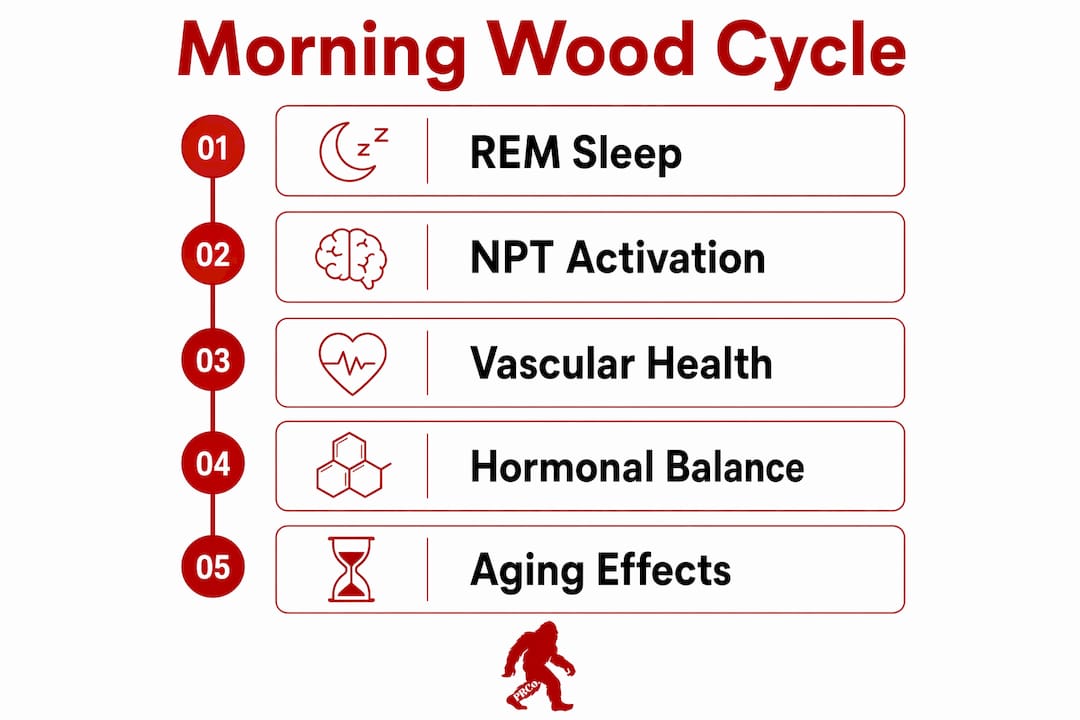
Common causes of absent morning erections
The reasons morning wood stops showing up fall into a few clear categories. Most are physical, some are psychological, and a few are hiding in plain sight on your nightstand.
Physical causes:
- Age-related hormonal changes: Testosterone declines gradually after 30, reducing the hormonal peak that supports NPT during sleep.
- Cardiovascular and metabolic conditions: Hypertension and diabetes impair blood flow, which directly reduces the quality and frequency of nocturnal erections.
- Sleep disorders: Sleep apnea interrupts REM cycles repeatedly through the night, cutting off the primary window for NPT to occur.
- Obesity and poor metabolic health: Excess body fat raises estrogen, suppresses testosterone, and worsens vascular function all at once.
Medication side effects:
- Antidepressants and blood pressure drugs are among the most common causes of reduced morning erections, and men often do not connect the two.
- SSRIs, beta-blockers, and certain antihistamines all interfere with the neurological and vascular pathways that drive NPT.
Psychological and lifestyle factors:
- Chronic stress and anxiety suppress parasympathetic nervous system activity, the same system that drives nocturnal erections.
- Psychological stress can inhibit REM sleep directly, reducing the window for NPT to occur.
- Heavy alcohol use, poor diet, and physical inactivity all degrade vascular and hormonal health over time.
- Depression affects both sleep architecture and testosterone regulation, hitting NPT from two directions simultaneously.
When missing morning wood may point to erectile dysfunction
Absent morning erections and erectile dysfunction are not the same thing, but they share significant overlap. ED is defined as the consistent inability to achieve or maintain an erection sufficient for sex. It has vascular, neurological, and hormonal roots. Morning wood absence can be an early signal that one or more of those systems is under stress.

The clinical connection works like this: if your body cannot produce spontaneous erections during sleep, when conditions are most favorable and performance pressure is zero, that suggests a physiological problem rather than a situational one. A man who struggles with erections during sex but still wakes with morning erections most days likely has a psychological component driving his ED. A man with neither is more likely dealing with a physical cause.
That said, lack of morning erections alone does not confirm an ED diagnosis. Patterns matter. If you are also noticing weaker erections during sex, reduced libido, or fatigue that feels out of proportion to your lifestyle, those symptoms together build a clearer picture. Do not self-diagnose from one symptom. Get the full picture.
When to see a doctor and what to expect
If morning erections have been absent for more than a few weeks and you are noticing other changes, that is your cue to make the appointment. Do not wait for it to become a crisis.
Signs that warrant prompt medical evaluation:
- Persistent absence of morning erections for several weeks or longer
- Reduced libido or difficulty with erections during sex
- Unexplained fatigue, low energy, or mood changes
- Known risk factors like hypertension, diabetes, or obesity
What a clinical assessment typically includes:
- Symptom review: Your doctor will ask about frequency, duration, and any associated symptoms like libido changes or fatigue.
- Hormone blood tests: A comprehensive panel covering total testosterone, free testosterone, SHBG, and albumin gives a real picture of hormonal status.
- Sleep evaluation: If sleep apnea is suspected, a sleep study may be ordered to assess REM disruption.
- Cardiovascular screening: Blood pressure, cholesterol, and blood glucose checks assess vascular health, which directly affects erectile function.
- NPT testing: Home-based NPT monitors are available and can track erections during sleep, giving your doctor objective data rather than just your recollection.
Bring your full medication list to the appointment. Many men discover that a drug they have been taking for years is the primary driver of their morning wood issues. That is a fixable problem, but only if it gets identified.
What no morning wood actually means (and what it does not)
Here is where a lot of men get it wrong. Missing morning erections does not automatically mean low testosterone. Diagnosis requires a full medical evaluation, including blood work, not just a symptom check. Some men with clinically low testosterone still have regular morning erections. Others with normal testosterone levels lose them entirely due to sleep problems or medication. The body does not follow a simple script.
NPT is a data point, not a verdict. It tells you something about your vascular, neurological, and hormonal systems working together during sleep. But interpreting it accurately requires context: your sleep quality, your medications, your stress levels, your cardiovascular health. No single symptom tells the whole story.
The psychological weight men carry around this topic is real, and it gets in the way of clear thinking. Viewing morning wood as a measure of masculinity or sexual health creates shame where there should be curiosity. Treat it the way you would treat a check engine light. It is information. Act on it.
Pro Tip: Track your morning erections for two to three weeks before your doctor's appointment. Note frequency, quality, and any lifestyle factors like alcohol, sleep hours, or stress levels. That log gives your doctor something concrete to work with and speeds up the diagnostic process considerably.
Restorative approaches that support sleep quality, reduce chronic stress, and maintain vascular health all contribute to keeping NPT functioning well. Men who prioritize male vitality through consistent sleep, movement, and stress management tend to preserve these signals longer. It is not about chasing a number on a lab report. It is about keeping the whole system running.
Key Takeaways
Persistent absence of morning erections is a biological signal worth investigating, not a source of shame, and a full medical evaluation is the only reliable way to identify its cause.
| Point | Details |
|---|---|
| NPT is a health indicator | Morning erections reflect vascular, neurological, and hormonal function during REM sleep, not sexual desire. |
| Medications are often overlooked | Antidepressants and blood pressure drugs frequently suppress nocturnal erections without men connecting the cause. |
| Absence is not a diagnosis | Missing morning wood does not confirm low testosterone or ED; a comprehensive blood panel and clinical review are required. |
| Sleep quality drives NPT | Disrupted REM sleep from stress, alcohol, or sleep apnea is one of the most common and correctable causes. |
| Early action protects long-term vitality | Mentioning a decreasing trend to your doctor enables early detection of vascular or metabolic issues before they escalate. |
You haven't lost the signal. You just need to find it.
If morning erections have gone quiet, that is your body asking a question. Primal Red Co. was built for men who want to answer it before bigger decisions land on the table. RedRockit is a private-use red light wellness device designed to support your daily restoration routine, the kind that keeps your drive, energy, and connection working the way they should.

This is not TRT. This is not a clinic visit. This is a tool for men who are paying attention and want to stay ahead of the shift. Start with The Signal restoration routine and see what consistent daily practice actually does for how you feel.
Recommended
- Tired All the Time Male 40s: Why Men Start Searching Testosterone | RedRockit
- Male Vitality After 40: Energy, Drive, Recovery, and Restoration | RedRockit
- Low Libido After 40: Why Men Start Searching Testosterone | RedRockit
- Low Testosterone Symptoms in Men: What Changes After 40 Can Feel Like | RedRockit